Copyright © 2026 VPM, all rights reserved.
PBS is a 501(c)(3) not-for-profit organization.
VPM News Morning Edition
NEXT UP: 9:00 AM

Thanks to our sponsors – Become a Sponsor

On Mexico’s southern border, the latest migration surge is Haitian

Haitian migrant Djeeff Orelien lines up on the side of a highway for buses provided by the INM, the National Migration Institute, Mexico's immigration agency.
Richard Tsong-Taatarii for NPR
Haitian migrant Djeeff Orelien lines up on the side of a highway for buses provided by the INM, the National Migration Institute, Mexico's immigration agency.

TAPACHULA, Mexico — The neatly assembled line of stuffed backpacks stretches more than a mile down the side of a busy two-lane highway outside the southern Mexico city of Tapachula. These are the belongings of hundreds of migrants, mostly from Haiti, trying to save their place in line to board buses that will come and take them to cities further north in Mexico.

It’s a line Mexican officials told them to form. But the buses are few and far between. And for the hundreds of migrants camped along the road and at a public park across town, the wait is excruciating.
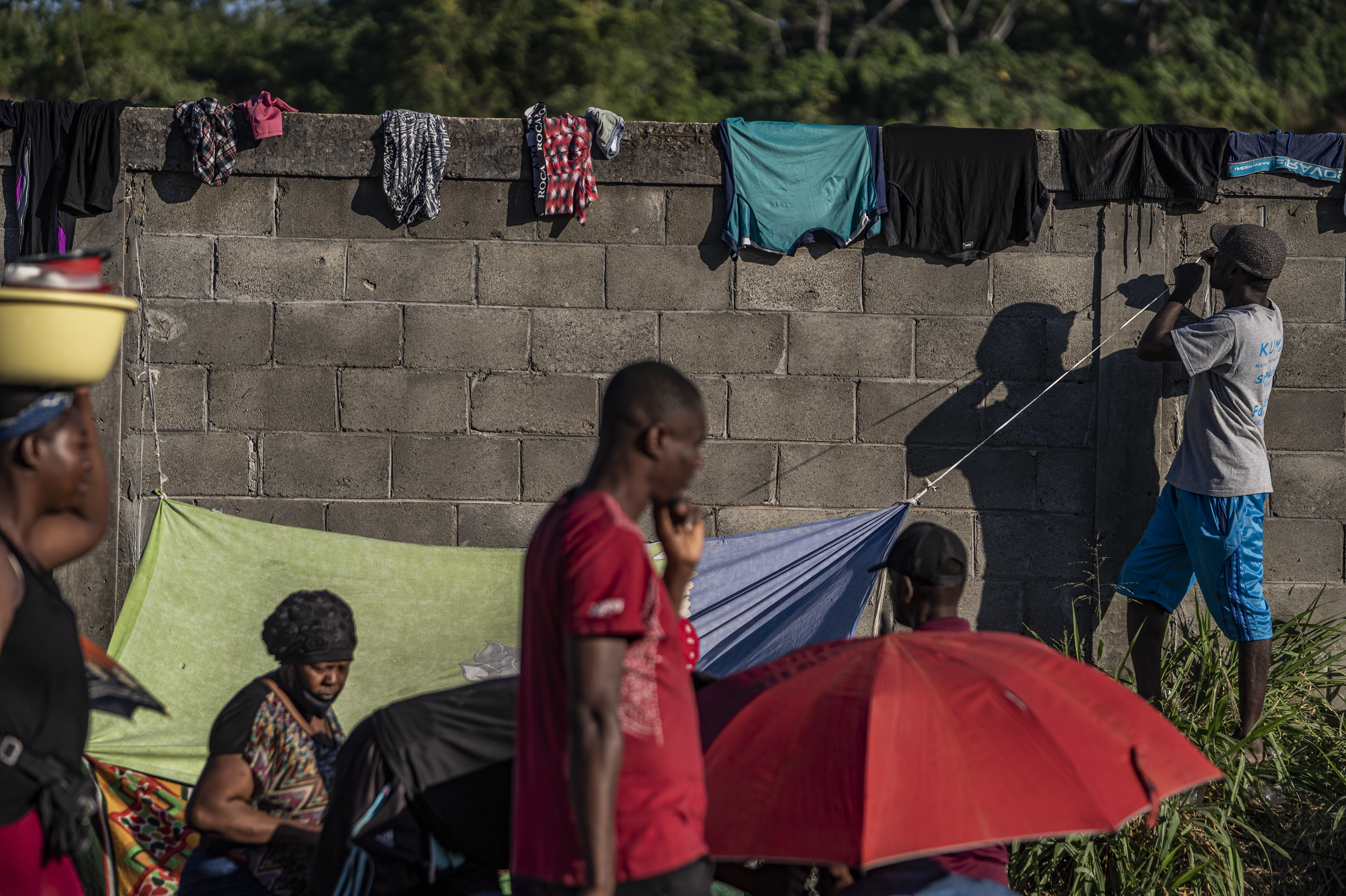
Mostly Haitian migrants wait on the side of a highway for buses provided by the INM.
Mostly Haitian migrants wait on the side of a highway for buses provided by the INM. / Richard Tsong-Taatarii for NPR

“I have been here for five months now and have gotten nothing but the run-around,” says 24-year old Djeff Orelien, who arrived in Tapachula, just across Mexico’s border with Guatemala, with his wife and year-old son back in July.

Mexican officials have told migrants like Orelien they can’t leave this southernmost city in Mexico without proper travel documents or a so-called humanitarian visa that allows them free passage through the country. Others have been urged to apply for refugee status or asylum, but must do that in Tapachula, too.

Mexico’s Interior Ministry estimates by year’s end almost 130,000 migrants will have applied for some type of protection. Nearly half of those applications are from Haitians.
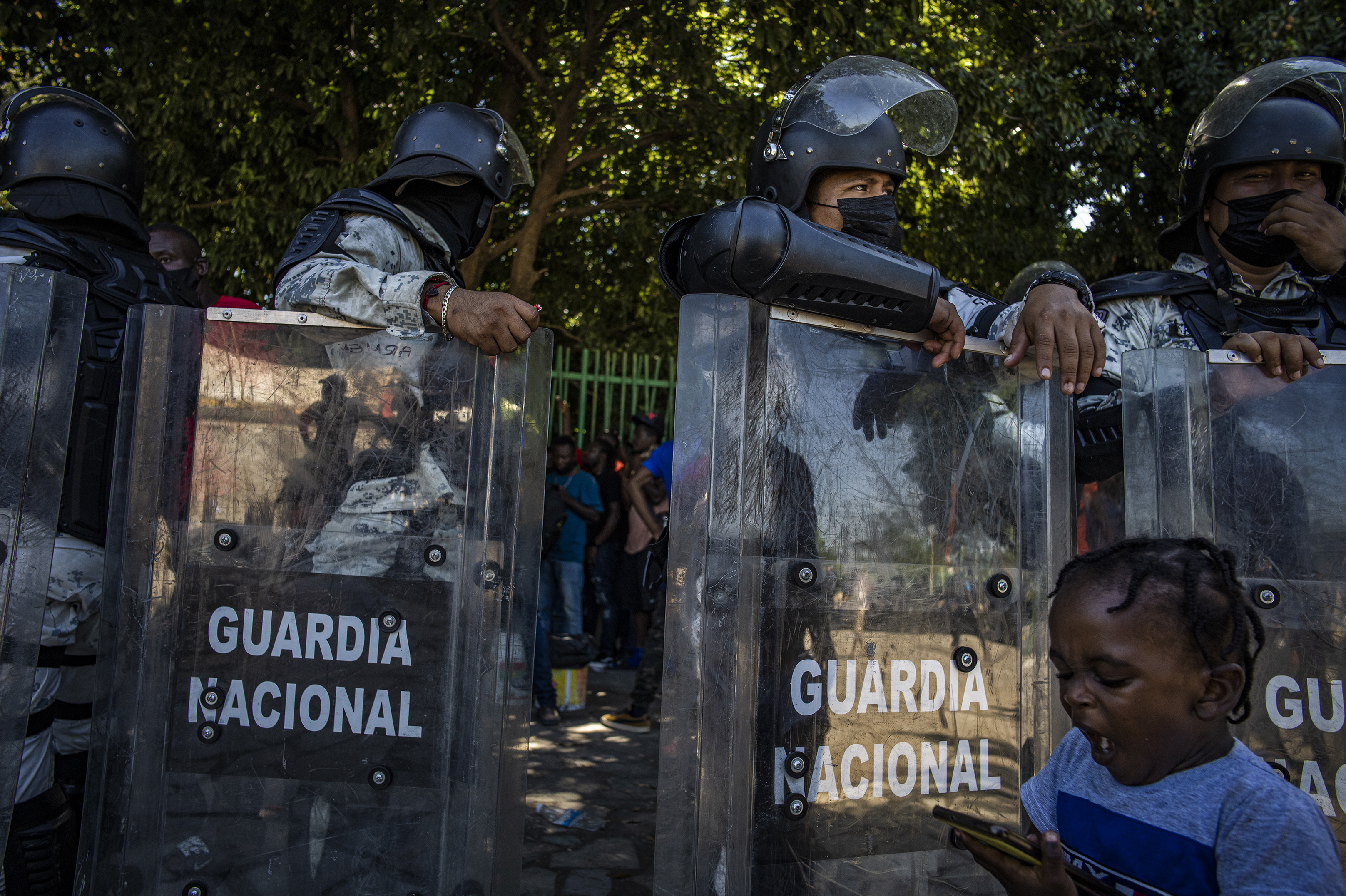
Mexican National Guard troops control the line of migrants waiting for buses in a Tapachula city park.
Mexican National Guard troops control the line of migrants waiting for buses in a Tapachula city park. / Richard Tsong-Taatarii for NPR
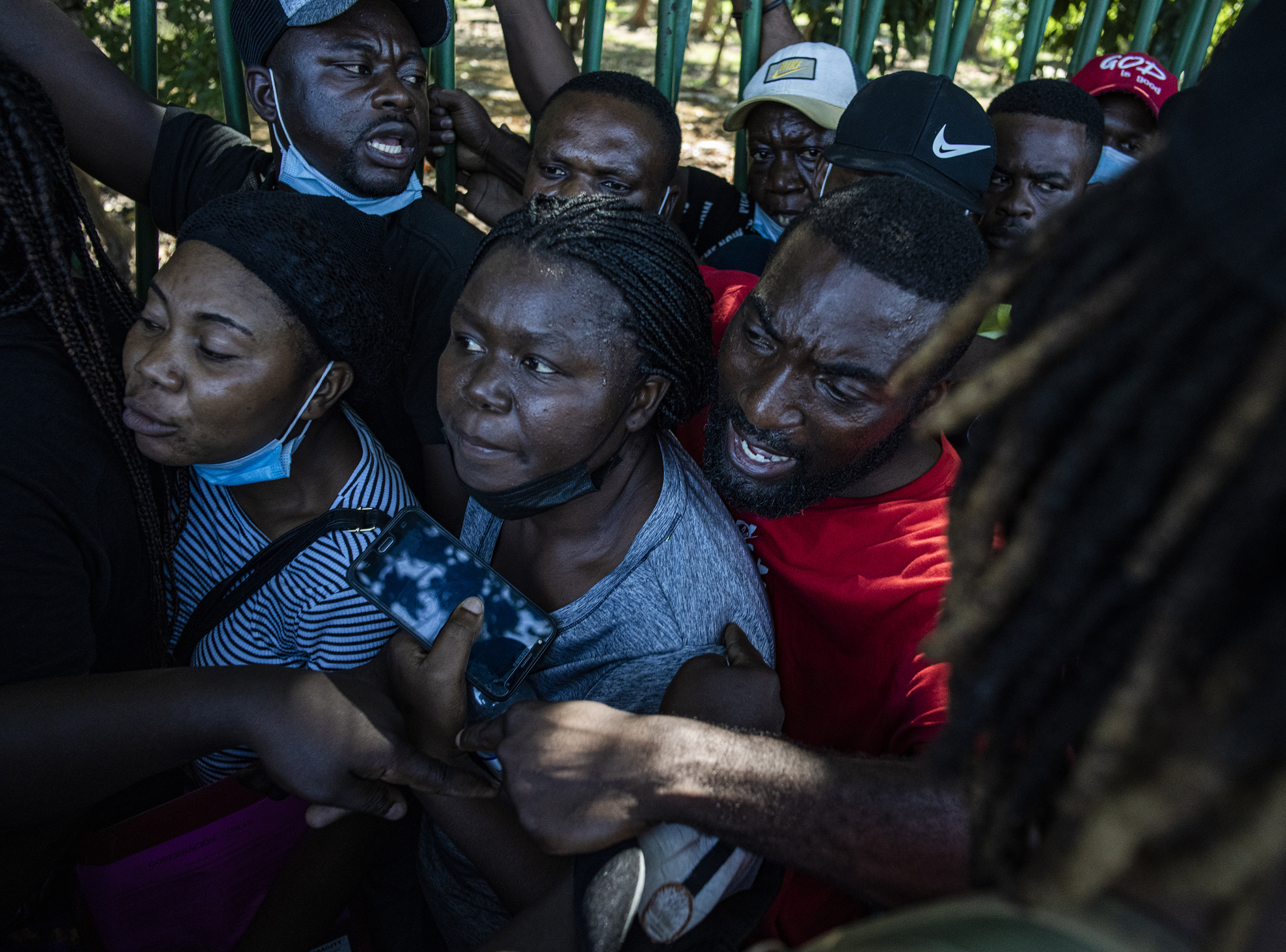
Haitian migrants jockey for position in line once they learn that there will no more buses for the rest of the day. Decades of political and economic instability have led Haitians to leave their country seeking better lives abroad.
Haitian migrants jockey for position in line once they learn that there will no more buses for the rest of the day. Decades of political and economic instability have led Haitians to leave their country seeking better lives abroad. / Richard Tsong-Taatarii for NPR

Many of the migrants have been on the move for years

Orelien is part of an exodus of Haitians pouring out of South America. Most fled their Caribbean nation in the mid-2010s, finding jobs plentiful in Brazil and Chile. But as the COVID pandemic ravaged those economies, the Haitians moved north, most hoping to reach the U.S. By some estimates more than 60,000 Haitians have left South America in recent months.

Under one of the few trees providing shade near the roadside line of migrants, 35-year old Tinac Lena is charging his cell phone from an extension cord a nearby homeowner has put out for the Haitian migrants to use.
Many Haitian migrants have lived for years in Brazil, Chile and other South Americans countries. Worsening economies have led them to make the perilous journey to Tapachula through Central America.
Many Haitian migrants have lived for years in Brazil, Chile and other South Americans countries. Worsening economies have led them to make the perilous journey to Tapachula through Central America. / Richard Tsong-Taatarii for NPR

“We have been waiting here on the road for more than a week,” he says, shouting in broken Spanish he learned during his six years in South America. “We have no water, no work, nothing….why do they treat us like this?” he adds, as dozens of other migrants nod their heads in agreement.

The Haitians’ arrival, along with thousands of other migrants originally from Venezuela, Cuba and countries in Africa, has overwhelmed Mexican authorities. There are fewer than 50 asylum claim officers in Mexico’s refugee assistance program. The slow bureaucracy, as well as the lack of clear information, is frustrating to the migrants who can’t work or leave the city without proper documents.

“We’ve never seen such a situation here, one so dramatic, so terrible and so poorly managed by the INM (National Migration Institute, Mexico’s immigration agency),” says Enrique Vidal, a migrant activist with the Fray Matías de Córdoba Center for Human Rights in Tapachula. “This is a humanitarian emergency.”
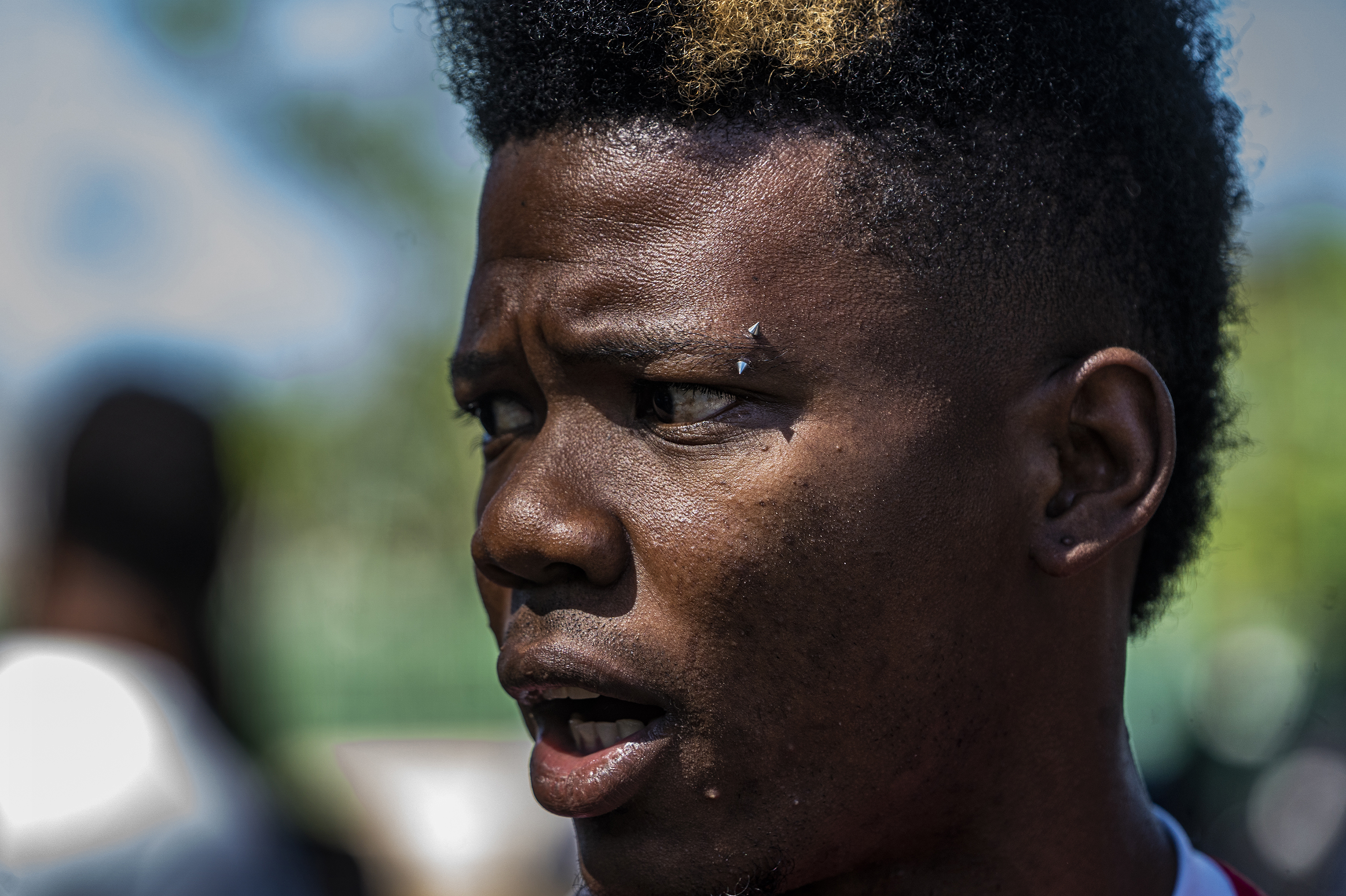
Haitian migrant Djeeff Orelien hopes to find a way to leave town on a bus provided by the INM. He is exasperated by the lack of buses and help from the Mexican government.
Haitian migrant Djeeff Orelien hopes to find a way to leave town on a bus provided by the INM. He is exasperated by the lack of buses and help from the Mexican government. / Richard Tsong-Taatarii for NPR

Vidal says migrants have told his group that authorities are charging as much as $400 to get a seat on a bus. One INM official did not respond to a question about the accusation.

The wait for buses is long and cruel

For more than two weeks thousands of Haitians have also been lining up along a tall green fence at a park on the edge of Tapachula. That’s where immigration officials hand out pieces of paper with a large QR code, which allows the migrants to board buses headed north out of the city.
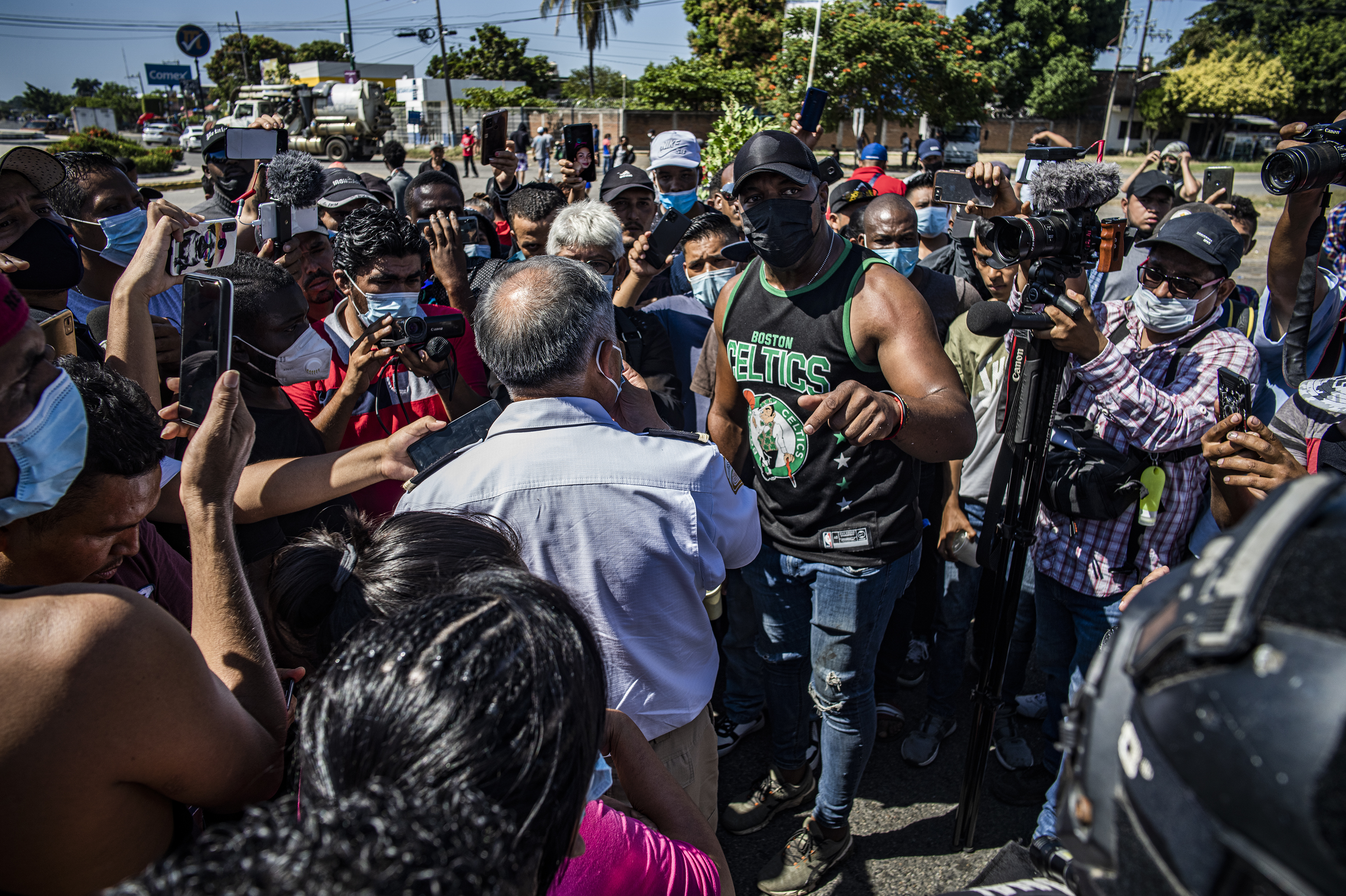
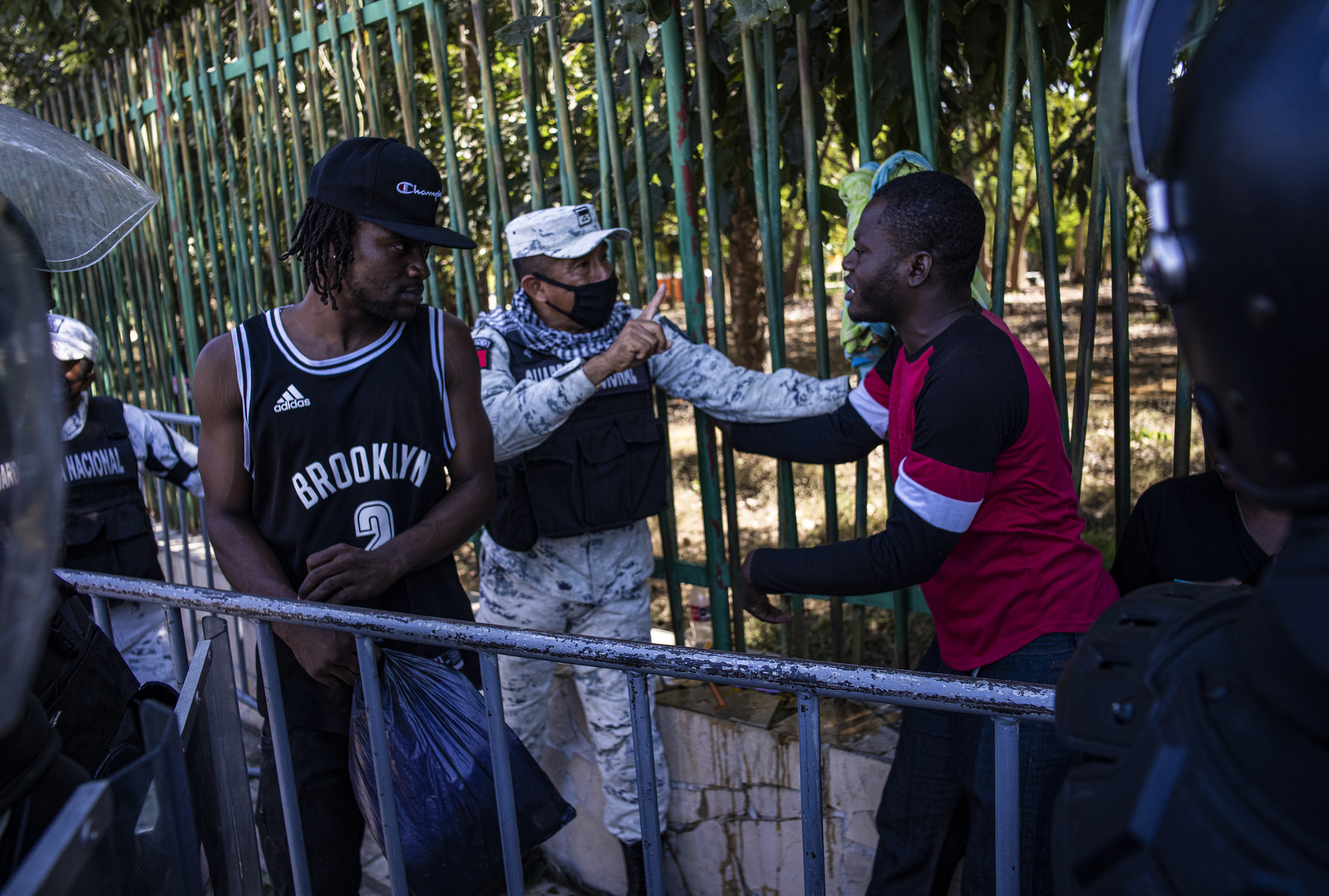
Cuban Heidel Roberto, right, complains to Hugo Salvador Cuéllar of the INM about the lack of buses. The slow deployment of northbound buses has frustrated many Haitians and other migrants who are unhoused in Tapachula.
Cuban Heidel Roberto, right, complains to Hugo Salvador Cuéllar of the INM about the lack of buses. The slow deployment of northbound buses has frustrated many Haitians and other migrants who are unhoused in Tapachula. / Richard Tsong-Taatarii for NPR
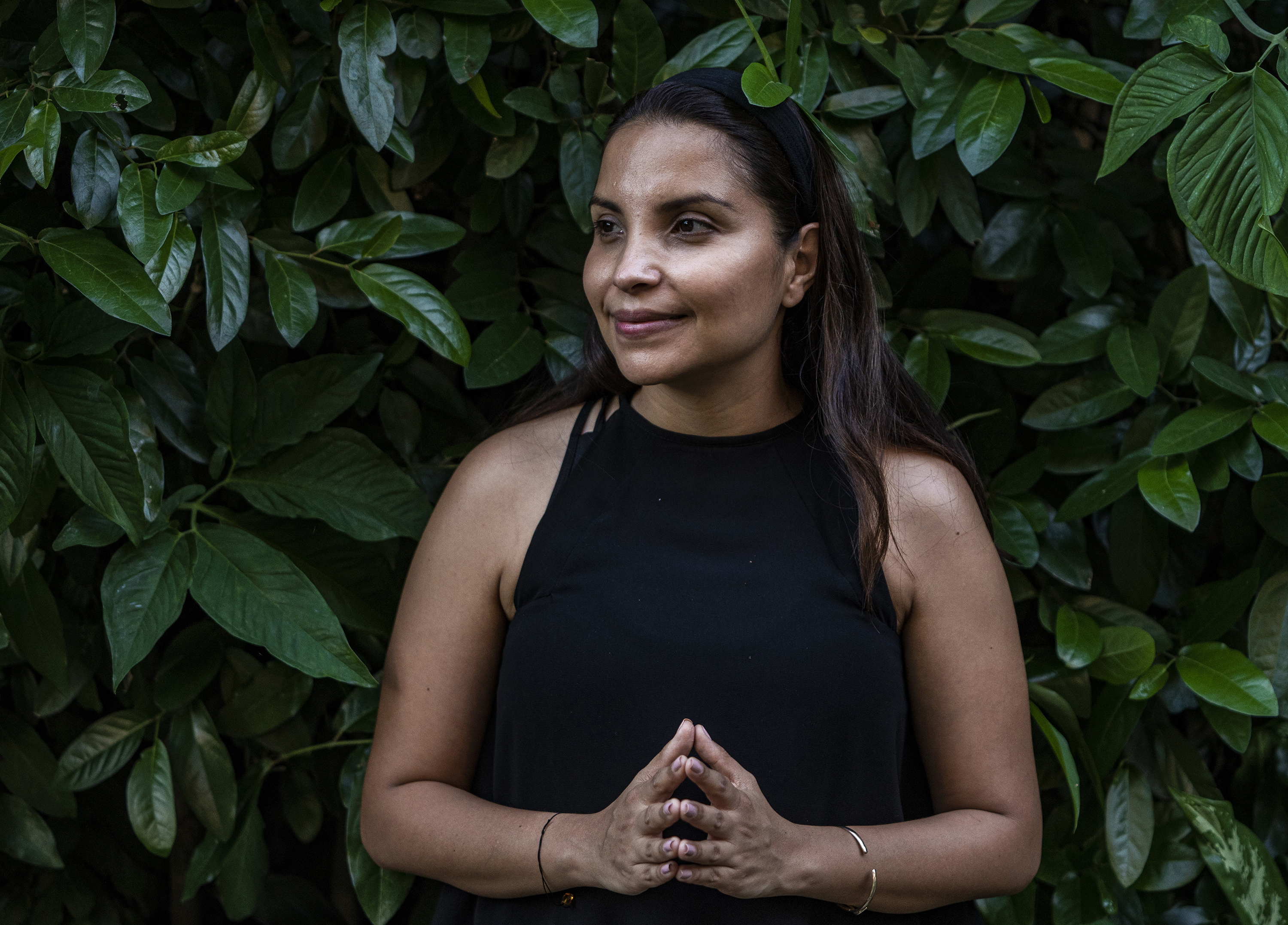
Migrant rights activist Yamel Athie is working to improve the treatment of Haitian migrants in Tapachula.
Migrant rights activist Yamel Athie is working to improve the treatment of Haitian migrants in Tapachula. / Richard Tsong-Taatarii for NPR

There are just eight overflowing portable toilets in the park. The baking sun accentuates the fetid smell. Most migrants sleep on the sidewalk, not wanting to venture far from their spot in line. A phalanx of Mexican National Guard troops with large plastic anti-riot shields patrol the long line of migrants.

Everyday before noon, after only a few hours of work, an immigration official walks the line with a bullhorn announcing “activities” for the day have ended. Some days no QR codes are handed out.

“They treat us like animals,” says Barecena Jean, also from Haiti. She says she’s been sleeping at the park for more than week in hopes of securing a spot on a bus.
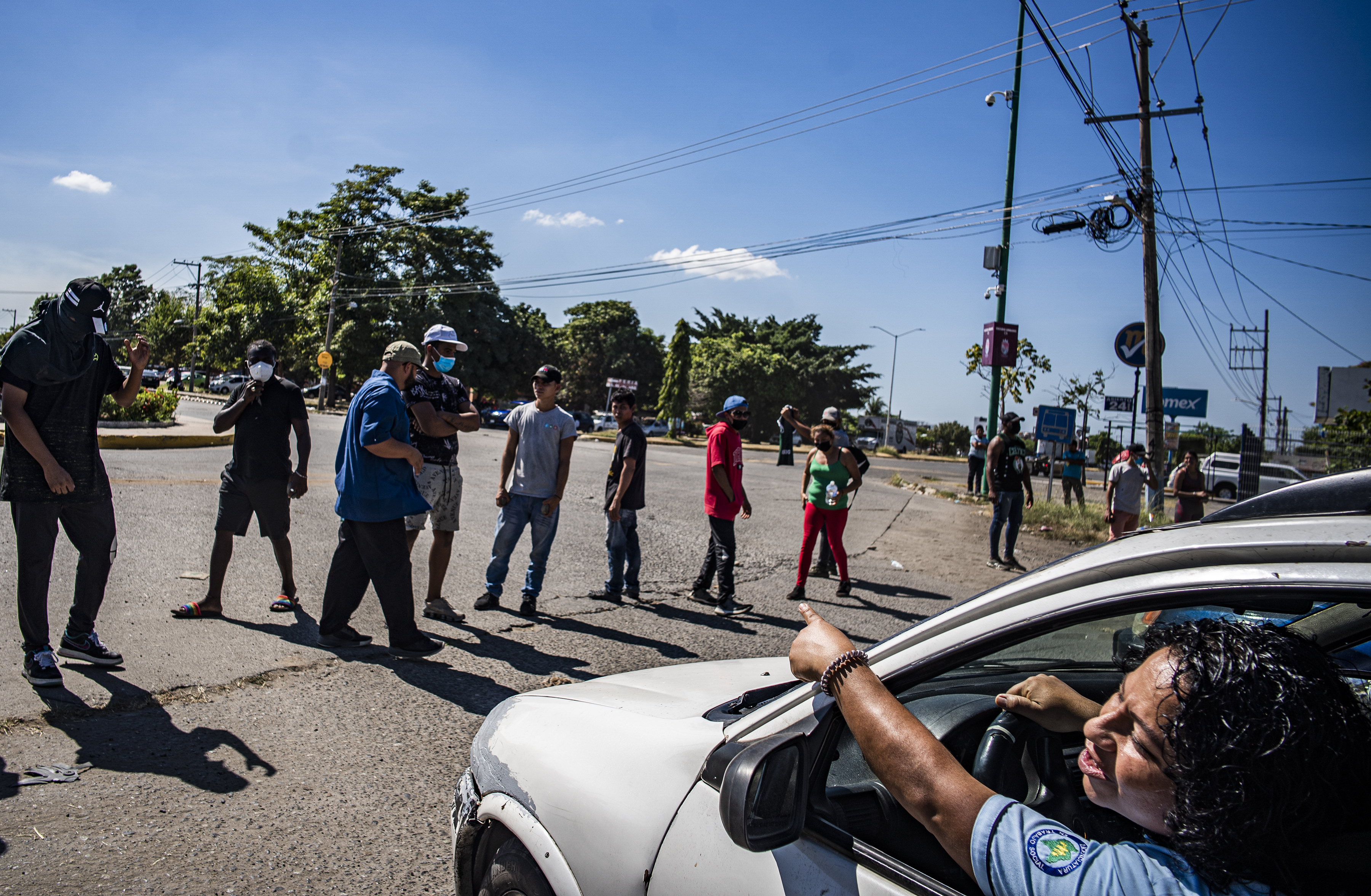
Migrants block traffic to protest the lack of buses provided by the INM.
Migrants block traffic to protest the lack of buses provided by the INM. / Richard Tsong-Taatarii for NPR

Activists in support of migrant rights say such treatment is a purposeful strategy. “This is part of the immigration authorities’ policy of dehumanizing and humiliating the migrants,” says Yamel Athie, a local activist and psychologist. “They just hope the Haitians will give up.”

The INM did not respond to a request for comment. One official, who said they were not authorized to talk to the press, did say that the number of migrants reaching Mexico is at record levels and dealing with the Haitians is a struggle due to the language barriers. Haitians speak either French or Creole.

Some say Mexico’s treatment of the migrants is serving the wishes of the U.S.

Mexico has long been under pressure to do more to stop migrants from reaching the U.S. border, says Maureen Meyer, of the Washington Office on Latin America.
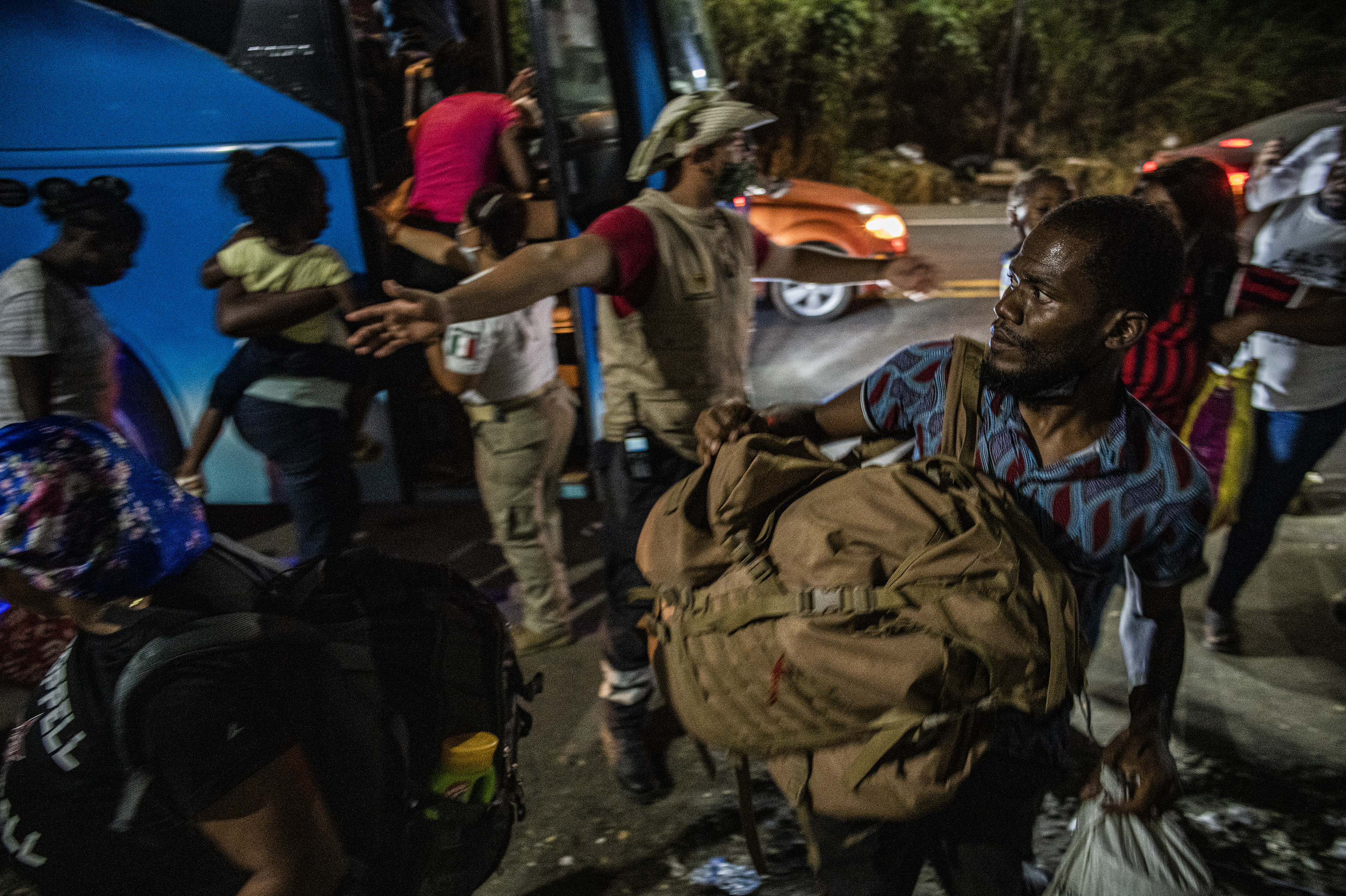
Haitian migrants boarding INM northbound buses in Tapachula.
Haitian migrants boarding INM northbound buses in Tapachula. / Richard Tsong-Taatarii for NPR

“It’s…a message from the Biden Administration that what they want from countries further south is to do as much as they can to stop migrants from reaching the U.S.-Mexico border,” Meyer says.

In September, 15,000 Haitians made it from Mexico to the Texas border city of Del Rio. While as many as 5,000 were deported back to Haiti, the rest were allowed into the U.S. to make asylum claims.

While some of the migrants say they want to stay in Mexico and work, many of the Haitians interviewed in southern Mexico ultimately want to get into the U.S.
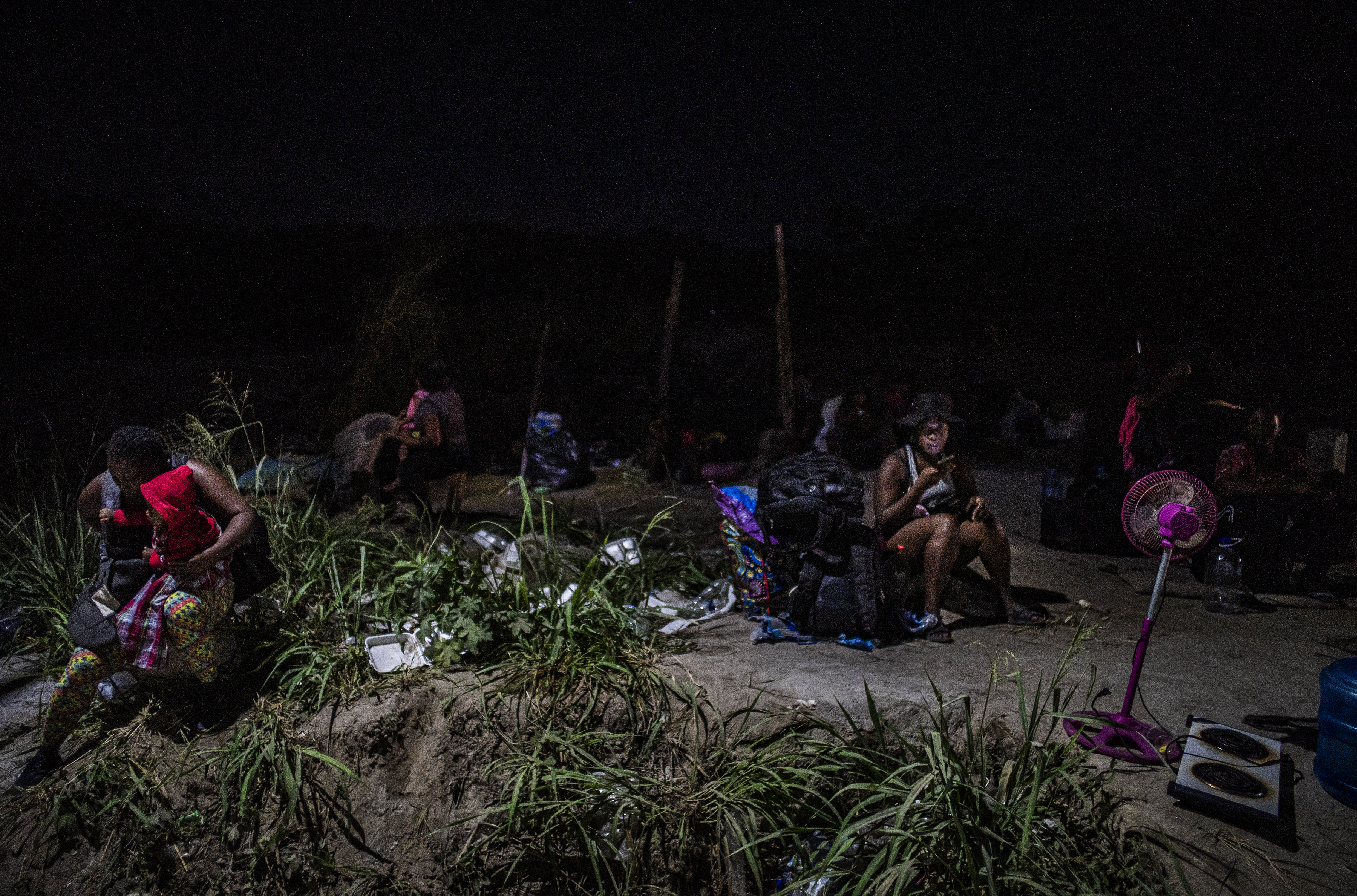
Haitian migrants in a roadside encampment in Tapachula, waiting for buses north.
Haitian migrants in a roadside encampment in Tapachula, waiting for buses north. / Richard Tsong-Taatarii for NPR

Djeeff Orelien says Miami is his destination. “The U.S. is the best place for us Haitians to live and work,” he says. He wants to follow Mexican law so he can travel safely but he says the authorities make it so hard. “I don’t want to do anything crooked, I just want to get a permit so I can get out of here,” he adds.

The stream of migrants crossing into Mexico shows no limit

One night this week 15 buses showed up along the busy two-lane highway without any prior announcement. Hundreds of Haitians scrambled to board the buses. National Guard troops attempted to keep the peace. Orelien didn’t get a coveted seat.
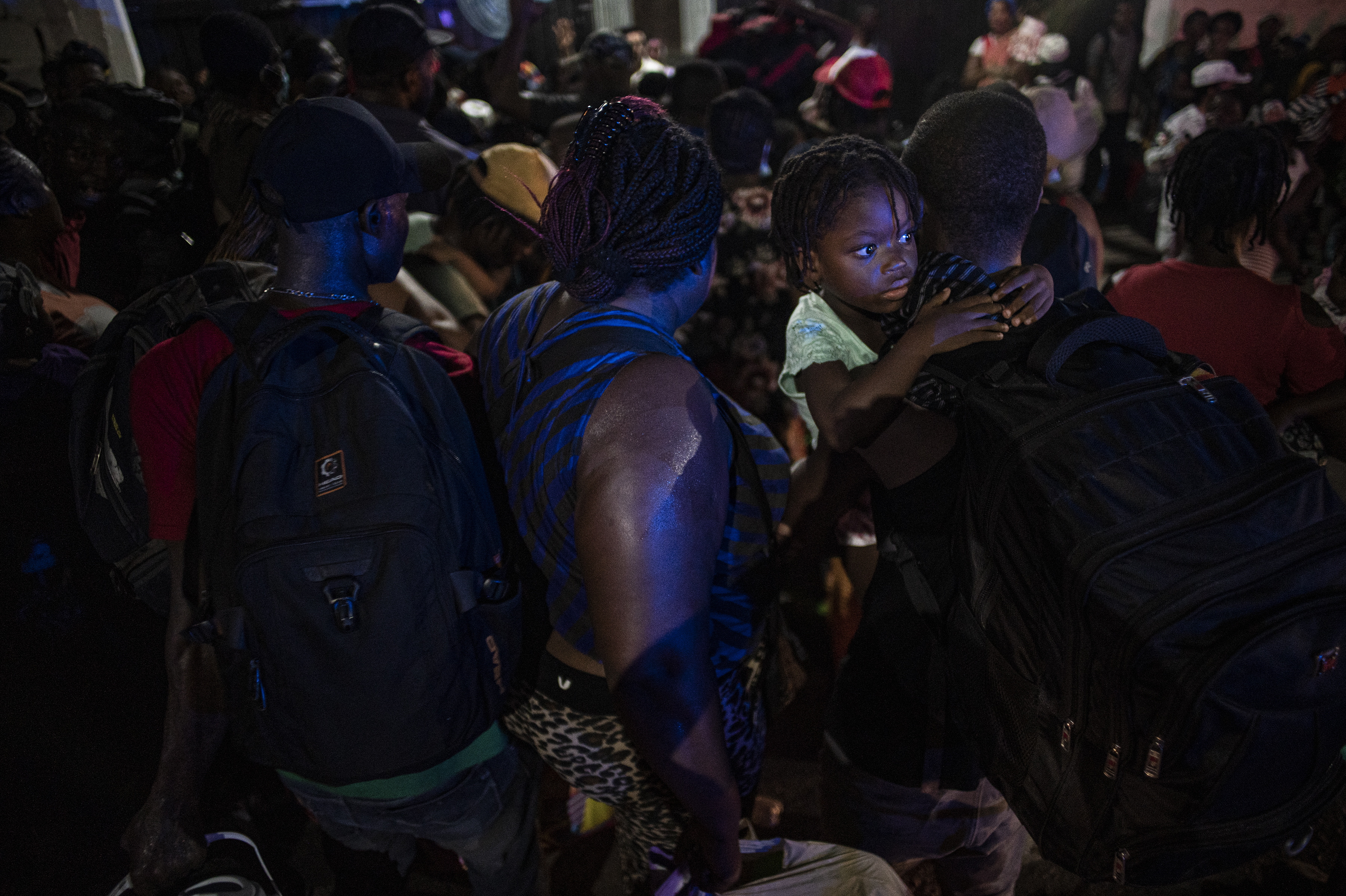
Haitian migrants line up to board buses headed north at an encampment on in Tapachula
Haitian migrants line up to board buses headed north at an encampment on in Tapachula / Richard Tsong-Taatarii for NPR

“Life is really difficult, I don’t want to die here, I just need to keep moving forward,” he says, contemplating the long wait for the next group of buses.

Local gang prevention officer Alberto Rodriguez, who helps out with controlling the migrant crowds, says the situation is frustrating all around. The stream of migrants coming into town appears endless.

“One day 800 may leave, but another 1,000 show up right behind them,” says Rodriguez, shaking his head in exasperation.

Copyright 2023 NPR. To see more, visit https://www.npr.org. utm

Carrie Kahn is NPR's International Correspondent based in Rio de Janeiro, Brazil. Kahn's reports can be heard on NPR's award-winning news programs including All Things Considered, Morning Edition and Weekend Edition, and on NPR.org.

Previously, she spent a decade based in Mexico City, Mexico, covering Mexico, the Caribbean and Central America. She arrived in Mexico in the summer of 2012, on the eve of the election of President Enrique Peña Nieto and the PRI party's return to power, and reported on everything from the rise in violence throughout the country to its powerful drug cartels, and the arrest, escape and re-arrest of Joaquin "El Chapo" Guzman. She reported on the Trump Administration's immigration policies and their effects on Mexico and Central America, the increasing international migration through the hemisphere, gang violence in Central America and the historic détente between the Obama Administration and Cuba.

Kahn has brought moving, personal stories to the forefront of NPR's coverage of the region. Some of her most notable coverage includes the stories of a Mexican man who was kidnapped and forced to dig a cross-border tunnel from Tijuana into San Diego, a Guatemalan family torn apart by President Trump's family separation policies and a Haitian family's situation immediately following the 2010 earthquake and on the ten-year anniversary of the disaster.

Prior to her post in Mexico, Kahn was a National Correspondent based in Los Angeles. She was the first NPR reporter into Haiti after the devastating earthquake in early 2010, and returned to the country on numerous occasions to continue NPR's coverage of the Caribbean nation. In 2005, Kahn was part of NPR's extensive coverage of Hurricane Katrina, where she investigated claims of euthanasia in New Orleans hospitals, recovery efforts along the Gulf Coast and resettlement of city residents in Houston, Texas.

She has covered hurricanes, the controversial life and death of pop icon Michael Jackson and firestorms and mudslides in Southern California,. In 2008, as China hosted the world's athletes, Kahn recorded a remembrance of her Jewish grandfather and his decision to compete in Hitler's 1936 Olympics.

Before coming to NPR in 2003, Kahn worked for NPR Member stations KQED and KPBS in California, with reporting focused on immigration and the U.S.-Mexico border.

Kahn is a recipient of the 2020 Cabot Prize from Columbia Journalism School, which honors distinguished reporting on Latin America and the Caribbean. In 2010 she was awarded the Headliner Award for Best in Show and Best Investigative Story for her work covering U.S. informants involved in the Mexican Drug War. Kahn's work has been cited for fairness and balance by the Poynter Institute of Media Studies. She was awarded and completed a Pew Fellowship in International Journalism at Johns Hopkins University.

Kahn received a bachelor's degree in biology from UC Santa Cruz. For several years, she was a human genetics researcher in California and in Costa Rica. She has traveled extensively throughout Mexico, Central America, Europe and the Middle East, where she worked on an English/Hebrew/Arabic magazine.

Related Stories