Copyright © 2026 VPM, all rights reserved.
PBS is a 501(c)(3) not-for-profit organization.
VPM News Morning Edition
NEXT UP: 9:00 AM

Thanks to our sponsors – Become a Sponsor

See how Kharkiv’s bomb squad neutralizes cluster bombs in Ukraine

Kharkiv Explosive Ordinance Disposal (EOD) technicians Maksim and Maksim walk back to their truck after detonating the first of 24 unexploded, timed mines. They were able to safely dispose of the mines in Bilashi on Saturday. Maksim (left) is holding the remains of the exploded cluster munition is his left hand. The mine was dropped by a cluster bomb Friday night.
Nickolai Hammar / NPR
Kharkiv Explosive Ordinance Disposal (EOD) technicians Maksim and Maksim walk back to their truck after detonating the first of 24 unexploded, timed mines. They were able to safely dispose of the mines in Bilashi on Saturday. Maksim (left) is holding the remains of the exploded cluster munition is his left hand. The mine was dropped by a cluster bomb Friday night.

Updated April 24, 2022 at 5:18 PM ET

BILASHI, UKRAINE — When the bomb squad arrives here, it is peaceful. The trees have new leaves; the fields are green.

One resident comes out of his house and shows NPR reporters a handful of shrapnel. When the bombs explode, he says, they fly through the windows.
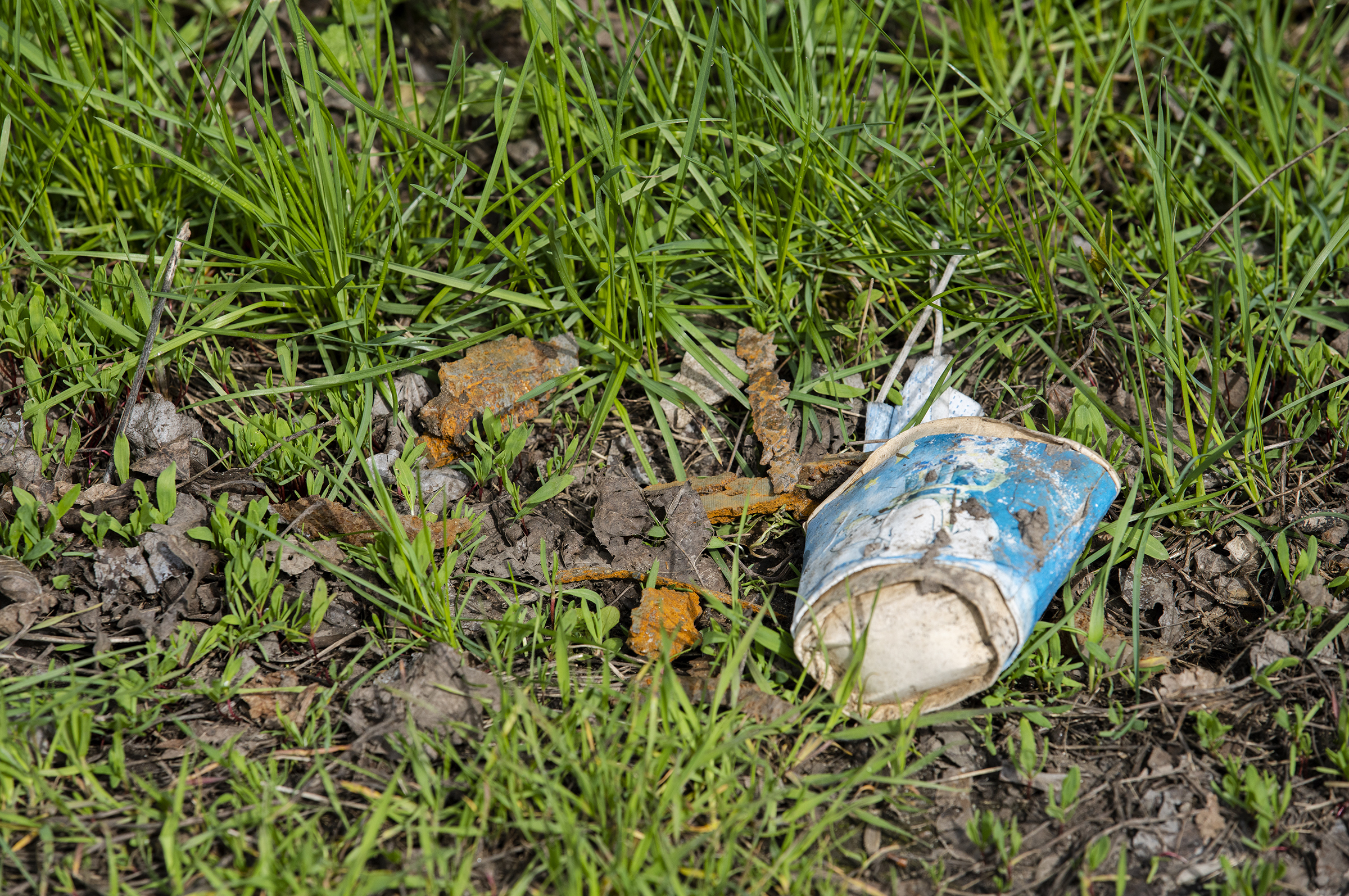
Shrapnel from an airstrike in Bilashi sits rusted on the side of the road next to a resident's house. A resident of Bilashi said the shrapnel struck his house. He also said the town has been consistently hit by various munitions since March.
Shrapnel from an airstrike in Bilashi sits rusted on the side of the road next to a resident’s house. A resident of Bilashi said the shrapnel struck his house. He also said the town has been consistently hit by various munitions since March. Nickolai Hammar / NPR

He’s on the verge of tears. “I cannot understand how a brother fights a brother,” he says.

He walks away without giving his name, but his neighbor Yuri Yes’Kov explains that this little village not far from the Russian border in northeastern Ukraine has been shelled incessantly since March.

The night before, Yes’Kov says, a Russian rocket flew overhead, dropping bomblets all over the fields.

“One of them exploded today,” he says.
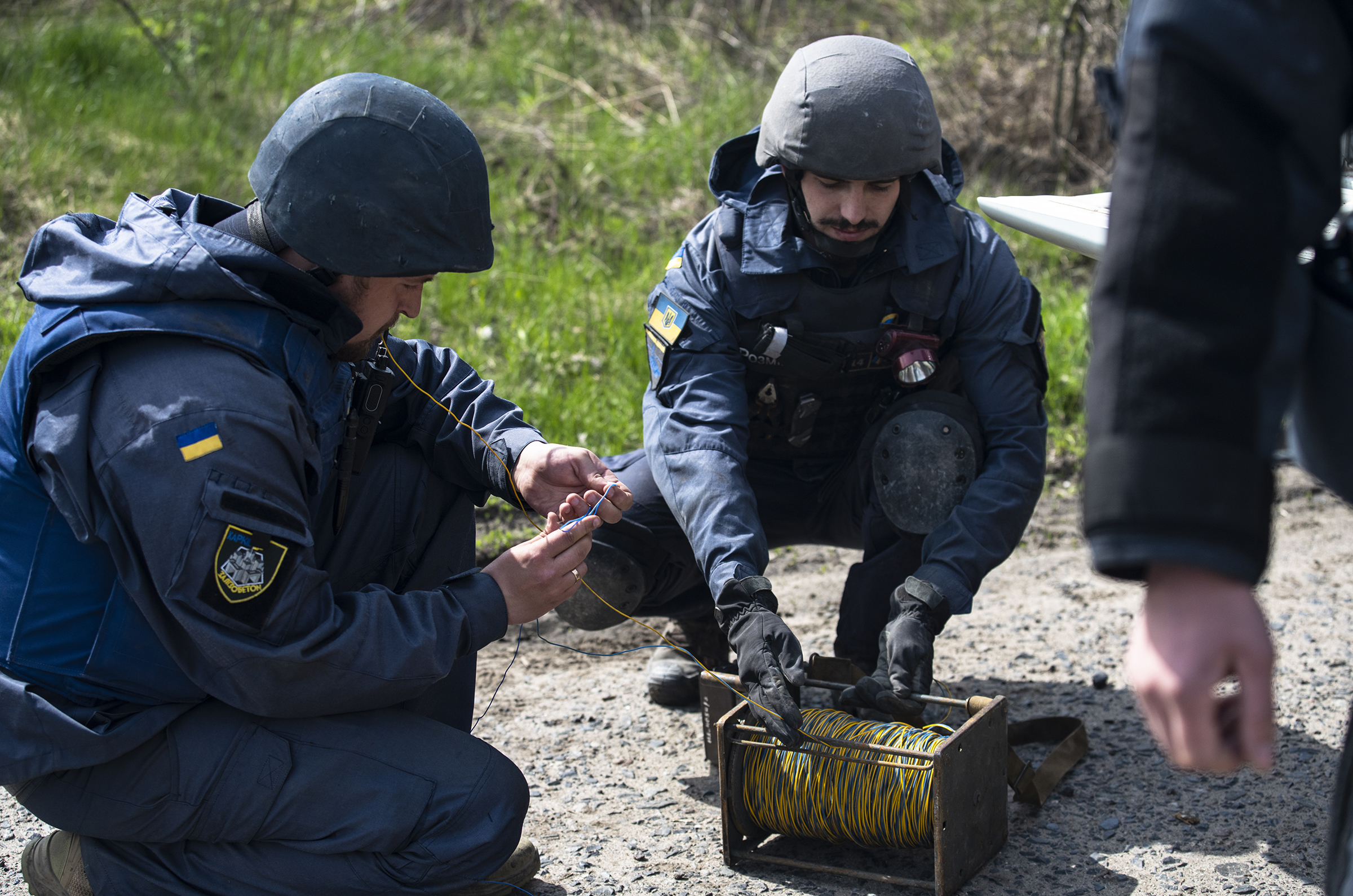
Kharkiv EOD technicians wire the blasting cap to the firing line in preparation for detonating the first mines.
Kharkiv EOD technicians wire the blasting cap to the firing line in preparation for detonating the first mines. Nickolai Hammar / NPR

What he is describing bears the hallmarks of cluster munitions, bombs that scatter over a wide area and blow up either on a timer or when something or someone goes over them.

They are banned internationally because they maim or kill indiscriminately, but human rights groups say the Russian military has been dropping them over Ukraine. Back in March, Human Rights Watch documented the use of cluster munitions in Kharkiv, just south of Bilashi. In a statement, Steve Goose, the arms director at Human Rights Watch, said that using cluster bombs in a populated area showed “callous disregard for people’s lives.”
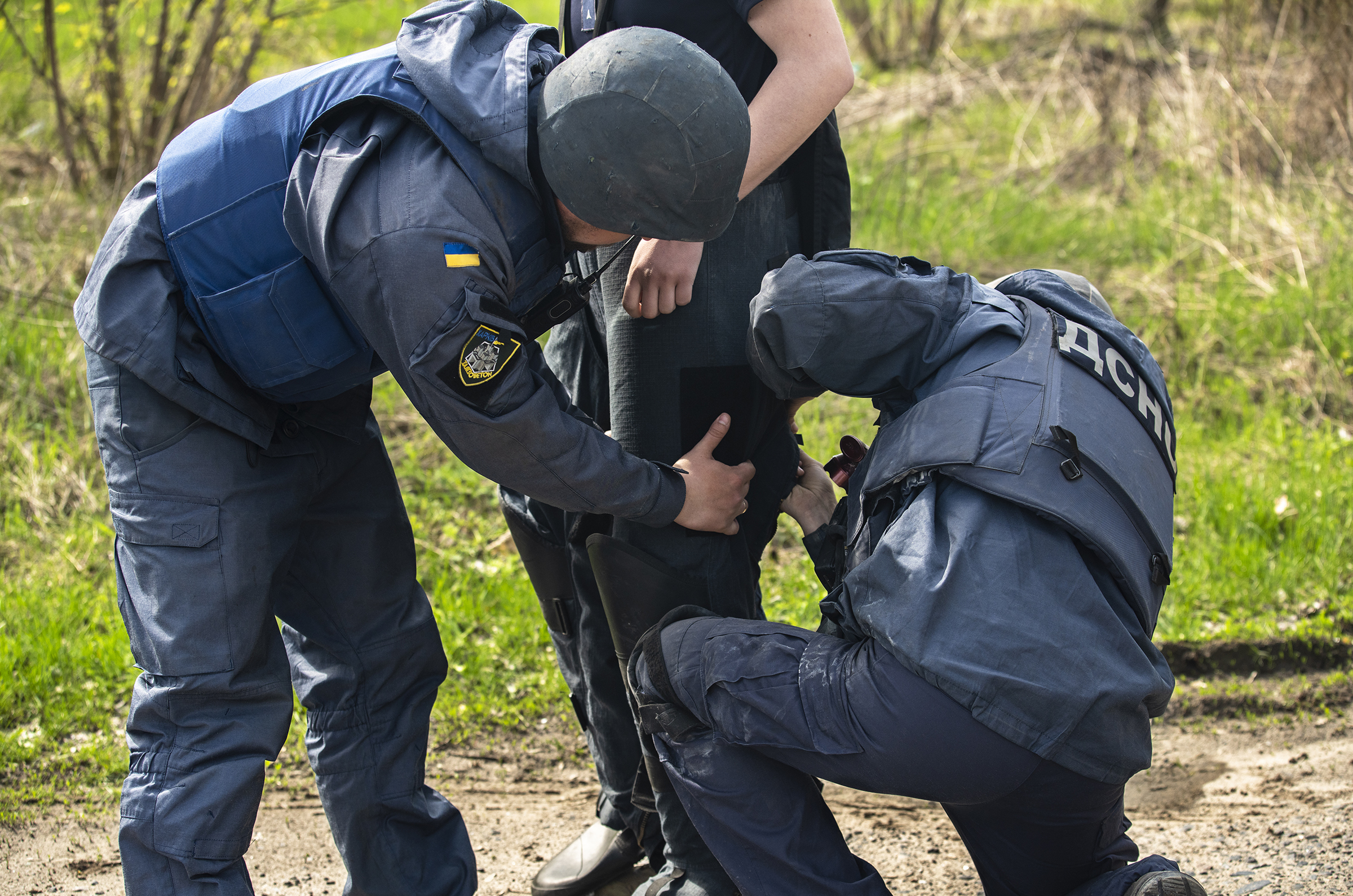
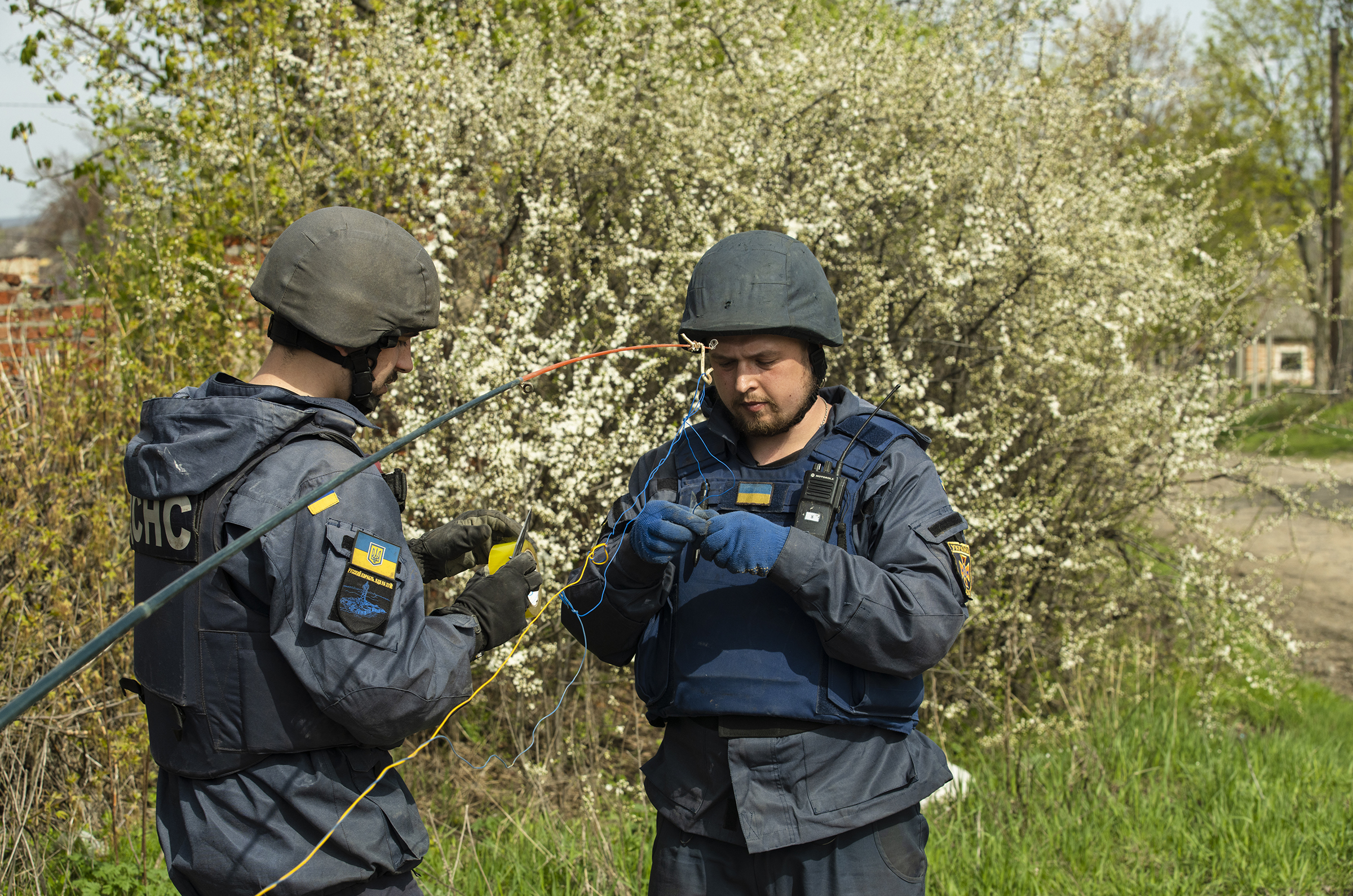
State Emergency Service first responders from Kharkiv, Ukraine suit up before detonating an unexploded mine. Bilashi sits approximately 20 miles from the border with Russia. The mines are set off with a timed detonator and there is no way to tell when they will explode.
State Emergency Service first responders from Kharkiv, Ukraine suit up before detonating an unexploded mine. Bilashi sits approximately 20 miles from the border with Russia. The mines are set off with a timed detonator and there is no way to tell when they will explode. Nickolai Hammar / NPR
Kharkiv EOD technician Maksim affixes a C-4 charge to its firing point in preparation for detonating the first of the mines.
Kharkiv EOD technician Maksim affixes a C-4 charge to its firing point in preparation for detonating the first of the mines. Nickolai Hammar / NPR

When the bomb crew finish suiting up, they hang a charge on what looks like a fishing pole. They walk it slowly to one of the bombs, drop it on top and set it off from a distance.

Maksim, the deputy chief of the Kharkiv pyrotechnic department, who asks that we only use his first name to comply with Ukrainian government policy, says what they found here was a “PTM-1,” a kind of Russian anti-tank mine.

As they get ready to blow up another mine, a small group of Ukrainian military servicemen show up in a pickup truck. They’re a reconnaissance team. As soon as they fly a drone, the Russians begin to shell.
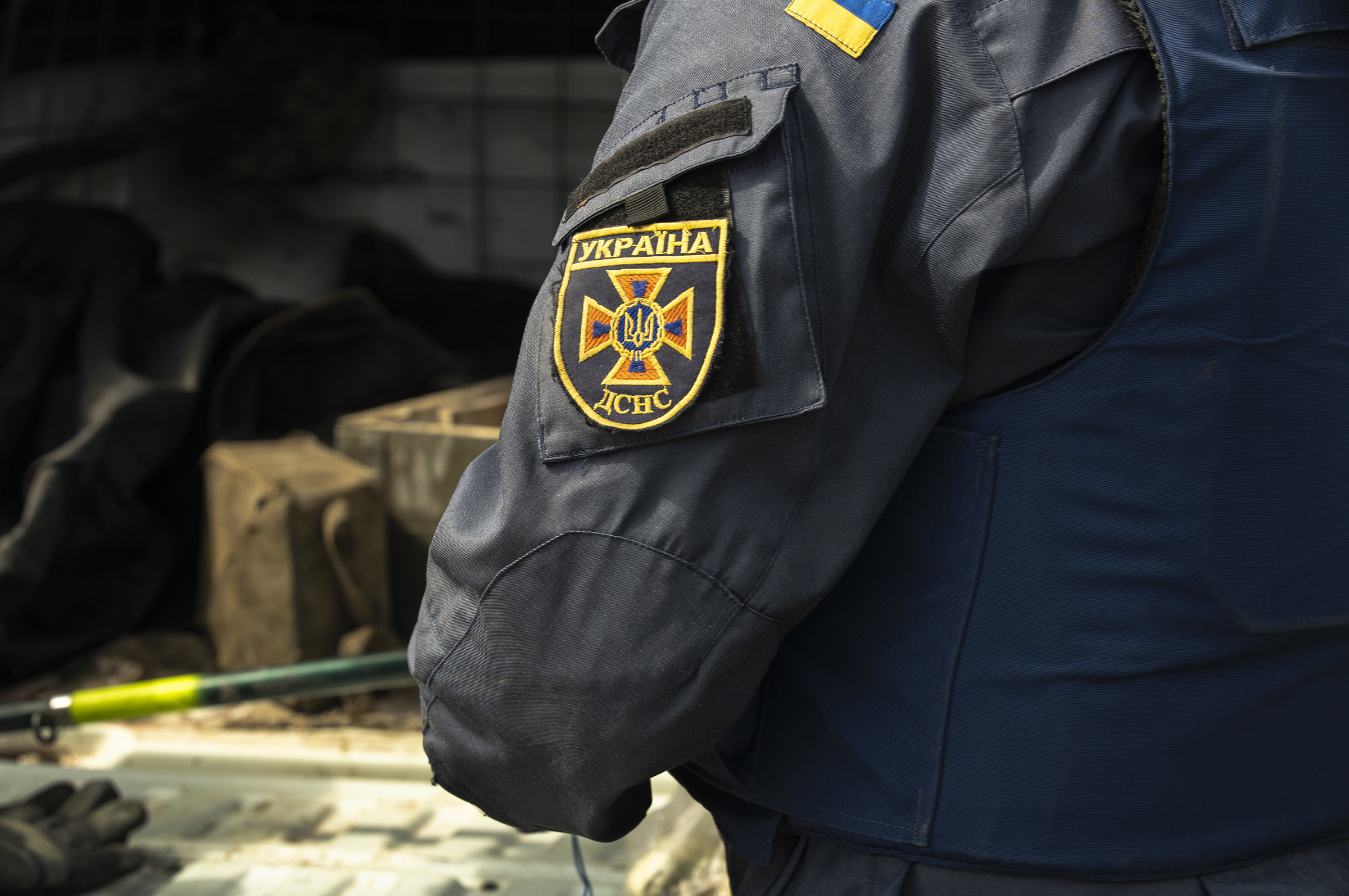
Maksim's State Emergency Service patch can be seen as he prepares to detonate another unexploded timed mine.
Maksim’s State Emergency Service patch can be seen as he prepares to detonate another unexploded timed mine. Nickolai Hammar / NPR

Yes’Kov, the resident, says it has been like this since the war began. A small group of Ukrainian troops show up; they leave and then the Russians start shelling their houses.

He shakes his head. His vegetable garden is now full of mines. His son has been fighting in the trenches and he can’t seem to make sense of this war.

“We want peace,” he says. “We don’t want this shelling. We want peace.”

Hanna Palamarenko contributed reporting.

Copyright 2023 NPR. To see more, visit https://www.npr.org. utm

Eyder Peralta is an international correspondent for NPR. He was named NPR's Mexico City correspondent in 2022. Before that, he was based in Cape Town, South Africa. He started his journalism career as a pop music critic and after a few newspaper stints, he joined NPR in 2008.

In his career, Peralta has reported from more than 20 countries on four continents. In 2022, his coverage of East Africa was named a finalist for the Pulitzer Prize in the Audio Reporting category.

Peralta joined NPR as associate producer, working his way up to become an international correspondent in 2016.

While based in Nairobi, Kenya, and then Cape Town, South Africa, he crisscrossed the African continent. He's interviewed presidents, covered resistance movements, civil war, Ebola and the coronavirus pandemic. He spent years reporting a profile on the most vulgar woman in Uganda. He wrote about house music in South Africa, the joy of mango season in Kenya, a baby elephant boom, hyenas and even how he ended up jailed for four days in South Sudan.

On occasion, he was dispatched to other regions, including Venezuela and Ukraine to cover the Russian invasion.

Previously, Peralta reported breaking news for NPR based out of Washington, D.C., where he covered everything from the American rapprochement with Cuba to natural disasters to the national debates on policing and immigration.

In 2009 and 2014, Peralta was part of the NPR teams that received the George Foster Peabody Award. His 2016 investigative feature on the death of Philando Castile was honored by the National Association of Black Journalists and the Society for News Design.

Peralta was born amid a civil war in Matagalpa, Nicaragua. His parents fled when he was child and they settled in Miami. Peralta graduated with a journalism degree from Florida International University.

He is married to writer and author Cynthia Leonor Garza. They have three young daughters, who occasionally do their own reporting.

Related Stories