ALEX CHADWICK, host:
This is DAY TO DAY. I’m Alex Chadwick.
MADELEINE BRAND, host:
I’m Madeleine Brand. People are still getting sick from that E. coli outbreak in fresh spinach. Confirmed cases have turned up in two more states, even as federal inspectors fan out across California fields to find the source of the infection. NPR’s John McChesney reports.
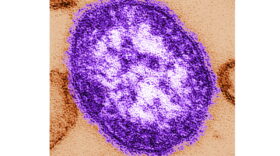
JOHN McCHESNEY: The Federal Food and Drug Administration says the fresh spinach E. coli outbreak now involves 114 known cases across 21 states. There’s been one death in Wisconsin, and another is under investigation in Ohio. The FDA says statistical evidence gathered from infected patients continues to point to Natural Selection Foods, which makes 34 brands of packaged salads. Natural Selection is the world’s largest processor of organic produce, but also packages some nonorganic product for other brands. The FDA says there is no evidence of deliberate tampering in this outbreak.
California Salinas Valley, known as the world’s salad bowl, is where most of America’s spinach is grown – nearly 200 million dollars worth last year. Most of that spinach will be plowed under later this week unless an accurate source of the bacteria is found soon. The Salinas Valley has been plagued with nine out of 20 E. coli outbreaks since 1995, one of which last year sickened 30 people in Oregon, Wisconsin and Minnesota who had eaten a salad produced by Dole.
Mr. BILL MARLER (Lawyer): Including one little girl I represented in Minnesota who was hospitalized for over 30 days, 19 days on dialysis, and is at a high risk of reaching end stage renal disease in her teens.
McCHESNEY: Bill Marler is a lawyer who’s been active in several past E. coli cases. Given the number coming out of the Salinas Valley, Marler says he’s convinced that something is really wrong there.
Mr. MARLER: Whether it is in how the growers grow the spinach and the lettuce or how it is manufactured and processed, about every year we’re having an outbreak that, you know, over the last four years has sickened literally hundreds of people and has killed two women who were residents of a retirement center outside of San Francisco.
McCHESNEY: Marler says he believes water is related to the outbreaks. Whether it be irrigation water or water from flooded, contaminated creeks. But no one knows for sure what the source of contamination is or whether it occurs in the fields or in processing plants. In any case, the FDA has been concerned about problems in the valley. Last November, Robert Bracket – who heads the FDA’s food safety division – wrote a stern open letter to California growers, saying that claims that we cannot take action until we know the cause are unacceptable.
And FDA inspectors had been in the valley, looking at E. coli in iceberg lettuce before the spinach outbreak occurred. Natural Selection Foods and the FDA have disagreed about which of the company’s products are affected. Natural Selection says only its nonorganic product has been infected. Here’s what company spokesperson Samantha Cabaluna told public radio station KAZU over the weekend.
Ms. SAMANTHA CABALUNA (Natural Selection company spokesperson): Primarily, the ones that we have gotten package codes from have been Dole.
McCHESNEY: Natural Selection processes a nonorganic spinach that’s sold under the Dole label. But in yesterday’s news conference, the FDA’s David Acheson said this.
Mr. DAVID ACHESON (Federal Food and Drug Administration): It is definitely premature to assume that organic spinach is not part of the outbreak, which is why we’ve kept the consumer advice as broad as we have in terms of not consuming any raw spinach whether it be organic or nonorganic.
McCHESNEY: And whether it’s loose or in packages. John McChesney, NPR News, San Francisco. Transcript provided by NPR, Copyright NPR.