
Copyright © 2026 VPM, all rights reserved.
PBS is a 501(c)(3) not-for-profit organization.
VPM News Morning Edition
NEXT UP: 9:00 AM

Thanks to our sponsors – Become a Sponsor

FAA Officials To Meet With Airlines And Pilots To Discuss Boeing 737 Max

RACHEL MARTIN, HOST:

Here in Washington today the Federal Aviation Administration is going to meet with airlines and pilots to talk about the troubled Boeing 737 Max airplanes. The planes are still grounded worldwide after crashes in Indonesia and Ethiopia killed almost 350 people. As NPR’s Russell Lewis reports, these talks come as Boeing says it’s close to finishing a software update that may allow the jets to start flying again.

RUSSELL LEWIS, BYLINE: When the 737 Max entered service in 2017, it had a new safety feature. The plane would sense if it was close to entering an aerodynamic stall and force the jet’s nose down. But it would do it without any commands from the pilots. That software, called MCAS, played a part in the two accidents. Dennis Tajer flies the 737 for American Airlines and is a spokesman of the Allied Pilots Association.

DENNIS TAJER: We believed it was manageable, but you had to know what was going on. But we’re learning more, since the Ethiopian crash, about just how aggressive this system was.

LEWIS: Pilots of both doomed airplanes struggled to pull up before crashing. In a simulated flight of a different version of the 737, a crew demonstrates how difficult it is to control an aircraft when it wants to fly pitched down.

UNIDENTIFIED PERSON: We’re at 300 knots now, fighting. And I am struggling to keep this aircraft flying.

LEWIS: The pilots in this simulation wrestled the plane for several minutes before they eventually gained control. Boeing says it has reprogrammed software on the 737 Max to prevent it from using erroneous data to trigger the MCAS anti-stall system. Here’s CEO Dennis Muilenberg speaking yesterday.

(SOUNDBITE OF ARCHIVED RECORDING)

DENNIS MUILENBURG: We’re taking a comprehensive, disciplined approach and taking the time to make sure that we get it right.

LEWIS: Muilenberg says the company’s test pilots have flown 96 flights with this updated software, and more are scheduled in the next few weeks.

(SOUNDBITE OF ARCHIVED RECORDING)

MUILENBURG: Yet we know we can always be better. And these recent accidents have intensified our commitment to continuous improvement as we design, build and support the safest airplanes in the sky.

LEWIS: That may be a long process. Neera Jain teaches mechanical engineering at Purdue University. She’s not involved with the software redesign. But says Boeing’s challenge is it needs to re-engineer its systems so pilots can have confidence and trust in the plane’s automation.

NEERA JAIN: We have to do a better and better job of then figuring out how to design those systems in a new way so that they don’t just technically do the correct things but that they are also, for lack of a better word, then being transparent to the human. And that’s a piece that I think – this is certainly a strong signal that there’s a lot more that we have to do.

LEWIS: The FAA’s meeting today is with executives and pilots of the three U.S. airlines that fly the 737 Max – Southwest, United and American. The agency says it wants to hear their concerns before it decides when to return the Max to service.

Russell Lewis, NPR News.

(SOUNDBITE OF PANTHA DU PRINCE’S “LAY IN A SHIMMER”) Transcript provided by NPR, Copyright NPR.
Tags

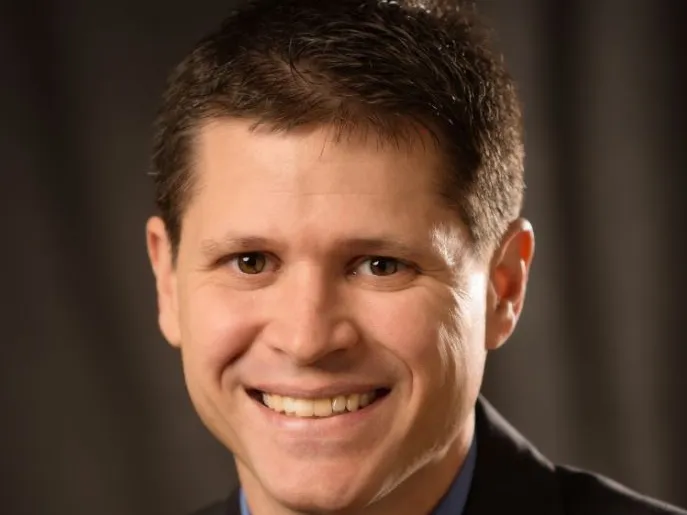
As NPR's Southern Bureau chief, Russell Lewis covers issues and people of the Southeast for NPR — from Florida to Virginia to Texas, including West Virginia, Kentucky, and Oklahoma. His work brings context and dimension to issues ranging from immigration, transportation, and oil and gas drilling for NPR listeners across the nation and around the world.

In addition to developing and expanding NPR's coverage of the region, Lewis assigns and edits stories from station-based reporters and freelancers that air on NPR's news programs, working closely with local correspondents and public radio stations. He spent a year in New Orleans after Hurricane Katrina, coordinating NPR's coverage of the massive rebuilding effort and the reverberations of the storm in local communities. He joined NPR in 2006 and is based in Birmingham, Alabama.

Lewis is also a key member of NPR's 'Go Team' — a small group of experienced NPR producers and reporters who respond to major disasters worldwide. He is often among the first on the scene for NPR — both reporting from these sites as well as managing the logistics of bringing additional NPR reporters into disaster areas that lack functioning transportation systems, basic utilities, food, water, and security.

He was dispatched to Haiti after the 2010 earthquake, where he helped manage a group of NPR journalists. He created an overland supply line for the NPR team between the Dominican Republic and Haiti and brought listeners stories about the slow pace of supply distribution because of border bottlenecks. In Japan in 2011, he was quickly on the scene after the earthquake and tsunami to help coordinate NPR's intensive coverage. In 2013, he was on the ground overseeing NPR's reporting in the Philippines in the aftermath of Super Typhoon Haiyan. Covering the impact of the massive earthquake in Nepal in 2015, he field-produced NPR's coverage and also reported how a lack of coordination by the government and aid workers slowed response. Lewis managed NPR's on-the-ground coverage in 2015 of the terrorist attacks in Paris, France, and reported from Brussels, Belgium. He returned to Brussels in 2016 after the terrorist bombings at the airport and metro station. He helped field-produce NPR's coverage and also reported several stories about the response and recovery. In 2018, he went to Indonesia to field-produce and edit coverage following the earthquake and tsunami in Palu.

Lewis also oversees NPR's sports coverage. He spent six weeks in Brazil in 2014 handling logistics and reporting on the World Cup. In 2015, he did the same in Canada for the Women's World Cup. In 2016, Lewis reported and oversaw NPR's team of journalists at the Summer Olympics in Rio de Janeiro. He also led NPR's coverage from Pyeongchang, South Korea, at the 2018 Winter Olympics and from Tokyo at the delayed Summer Olympics in 2021.

In 2010, the Dart Center for Journalism and Trauma at Columbia University awarded him a prestigious Ochberg Fellowship. The Fellowship is designed to improve reporting on violence, conflict, and tragedy. Lewis has continued his work with the Dart Center and has trained reporters on behalf of the organization in Trinidad and Tobago, the Cayman Islands, and Puerto Rico.

A graduate of the University of Florida, Lewis began his public radio career in 1992 as reporter and executive producer at NPR member station WUFT in Gainesville, Florida. He also spent time at WSVH in Savannah, Georgia, and was Statehouse Bureau Chief at Kansas Public Radio. For six years he worked at KPBS in San Diego as a senior editor and reporter. He also was a talk show host and assistant news director at WGCU in Fort Myers, Florida.

When he's not busy at work, Lewis can be found being creative in the kitchen or outside refereeing soccer games.

Related Stories