You know an album is special when the music and performances transport you to another place. In Lieux Retrouvés (Places Found), cellist Steven Isserlis and pianist Thomas Adès guide the listener to far-flung locales conjured by an odd assortment of composers, including Franz Liszt, György Kurtág, Gabriel Fauré, Leoš Janáček and Adès himself.
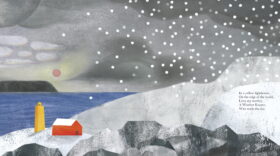
Liszt’s Die Zelle in Nonnenwerth opens with spacious, tolling piano chords and a mournful song in the cello, evoking stillness and solitude. It’s a portrait of the abandoned cloister on Nonnenwerth, an island in the middle of the Rhine and once a vacation destination for Liszt. You can practically see the leaden skies and feel a damp draft creep into your bones in this meditative performance.
Next stop is the land of fairytales, where Janáček’s Pohádka follows a pair of young lovers and their adventures with magicians, underworld figures and flights on horseback. The action inspires some of Janáček’s most visceral music: lyrical love duets, prickly chase scenes and a soaring high B in the cello, depicting the prince’s recovery from a magic spell. “Every gesture,” Adès writes in the album notes, “has the potency of a story told to a child.” Adès knows something about storytelling: His opera The Tempest just finished a critically acclaimed run at the Metropolitan Opera last month. (He also conducted all the performances.)
At the center of the album is the Cello Sonata No. 2 by Fauré. Here, we enter a world where surprise pours forth from silence. Fauré was feeble and deaf in 1921 when he wrote this piece, but you could never tell from the exuberantly syncopated opening movement, the deeply passionate Andante and a final Allegro vivo that dances with the joy of life. Adès’ rippling figures jump with energy, intertwining with Isserlis, whose ardent phrases border on ecstatic. It’s perhaps the last thing you’d expect from a debilitated composer staring into oblivion.
Death actually does make an appearance in a set of four miniatures by Kurtág. For Steven: In Memoriam Pauline Mara is a bleak three-minute piece for solo cello, composed for Isserlis after his wife died in 2010. Amid the weighty silences, Isserlis’ soft-grained cello sighs and moans — and, after one angry outburst, the piece disappears quietly on a pair of enigmatic notes.
All of these pieces and places lead to the final work, Adès’ Lieux Retrouvés, which receives its recorded debut on this album. “He takes influences from everywhere, from all the composers on this disc,” Isserlis notes in the album booklet. “From Offenbach, from jazz, from the French baroque, even from minimalism, and creates his own individual language.”
Adès creates his own musical locations, too. The wildly eclectic piece begins at a placid lake and trudges up a mountain, down to the fields and ends with all kinds of mischief in a movement titled “Cancan macabre,” which sounds like Saint-Saens on a happy acid trip. Ades’ piano punctuates a kind of tipsy, sliding hiccup by Isserlis to get the movement rolling. Then it’s a saucy romp, wherein Isserlis seems to embody several characters — who have perhaps downed a few too many in some smoky Parisian dance hall — with their squeaky-voiced confessions, blustery pronouncements and giddy gyrations. It’s a tour de farce for Isserlis, who admits it was the most difficult piece he’s ever learned.
In one sense, Lieux Retrouvés is an old-fashioned recital record — a studio document of works two musicians have been playing in concert. But when the music is planned this smartly, with performances that radiate instinct and energy, the album becomes something much larger, approaching magic.
Copyright 2024 NPR. To see more, visit https://www.npr.org. 9(MDM3NjYwMjA5MDE1MjA1MzQ1NDk1N2ZmZQ004) "When A Thoughtful Cellist Meets An Imaginative Composer 1")