Copyright © 2026 VPM, all rights reserved.
PBS is a 501(c)(3) not-for-profit organization.
VPM News Morning Edition
NEXT UP: 9:00 AM

Thanks to our sponsors – Become a Sponsor

The U.S. renews oil sanctions on Venezuela citing a failure to allow fair elections

Oil drills in Maracaibo Lake in Venezuela's oil rich Zulia state. The U.S. is renewing sanctions on Venezuela's oil industry.
Leslie Mazoch / AP
Oil drills in Maracaibo Lake in Venezuela's oil rich Zulia state. The U.S. is renewing sanctions on Venezuela's oil industry.

The United States is renewing sanctions on Venezuela’s oil industry, after easing some of the penalties for six months in return for assurances the South American country would hold free and fair elections this year.

Senior U.S. officials said the government of Venezuelan President Nicolás Maduro had “fallen short” of that commitment and continues its “repression” of opponents.

The U.S. had agreed to lift certain sanctions for a half-year period after the Maduro government met with Venezuelan political opposition leaders in Barbados in October last year. The Barbados accord outlined a roadmap to make the July 28 election more competitive.

The deal included a legal process for reinstating banned presidential candidates. But the main opposition hopeful, María Corina Machado, remains barred from running, a replacement contender was prevented from registering her candidacy and members of the opposition have been arrested. Most polls indicate that Machado would win any free and fair election by a landslide.

With the sanctions relief deal set to expire Thursday, the Biden administration indicated those penalties would snap back into place.

The U.S. officials said the Venezuelan government was failing to enable “an inclusive and competitive election” to take place. They were speaking on condition of anonymity to brief reporters about the policy decision.

“Despite delivering on some of the commitments made under the Barbados electoral roadmap, we are concerned that Maduro and his representatives prevented the democratic opposition from registering the candidate of their choice, harassed and intimidated political opponents, and unjustly detained numerous political actors and members of civil society,” the U.S. State Department said in a statement Wednesday.
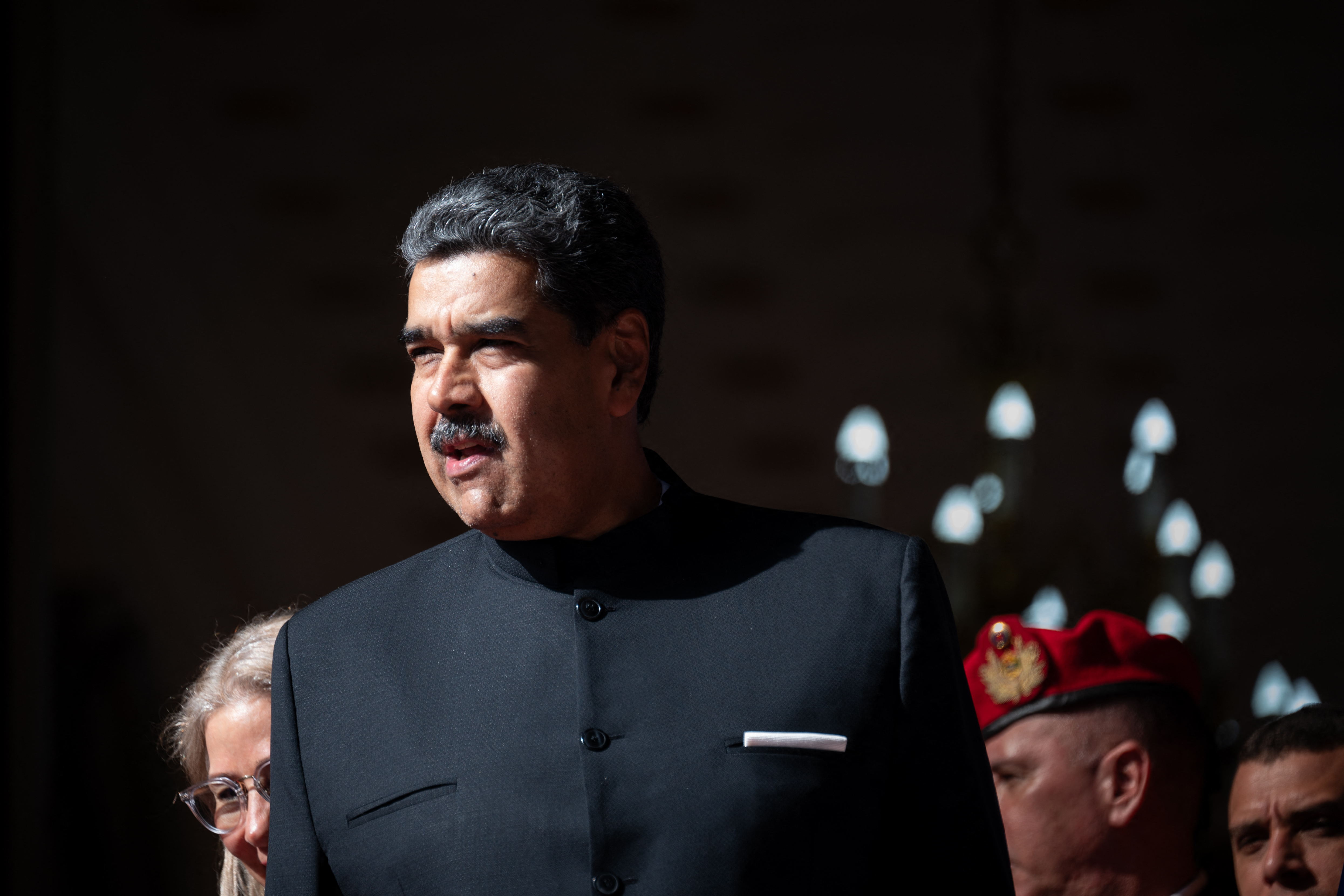
Venezuelan President Nicolás Maduro gestures after a meeting with Russian Foreign Minister Sergey Lavrov (out of frame) at the Miraflores Presidential Palace in Caracas, Venezuela, on Feb. 20.
Venezuelan President Nicolás Maduro gestures after a meeting with Russian Foreign Minister Sergey Lavrov (out of frame) at the Miraflores Presidential Palace in Caracas, Venezuela, on Feb. 20. Gabriela Oraa / AFP via Getty Images

Venezuela has some of the world’s largest oil and gas reserves. But years of mismanagement, impact of international sanctions and poor governance has led to the near collapse of the industry.

The U.S. Treasury Department website said Wednesday it issued a replacement license giving companies until May 31 to “wind down” previously authorized business and transactions with Venezuela’s oil and gas industry.

But administration officials told reporters that U.S. energy company Chevron will be allowed to continue a joint venture with Venezuela’s national oil company, PDVSA.

Nearly 8 million Venezuelans have fled their country to escape a devastating economic crisis, many to the U.S.

Copyright 2024 NPR. To see more, visit https://www.npr.org. utm.gif?utmac=UA 5828686 4&utmdt=The+U.S

Tags

Tara Neill is the Deputy international Editor and also covers Africa and Latin America on the International desk.

Before coming to NPR in 2022, Neill spent 25 years at the BBC, working her way up from a researcher at BBC Westminster, to executive producer on BBC Radio 4 stable of news programs The World At One, PM, The World This Weekend and Broadcasting House.

Then started her globe-trotting years, as one of a handful roving BBC senior news producers working across international news. She's covered elections in over a dozen countries, from democracies to dictatorships; natural disasters, from earthquakes, mudslides, cyclones and hurricanes; conflicts from Somalia, DR Congo, Cote D'Ivoire, South Sudan, Libya, Syria, Ukraine, Iraq and Gaza; major events like the football world cup, Beijing Olympics, and more international, UN and EU summits then you can shake a stick at.

Neill then spent six years in Africa, based in Johannesburg, as the BBC's senior producer, covering the joy of the 2010 World Cup, to the death of Nelson Mandela and the fall of Zimbabwe's Robert Mugabe for radio, TV and digital.

After Africa, she moved to the USA as the BBC's deputy bureau chief for the Americas. Based in the bureau in Washington DC she helped to lead a team of more than 100 journalists in the BBC's busiest international bureau. During her nearly 10 years in there she was involved in and oversaw the coverage of some of the biggest news stories recent years – from the Trump Presidency, the death of Fidel Castro, the death of George Floyd and the aftermath, the covid pandemic, and a fair number of disasters – both natural and manmade, along the way.

She doesn't have much spare time, but she rather likes spending what she does have with her family. She has a weakness for a good noir novel and always, a decent cup of tea.

Related Stories