Over the last few years and through this year’s contentious campaign season, which was rooted in America’s deep divisions, there has been a coarsening in the way people talk to each other. We wanted to explore how some are trying to bridge divides. We asked our reporters across the NPR Network to look for examples of people working through their differences. We’re sharing those stories in our series Seeking Common Ground.
CREIGHTON, Pa. — With their faces hidden behind hard black masks, two fighters stand a few feet apart and raise their swords.
They step forward and clank the broad, dull metal blades against each other repeatedly. One fighter strikes the other in the chest. The fight is over, and a small crowd applauds.
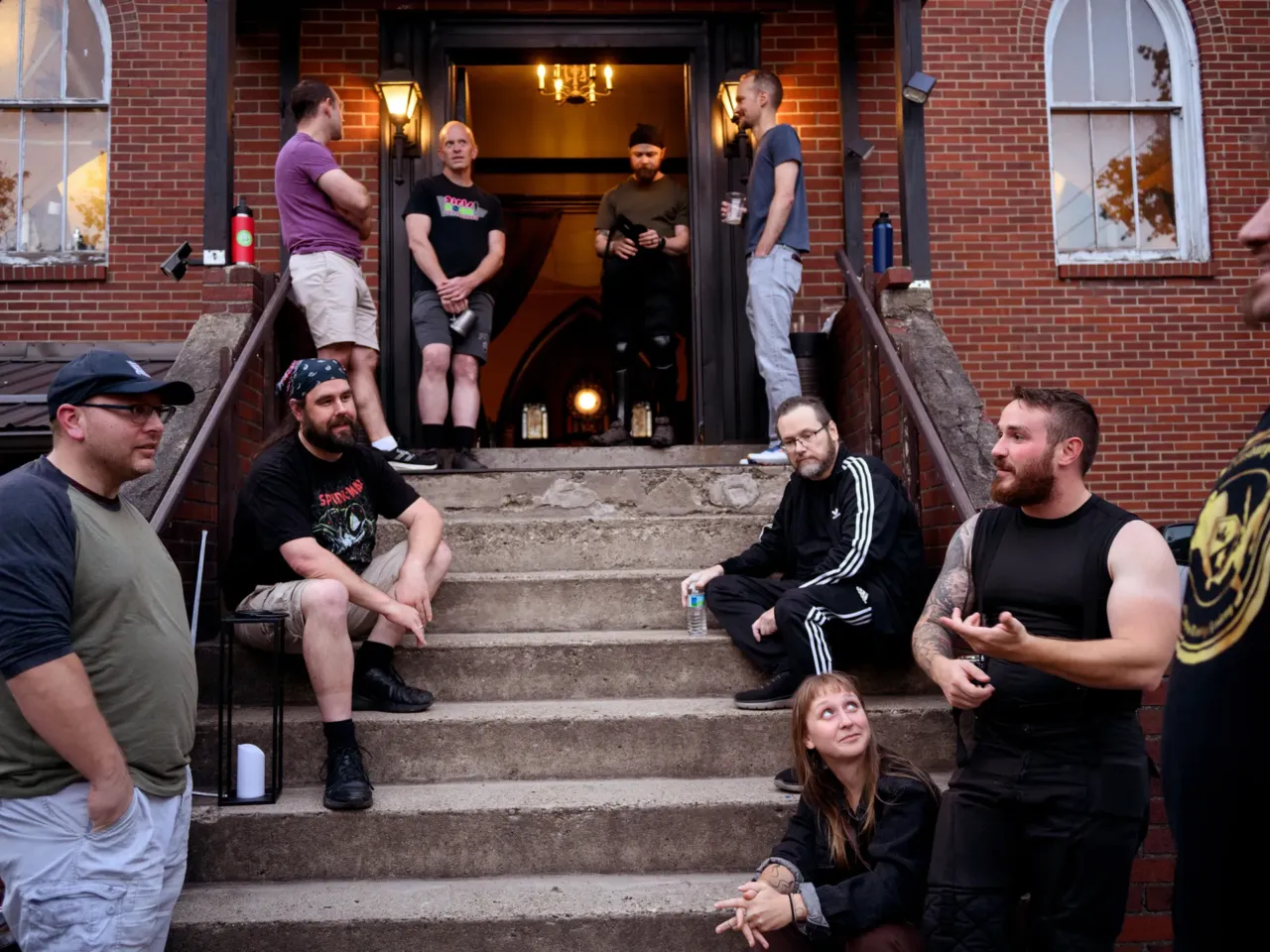
Inside this former Catholic church northeast of Pittsburgh, under a 25-foot ceiling flanked by Gothic, pointed-arch windows, members of the Pittsburgh Sword Fighters club and school gather.
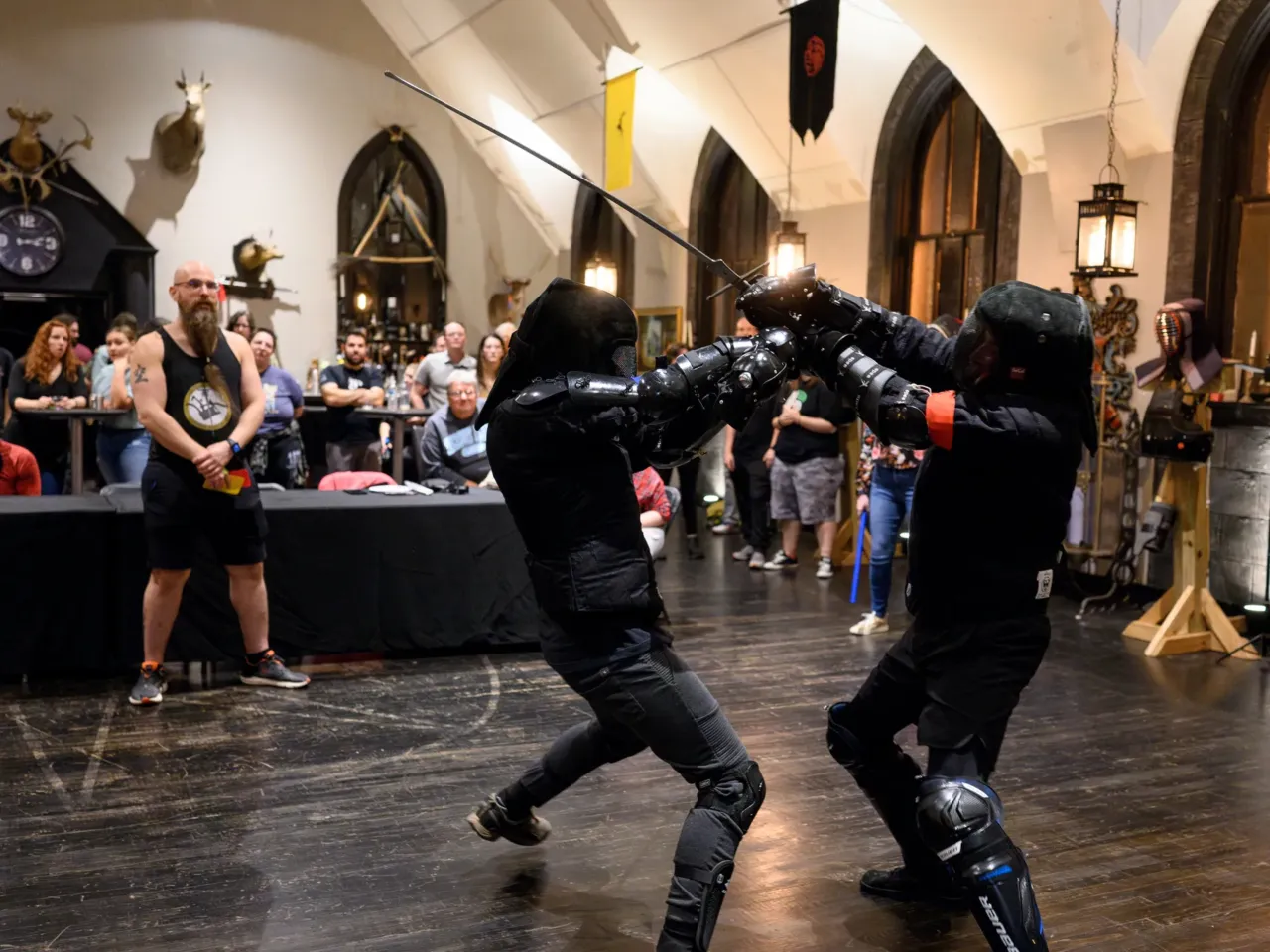
It’s a tournament — as well as a party — billed as Friday Night Fights.
There are plenty of rules in a sword fight. But there’s one rule that applies after the fighters have put down their weapons: no talk of politics.
The evolution of the rule started around 2016, when club owner Josh Parise says he was getting fed up with the rancor of political discourse in the U.S. — personal attacks were on the rise, even within families, as was cancel culture.
“I couldn’t tolerate the lack of decency between human beings,” says Parise, whose club focuses on historical European martial arts.
“None of it made sense anymore,” he says.
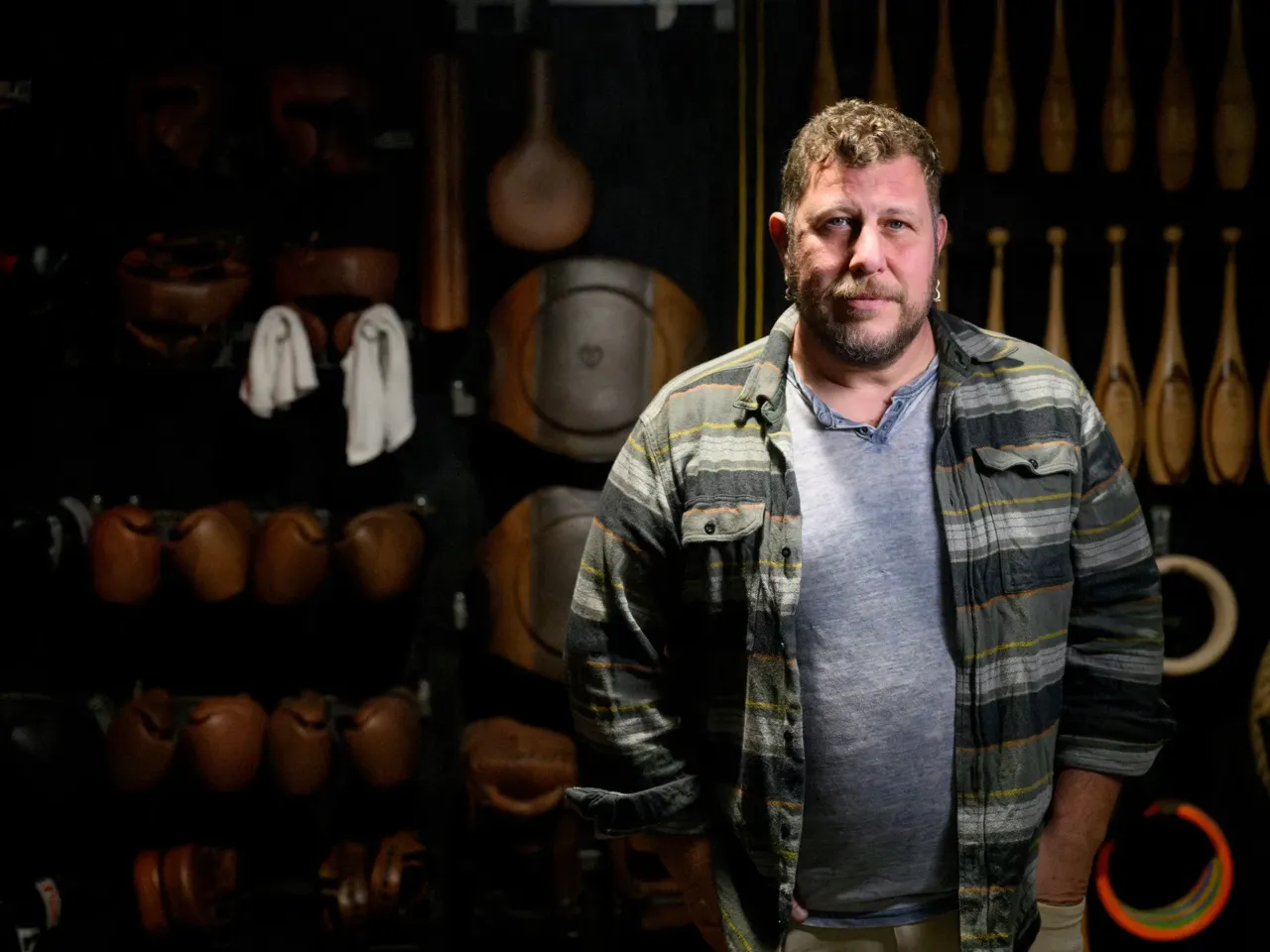
And then there were a few would-be sword fighters who came to the club and didn’t treat others well. Parise had to tell them to get on their horses and leave.
“It’s infuriating to me, so with this place, we just don’t allow that to happen,” Parise says.
Leaving their politics at the door
As club volunteer Kat Licause watches the matches, she says the directive to avoid politics has led to closer relationships in the club.
“I don’t think we avoid it in the sense that we’re running scared of big questions and topics,” says Licause, who works as a tech writer. “I think we just have this mutual understanding here that if any of us was ever in trouble, we would pick each other up, like immediately.”
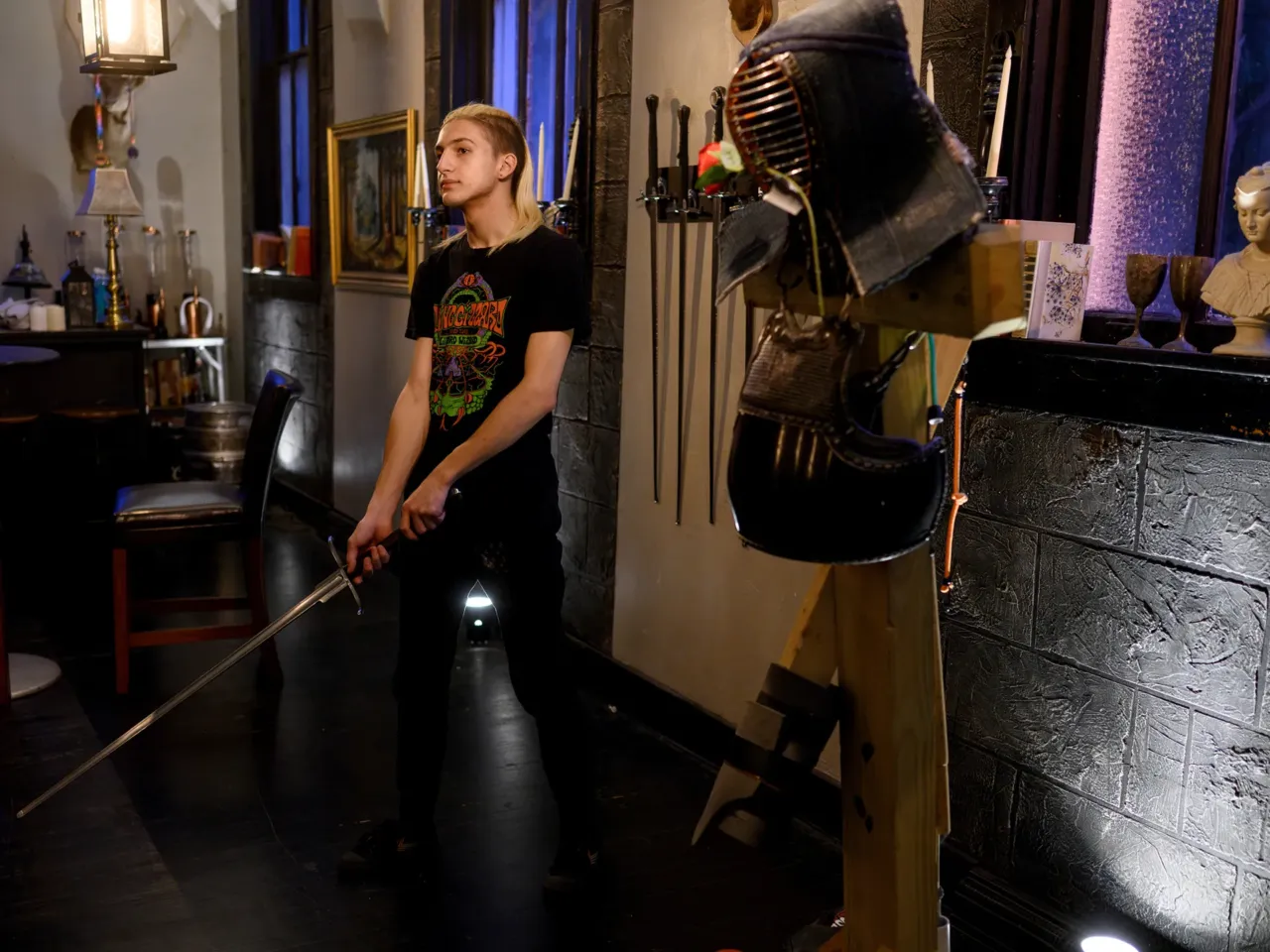
The club space is outfitted with medieval and Gothic touches, like coats of arms, a three-eyed raven sculpture and faux stonework that Parise made himself.
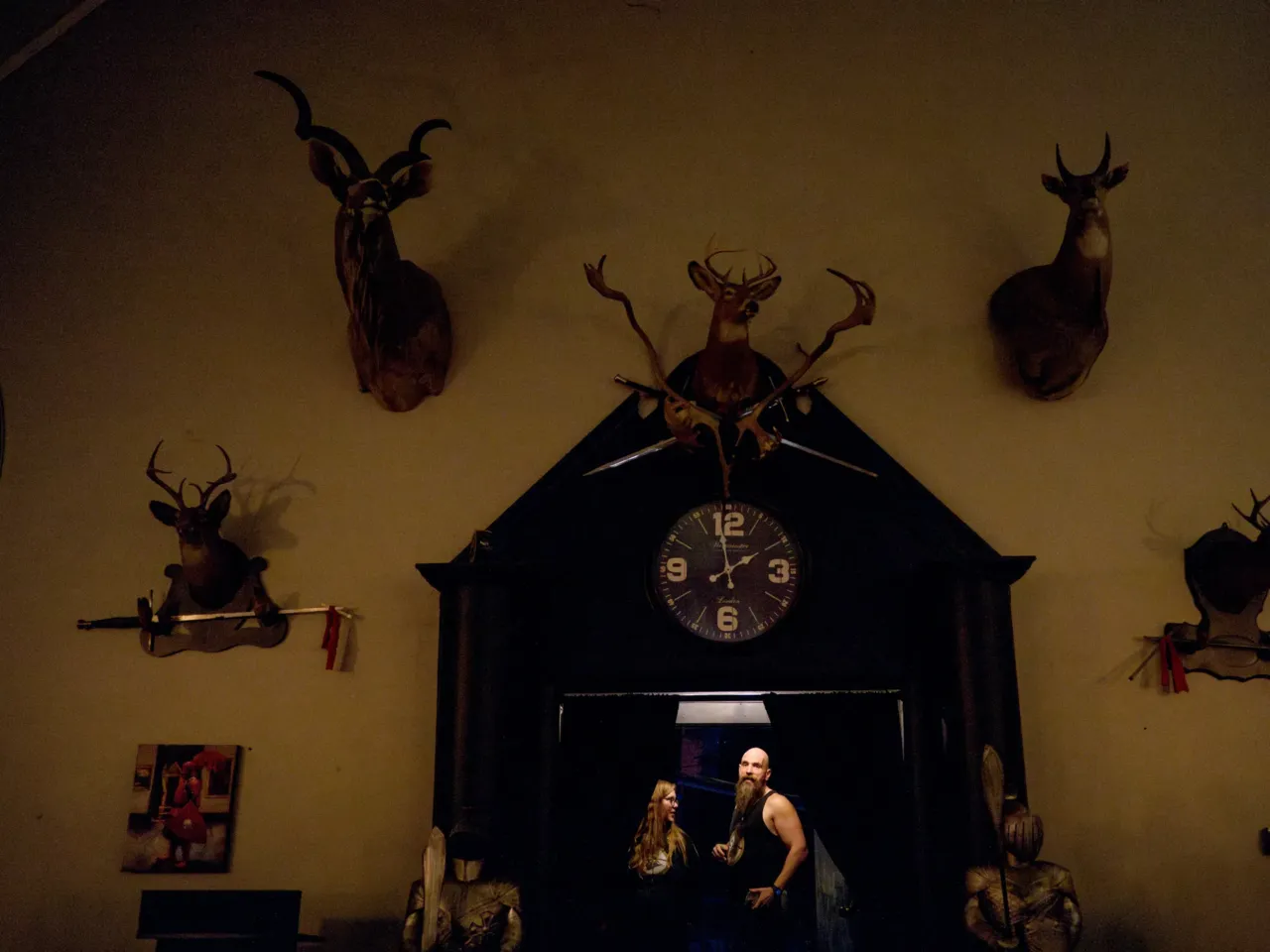
Against the far wall, a custom Dumbledore throne sits on a fake altar. Off to the sides, there’s a table for potluck dishes and an open bar. The crowd and the vibe are noticeably chill, considering the main activity.
“You walk up, you acknowledge one another, and then you hit each other with big metal sticks,” Parise says with a wry smile.
But divisive political rhetoric, which can be sharper than the swords here, must be left at the club’s big wooden door. The politics ban doesn’t rise to the level of, say, a 15th-century heresy law, but it’s there.
Parise says his students and club members run the gamut politically, from religious conservatives to progressives. He loves to see them find common ground.
“I just don’t want people to feel uncomfortable, but I also don’t want them to bring their baggage with them,” he says. “Leave it outside and just do the thing.”
Teaching and learning from fellow fighters
As the tournament gets underway, a judge briefs the fighters and urges them to play by the rules and stay under control, lest he “red-card” them.
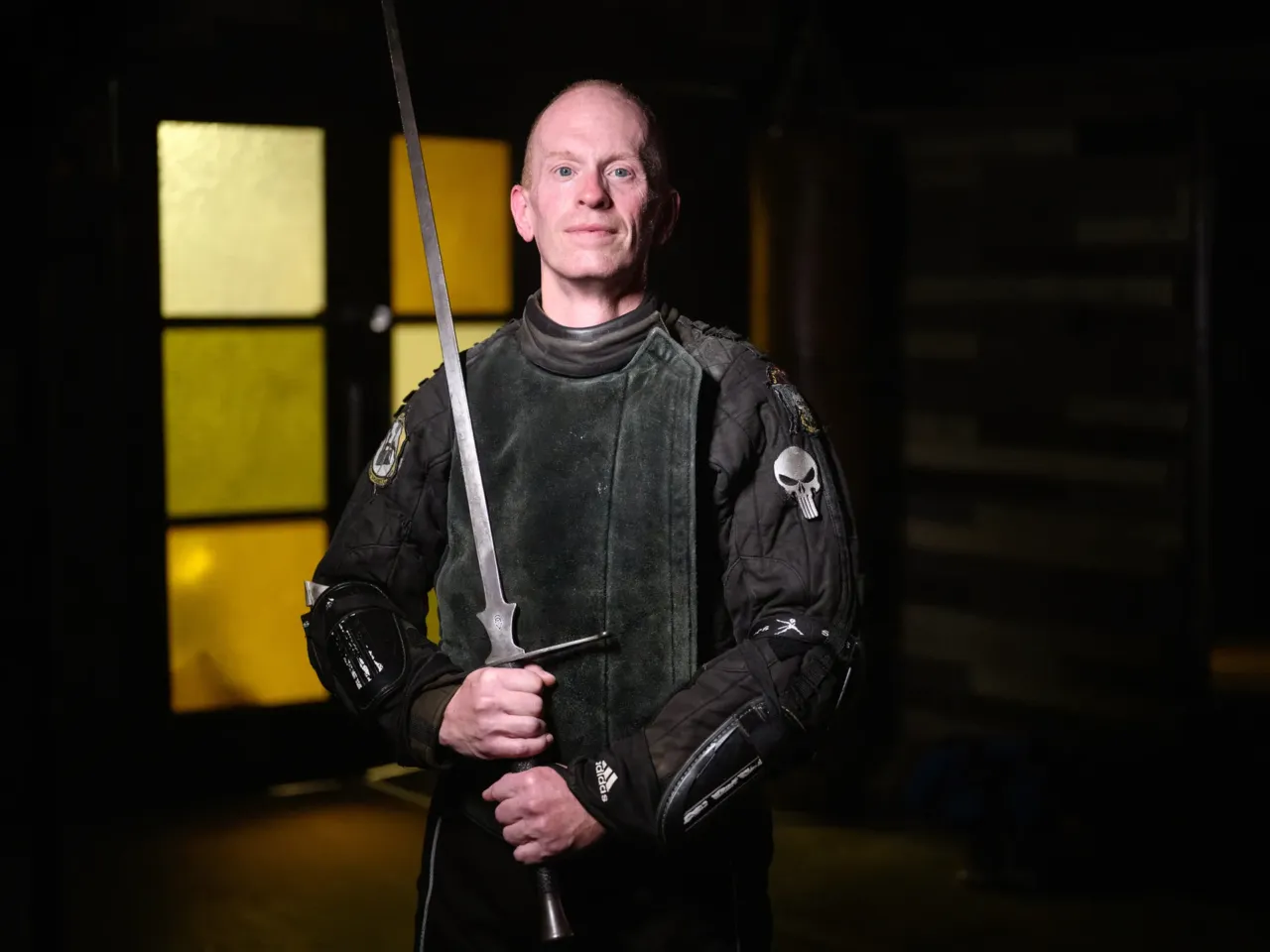
“These are teachable moments,” the judge says. “We fight at Friday Night Fights to learn and help each other.”
More fighters line up. Among them is high school English teacher and long-sword instructor Todd Rooney.
He’s holding his headgear, waiting for his name to be called to fight. Rooney has been a member of the sword fighters’ club for almost 10 years and appreciates the politics-free zone.
“Because that rule exists here, I get to work with, spar with, teach, learn from people from all different walks of life, all different political affiliations, religious groups,” Rooney says.
And the controlled conflict of a sword fight, he says, brings about a kind of clarity.
“We have to encounter each other as fully human — we have to respect each other,” he says. “And it’s especially important here, when we’re coming at each other with weapons.”
Copyright 2024 NPR