Copyright © 2026 VPM, all rights reserved.
PBS is a 501(c)(3) not-for-profit organization.
VPM News Morning Edition
NEXT UP: 9:00 AM

Thanks to our sponsors – Become a Sponsor

When the U.S. invaded Panama

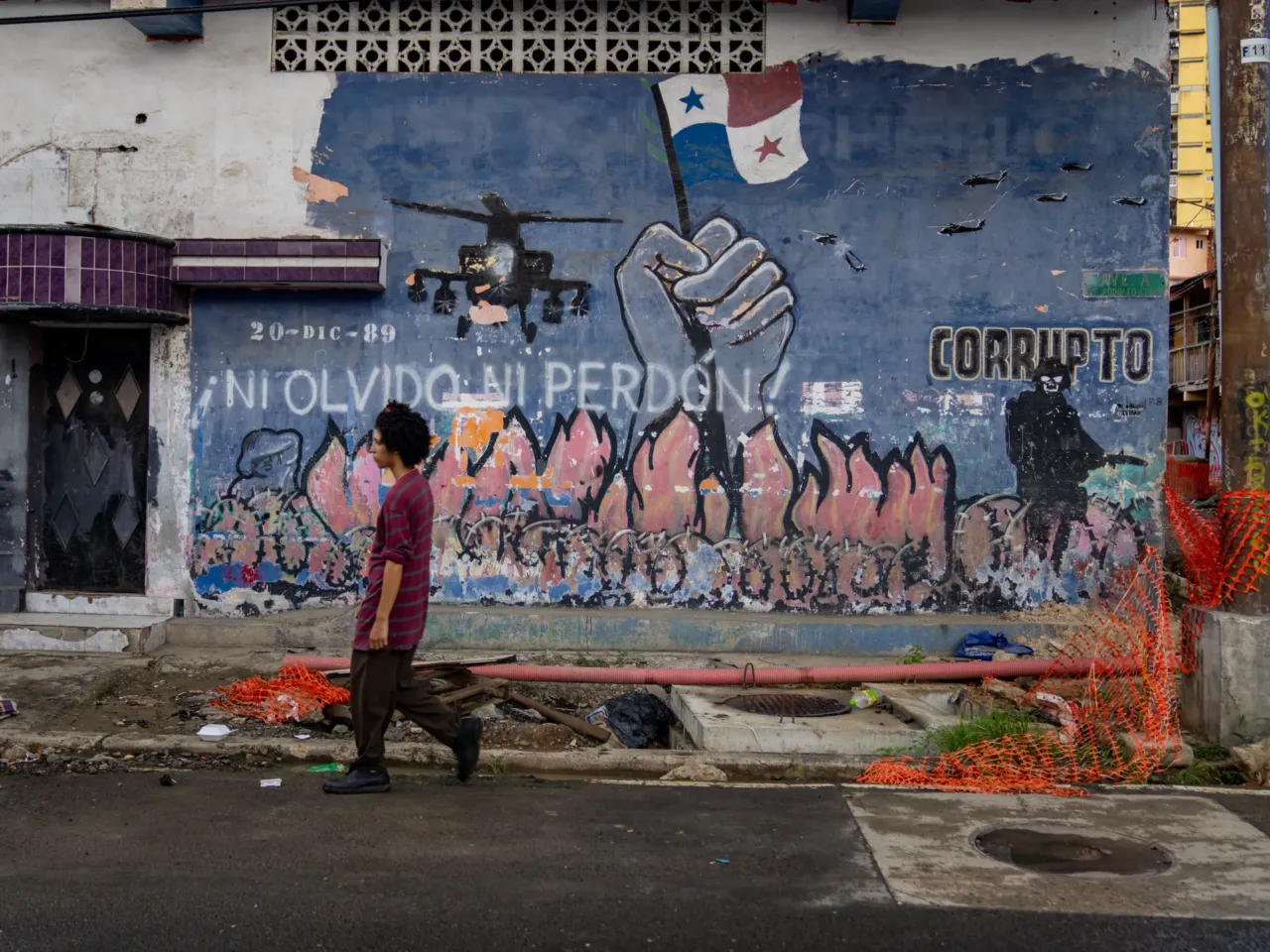
Isa Ashaw, 22, walks in front of a mural illustrating the events of the December 1989 U.S. invasion of Panama City, known as Operation Just Cause.
Tomas Ayuso for NPR
Isa Ashaw, 22, walks in front of a mural illustrating the events of the December 1989 U.S. invasion of Panama City, known as Operation Just Cause.

Updated February 24, 2025 at 15:26 PM ET

EL CHORRILLO, Panama – At the top of a hill in this working-class neighborhood in Panama City, Efraín Guerrero tells an American tour group how his parents responded when the U.S. government invaded these streets 35 years ago.

“They hid us under the bed,” Guerrero, 39, says through a translator.

In December 1989, thousands of U.S. troops came to Guerrero’s neighborhood and opened fire. Troops were looking for Panamanian dictator Manuel Noriega, who was wanted by the U.S. government for racketeering and drug trafficking charges.
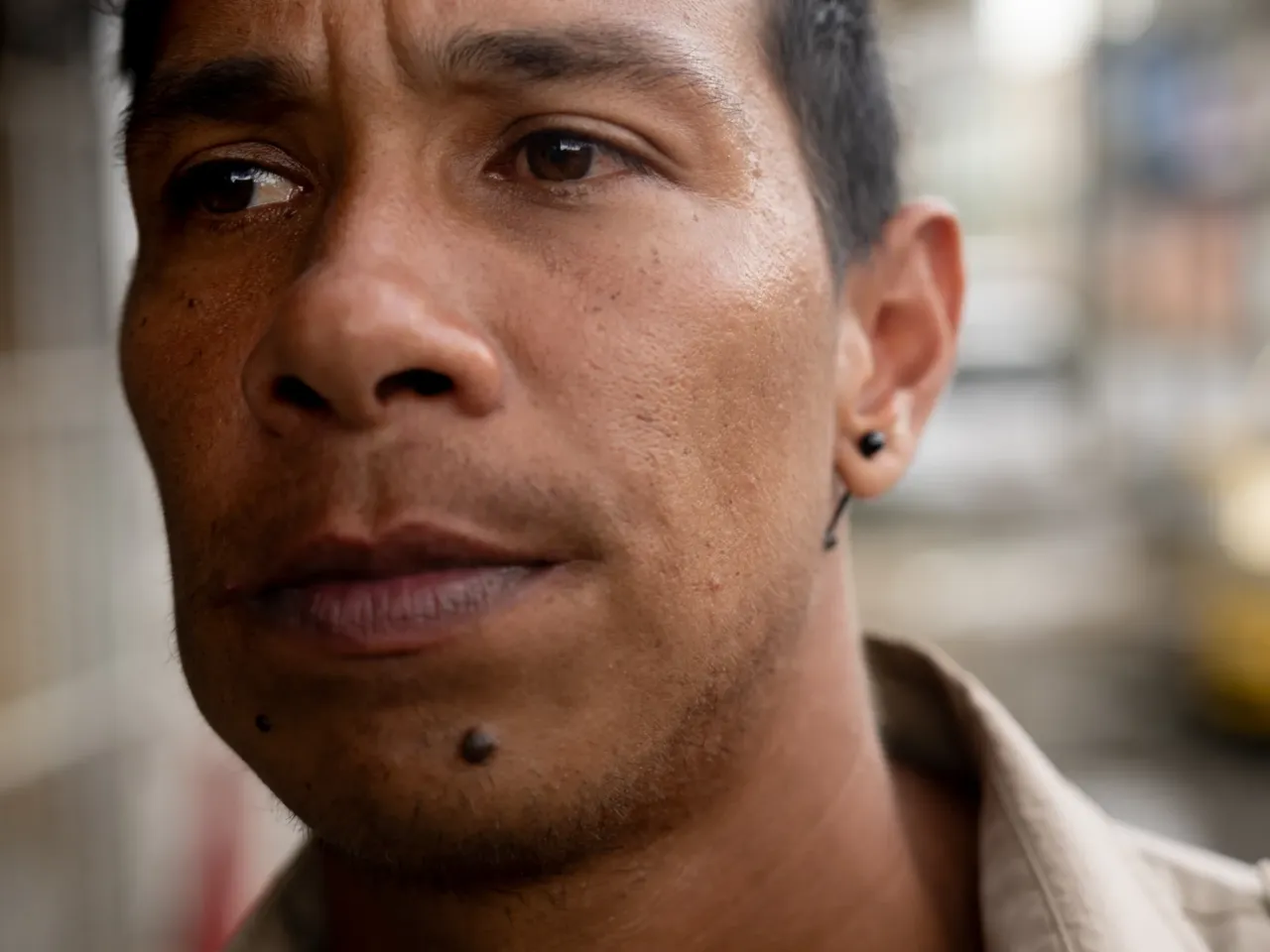
Efraín Guerrero is the founder of Movimiento Cultural Identidad. Guerrero gives walking tours of El Chorrillo for locals and tourists to learn more about one of Panama's most historic neighborhoods.
Efraín Guerrero is the founder of Movimiento Cultural Identidad. Guerrero gives walking tours of El Chorrillo for locals and tourists to learn more about one of Panama’s most historic neighborhoods. Tomas Ayuso for NPR /

Now, 35 years later, the U.S. government is once again focused on Guerrero’s home. President Trump has threatened to “take back” the Panama Canal. When a reporter recently asked whether he’d consider using the military to take back the canal, Trump said, “I’m not going to commit to that now.”
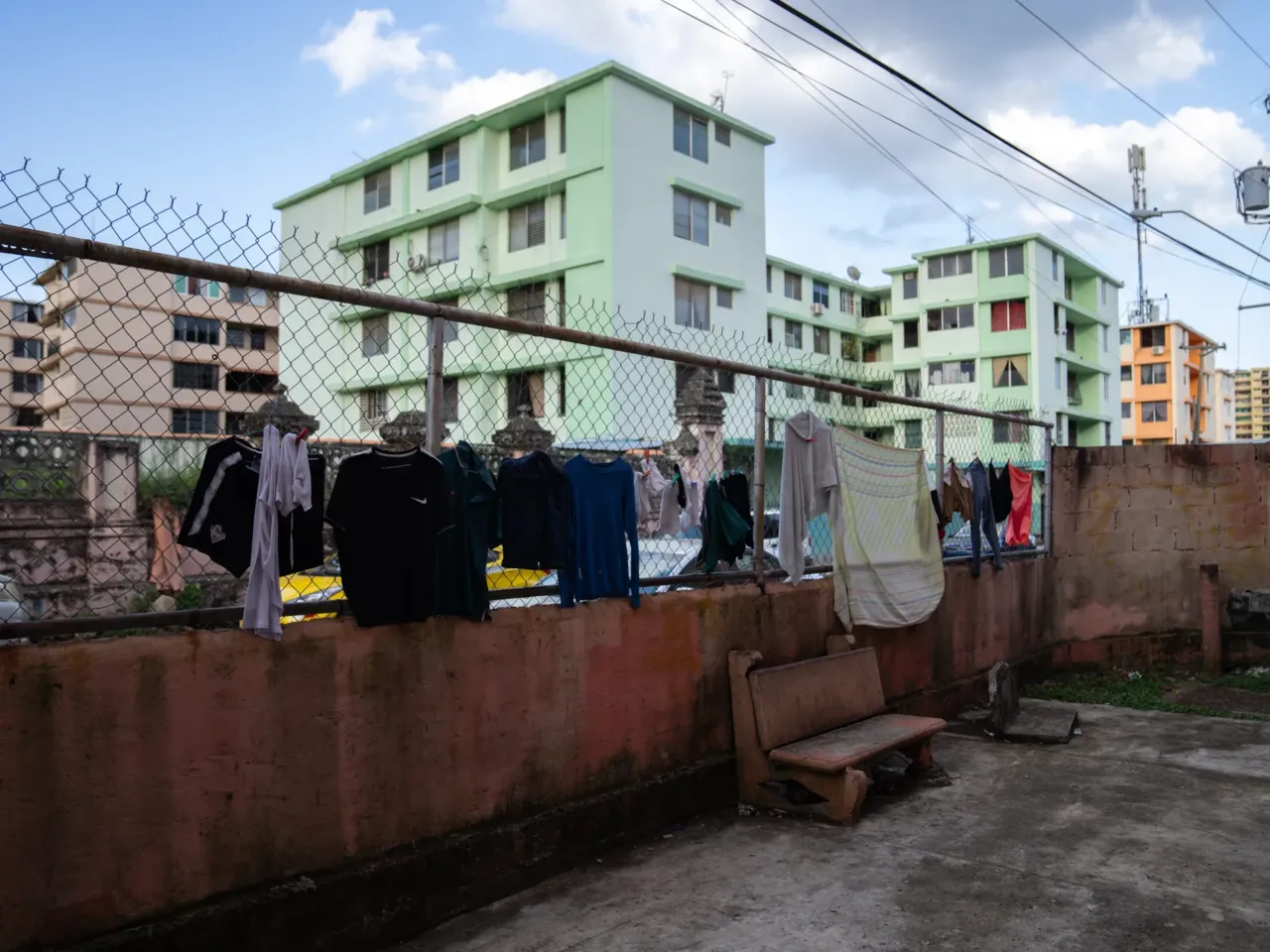
Apartment buildings were constructed in the neighborhood after the U.S. invasion.
Apartment buildings were constructed in the neighborhood after the U.S. invasion. Tomas Ayuso for NPR /
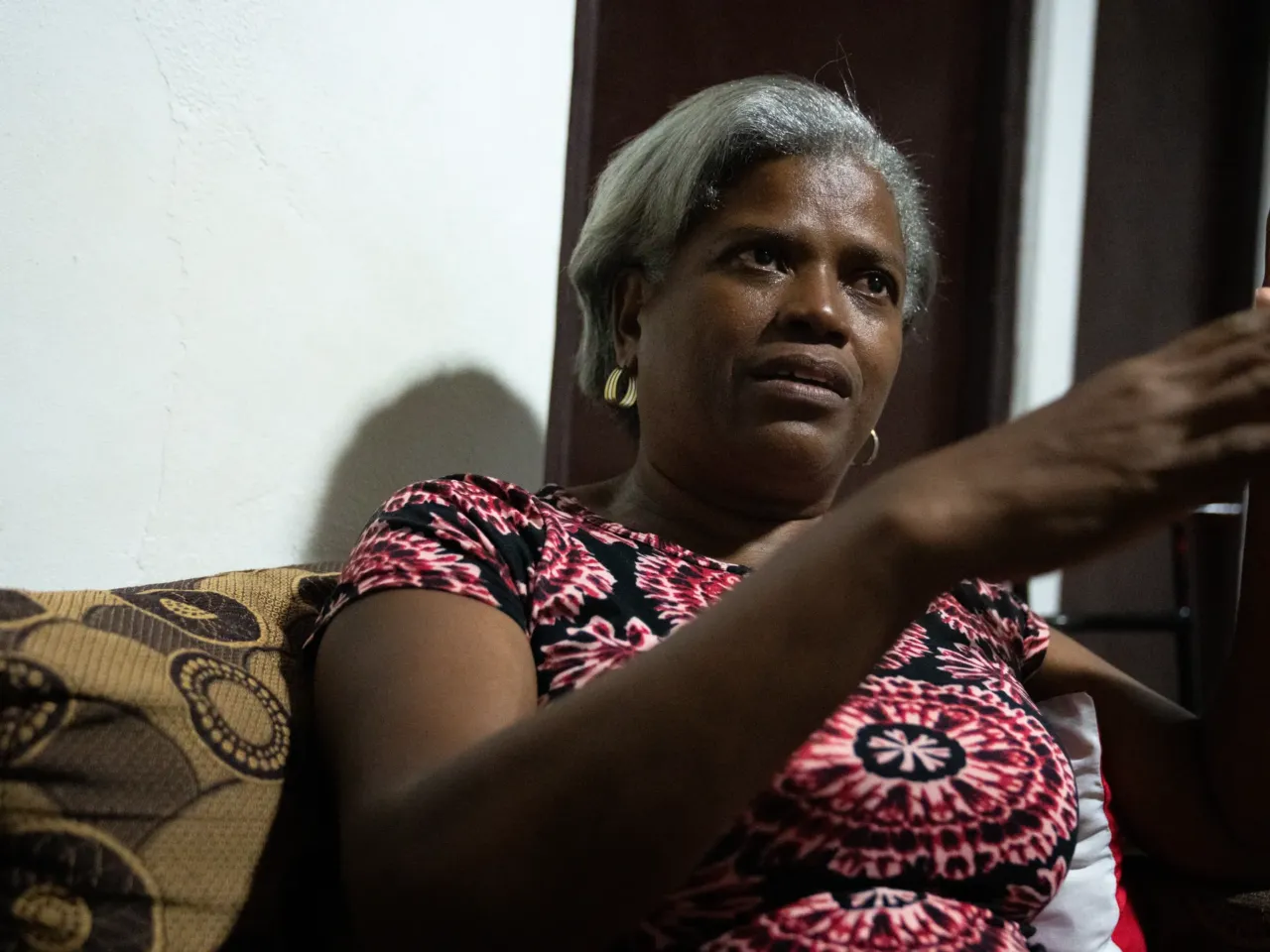
Julissa Jaramillo, a survivor of the U.S. invasion of Panama, remembers being told "the wolf is coming" when she was younger.
Julissa Jaramillo, a survivor of the U.S. invasion of Panama, remembers being told “the wolf is coming” when she was younger. Tomas Ayuso for NPR /

Experts say the U.S. is unlikely to seek a violent conflict with Panama, but to people who survived one American invasion already, those assurances aren’t much comfort.

Julissa Jaramillo remembers what the grown-ups told her when she was 16.

“They kept telling us the wolf is coming, the wolf is coming,” Jaramillo says through a translator.

For people in this neighborhood, the U.S. invasion, known as Operation Just Cause, was a dividing line in their lives. There was a before and an after.

“They say it was a just cause. It was not a just cause,” she says. “They say it was an intervention. But it was an invasion.”
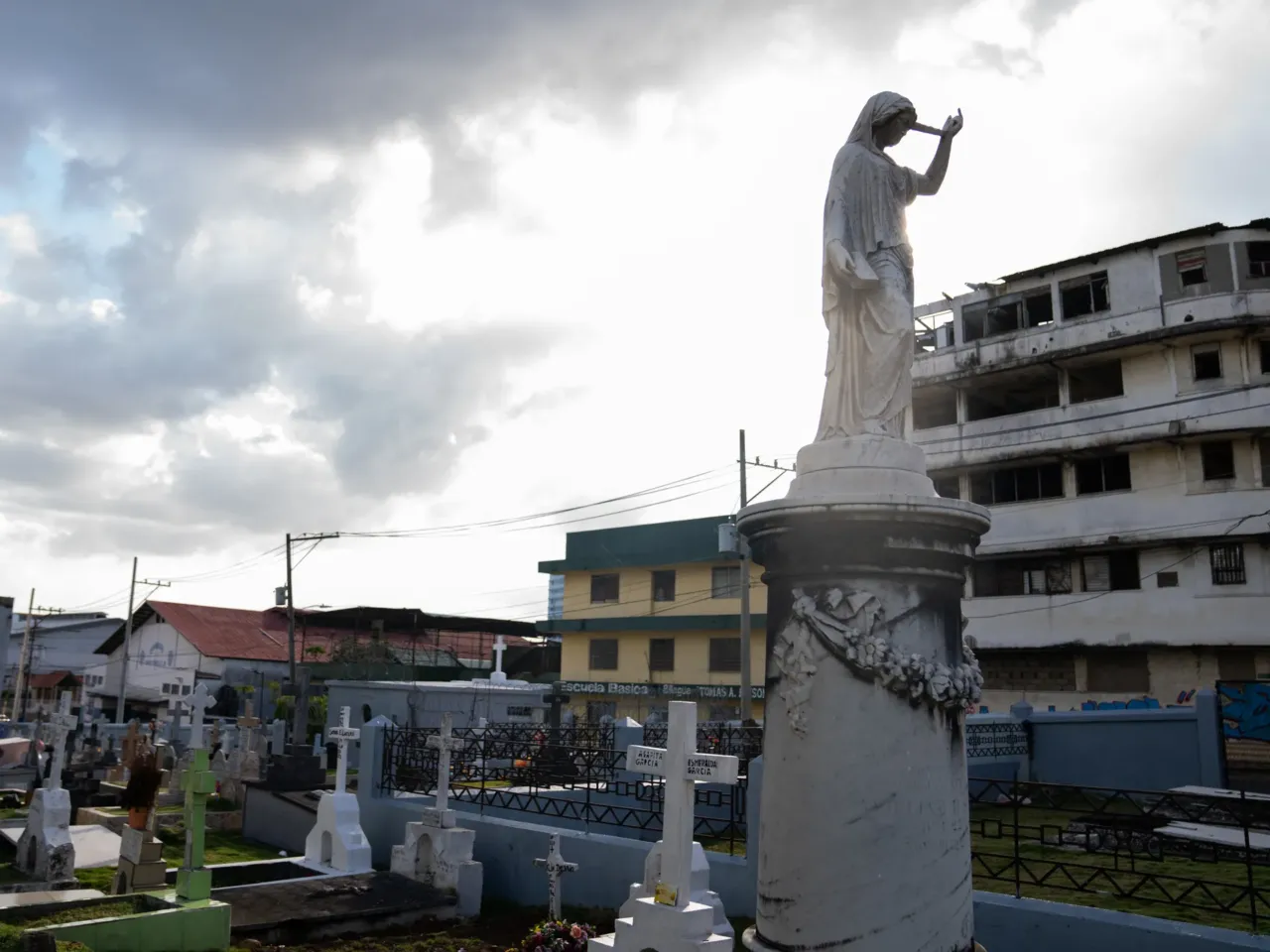
A cemetery in the heart of El Chorillo.
A cemetery in the heart of El Chorillo. Tomas Ayuso for NPR /
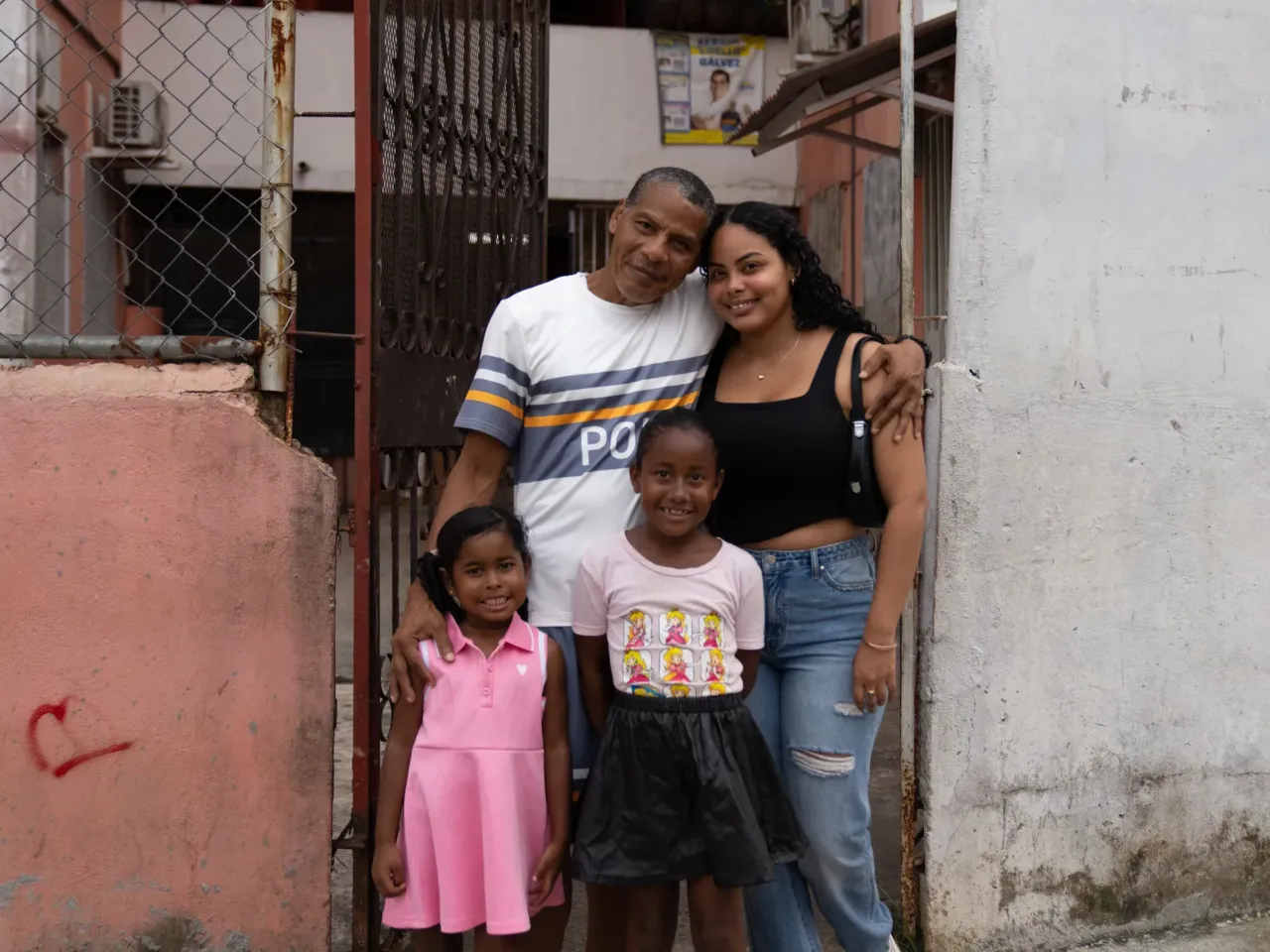
Samuel Ricaurte Castañeda (top left) with his daughter (top right) and granddaughters in front of his home in El Chorrillo.
Samuel Ricaurte Castañeda (top left) with his daughter (top right) and granddaughters in front of his home in El Chorrillo. Tomas Ayuso for NPR /
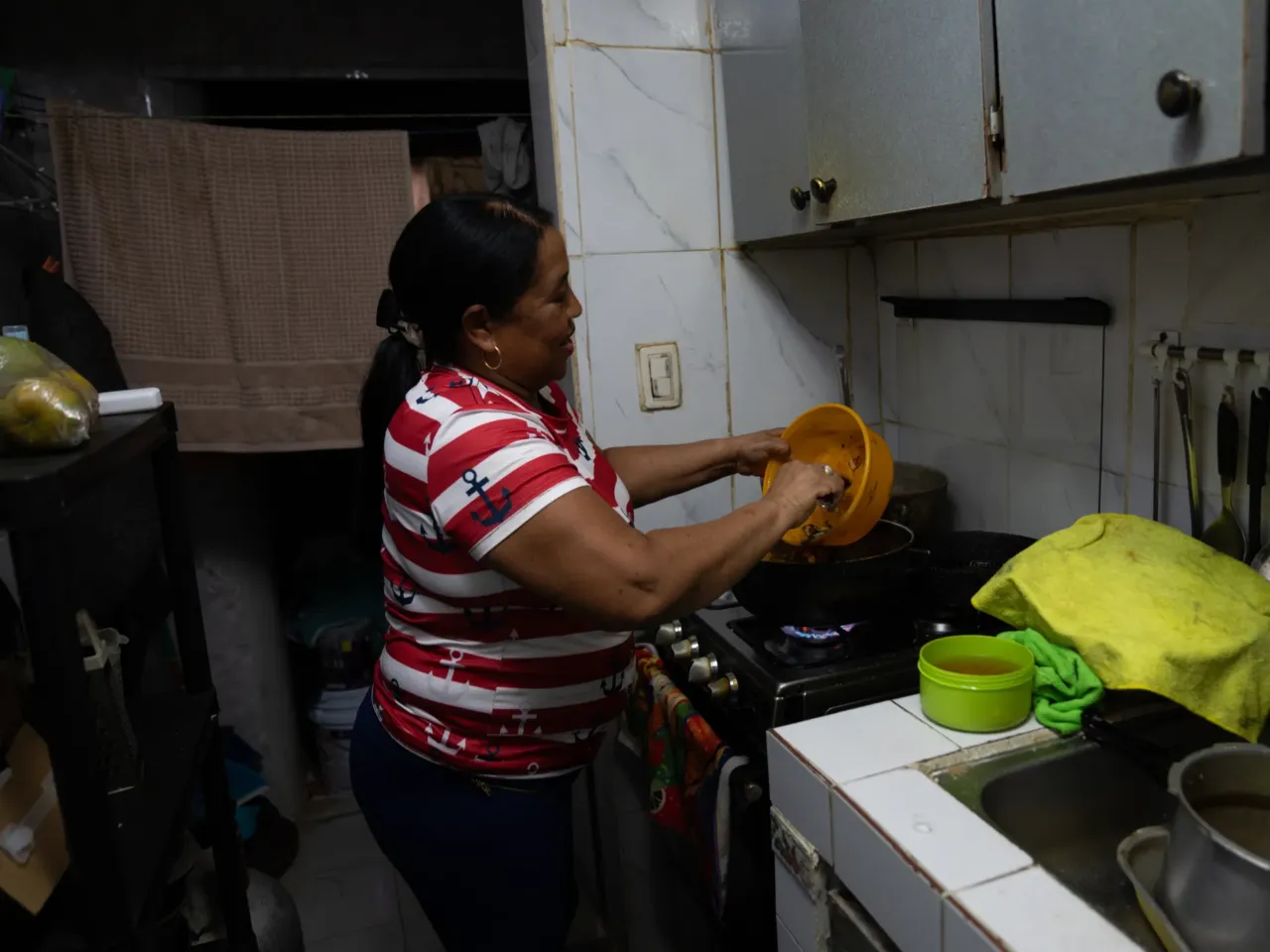
Esther Castañeda, Samuel Ricaurte Castañeda's wife, prepares seafood rice and beans for his birthday. The couple live in an apartment building constructed after the 1989 invasion.
Esther Castañeda, Samuel Ricaurte Castañeda’s wife, prepares seafood rice and beans for his birthday. The couple live in an apartment building constructed after the 1989 invasion. Tomas Ayuso for NPR /

Another resident, 63-year-old Samuel Ricaurte Castañeda, remembers trying to reach his mother on the other side of town when the first wave of gunshots rang out.

“I don’t want this to happen again,” he says through a translator. “With all my heart, I don’t want this to happen again … I would give my life for Panama.”
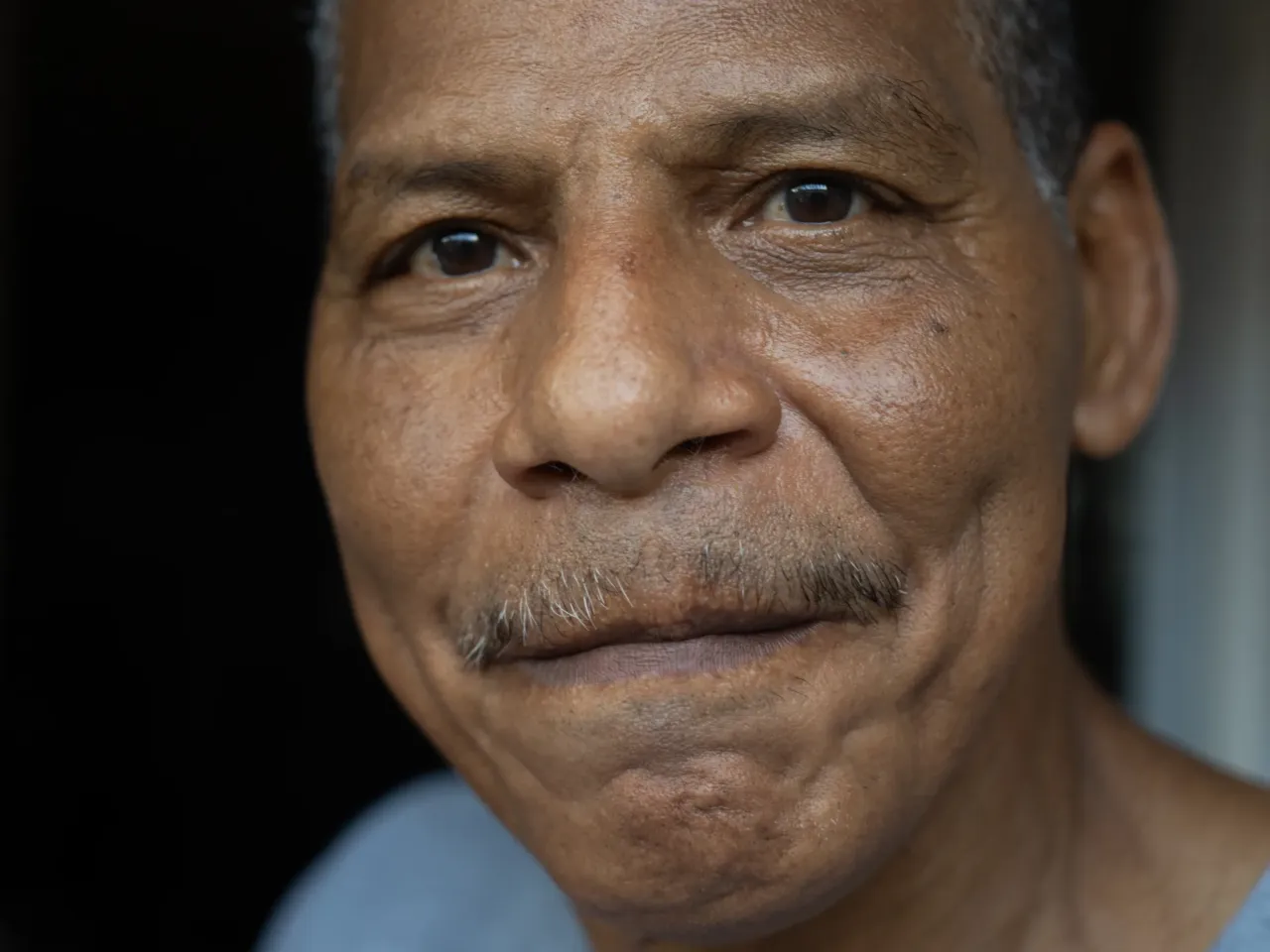
Samuel Ricaurte Castañeda in front of his former home in El Chorrillo. He was 27 when the U.S. invaded his neighborhood.
Samuel Ricaurte Castañeda in front of his former home in El Chorrillo. He was 27 when the U.S. invaded his neighborhood. Tomas Ayuso for NPR /

Preserving a unique piece of Panamanian history

Guerrero founded a cultural heritage group, Movimiento Cultural Identidad, that works to preserve the history of El Chorrillo. He also conducts walking tours that he calls an “immersive museum.”

During a recent tour, Guerrero showed bullet holes where fighting was the fiercest, the repurposed ruins of Noriega’s military infrastructure, and cenotaphs to commemorate civilians killed in the crossfire. He also stopped at street corners and shared photographs on his tablet from the same intersection 35 years ago — images of American soldiers bearing down on civilians contrasted with today’s backdrop of luxury apartments.
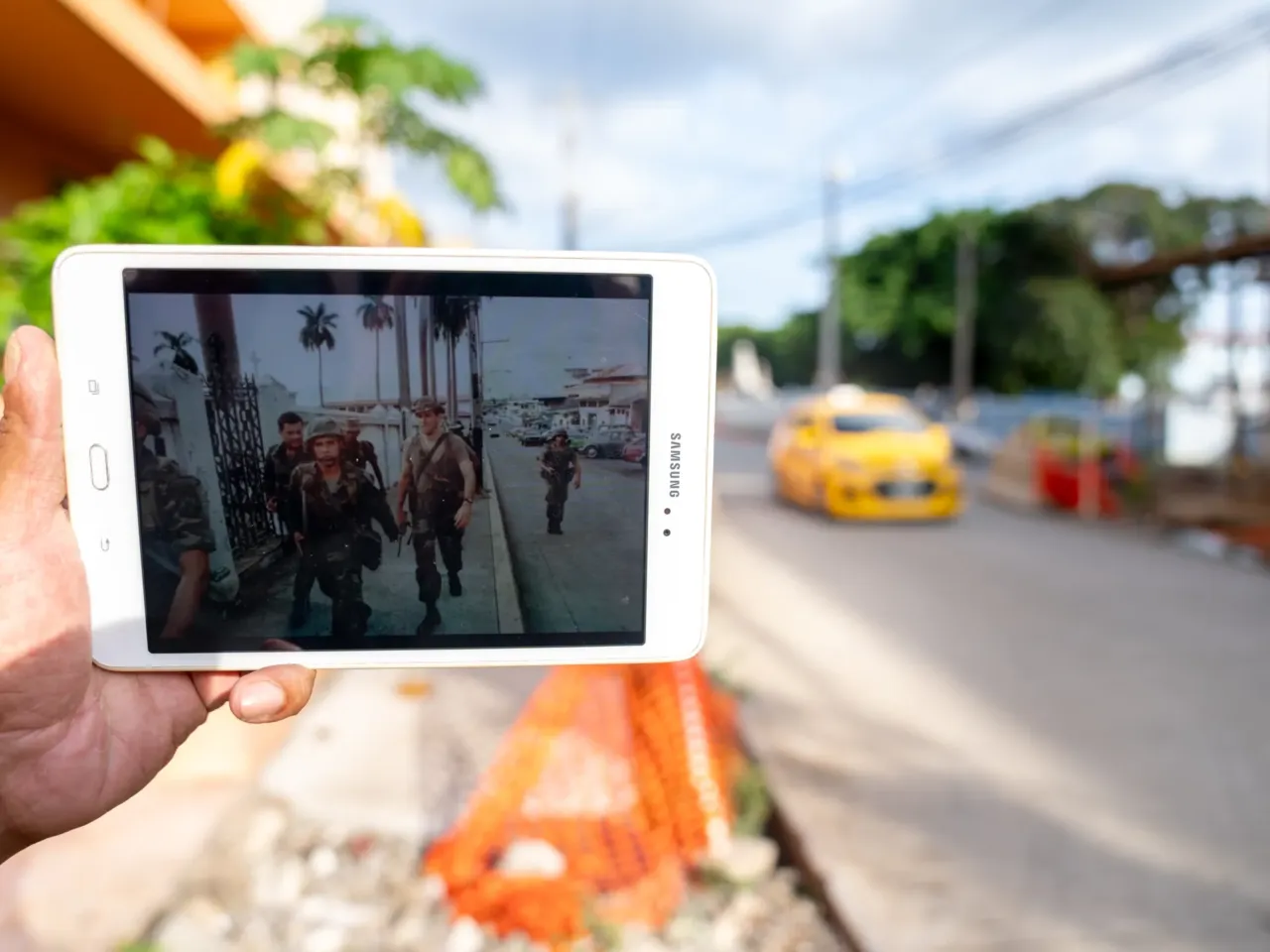
Efraín Guerrero holds a tablet showing a photograph of American soldiers walking up the same street in El Chorrillo neighborhood. American troops were searching for Manuel Noriega.
Efraín Guerrero holds a tablet showing a photograph of American soldiers walking up the same street in El Chorrillo neighborhood. American troops were searching for Manuel Noriega. Tomas Ayuso for NPR /
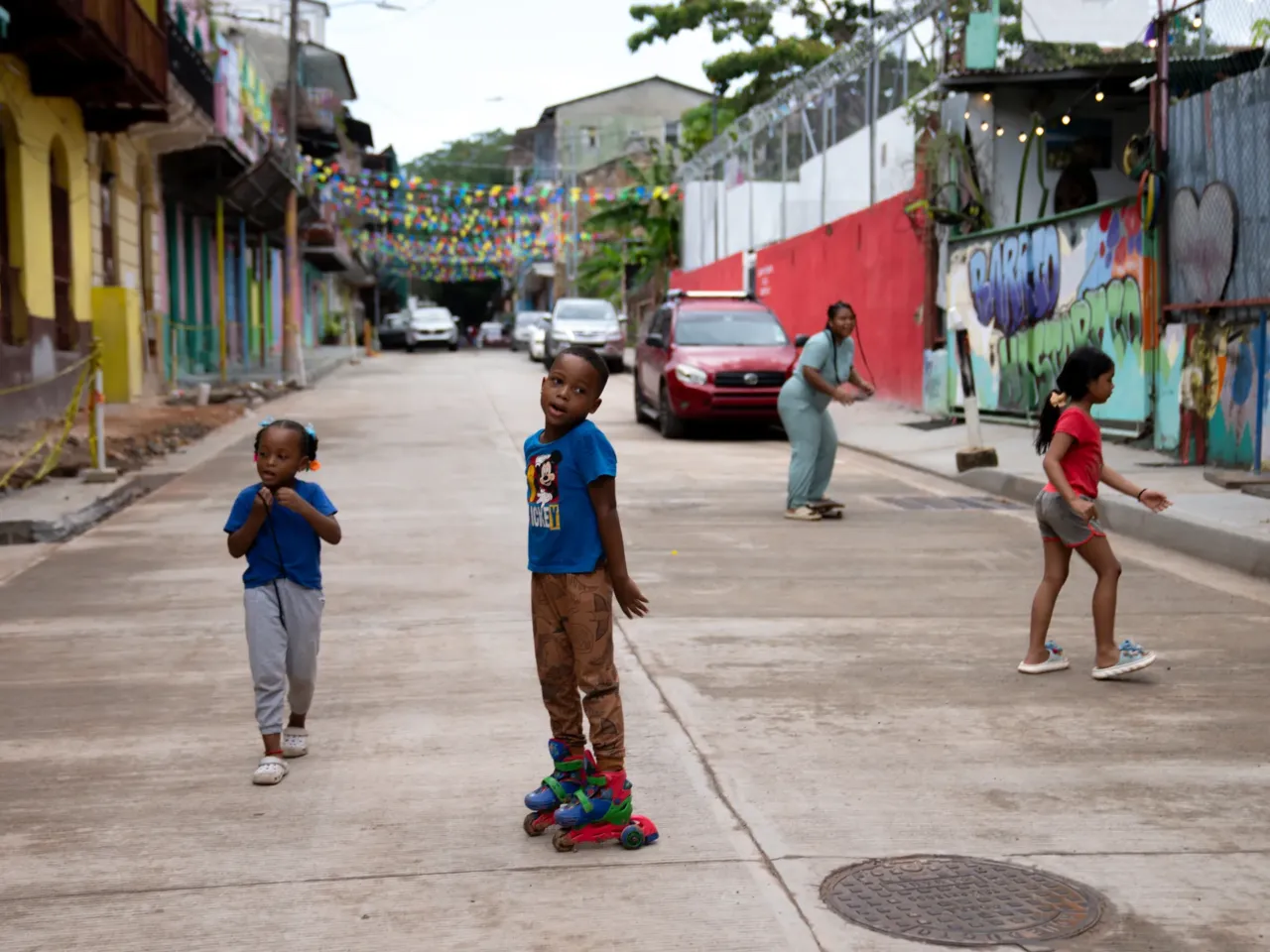
Children play in the streets near El Chorrillo. This neighborhood was mostly reduced to rubble during the 1989 U.S. invasion.
Children play in the streets near El Chorrillo. This neighborhood was mostly reduced to rubble during the 1989 U.S. invasion. Tomas Ayuso for NPR /

The reality is that this neighborhood is changing. Once home to immigrants working on the construction of the Panama Canal, it was heavily damaged during the invasion and later became a place known for criminal violence. Now, luxury high-rises are beginning to tower over the streets.
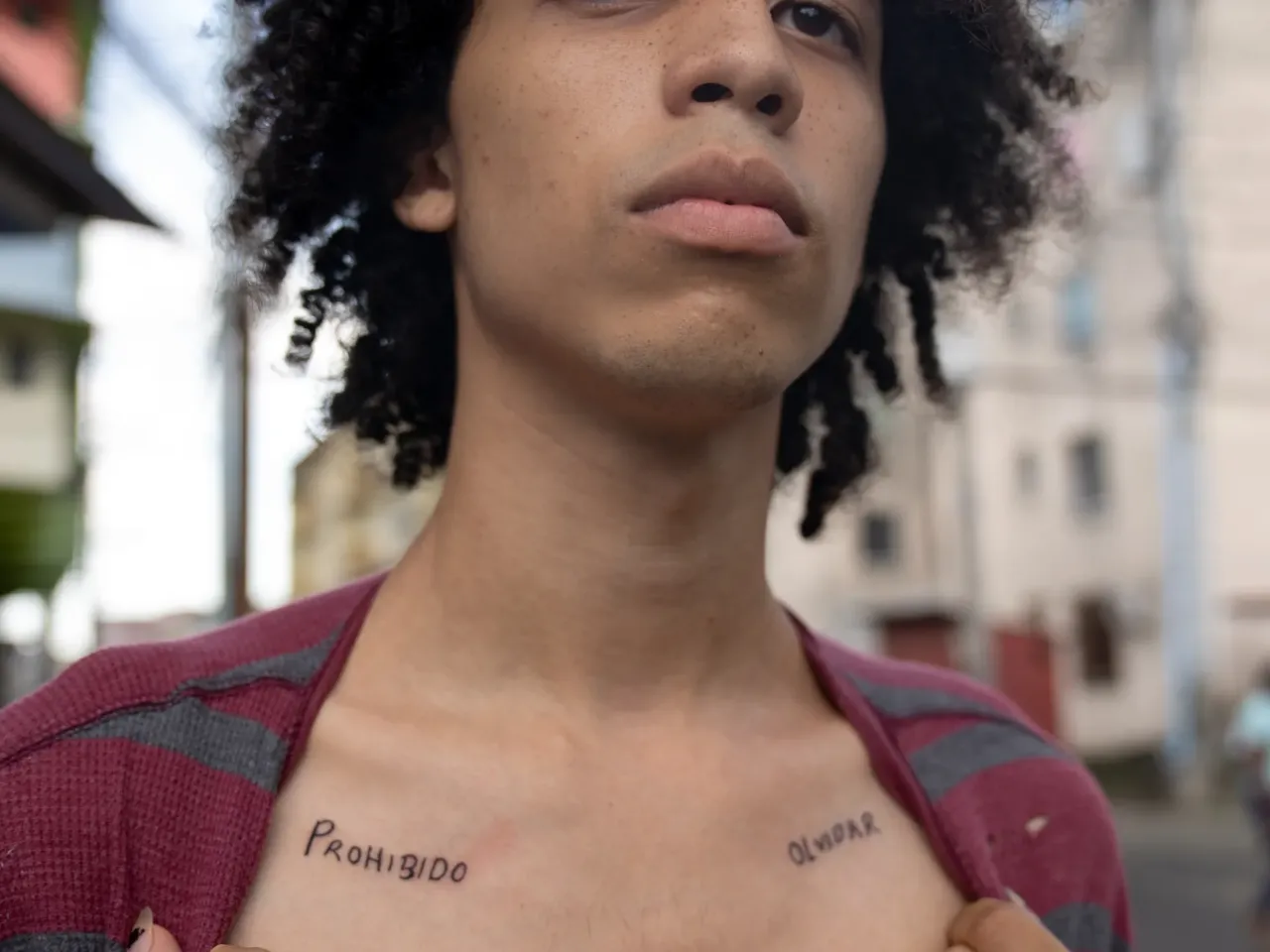
Isa Ashaw, 22, is a cultural ambassador for Movimiento Cultural Identidad. His tattoo reads "Never Forget," a common refrain to remember the events of the 1989 U.S. invasion of Panama.
Isa Ashaw, 22, is a cultural ambassador for Movimiento Cultural Identidad. His tattoo reads “Never Forget,” a common refrain to remember the events of the 1989 U.S. invasion of Panama. Tomas Ayuso for NPR /

More so than ever, Guerrero says, the community is willing to defend a neighborhood once destroyed — to preserve not only a unique piece of Panamanian cultural heritage but also their homes, on their own resilient terms.

“I grew up here. I don’t want to see a world where my daughter doesn’t know her roots,” he says. “Or be in a world where the old timers lose theirs.”

Copyright 2025 NPR
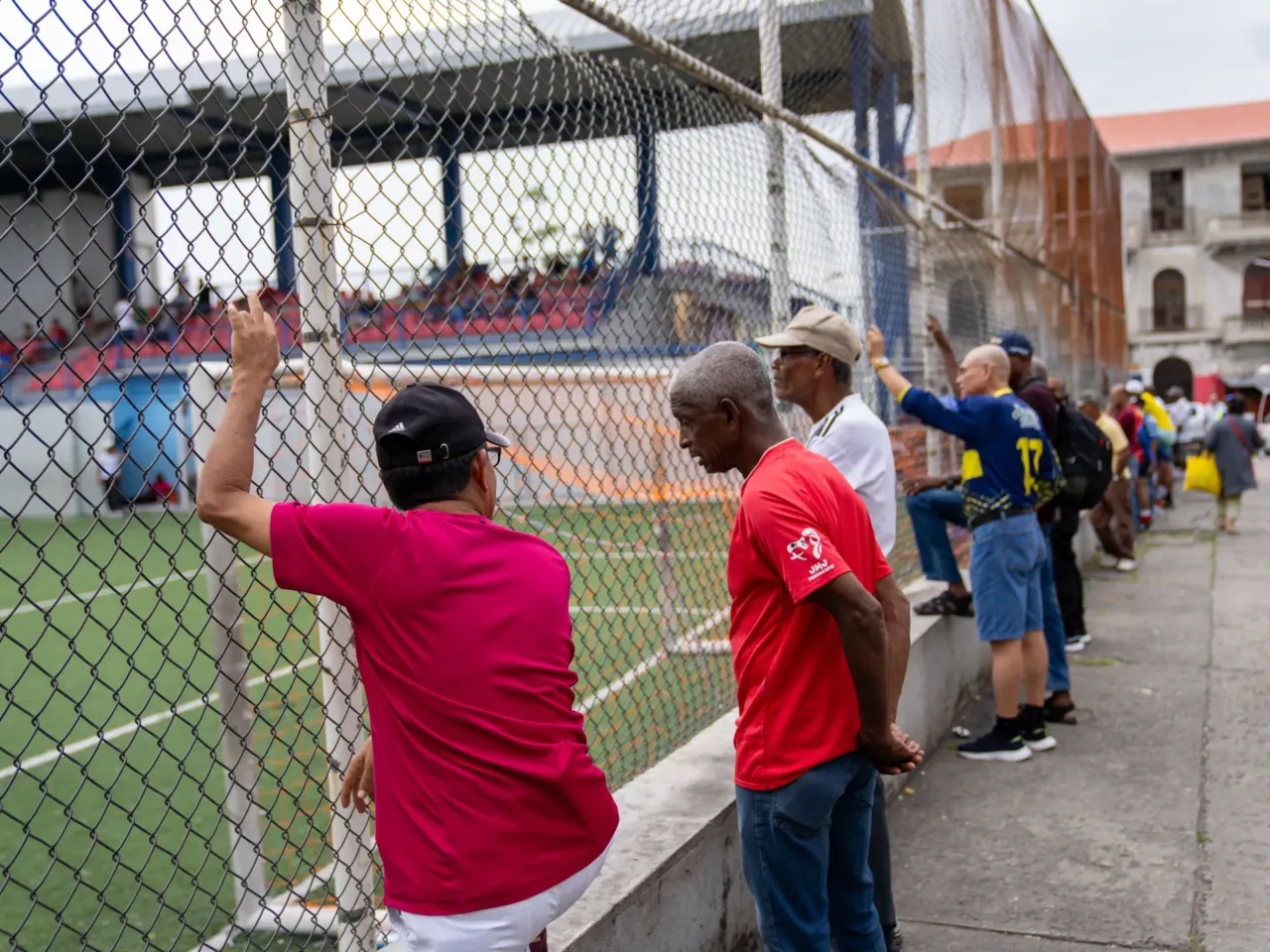
Older residents gather to watch a sports game in the heart of El Chorrillo. Many people who lived through the invasion were born and raised in this historic neighborhood.
Older residents gather to watch a sports game in the heart of El Chorrillo. Many people who lived through the invasion were born and raised in this historic neighborhood. Tomas Ayuso for NPR /

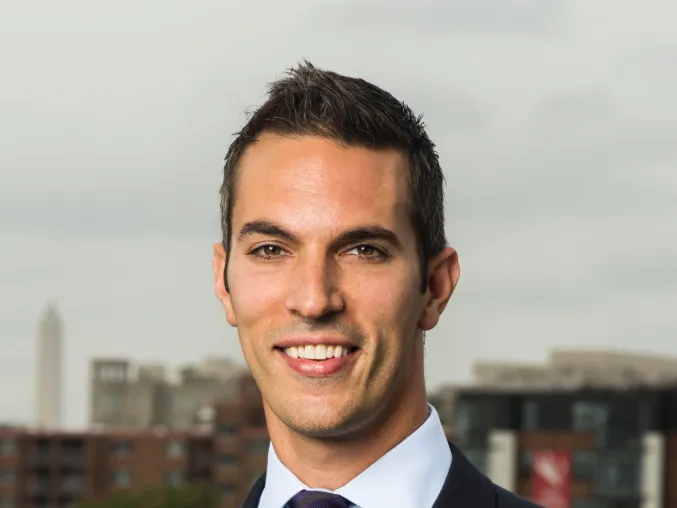
Ari Shapiro has been one of the hosts of All Things Considered, NPR's award-winning afternoon newsmagazine, since 2015. During his first two years on the program, listenership to All Things Considered grew at an unprecedented rate, with more people tuning in during a typical quarter-hour than any other program on the radio.

Shapiro has reported from above the Arctic Circle and aboard Air Force One. He has covered wars in Iraq, Ukraine, and Israel, and he has filed stories from dozens of countries and most of the 50 states.

Shapiro spent two years as NPR's International Correspondent based in London, traveling the world to cover a wide range of topics for NPR's news programs. His overseas move came after four years as NPR's White House Correspondent during President Barack Obama's first and second terms. Shapiro also embedded with the campaign of Republican Mitt Romney for the duration of the 2012 presidential race. He was NPR's Justice Correspondent for five years during the George W. Bush Administration, covering debates over surveillance, detention and interrogation in the years after Sept. 11.

Shapiro's reporting has been consistently recognized by his peers. He has won two national Edward R. Murrow awards; one for his reporting on the life and death of Breonna Taylor, and another for his coverage of the Trump Administration's asylum policies on the US-Mexico border. The Columbia Journalism Review honored him with a laurel for his investigation into disability benefits for injured American veterans. The American Bar Association awarded him the Silver Gavel for exposing the failures of Louisiana's detention system after Hurricane Katrina. He was the first recipient of the American Judges' Association American Gavel Award for his work on U.S. courts and the American justice system. And at age 25, Shapiro won the Daniel Schorr Journalism Prize for an investigation of methamphetamine use and HIV transmission.

An occasional singer, Shapiro makes frequent guest appearances with the "little orchestra" Pink Martini, whose recent albums feature several of his contributions, in multiple languages. Since his debut at the Hollywood Bowl in 2009, Shapiro has performed live at many of the world's most storied venues, including Carnegie Hall in New York, The Royal Albert Hall in London and L'Olympia in Paris. In 2019 he created the show "Och and Oy" with Tony Award winner Alan Cumming, and they continue to tour the country with it.

Shapiro was born in Fargo, North Dakota, and grew up in Portland, Oregon. He is a magna cum laude graduate of Yale. He began his journalism career as an intern for NPR Legal Affairs Correspondent Nina Totenberg, who has also occasionally been known to sing in public.

Related Stories