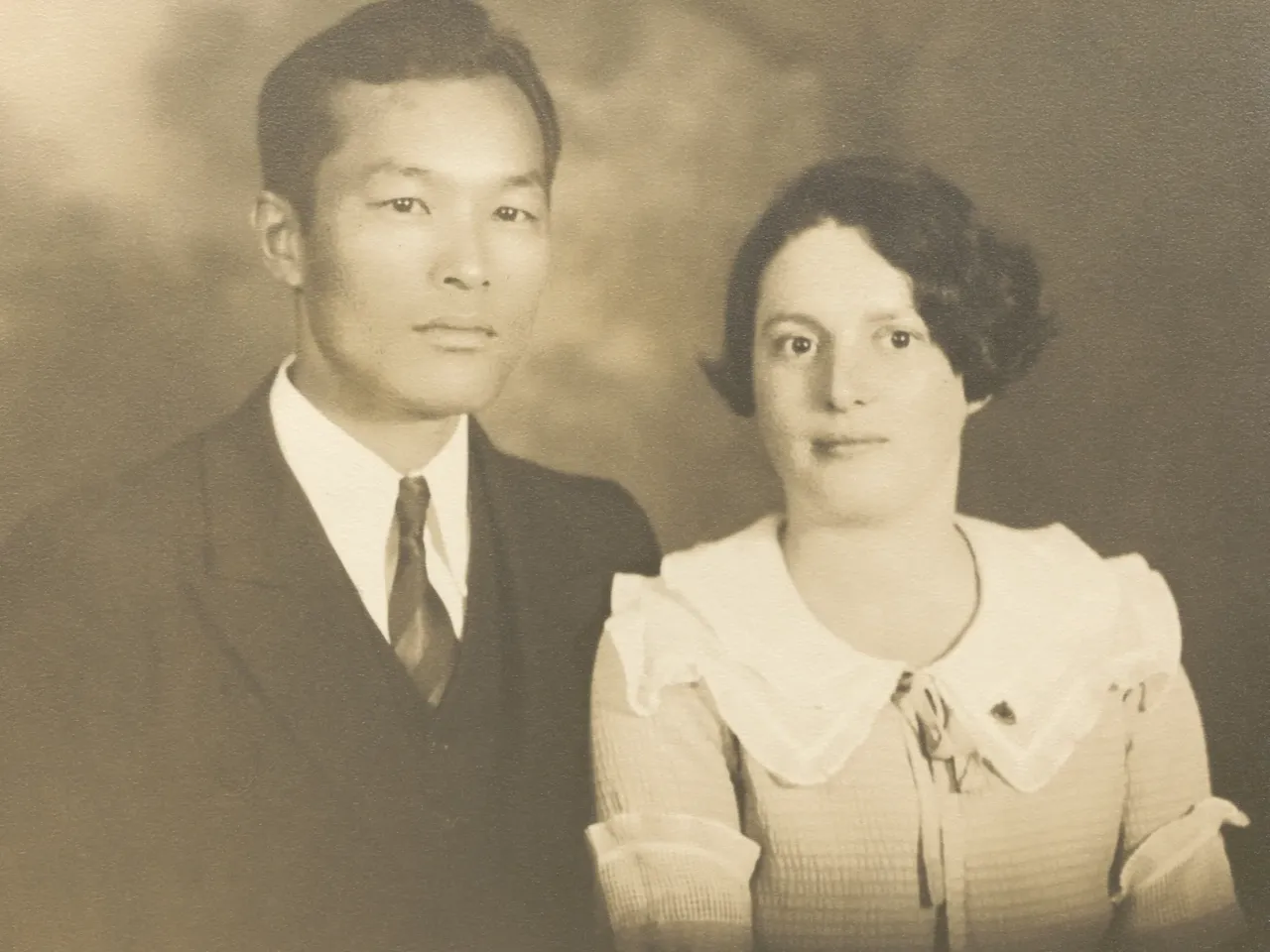
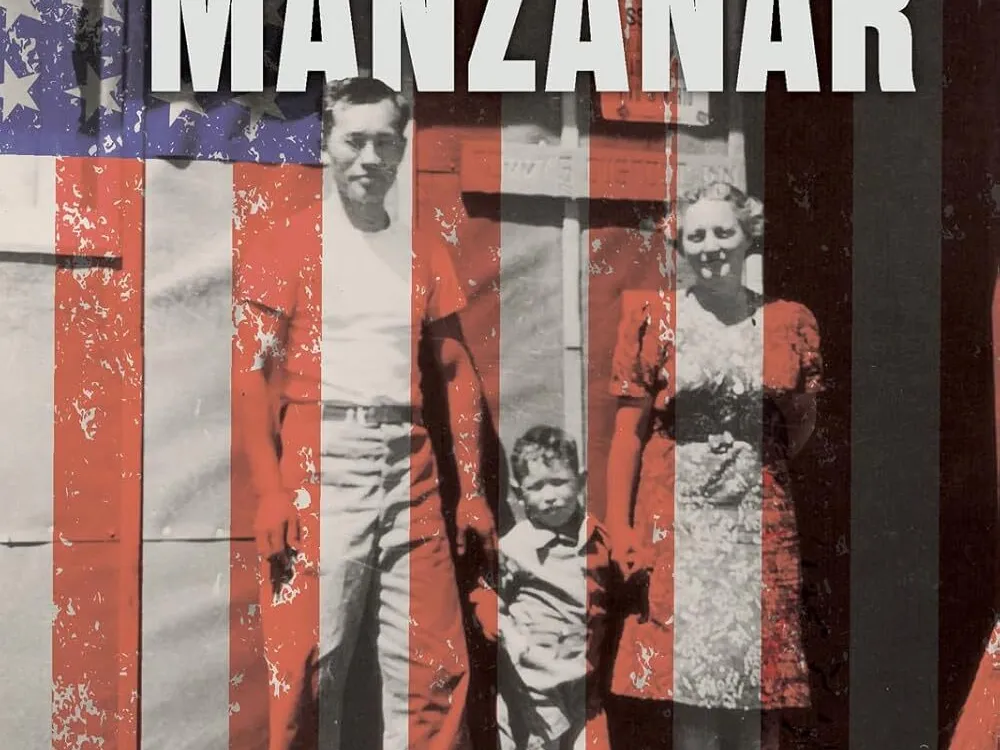
In 1942, the mother of a toddler was given a shocking order: She was told that her child must be sent to a detention facility without her. That was the real-life dilemma faced by the main character of Together in Manzanar: The True Story of a Japanese Jewish Family in an American Concentration Camp, a new book by Tracy Slater.
It takes place when the United States was reeling from Japan’s attack on Pearl Harbor and began rounding up people of Japanese descent. In February 1942, two months after the attack, President Franklin D. Roosevelt issued an executive order authorizing the forced removal and incarceration of Japanese Americans during World War II.
The woman at the center of Slater’s story, Jewish American labor activist Elaine Buchman Yoneda, chose to go to a concentration camp with her half-Japanese son, Tommy, leaving her white daughter, Joyce, behind.
After the camps closed, Elaine and her husband, angry about what happened, campaigned for reparations. But later in life, they questioned whether they had been too compliant, whether they should have pushed back harder. As Slater puts it, “I think it was understandably hard for them to make peace with some of the choices that they made, given that there were no good choices at the moment.”
Slater spoke with NPR’s Sacha Pfeiffer on Morning Edition about Yoneda’s journey to Manzanar and what life was like at the camp.
This is Slater’s second book, released July 8. Her first was a memoir, The Good Shufu: Finding Love, Self, and Home on the Far Side of the World, about her experience marrying a Japanese man and moving to Japan.
This interview has been edited for length and clarity.
Interview highlights
Sacha Pfeiffer: Would you describe Elaine’s state of mind as she was wrestling with that excruciating decision [whether to let her son go to Manzanar alone]?
Tracy Slater: I think Elaine felt like she had nowhere to turn. I think she knew that there was no keeping Tommy out of Manzanar, that the chance she would find some way out of this dilemma she was in was not possible.
Pfeiffer: You write that in some ways she didn’t think there was a decision to make at all — that the decision she had to make was very clear.
Slater: I think she knew logistically that she could not let the army take her 3-year-old son to Manzanar without her because, first of all, I think she could not imagine being without him. And second of all, he was pretty ill from the time he was born. So I think she knew that he was a really vulnerable child and couldn’t imagine sending him to detention in a desert without her.
Pfeiffer: Elaine’s husband, Karl, was a U.S. citizen born in the U.S., but that didn’t spare him from being rounded up because he was of Japanese descent. So the U.S. was in a pretty unforgiving state of mind.
Slater: Yes. The U.S. mandated that anybody with, in the words of one official, even one drop of Japanese blood, regardless of citizenship status, regardless of age, regardless of health status, must be rounded up and sent to camp.
Pfeiffer: But Elaine’s son was a 3-year-old boy. What threat could a kid pose? Why require children to go as well?
Slater: There never was any explanation beyond that, in the words of John DeWitt [a U.S. Army general who oversaw the incarceration of Japanese Americans during World War II], and I’m paraphrasing here somewhat, the Japanese race is an enemy race. And no matter where a Japanese person is born or who they are or how old they are, they’re a threat and they need to be removed. It’s really hard to imagine that this went over. But it did. And it resulted in [approximately] 120,000 Japanese Americans, about two-thirds of whom were American citizens, being incarcerated in concentration camps.
Pfeiffer: Would you give an overview of what life in these camps was like?
Slater: It was very, very desolate and very, very unfit for habitation. There was a sewer ditch that ran along a set of barracks, and some portable toilets that were pulled back and forth between barracks for people to use and then emptied into the ditch. There could be families of ten or more squished into these barrack rooms with sometimes another family. There was one sort of heating stove and then a naked light bulb. The food frequently made people ill because it spoiled.
Pfeiffer: What has researching and writing this book made you think about what’s happening in the U.S. today when it comes to immigrants and immigration?
Slater: This is the true story of an American family that got swept up in the maelstrom of an inflection point in our history, and there’s a lot of ways in which that’s similar to an inflection point that we’re in now. When the concept of forced removal and incarceration was first being discussed among politicians and government officials, it was discussed as a policy to handle Japanese immigrants. It very quickly morphed into a discussion of incarcerating the entire Japanese American community, two-thirds of whom were U.S. citizens. So I think we have not just a right, but a wisdom in being worried about the potential direction that we’re going in with this brutal crackdown even on immigration. I also think that the lack of care about how policies affect people, borne out of fear and false narratives about who and what is dangerous, has historically led to some really tragic, dark periods in our history. So I think, as a nation, we need to be really careful with what’s happening now and with the potential that it could lead us even further into a darker chapter.
This broadcast interview was edited by Ally Schweitzer, with the digital version edited by Majd Al-Waheidi.
Copyright 2025 NPR