
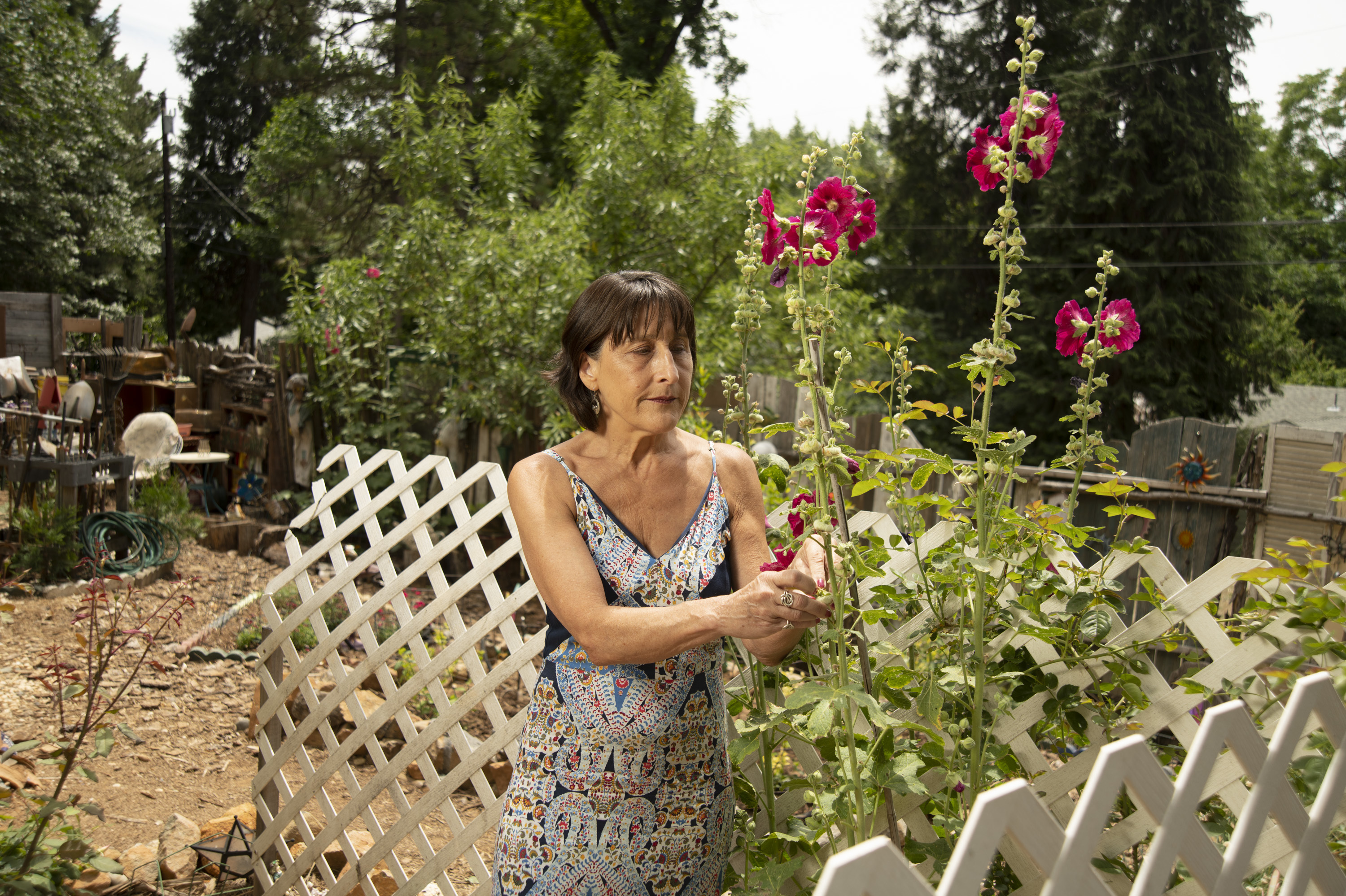
The 63-year-old lives on the edge of rural Grass Valley, an old mining town in the Sierra Nevada foothills of northern California. She was devastated after her husband Dennis passed away in the fall of 2014 after a long series of medical and financial setbacks.
“I was grief-stricken and my self-esteem was down,” Hill remembers. “I didn’t care about myself. I didn’t brush my hair. I was isolated. I just kind of locked myself in the bedroom.”
Hill says knew she needed therapy to deal with her deepening depression. But the main health center in her rural town had just two therapists. Hill was told she’d only be able to see a therapist once a month.
Then, Brandy Hartsgrove called to say Hill was eligible via MediCal (California’s version of Medicaid) for a program that could offer her 30-minute video counseling sessions twice a week. The sessions would be via a computer screen with a therapist who was hundreds of miles south, in San Diego.
Hartsgrove co-ordinates telehealth for the Chapa-de Indian Health Clinic, which is a 10-minute drive from Hills’s home. Hill would sit in a comfy chair facing a screen in a small private room, Hartsgrove explained, to see and talk with her counselor in an otherwise traditional therapy session.
Hill thought it sounded “a bit impersonal;” but was desperate for the counseling. She agreed to give it a try.
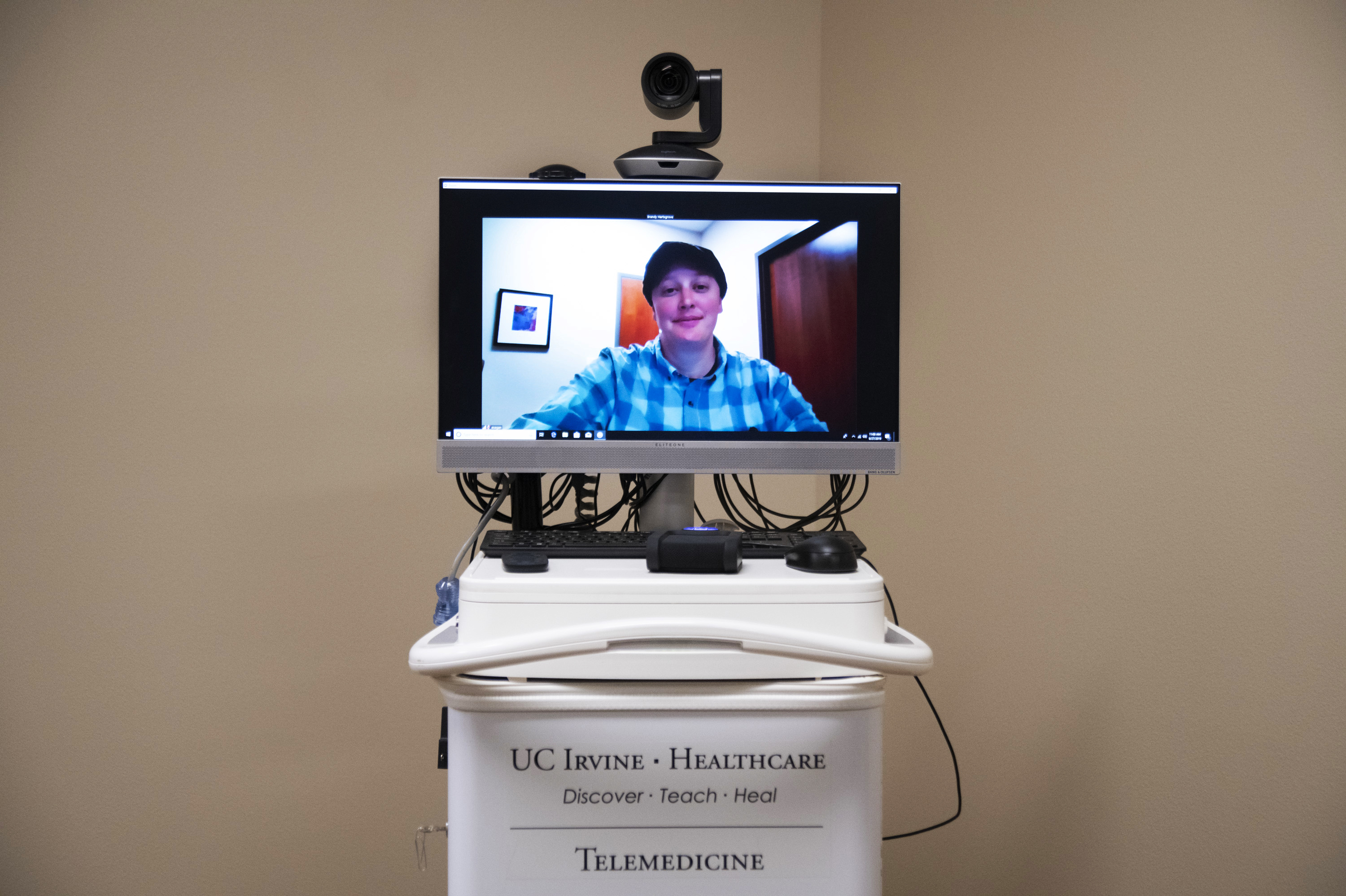
Long-distance doctor-to-doctor consultations via video also fall under the “telehealth” or “telemedicine” rubric.
A recent NPR poll of rural Americans found that nearly a quarter have used some kind of telehealth service within the past few years; 14% say they received a diagnosis or treatment from a doctor or other health care professional using email, text messaging, live text chat, a mobile app, or a live video like FaceTime or Skype. And 15% say they have received a diagnosis or treatment from a doctor or other health professional over the phone.
Loading…
Don’t see the graphic above? Click here.Those survey findings are part of the second of two recent polls on rural life and health conducted by NPR, the Robert Wood Johnson Foundation and the Harvard T.H. Chan School of Public Health.
The Chapa-de clinic offers telehealth services not only for consultations in behavioral health and psychiatry, but also in cardiology, nephrology, dermatology, endocrinology, gastroenterology and more.
And that’s out of reach for many, says Robert J. Blendon, co-director of NPR’s poll and professor of health policy and political analysis at the Harvard Chan School.
The poll found that one in five rural Americans say getting access to high-speed internet is a problem for their families.
Blendon says advances in online technology have brought a “revolution” in healthcare that has left many rural patients behind.
“They lose the ability to contact their physicians, fill prescriptions and get follow-up information without having to go see a health professional,” he says.
Critical care pediatrician James Marcin at UC Davis Children’s Hospital, directs the University of California, Davis, Center for Health and Technology and regularly consults via a telehealth monitor with primary care doctors in remote hospitals in rural areas.
“We’re able to put the telemedicine cart [virtually] at the patient’s bedside,” Marcin says, “and within minutes our physicians are able to see the child and talk with the family members and help assist in the care that way.”
If not for telehealth, Marcin says, the costs of getting what should be routine care “are significant barriers for those living in rural communities.”
“We have patients that drive to our Sacramento offices and they have to drive the night before,” he says, “and spend the night in a hotel because it’s a five-hour trip each way.” And there are additional costs for many patients, he says, such as childcare services, and missed days of work.
With telehealth, “a video is truly worth a thousand words,” he says; it can mean patients don’t have to make costly time-consuming trips to see a specialist.
Though Hill initially had reservations about meeting with a therapist online, she says she’s been amazed by how helpful the sessions have been.
“She gives me assignments and works me really hard,” Hill says, “and I have grown so much — especially just in the last few months.”
Her latest assignment in therapy: writing down positive characteristics of herself. Initially, she could only come up with three: loyalty, compassion and resilience. But the therapist questioned that, and encouraged Hill to consider that there might be more.
But policies that regulate which telehealth services get paid for “lag way behind the technology,” Kwong says. Many policies are 10 to 15 years behind what the technology is able to do, she says.
For example, high-resolution photos can now be taken – and sent anywhere digitally — of skin conditions that many doctors say are better than “the naked eye looking at the condition,” she says. But the policies on the books of what Medicare, Medicaid and private insurers will pay for often means these services are not fully covered.
That’s unfortunate, Kwong says, especially for underserved communities where there is a shortage of specialists.
Changes are starting to be made in state, federal and private insurance policies, Kwong says. But it’s “slow going.”
Copyright 2025 NPR