Copyright © 2026 VPM, all rights reserved.
PBS is a 501(c)(3) not-for-profit organization.
VPM News Morning Edition
NEXT UP: 9:00 AM

Thanks to our sponsors – Become a Sponsor

U.K. police have identified the suspected attacker of a Manchester synagogue

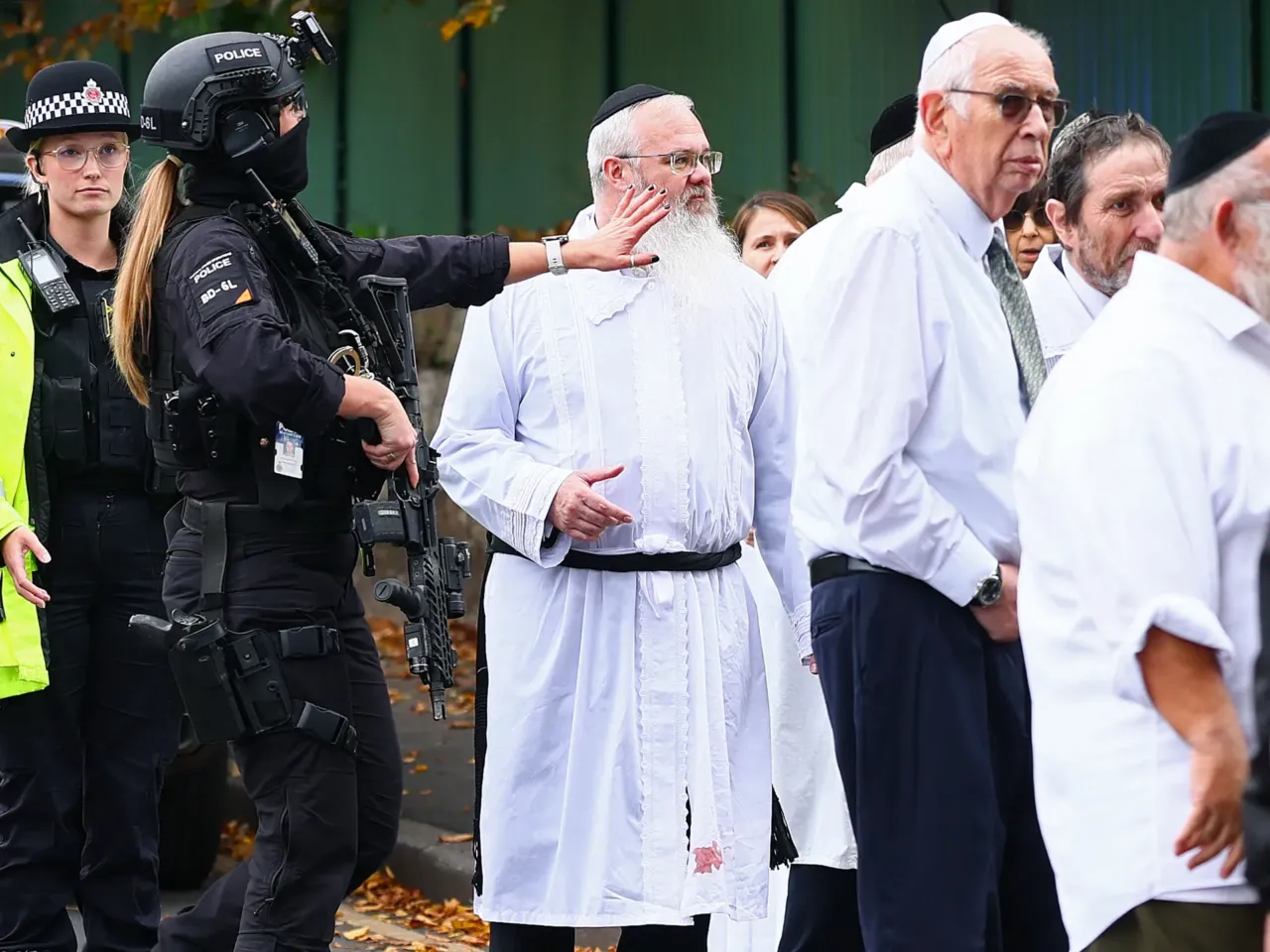
Rabbi Daniel Walker (third from left) stands among armed police officers as they talk with members of the Jewish community outside Heaton Park Hebrew Congregation synagogue in Crumpsall, north Manchester, following an attack at the synagogue on Thursday.
Paul Currie / AFP via Getty Images
Rabbi Daniel Walker (third from left) stands among armed police officers as they talk with members of the Jewish community outside Heaton Park Hebrew Congregation synagogue in Crumpsall, north Manchester, following an attack at the synagogue on Thursday.

Updated October 02, 2025 at 20:01 PM ET

LONDON — At least two people were killed and several injured in a car-ramming and stabbing outside a synagogue in northern England on a major Jewish holiday Thursday, an attack police called a “terrorist incident.”

The attack occurred as Jewish community members were gathering at Manchester’s Heaton Park Hebrew Congregation synagogue for Yom Kippur, Judaism’s holiest day.

Greater Manchester Police officers shot and killed a suspected attacker and arrested three suspects in connection with the incident.

Later Thursday, the police identified the man they believed was responsible for the attack: Jihad Al-Shamie, a 35-year-old British citizen of Syrian descent. The police said there was no record of the man in a U.K. counterterrorism program that works to prevent people from being drawn into extremist crime.

“We are working to understand the motivation behind the attack as the investigation continues,” a police statement said.

Prime Minister Keir Starmer called the attack “appalling” and “all the more horrific” for taking place on a Jewish holiday.
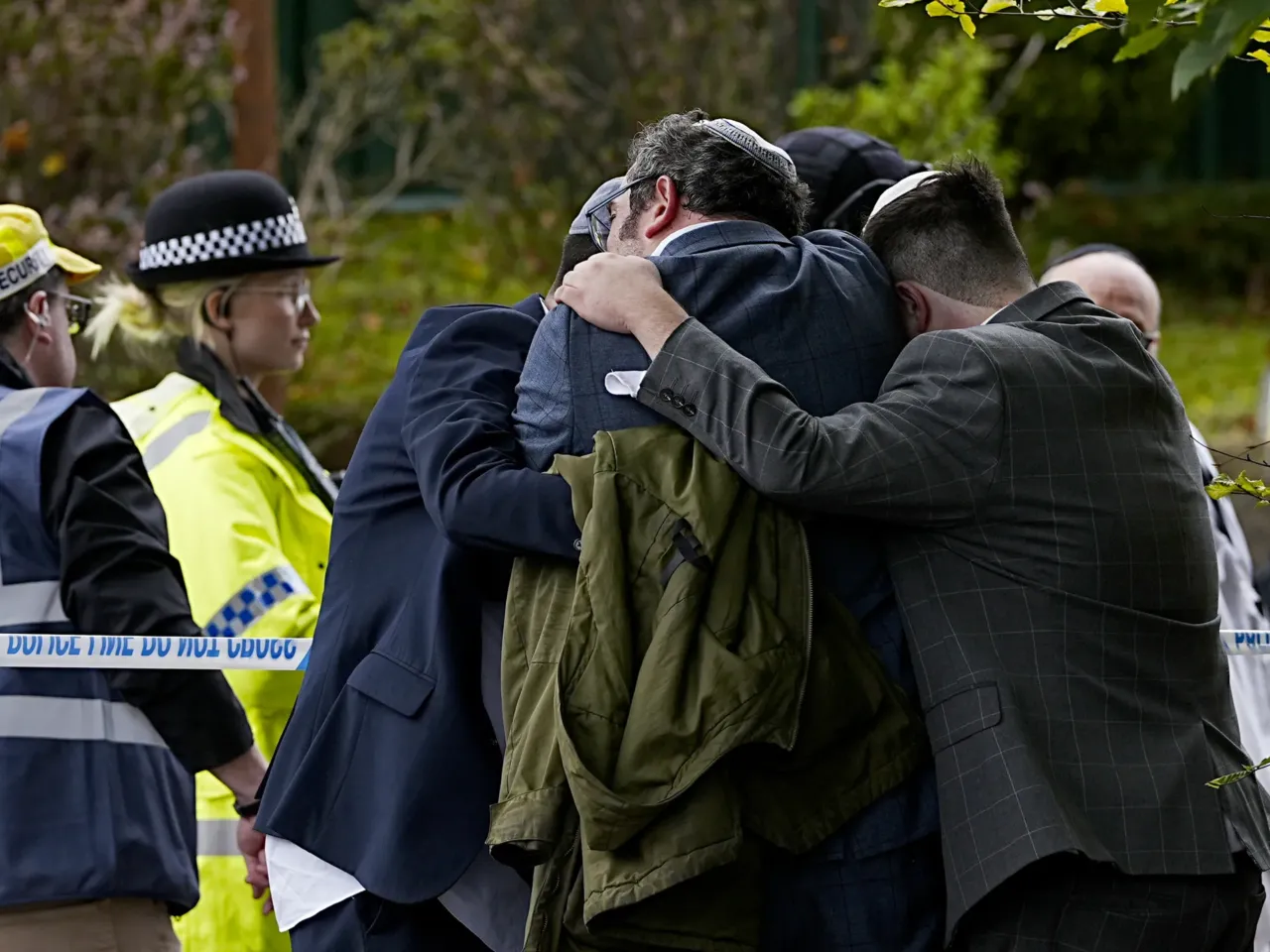
Members of the Jewish community comfort each other near the Heaton Park Hebrew Congregation synagogue in Crumpsall, Manchester, England, where two people died in an attack Thursday that police have labeled a terrorist incident.
Members of the Jewish community comfort each other near the Heaton Park Hebrew Congregation synagogue in Crumpsall, Manchester, England, where two people died in an attack Thursday that police have labeled a terrorist incident. Peter Byrne / PA Images via Getty Images

Yom Kippur, known as the Day of Atonement, is a holiday when Jews engage in fasting, prayer and reflection, beginning at sundown Wednesday.

It was around the time of the holiday’s Thursday morning service when an attacker drove his car into people outside the synagogue in Crumpsall, a largely residential area about 3 miles from Manchester’s city center.

“The driver of the car was seen then to attack people with a knife,” Greater Manchester Police Chief Constable Stephen Watson said in a statement. “Following a rapid response, armed officers from Greater Manchester Police intercepted the offender and he was fatally shot by officers within 7 minutes of the original call.”

Passersby recorded videos of officers yelling at people outside the temple to “move back!”

The police initially said the suspect wore “a vest that had the appearance of an explosive device,” but they later determined the supposed device was not “viable.”

The attack came less than a week before the second anniversary of the Oct. 7, 2023, attack in Israel and the ongoing war in Gaza that followed. There’s been an increase since then of Islamophobic and antisemitic incidents.

“This was a vile terrorist attack that attacked Jews, because they are Jews,” Starmer later said in an address. He said antisemitism is a “hatred that is rising, once again. And Britain must defeat it, once again.”

After London, Manchester is home to the United Kingdom’s second-biggest Jewish community.

It is also the city where a bombing at an Ariana Grande concert killed 22 people in 2017.

After Thursday’s attack, King Charles III said in an online statement that he and Queen Camilla were “deeply saddened and shocked to learn of the horrific attack in Manchester, especially on such a significant day for the Jewish community.”

British Christian and Muslim community leaders also offered messages of support and prayers to the country’s Jewish people.

Police have fanned out to guard synagogues across the country.

Raphi Bloom was on his way to the Heaton Park synagogue for the morning service when he received a call from a friend telling him not to go, there had been an attack there.

“I never thought it would happen in my synagogue, in my city, but it’s something we all expected,” he told the BBC.

Fatima Al-Kassab contributed reporting in London.

Copyright 2025 NPR
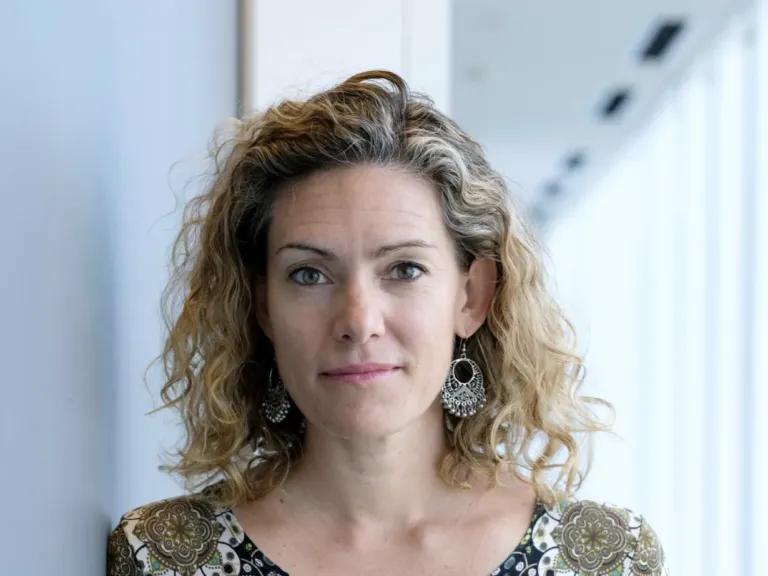
Lauren Frayer covers South Asia for NPR News. In 2018, she opened a new NPR bureau in India's biggest city, its financial center, and the heart of Bollywood—Mumbai.

She has covered the rise of Hindu nationalism in India, the aftermath of Sri Lanka's civil war and the power of a 19th century short story to combat racism against Afghan refugees. In 2019, she met the Dalai Lama at his monastery in northern India, and reported on the sticky geopolitics of who decides his successor. On Mahatma Gandhi's 150th birthday, Frayer examined how his legacy has changed.

When a 6-year-old Indian girl died of heat stroke on the U.S.-Mexico border, Frayer traced her path back to the Punjab, met her grieving grandparents – and uncovered a smuggling ring responsible for a 10,000% spike in the number of Indians detained on that border. For a year, Frayer followed an interfaith couple whose wedding plans were upended by 'Love Jihad' – an anti-Muslim conspiracy theory that's now law in several Indian states.

In 2022, Frayer was awarded the Overseas Press Club of America's Lowell Thomas Award for her coverage of India's COVID-19 outbreak, and a Gracie Award for coverage of India's farmer protests.

Frayer reported on caste discrimination for a 2020 episode of NPR's Rough Translation podcast, and is working on a new podcast about love marriage in India.

When Russia invaded Ukraine, Frayer was in the first batch of NPR reporters to cross from Poland into the embattled country. She chronicled the flow of Ukrainian refugees out, and military volunteers in. She also reported on the surprisingly long history of Ukrainian women in combat, a spiritual revolt among Orthodox Christians and how Ukrainian rock stars are turning their trauma into art.

Before moving to India, Frayer was a regular freelance contributor to NPR for seven years, based in Madrid. During that time, she substituted for NPR bureau chiefs in Seoul, London, Istanbul, Islamabad, and Jerusalem. She also served as a guest host of Weekend Edition Sunday.

In Europe, Frayer profiled a Portuguese opera singer-turned protest leader, and a 90-year-old survivor of the Spanish Civil War, exhuming her father's remains from a 1930s-era mass grave. In the fall of 2015, Frayer spent two months covering the flow of migrants & refugees across Hungary & the Balkans – and profiled a Syrian rapper among them. She interviewed a Holocaust survivor who owed his life to one kind stranger, and managed to get a rare interview with the Dutch far-right leader Geert Wilders – by sticking her microphone between his bodyguards in the Hague.

Farther afield, she has introduced NPR listeners to a Pakistani TV evangelist, a Palestinian surfer girl in Gaza, and K-pop performers campaigning in South Korea's presidential election.

Frayer has also contributed to The New York Times, the Los Angeles Times, and the BBC.

Her international career began in the Middle East, where she was an editor on the Associated Press' Middle East regional desk in Cairo, and covered the 2006 Israel-Hezbollah war in Syria and southern Lebanon. In 2007, she spent a year embedded with U.S. troops in Iraq.

On a break from journalism, Frayer drove a Land Rover across Africa for a year, from Cairo to Cape Town, sleeping in a tent on the car's roof. She once made the front page of a Pakistani newspaper, simply for being a woman commuting to work in Islamabad on a bicycle.

Born and raised in a suburb of New York City, Frayer holds a bachelor's degree in philosophy from The College of William & Mary in Virginia. She speaks Spanish, Portuguese, rusty French and Arabic, and is now learning Hindi.

Related Stories