Democrats in Virginia’s General Assembly are debating amongst themselves how they could counter a nationwide redistricting effort led by Republican President Donald Trump. They voted to take up the issue Monday, but did not present the draft text of a constitutional amendment needed for legislators to start drawing election maps in time for the 2026 midterms.
“We’re working on it,” said Majority Leader Scott Surovell (D–Fairfax) when asked. “The version to introduce has not been agreed upon yet.”
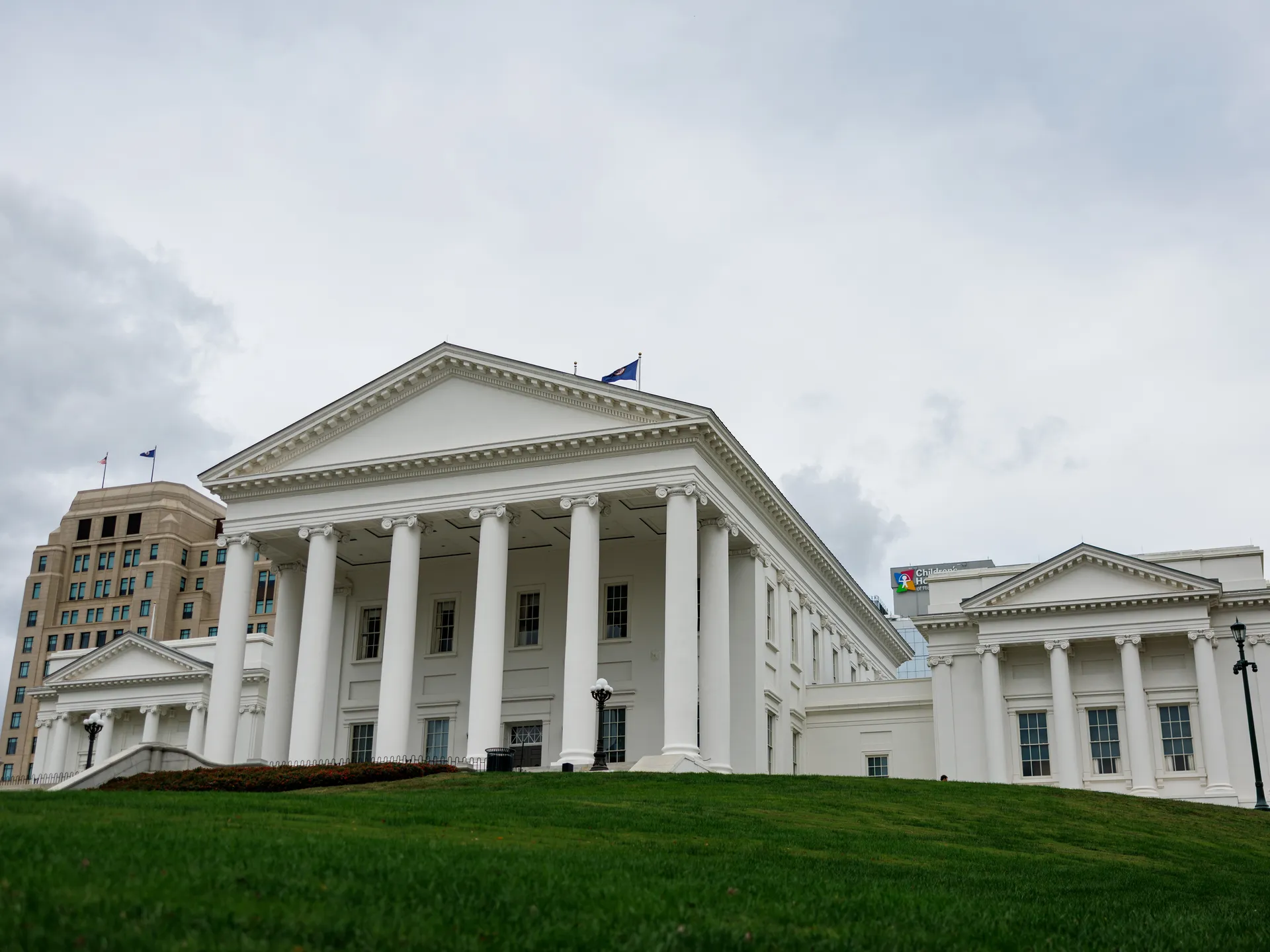
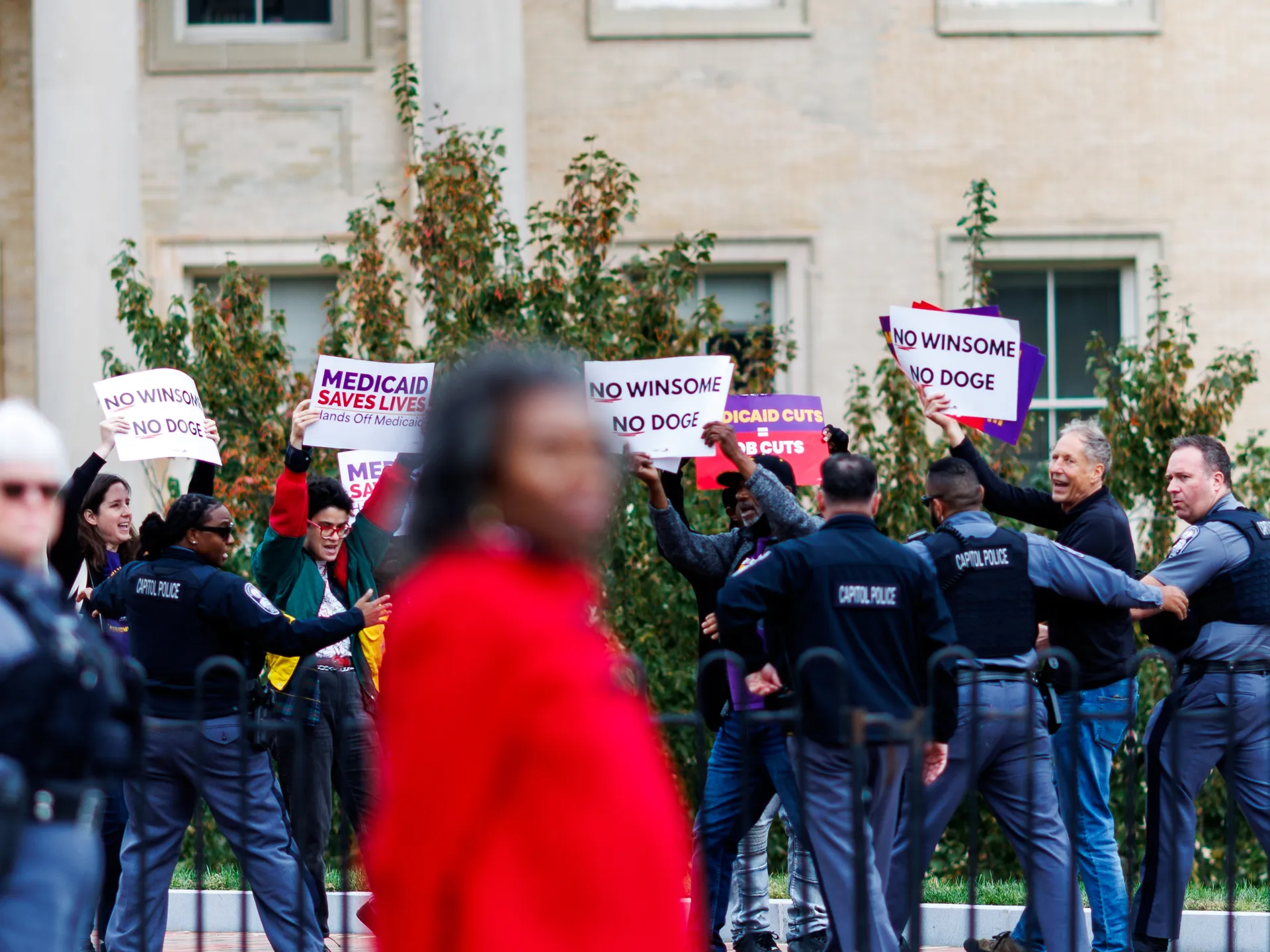
A House of Delegates vote Monday to put redistricting on the week’s agenda was amongst the first actions in what could be a monthslong process to change Virginia’s constitution (again) and send the power to draw political boundaries back to the Legislature.
Virginia is the second state with a legislature led by Democrats looking to counter a redistricting frenzy across the country. Over the summer, President Trump said Texas legislators should redraw their congressional maps — which they did — before California moved to negate a gain of five GOP seats.
Last week, North Carolina politicians moved to eliminate a Democrat-held seat; and Monday, Indiana also entered the fray. Separately, a lawsuit in New York was filed that could bring in that state.
On Thursday, General Assembly Democrats called legislators back to Richmond. Legislators told VPM News it was for redistricting, and the Democratic Congressional Campaign Committee said in a statement that “Virginia’s decision to convene and preserve the right to consider a new map in 2026 is critical in the fight to ensure voters have fair representation.”
But Democrats generally did not offer details on their plans, which continued into Monday, with no proposed amendment that legislators may actually be voting on in a session expected to last until Friday.
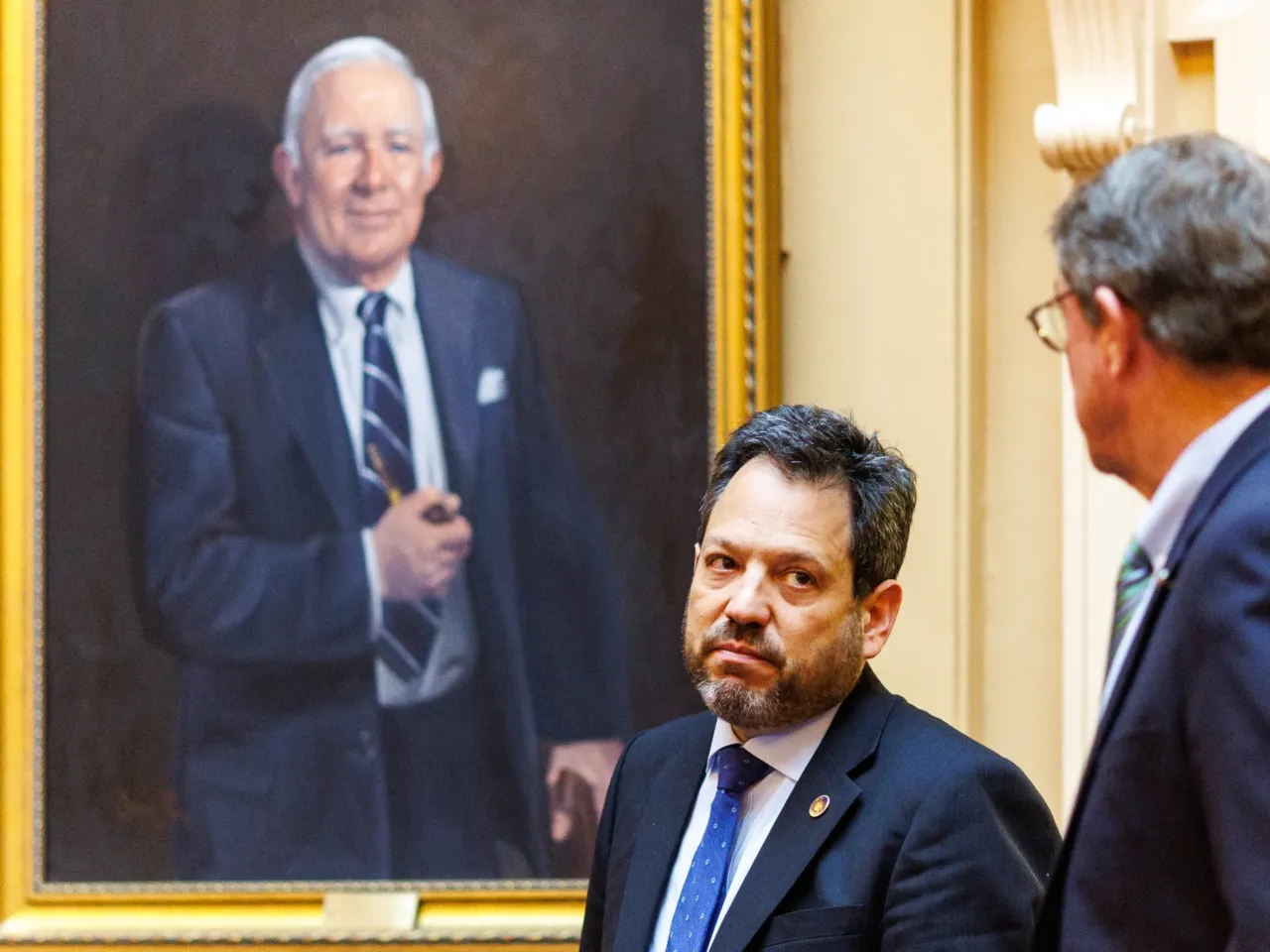
House Republicans were keen to point out the lack of details.
“Clearly this is a bad idea, because they don’t want to take questions,” said Del. Israel O’Quinn (R–Abingdon).
Del. Rodney Willett (D–Henrico), who said he would carry the amendment’s language, responded to questions from reporters about the text of the potential amendment, but didn’t say exactly what it would do.
“This resolution is not going to abolish the commission that was created through the earlier constitutional amendment. We are still going to have a commission,” said Willett. “This is going to give us options — and an option that could or could not be exercised. That question is actually going to be left to the voters.”
Democrats will have to contend with the 2020 amendment’s overwhelming public support for the addition of the redistricting commission.
In 2020, 65% of voters approved a constitutional amendment on the ballot to have a bipartisan commission draw the commonwealth’s election maps every 10 years. The commission was plagued with gridlock and failed to produce any approved maps, leading to the Supreme Court of Virginia’s appointment of two political experts to draw maps.
These maps, implemented in 2023, outline the 11 districts represented in Congress and the General Assembly’s 140 districts today.
“I do suspect that folks will argue that people who, five years ago made one argument regarding redistricting, are making a completely different argument today,” said Henry Chambers Jr., a constitutional law professor at the University of Richmond.
There are also internal caucus dynamics to consider. In 2020, many Democrats preferred to have the Legislature retain the power to draw maps, but some voted for the commission.
Sen. Schuyler VanValkenburg (D–Henrico) was one the most vocal supporters of the commission among Democrats.
“I think the commission is going to stay. It’s going to exist, because I’m not going to vote to get rid of the commission,” he said.
“But I’m also not going to let Donald Trump go around to states that have majorities that he likes and try to make it so that he can’t lose, when the overwhelming majority of people disapprove of the things he’s doing. …That’s not how democracy works.”
The balance of the US House of Representatives as of Oct. 27 is 219 Republicans and 213 Democrats. Virginia has six Democrats in its 11-member House delegation. All five congressional Republicans held a press conference Monday in Richmond opposing the move.
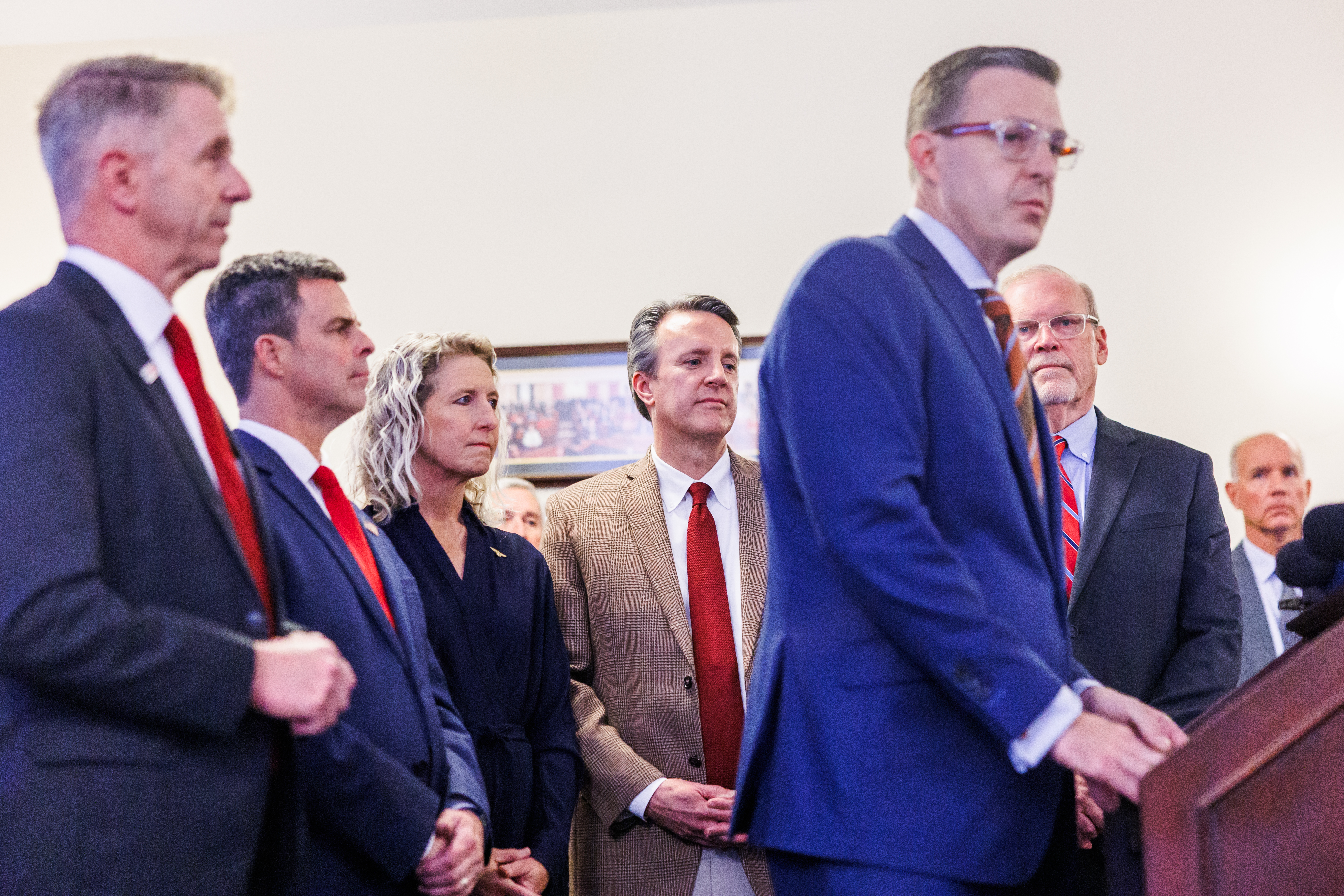
“The fact that five of us are here in the room should make a statement to all of Virginia,” said Rep. Jenn Kiggans (R–2nd). “We would love to get back to work, but there’s partisan games in Washington. It seems like the partisan games have now trickled down here to Richmond, and that brings us all together in this room to stand against this redistricting proposal that the Democrats have put forward to target districts like ours, like mine.”
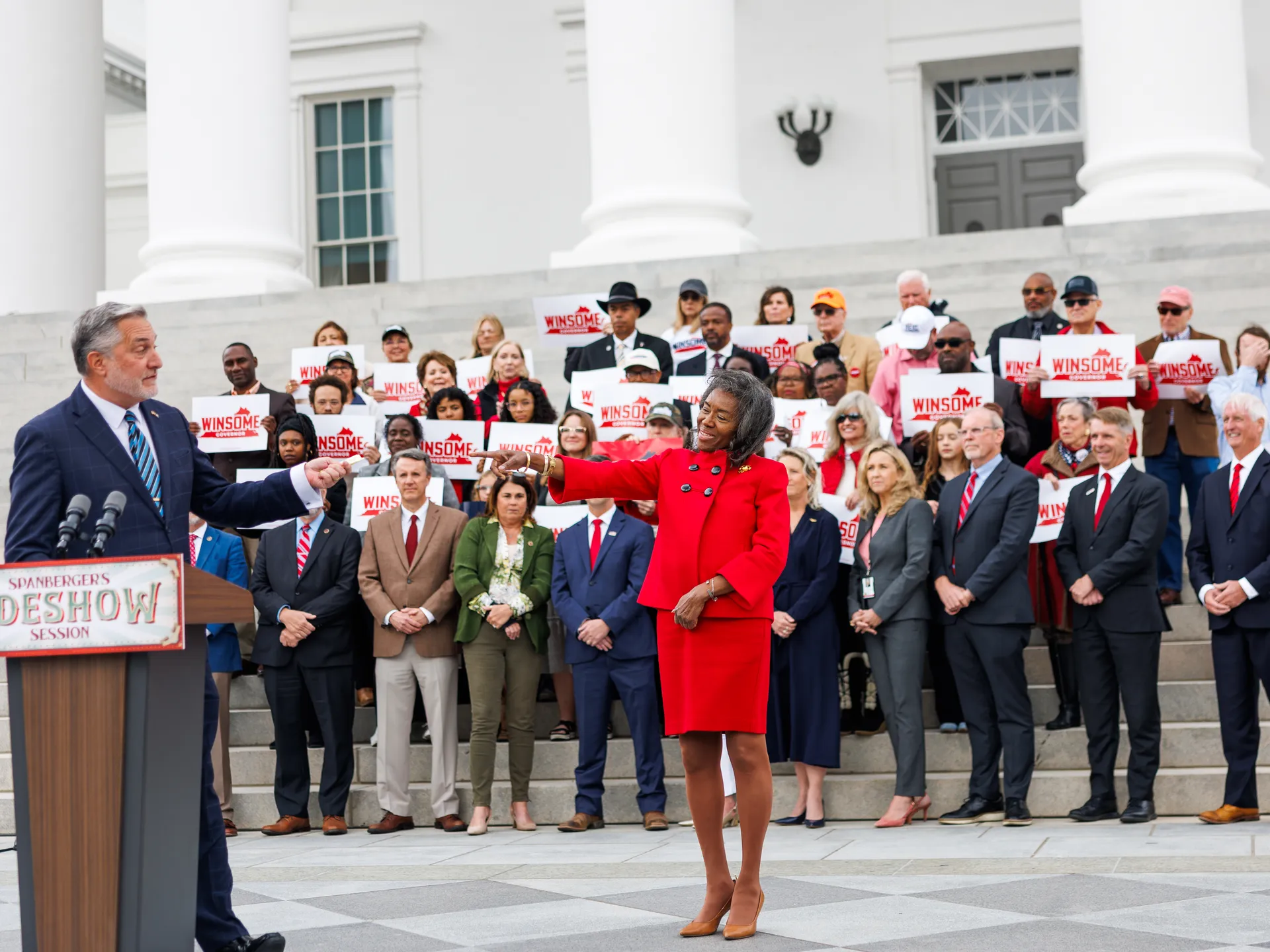
Republicans have also referred to this session as a plan to take Lt. Gov. Winsome Earle-Sears, the GOP candidate for governor, off the campaign trail.
“I am standing here today, not as a candidate, not on the campaign trail, but as your lieutenant governor, fulfilling my oath to speak for the people in our great Senate chamber and to defend the principles that make Virginia strong,” Earle-Sears said from the Virginia State Capitol steps before Monday’s session, as a crowd held “Winsome For Governor” signs behind her.
She told the press that it was her “duty” to preside over the Virginia Senate. If Earle-Sears was not present, President Pro Tempore Louise Lucas (D–Portsmouth) would preside instead.
Virginia’s Senate is scheduled to meet beginning at 9 a.m. Tuesday. The House of Delegates adjourned until Wednesday.
Copyright 2025 VPM News