Democrats in Virginia’s House of Delegates voted to propose a constitutional amendment Wednesday that, if ultimately approved by voters, would allow the legislature to draw new congressional districts ahead of the 2026 federal midterm elections.
Virginians won’t be able to take up the amendment unless the state Senate approves it — and then both chambers do the same next year when the 2026 regular session convenes. (The General Assembly is currently in a special session officially held over from a state budget dispute in 2024.)
“We had to give the voters of Virginia the option to make a change if they so want it,” said House Speaker Don Scott (D–Portsmouth) after the vote. “I think we have a responsibility right now, while Donald Trump is attacking our government, our Constitution.”
The 51–42 partisan vote means Virginia is well on its way to joining the contagious redistricting back-and-forth between states that began when President Donald Trump requested that Texas Republicans gerrymander its electoral maps to give the GOP five more seats in the US House of Representatives. (The US Supreme Court ruled the partisan mapmaking practice constitutional in 2019, during Trump’s first term.)

Virginia’s bipartisan redistricting commission currently draws electoral districts after the decennial census. But on its first round in 2021, the commission repeatedly deadlocked — leaving the task of drawing new maps to two experts appointed by the Supreme Court of Virginia; those took effect in 2023.
The draft amendment would allow for congressional districts to be drawn in a way that deviates from the current process in two key ways. First, the amendment would return mapmaking power to the Legislature. Second, it would allow maps to be drawn between the 10-year censuses.
That process would only happen “in the event that any other state conducts a redistricting of the state’s congressional districts outside of the standard decennial redistricting cycle,” and the General Assembly’s ability to step in would be in effect until Oct. 31, 2030.
Wednesday’s process
The vote came in the middle of a crucial day featuring hurried votes with limited debate, which Republicans attempted to block or slow down at each turn — limited by their position as the minority party in both chambers.
Early in the day, House Republicans used introductions to campaign, talking about political violence and a texting controversy involving the Democratic candidate for attorney general, sparking a back and forth with Scott — who even called the sergeant-at-arms to the floor at one point.
“If you have a political speech about a current election that has nothing to do with an introduction, please refrain,” he said.
All 100 seats in the House of Delegates are on the ballot in the ongoing 2025 election, which concludes next week.
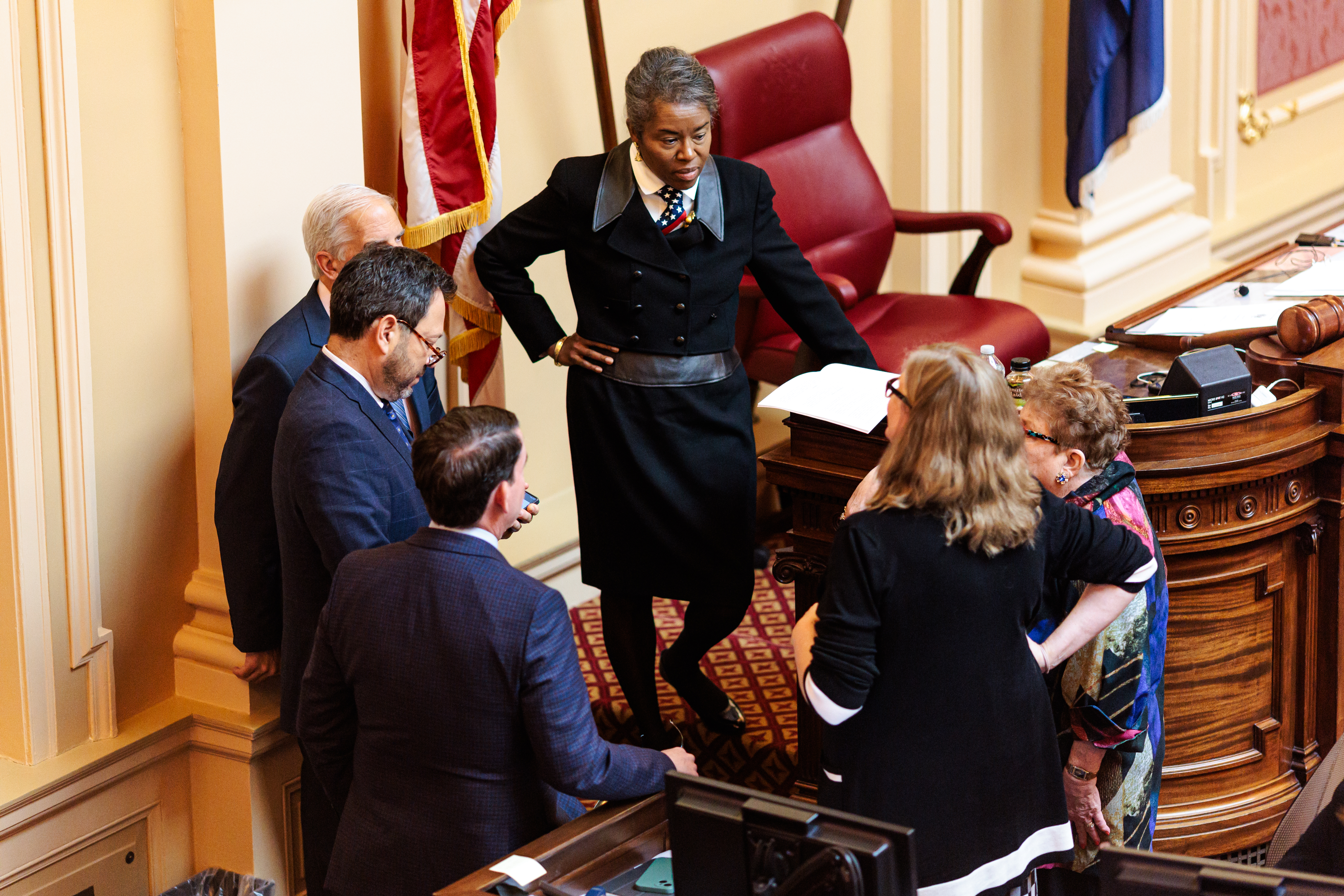
In the Senate, Republicans also attempted to make political violence part of the agenda, which failed. Lt. Gov. Winsome Earle-Sears, presiding over the Senate just days before she hopes to be elected Virginia’s next governor, attempted to block the body from taking up redistricting by saying it needed a two-thirds vote, before being overruled by the majority.
The efforts to block the amendment extended outside the capital, too. In Tazewell County, a group led by three GOP legislators on the redistricting commission filed a lawsuit that was delayed until next week — and have threatened more litigation.
Since Virginia’s Legislature convened on Monday, Republicans have been arguing that Virginia shouldn’t change its laws in response to other states’ actions.
“What I’m hearing from the other side [is that] because we have a disagreement with the president of the United States, we’re going to throw Virginia’s constitution to the wind,” said House Minority Leader Terry Kilgore (R–Gate City) Wednesday; Kilgore is also one of the Tazewell lawsuit’s plaintiffs.
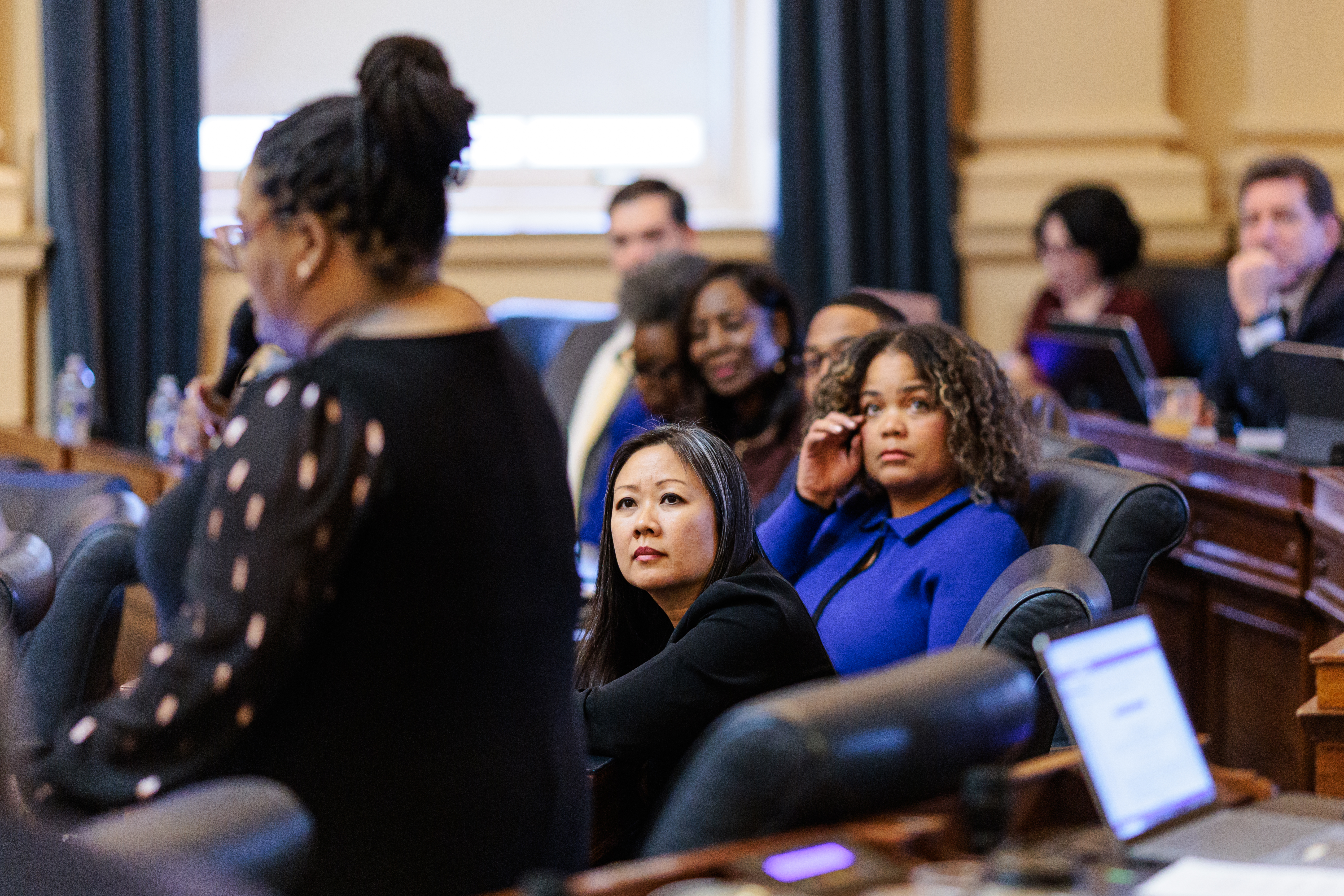
Del. Cia Price (D–Newport News) took exception to that position: “We’re belittling what happens in other states. ‘Oh, it’s just Texas, it’s just North Carolina.’ As if basic civics knowledge does not teach us that what happens on the federal level can impact everyone.”
The fate of the amendment — and the prospect of Virginia’s redistricting — now lies with the Senate. On Wednesday, the Privileges & Elections Committee forwarded the amendment on an 8–6 party-line vote. The Senate is scheduled to meet again Thursday; the House is in recess until Friday.
Copyright 2025 VPM News