Updated November 19, 2025 at 16:42 PM ET
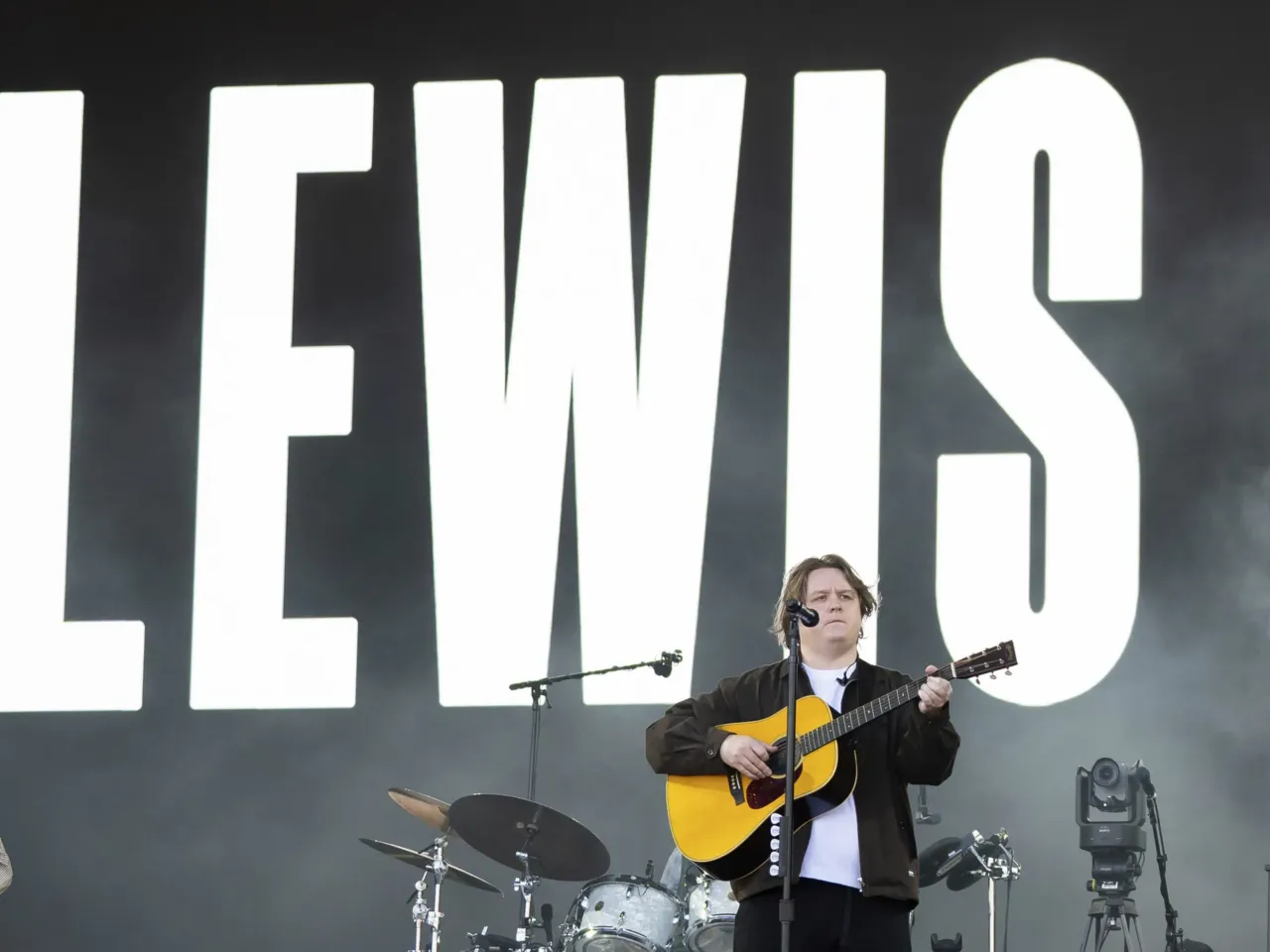
It was a sweltering June afternoon at Glastonbury Festival in 2023 when Lewis Capaldi realized he needed to radically change how he was living his life.
Standing before a massive crowd and singing the song that made him a global star, “Someone You Loved,” the Scottish singer-songwriter’s voice cracked. His shoulder twitched — a symptom of his Tourette syndrome — and he couldn’t finish the chorus. The crowd took over, singing the hit back to him as he stepped away from the mic.
Capaldi calls it a “meltdown.” But now, he says, it became the moment that ultimately saved him.
“I look at it now and I’m, like, that needed to happen,” Capaldi told NPR’s Morning Edition. “I’d really sort of worked myself into the ground making a second album. The success of the first album had really put the fear of God into me.”
The pressure from fear of being a one-hit wonder to a grueling work schedule to his Tourette diagnosis pushed him into a spiral he didn’t fully recognize until that moment. Without that Glastonbury incident, he says, he might have kept going “until the wheels came off.”
Capaldi disappeared from the spotlight for nearly two years. Now he’s back, cautiously — and with new music. His new EP, Survive, is just four tracks long, a deliberate choice to avoid the perfectionism and pressure of his second album.
One track, “The Day That I Die,” is his favorite, and also the hardest to talk about. Capaldi says he wrote it after struggling to taper off a high dose of sertraline (the generic version of Zoloft), prescribed for anxiety and depression.
“I never really had end-of-life thoughts before,” he said. “But coming off sertraline, I found I was having really, really dark days. And much later, thinking about that time when I was writing, I just thought ‘what would you say to someone’ — I guess, a suicide note — what would I say to people if heaven forbid I succumbed to all dark moments that I was having?”
Capaldi said he still finds that song difficult to discuss, noting that “everything’s good now.” But he pointed to the title track, “Survive,” as a better reflection of how he feels today, with lyrics like “I swear to God I’ll survive” and “I’m gonna get up and try if it’s the last thing I do.”
“I didn’t want to come back and be like, ‘Here’s a song called The Day That I Die,'” he said. “So I wanted to, like, really have a positive flag in the sand, sort of like, we’re back, and this is how I’m feeling, and this is how everything is.”
Now, Capaldi is looking forward to whatever comes next. He hopes he’ll be able to show more of his funny side that was clearly evident between tracks during his Tiny Desk performance.
“I would like to sort of incorporate that a little bit more and be a bit more adventurous when it comes to songwriting,” he said.
As he prepares for a U.S. tour in 2026, Capaldi is thinking about how he can finally move beyond being known as “the ballad guy.”
If you or someone you know may be considering suicide or is in crisis, call or text 988 to reach the Suicide & Crisis Lifeline.
The digital version of this interview was edited by Majd Al-Waheidi, and the radio version was edited by Phil Harrell.
Copyright 2025 NPR