Northern Virginia data centers “sometimes run up right into people’s backyards.”
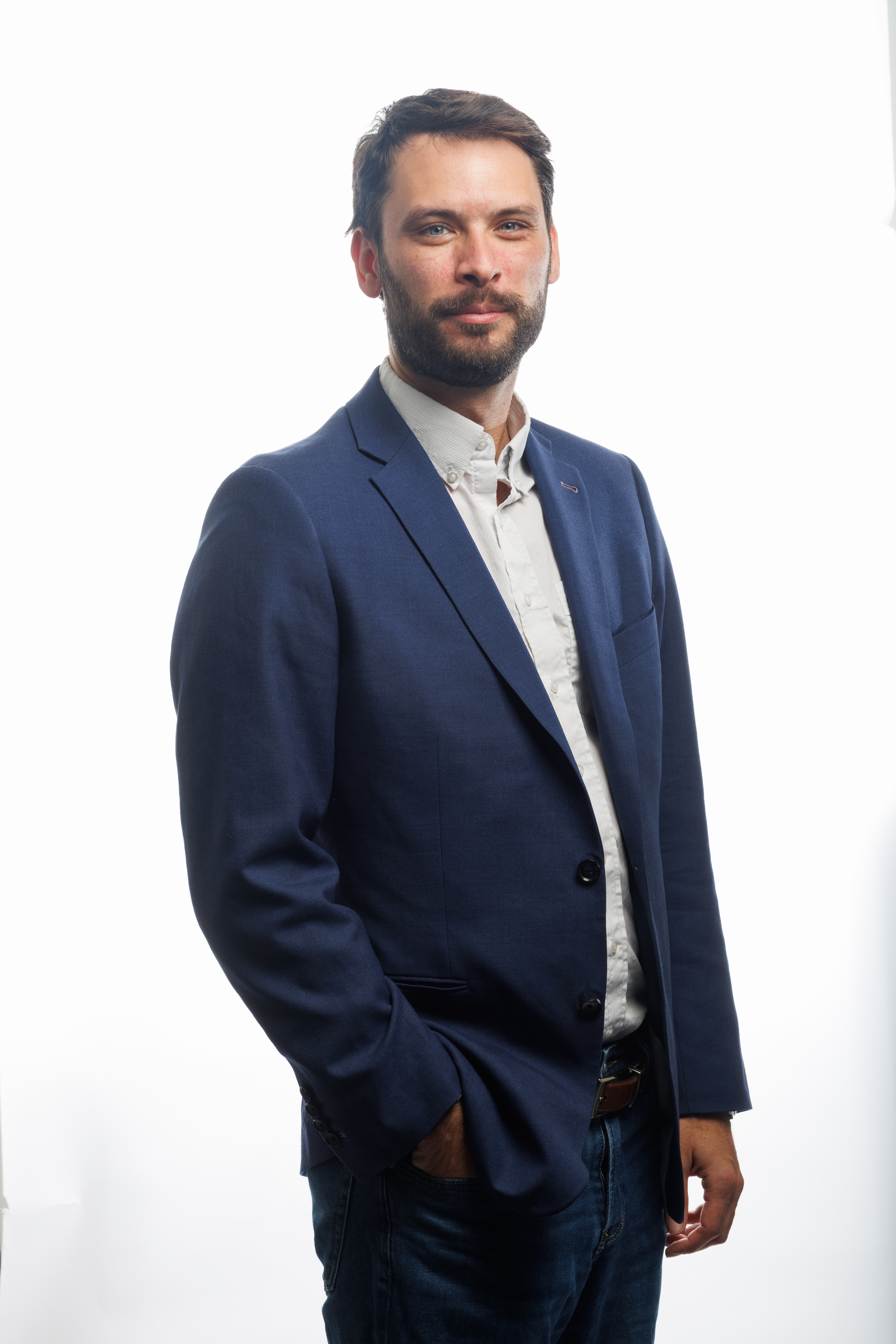
Del.-elect John McAuliff has the distinction of unseating one of the last Republicans in Northern Virginia: In November, he defeated incumbent Del. Geary Higgins, who had represented the 30th District in the House of Delegates for one term.
This will not be McAuliff’s first time working at the General Assembly Building; he previously worked as the chief of staff for Del. David Reid (D–Loudoun).
VPM News State Politics Reporter Jahd Khalil recently spoke with McAuliff at the Virginia State Capitol in Richmond, as part of a series of interviews conducted with the newest members of Virginia’s House of Delegates. (Links to interviews with the other delegates can be found at the bottom of this story.)
McAuliff says that with so much of the world’s internet running through Virginia, it’s unrealistic to put so much of the burden on localities to understand the implications of a new data center. He also spoke about farms, conservation and what success looks like to him.
This interview has been lightly edited for style and clarity.
Jahd Khalil: Could you introduce yourself and tell us about your district?
John McAuliff: I will be representing Virginia’s 30th House of Delegates District, which is an incredible place. It covers all of western Loudoun County — pretty much all of our farmland that’s left in Northern Virginia.
If you get time to go up there, we love to welcome folks to our wineries, our bed-and-breakfasts — I am a bed-and-breakfast owner myself in Warrenton — and incredible hiking and experiences out there. It’s a wonderful place.
I spent the last few years of my career working in the Biden administration in Washington, where it was my job to help farmers keep their farms in the family by getting grants, access to loans and environmental money for environmental work and renewable energy. The state or federal governments would pay 50% for a variety of grants to help them take all those energy costs and move them off of their books, because that’s generally one of the highest costs that any landowner — but particularly a farmer — is going to sustain.
I decided that for two reasons, the best place I could help after that administration ended was actually right at home. One: Like I said, all of the farmland left in Northern Virginia is pretty much in my district. The second reason is because we have one of the biggest energy crises, and the second half of my work in the last administration was focused on energy. It is a growing crisis.
There’s over 200 data centers that now use up to 25% of Virginia’s energy in a given year, which impacts residents particularly in my area, but all around the state. That’s something that I think we can actually do something about, to help address affordability issues.
What kind of things were you hearing about on the campaign trail that you’re planning to put in action when you come to represent the district?
One is energy bills, right? Everybody has to pay them, and they’ve been going up for everybody, right? That’s something that folks wanted to talk about — because of the land-use component of data centers, they sometimes run up right into people’s backyards. We did an advertisement that showed one of the places in my district where you could throw a rock and hit the data center from a porch. Not that you should do that, but it impacts folks’ lives in very real ways.
Another is the transmission lines, which are not your mom-and-pop utility poles along the road. These are 300-foot, gigantic transmission lines that are, in some cases, running right through people’s neighborhoods, and folks really care about that. They live out there for a reason, which is to preserve the rural way of life.
Education is a big thing that the General Assembly has to deal with, in terms of the challenges that Virginia is facing. What do you want to see the General Assembly take on in that sphere?
What I talked about on the trail every day was teacher pay. Virginia is still in the bottom 25 states in teacher pay, despite being some of the best public school education anywhere in the country, maybe on the planet. This is something that we can directly do something about in the state budget.
Obviously, there are a lot of competing priorities, but I think this is when we have to prioritize, because especially up where I live, you can’t afford to live in the community where you teach. You’re commuting in from West Virginia or Maryland or up from Manassas to be able to teach in Loudoun and Fauquier County public schools, and that’s virtually impossible to do. You’re driving an hour each way, potentially; you’re not spending that time with the students who need you.
I also really liked what Gov. Youngkin started with getting cell phones out of schools. I think we have a lot more work to do there, and I’d like to take that on.
What do you think the General Assembly should be doing when it comes to the balance of money coming in versus money going out, and the services that people get for that?
My priorities are health care, education and conservation, and if we can shift funding to make sure that our health care stays intact for the folks that are in the state health insurance exchange. I was on the exchange while I was running — it’s not a paying job, believe it or not. We want to make sure that folks can access that tax credit if the federal government really is getting rid of it, pay teachers and expand conservation easements as much as we possibly can.
What can the rest of the state learn from what your district has experienced in the past 20 years with the expansion of data centers?
The main thing that we’ve learned is we have to know how much energy is actually going to be consumed and where it’s going to come from. We sort of took a hands-off approach to data center regulation in Loudoun County — it was by-right in five different zoning districts, which meant that folks could build them more easily than I could convert my grandma’s house into a bed-and-breakfast. I still had to go through a permitting process for that.
This is going to be something that every county is going to deal with. Even if Loudoun and Fauquier say, “Hey, we’ve had enough, 200 is plenty” — or 300, by the time they build out the existing ones in the pipeline — they’re going to move on to other counties.
My hope is that instead of relying on each county to have energy experts — which is unrealistic with the way county budgets are — let’s make those requirements at the state level, so that we can give our counties the tools to decide if the project fits in their community, and if the juice is worth the squeeze. Because if you’re getting some great tax revenue, that’s excellent, but if that’s at the cost of the energy bills of all your constituents going up, then you’re just moving the tax somewhere else.
It’s a big responsibility to be representing the district information flows through, not just for Virginia, but for the rest of the world. How do you think about that?
The good news is we’re not alone. There are a lot of folks both in the Democratic and Republican parties here in the Capitol who want to work on this issue and take it very seriously, and I hope that a bipartisan coalition will come out to be able to do that. I think the building blocks are in place.
The bottom line is: We have a unique problem up there, but it is not a unique problem forever. Other places will deal with this in the not-too-distant future, given the size of the buildouts that Oracle and Amazon and OpenAI and others have planned in the next few years.
It has become a national issue during the year that we were campaigning, and I think Virginia can now be a leader in saying “Hey, here’s a good way to do this,” instead of being a leader in “We’re going to take our hands off and figure it out later.”
How will you know that you’ve achieved what voters sent you to Richmond to do?
Success for my folks back home is bringing down costs in a real way on energy bills, and hopefully some public education costs, too.
If we can get as much as we possibly can from some of the biggest companies on the planet that are building these data centers — if we have that plan in place for the first time, I think this two-year period will have been a success, but there’s a lot to do.
I’ve got a dozen communities, seven small towns, and a lot of folks with a lot of individual challenges in each of those towns, so I want to try to address those as well.
Read VPM News’ interviews with incoming delegates:
Del.-elect Jessica Anderson (HD-71)
Del.-elect Kacey Carnegie (HD-89)
Del.-elect Stacey Carroll (HD-64)
Del.-elect Mitchell Cornett (HD-46)
Del.-elect Lindsey Dougherty (HD-75)
Del.-elect Mark Downey (HD-69)
Del.-elect Elizabeth Guzman (HD-22)
Del.-elect John McAuliff (HD-30)
Del.-elect Leslie Mehta (HD-73)
Del.-elect May Nivar (HD-57)
Del.-elect Virgil Thornton Sr. (HD-86)
Copyright 2025 VPM