Virginia Democrats campaigned on affordability this year — and incoming Gov. Abigail Spanberger made energy costs a key part of that message. As the 2026 General Assembly session approaches, lawmakers are already debating how best to address rates and what costs are worthwhile.
Lawmakers on the Commission on Electric Utility Regulation recommended continuing bill assistance and weatherization programs for Dominion Energy Virginia and Appalachian Power Company customers. However, they kept those programs tied to an expensive, but popular, line undergrounding initiative.
“These two initiatives are apples and oranges, basically. I didn’t really see any linkage between the two,” said Meade Browder, state assistant attorney general, at a December CEUR meeting.
Dominion and APCo (the state’s two regulated, investor-owned electric utilities) are both required by state law to run energy assistance and weatherization programs that provide services to low-income, elderly and disabled customers. That assistance could look like help paying bills or efficiency upgrades ranging from LED light bulbs to electric HVAC systems.
The requirement stems from a 2018 law that set required annual spending levels — $13 million for Dominion, $1 million for APCo — to be funded by the companies’ shareholders, rather than customer bills.
The proposal making its way to the General Assembly from CEUR will extend those programs to 2038. CEUR staff recommended either maintaining current funding levels or increasing them to keep pace with bill inflation since the programs began. That would be a roughly $17 million yearly requirement for Dominion and $1.5 million for APCo.
Dominion Senior VP Bill Murray suggested a $13 million-per-year minimum for the program, with a 10-year requirement to spend $170 million total.
“Some years, frankly, the economy is worse than others,” Murray told the commission. “I’m remembering the COVID year. We put extra money in EnergyShare that year because there was more need.”
Ultimately, the committee approved a version that would require the utilities to spend within a range each year — $13M–$17M for Dominion, $1M–$1.5M for APCO — and those totals are subject to change in the Legislature.
The somewhat-controversial part of the policy comes in the other half — which Assistant AG Browder said was like “apples and oranges” with the customer assistance program.
Reliability — at a cost
Back when state lawmakers approved the energy assistance program in 2018, they also set up a pilot program for Dominion to bury electric lines.
On the one hand, that’s an easy decision to make: Underground wires aren’t vulnerable to trees, weather, cars and other interruptions. That makes them much more outage-resistant than overhead lines. Dominion says customers with undergrounded lines can see their average yearly outage times go from hours to minutes.
But it’s an expensive proposition — Dominion estimated in 2024 that its per-mile cost to underground lines was $734,547.
Currently, Dominion’s undergrounding work is included in the rider DIST, or distribution facilities projects, on customer bills. That totals $6.24 on a 1,000 kilowatt monthly bill (you can check your usage on your Dominion statement) — $4.38 of that covers undergrounding work, according to Murray.
CEUR’s affordability subcommittee approved a version of the measure that did not have the undergrounding program — but Sen. Creigh Deeds (D–Charlottesville) said he didn’t think it was a bad program.
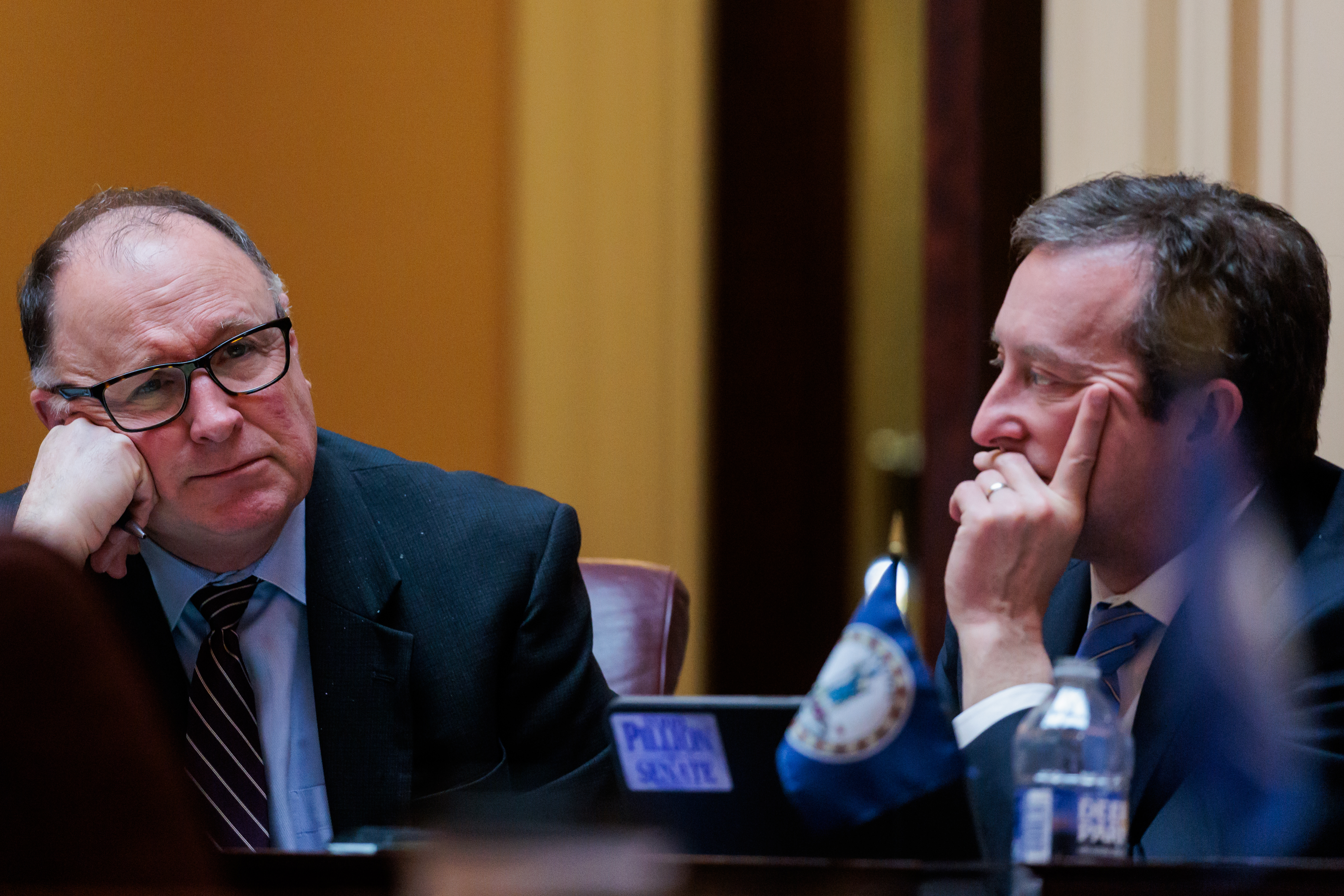
“Growing up out in the country, I’m used to being in the black for 24 hours sometimes, and I don’t think the underground lines would have ever been knocked out by wind or snow or rain,” Deeds said. “So I’m not complaining about the program, but the reason it wasn’t adopted is that it doesn’t make electricity more affordable.”
Dana Wiggins, director of the Center for Economic Justice at the Virginia Poverty Law Center, said she supported extending the assistance program, but that charity won’t offset the rising cost of electricity for most customers while additional programs make their bills go up.
“Undergrounding, all of those other things are laudable, but if you look at, as Mr. Browder had said at the subcommittee meeting, the cost benefit analysis doesn’t actually weigh out in terms of actual cost of undergrounding versus the benefits of the reliability,” Wiggins said.
The subcommittee agreed to just move forward with the assistance and weatherization portion of the bill and allow the undergrounding program to be extended by separate legislation. But at a meeting of the full commission, Sen. Louise Lucas (D–Portsmouth) moved to tie the two programs back together.
The commission approved that change, with Browder the lone opposition.
What about Spanberger’s plan?
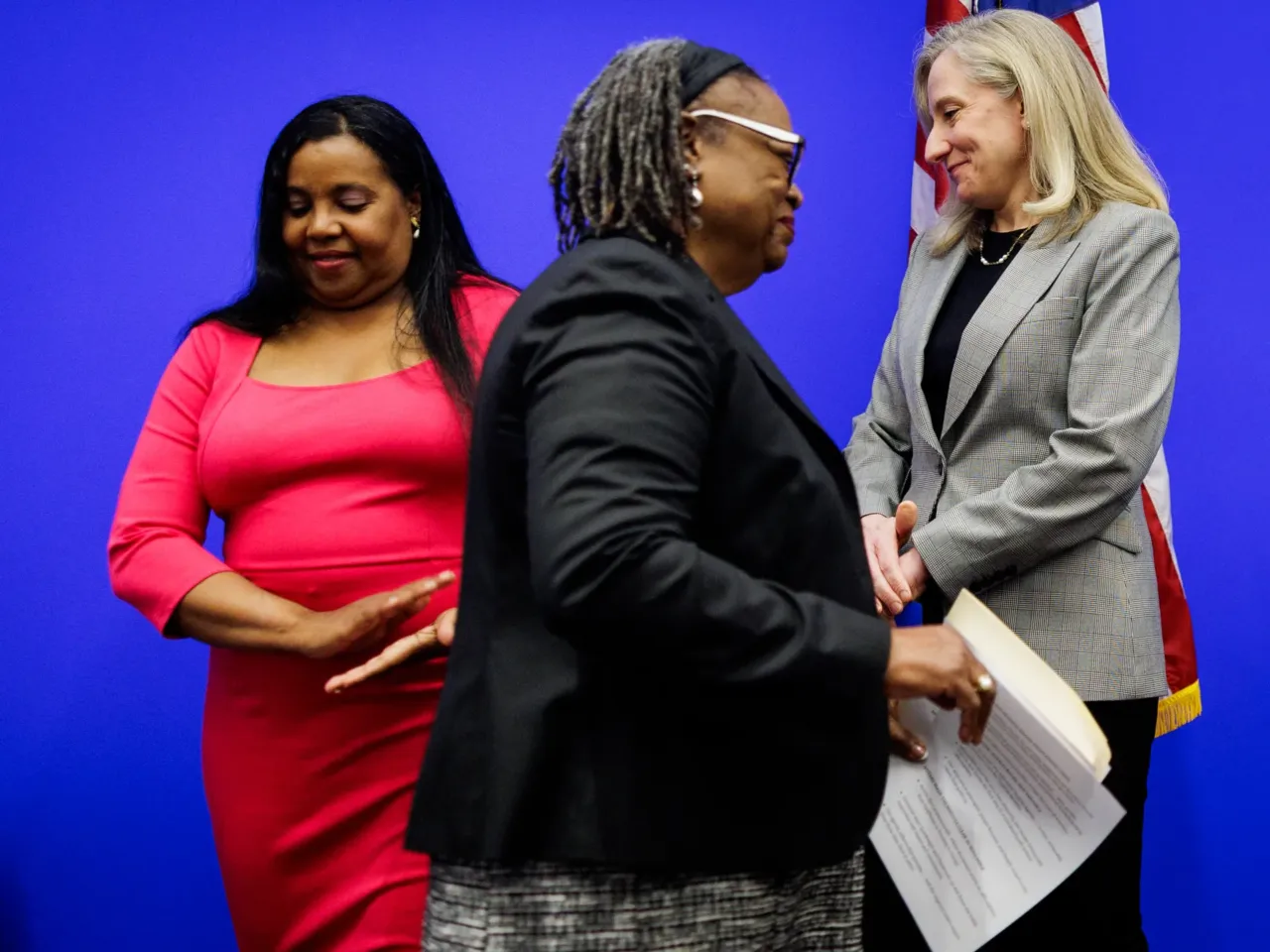
The governor-elect announced a slate of affordability proposals in December, including six energy-related policies.
Her proposals focused on increasing renewable energy deployment and expanding energy efficiency programs. She also proposed ordering the State Corporation Commission to check the calculations of utilities when planning for future demand growth and take a closer look at which transmission lines have extra capacity — in theory, avoiding the need for expensive, often controversial projects.
She did not include policies directly addressing data centers and their costs. A slate of bills on the electron- and water-hungry facilities drew attention last session but mostly fell short of legislative approval. A watered-down version of one bill would have required localities to order sound pollution studies on proposed data centers — Youngkin vetoed that as well.
Spanberger also avoided commenting on the Virginia Clean Economy Act. The 2020 law which orders Dominion and APCo to retire fossil-fueled power plants by 2050, barring reliability concerns, has drawn consistent criticism from Republicans. More recently, some Democrats — including House Speaker Don Scott of Portsmouth — have suggested the law could be subject to changes in the upcoming session.
Copyright 2025 VPM