“We’re going to legislate. It’s not a Trump agenda, it’s a Virginia agenda.”
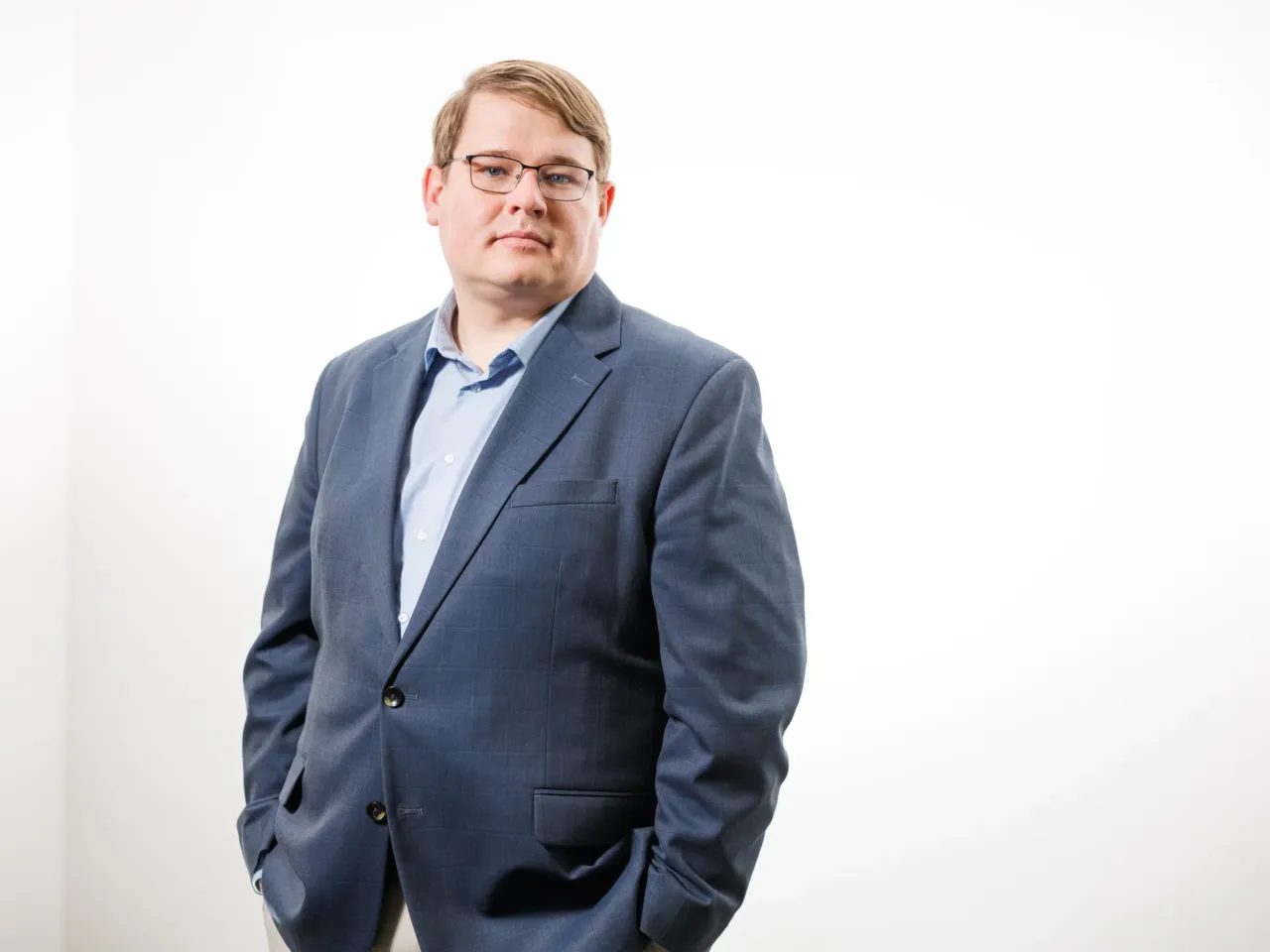
Del.-elect Mitchell Cornett (R–Grayson) is about to take over House District 46 from one-term Republican Jed Arnold. The Southwest Virginia district is strongly Republican – Cornett, a Republican and a self-described Trump supporter, took almost 78% of the vote in November.
The 31-year-old Grayson County native is a former member of its board of supervisors, a volunteer firefighter and an emergency medical technician. Cornett works as a realtor and is a fifth-generation cattle farmer.
VPM News Reporter Billy Shields recently spoke with Cornett from his district via video chat, as part of a series of interviews conducted with the newest members of Virginia’s House of Delegates, elected in November of 2025. (Links to interviews with the other delegates can be found at the bottom of this story.)
In the interview, Cornett spoke about health care issues facing his rural district, energy costs and working with Democrats to pass legislation.
This interview has been lightly edited for style and clarity.
Billy Shields: Could you introduce yourself?
Mitchell Cornett: I’m a real estate broker and cattle farmer; those are my main occupations. I’m also a volunteer paramedic now, and used to be a full-time paramedic and volunteer firefighter. I’m a fifth-generation cattle farmer here in Grayson County. I’ve been here my entire life, and I don’t have any plans to leave. I’ve always been dedicated to public service and interested in helping the community in any way that I can.
During the campaign, what were some issues that people in Grayson County were talking to you about?
People were speaking to me about the cost of living and energy costs. My campaign focused a lot on that and lowering taxes. There were social issues, as well, but for the most part it was cost of living and lower taxes — that’s what people here were really wanting.
You’re a Republican that got elected during a “blue wave” that swept across the state. How do you hope to get some of your own measures off the ground?
I’m in one of the most conservative parts of the state, in Southwest Virginia, but we’re also very economically distressed. We need a lot of economic development. We need wins in Richmond. It’s my goal to work across the aisle where we can for all of Virginia, especially the 46th District.
I’ve been out in Wise County, and I was asking about where the local hospitals were and where the locals would get their teeth fixed if they needed that? Most people would tell me things like, “We’d go to Tennessee or North Carolina.” What are some things that you deal with in Grayson County that you’re going to keep top of mind this legislative session?
Health care is a major issue. Keeping our hospitals open, with some of the federal cuts, is a challenge to having good access to health care. It’s the same with pharmacies. Grayson County is a pharmacy desert. I think it’s the only county in the district that is, but that’s a big issue with our local pharmacies having problems all across the district.
Access to health care is something that a lot of Democrats ran on in this election as well. How would their vision of access to health care differ from yours?
Most Democrats are from more urban areas than rural areas, and we have unique challenges in rural areas. I think there’s going to be some common ground there, but we’re just going to have to see how that plays out. There are a lot of unknowns with the federal funding cuts.
Another big issue in the area is energy costs. That’s a statewide thing, but especially here in Southwest Virginia, we have some of the highest rates in the state. People just cannot afford it, and it’s tough on businesses and bringing businesses in. We’re right next door to North Carolina and to Tennessee, and they have lower taxes for corporations to come in and lower energy costs. It really makes it tough for this area of the state. A lot of focus is on competing with Maryland, but in our area of the state, we have North Carolina and Tennessee, and it’s really tough to compete with those guys.
A big driver has been the Virginia Clean Economy Act, in my opinion. We just weren’t really prepared.
There’s a big push to meet the requirements for solar- and wind-generated energy. We have a lot of farmland in my district; that’s the main thing here. And farmers don’t want to put solar panels on good, productive farmland. I wholeheartedly agree with that. Once that land’s lost, it’s lost. There have been a few solar farms in the area, and there have been some bad experiences there. People are very wary of that.
Some people would say that data centers are behind the rise in energy costs in the state. What’s your take on data centers?
I believe they do play a part in that. I think we need to take care of the ratepayers first — the little guy — and the data centers should be pulling their weight.
They do bring some great economic opportunities, especially to areas that are economically distressed, but we have to be sure that we put individuals and small businesses first. We need to be sure that we can afford reliable electricity for all of our businesses and all of our people.
The Democrats have the House of Delegates, they’ve got the Senate, and they’ve also got the governor’s mansion. What concerns you about the direction that the state could head into in the next two years?
Well, there’s several things that concern me. Energy is one of the top issues, but also a lot of social issues. I’m in a very conservative part of the state. Down here, we like our guns. We like our Second Amendment rights. Many things are on the table that the people in my district do not agree with, but that’s why we have elections. We’ll stand up for people in my district, and hopefully — where we can — we’ll find some common ground on issues.
One of the things that members of your party have to contend with right now is whether you will embrace President Donald Trump’s agenda, or how much distance you’re willing to make for yourself there. What are your thoughts on that?
It played a big part in this election, but state politics is totally different in Virginia. I’ve made no qualms that I was a Trump supporter and continue to be. Now, do I agree with everything? No, but it’s just kind of where we are at this point.
We’re going to legislate. It’s not a Trump agenda, it’s a Virginia agenda, and I’m going to do the best thing for my district.
Fast-forward two years. How would you look back and define success?
Passing some bills, getting some wins for my district. Just standing up and getting things for the district is a big concern. And moving forward, having good working relationships, moving up in seniority, and hopefully, coming back in two years to continue to build those relationships and get things for our district.
Read VPM News’ interviews with incoming delegates:
Del.-elect Jessica Anderson (HD-71)
Del.-elect Kacey Carnegie (HD-89)
Del.-elect Stacey Carroll (HD-64)
Del.-elect Mitchell Cornett (HD-46)
Del.-elect Lindsey Dougherty (HD-75)
Del.-elect Mark Downey (HD-69)
Del.-elect Elizabeth Guzman (HD-22)
Del.-elect John McAuliff (HD-30)
Del.-elect Leslie Mehta (HD-73)
Del.-elect May Nivar (HD-57)
Del.-elect Virgil Thornton Sr. (HD-86)
Copyright 2026 VPM