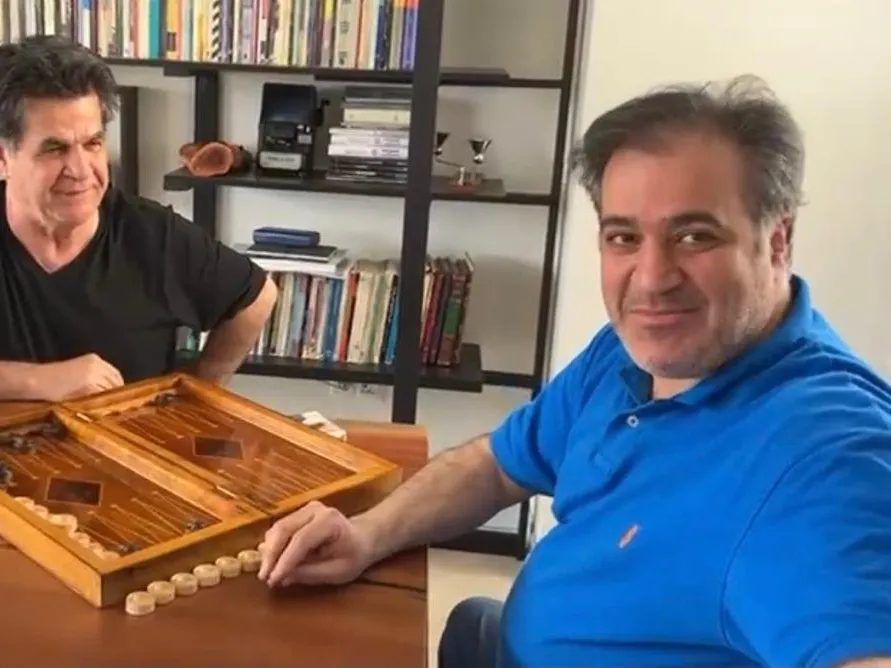
Iran’s acclaimed dissident director Jafar Panahi first met his Oscar-nominated screenwriter Mehdi Mahmoudian in prison in 2022. Their humanist ideals made them fast friends during the seven months they spent behind bars.
So when Mahmoudian didn’t respond to Panahi’s texts on one recent night, the filmmaker knew something was wrong.
“Together with some other friends, we were suspicious that he might have been arrested. And lo and behold, that afternoon we saw on the news that he, together with [Vida Rabbani and Abdullah] Momeni, was arrested,” Panahi told Morning Edition host Leila Fadel, speaking through an interpreter.
The Feb. 3 arrest took place just weeks before the Academy Awards, for which Panahi’s film It Was Just an Accident has been nominated for Best International Feature and Best Original Screenplay, which Mahmoudian co-wrote. The film also won the Palme d’Or, the top prize, at the Cannes Film Festival last year.
Mahmoudian landed in prison — Panahi estimated this was about his eighth time in jail — after adding his name to a statement condemning Iran’s supreme leader, Ali Khamenei, for a brutal crackdown on protesters that has killed thousands.
The note, which Panahi also signed along with human rights lawyers and activists, says that “the primary responsibility for these atrocities lies with Ali Khamenei, the leader of the Islamic Republic, and the repressive structure of the regime.”
It Was Just an Accident follows a group of former prisoners who think they’ve found the man who tortured them during their incarceration and struggle over what to do with him. Shiva, a character played by Mariam Afshari, suggests that “it’s not because they resorted to violence that we should too.”
The film was shot in secret in and around Tehran — in remote desert locations, inside vehicles and on city streets — despite government restrictions.
“It is very clear, no matter how angry they might be at a person, at the end of the day, they’re going to choose nonviolence over violence,” Panahi said of both his characters and Iran’s pro-democracy protesters.
It’s a quality he also found in Mahmoudian, recalling how the activist went out of his way to help out interrogators stuck under the rubble after Israel launched airstrikes on Tehran’s notorious Evin prison, where he was held during the 12-Day War last year.
“The thing that stood out to me about him was that it didn’t matter who the prisoner was, from what category or school of thought or for what crime … they were there in prison. He immediately attended to the person, to their needs,” Panahi said.
He had Mahmoudian, a human rights campaigner, help make the script more “believable” based on his own experiences in prison.
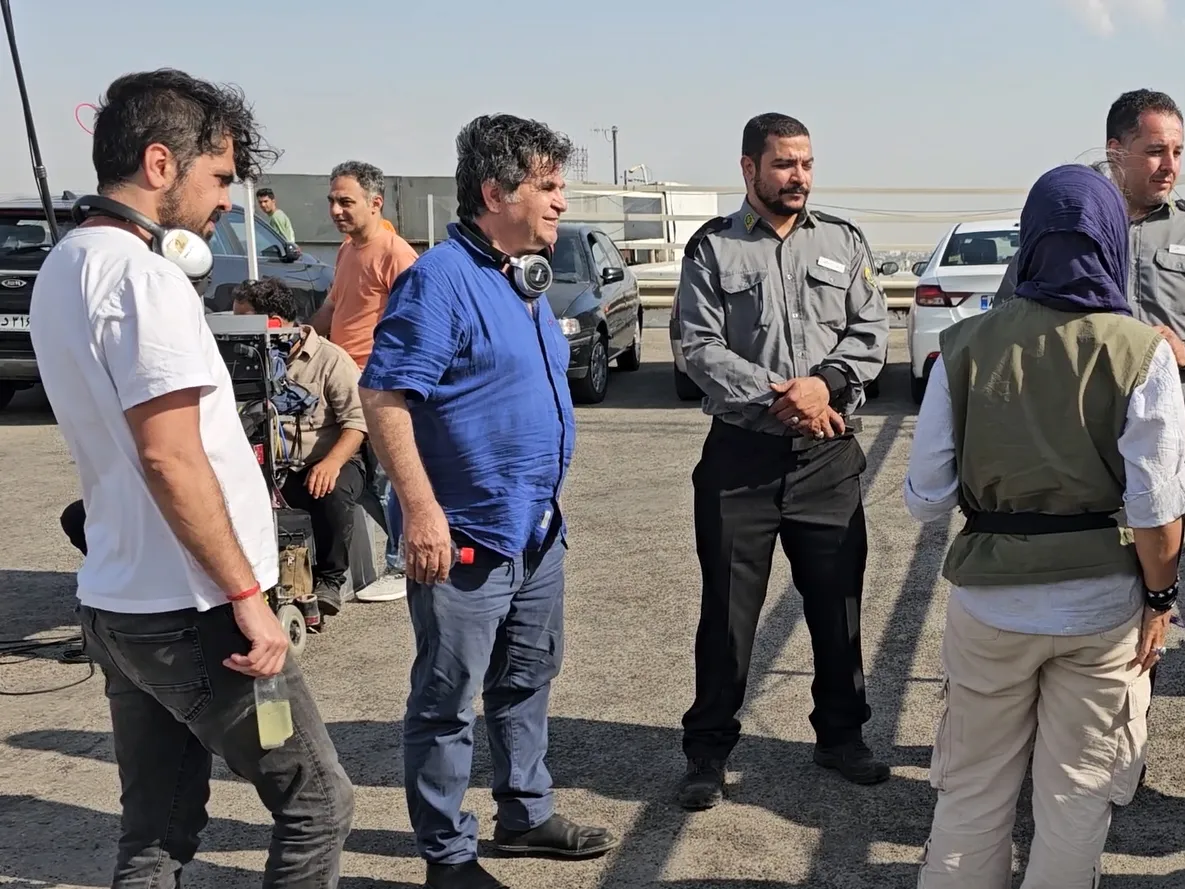
Panahi has himself been jailed repeatedly for his political activism and his films that criticize the regime. As he watched some of the most recent violence unfold in the streets of his native country, he says he’s been asking himself how the violence will end and stop repeating itself.
“The regime wants everything to end in violence and they want to institutionalize violence in people,” he said.
“This regime has collapsed and it is a failed state in any way you can possibly imagine. It is a failed state politically, ideologically, economically, culturally and environmentally. And it is not going to be able to last. The only reason it has survived is because of the amount of force it has used.”
As a “socially engaged filmmaker,” Panahi said he has little hope for any international intervention to make a lasting impact on the crisis.
“At the end [of the day], you know what the results will be because the regime is going to support and protect its own ideology. It’s not going to protect the country or the people of the country,” he said.
“So any international support has to be representing the demands of people, but it cannot be giving support to the existence of the regime.”
The broadcast version of this story was produced by Milton Guevara. The digital version was edited by Suzanne Nuyen.
Copyright 2026 NPR