Copyright © 2026 VPM, all rights reserved.
PBS is a 501(c)(3) not-for-profit organization.
VPM News Morning Edition
NEXT UP: 9:00 AM

Thanks to our sponsors – Become a Sponsor

Mourners pay their respects to civil rights leader Jesse Jackson in Chicago

MICHEL MARTIN, HOST:

For a second day, members of the public will have a chance to pay their respects to the Reverend Jesse Jackson. He’s lying in repose at the organization he founded decades ago, the Rainbow PUSH Coalition. Jackson died just over a week ago. The civil rights icon will also be honored in South Carolina and Washington, D.C., before his funeral is held in Chicago next week. NPR’s Cheryl Corley reports.

(SOUNDBITE OF BIRDS CHIRPING)

CHERYL CORLEY, BYLINE: People waiting to enter the Rainbow PUSH Coalition building Thursday lined up behind metal barricades before being led into the building. Chicagoan Curtis Lawrence, a former professor and journalist, came early and says Jackson simply had a way of connecting with people.

CURTIS LAWRENCE: Jesse Jackson told everybody not that they could be somebody, but that they were an activist, too. So I think the thing was to not just to look for a leader, but to look for the leader in you. And I think that’s what he left with everybody.

CORLEY: Standing nearby, Christine Harris (ph) called Jackson a hero. She traveled from Texas to say her goodbyes. She says Jackson’s presidential runs had a huge impact on her.

CHRISTINE HARRIS: I was a delegate in Texas for him in ’88 to the state convention. And he just inspired me. And I ended up going into – I was a paralegal for a civil rights firm after that for 25 years.

(SOUNDBITE OF MUSIC)

CORLEY: Inside the auditorium, there’s music and Jackson’s open casket, surrounded by flowers. A montage of photos plays on a screen while Jackson’s relatives and dignitaries shake hands and hug people as they approach. Later, Chicago Mayor Brandon Johnson said Jackson was both a friend and a mentor. Johnson says he now tells young people that the opportunities they and others have today came from struggle.

BRANDON JOHNSON: And that Reverend Jesse Jackson Sr. was a part of that struggle to create opportunities for young people. And my hope is that, as we face tremendous challenges in this particular political climate, that young people draw hope and strength from Reverend Jackson’s life.

CORLEY: Chicago Archbishop Blase Cupich met Jackson on Good Friday in 2015 during a march against gun violence. He says Jackson’s familiar tagline, keep hope alive, sums up what Jackson’s life was about.

BLASE CUPICH: He knew that there’s a difference between hope and optimism. Optimism is about tomorrow. Hope is about today. We have to do things now. There’s an urgency. And I think that really motivated his life to make sure we don’t put off promoting justice and equality.

CORLEY: And the cardinal added that Jackson was a man of the cloth driven by a deep faith, who wanted peace, not violence, and had an urgent need to help the vulnerable.

Cheryl Corley, NPR News, Chicago. Transcript provided by NPR, Copyright NPR.

NPR transcripts are created on a rush deadline by an NPR contractor. This text may not be in its final form and may be updated or revised in the future. Accuracy and availability may vary. The authoritative record of NPR’s programming is the audio record.
Tags

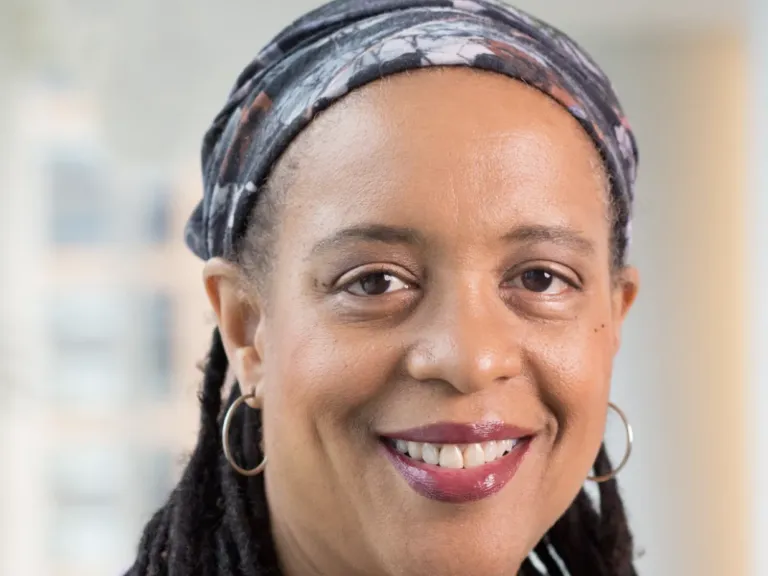
Cheryl Corley is a Chicago-based NPR correspondent who works for the National Desk. She primarily covers criminal justice issues as well as breaking news in the Midwest and across the country.

In her role as a criminal justice correspondent, Corley works as part of a collaborative team and has a particular interest on issues and reform efforts that affect women, girls, and juveniles. She's reported on programs that help incarcerated mothers raise babies in prison, on pre-apprenticeships in prison designed to help cut recidivism of women, on the efforts by Illinois officials to rethink the state's juvenile justice system and on the push to revamp the use of solitary confinement in North Dakota prisons.

For more than two decades with NPR, Corley has covered some of the country's most important news stories. She's reported on the political turmoil in Virginia over the governor's office and a blackface photo, the infamous Trayvon Martin shooting in Florida, on mass shootings in Orlando, Florida; Charleston, South Carolina; Chicago; and other locations. She's also reported on the election of Chicago's first black female and lesbian mayor, on the campaign and re-election of President Barack Obama, on the devastation caused by Hurricane Katrina and oil spills along the Gulf Coast, as well as numerous other disasters, and on the funeral of the "queen of soul," Aretha Franklin.

Corley also has served as a fill-in host for NPR shows, including Weekend All Things Considered, Morning Edition, and defunct shows Tell Me More and News and Notes.

Prior to joining NPR, Corley was the news director at Chicago's public radio station, WBEZ, where she supervised an award-winning team of reporters. She also worked as the City Hall reporter covering the administration of the city's first black mayor, Harold Washington, and others that followed. She also has been a frequent panelist on television news-affairs programs in Chicago.

Corley has received awards for her work from a number of organizations including the National Association of Black Journalists, the Associated Press, the Public Radio News Directors Association, and the Society of Professional Journalists. She earned the Community Media Workshop's Studs Terkel Award for excellence in reporting on Chicago's diverse communities and a Herman Kogan Award for reporting on immigration issues.

A Chicago native, Corley graduated cum laude from Bradley University in Peoria, Illinois, and is a former Bradley University trustee. While in Peoria, Corley worked as a reporter and news director for public radio station WCBU and as a television director for the NBC affiliate, WEEK-TV. She is a past President of the Association for Women Journalists in Chicago (AWJ-Chicago).

She is also the co-creator of the Cindy Bandle Young Critics Program. The critics/journalism training program for female high school students was originally collaboration between AWJ-Chicago and the Goodman Theatre. Corley has also served as a board member and president of Community Television Network, an organization that trains Chicago youth in video and multimedia production.

Related Stories