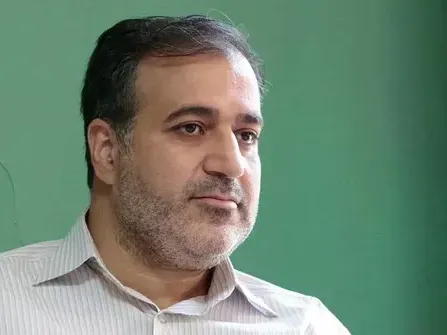
Iranian political and human rights activist Mehdi Mahmoudian has been in and out of his country’s prisons over decades for daring to dissent.
On February 17, he was released from his latest stint. He had been arrested for being among 17 political activists, artists and human rights lawyers who signed an open letter blaming then Supreme Leader Ali Khamenei for the killing of thousands of anti-government protesters.
Eleven days after Mahmoudian’s release from the Nowshahr prison, the U.S. and Israel launched a war on Iran. Khamenei was killed on the first day, but the conflict is widening.
Iran is retaliating against its Gulf neighbors, key U.S. ally Azerbaijan says it was hit by Iranian drones, Israel is striking Iran-back Hezbollah targets in Lebanon and European countries are rushing to deploy military assets to the region.
“Unfortunately, I don’t see a bright future,” Mahmoudian told Morning Edition host Leila Fadel. “If we cannot break this cycle of violence, it will go on forever.”
Mahmoudian is also the co-writer — alongside director Jafar Panahi — of It Was Just an Accident, a contender for best international feature film and best original screenplay at the Oscars on March 15. He shared with NPR his thoughts on this precarious chapter of Iran’s history.
Listen to the full interview by clicking on the blue play button above.
The following exchange has been edited for length and clarity.
Leila Fadel: You’re in Tehran right now. Can you tell me what it’s like where you are?
Mehdi Mahmoudian: I am in the center of Tehran. The scale of shelling here has become less intense since last night. Right now, they are attacking the east side of Tehran. In the central areas, it is quieter compared to yesterday.
Fadel: What’s it like to have to be living through this right now?
Mahmoudian: There is almost nothing beautiful about a war. But this war also brought us some happiness — the death of someone who, for years, took the Iranian people hostage. It’s a war where we’re watching people who were walking beside us yesterday, who are gone today.
Fadel: I just want to ask about that particular person, Iran’s Supreme Leader Ayatollah Ali Khamenei. When you heard he’d been killed, you had been jailed over blaming the supreme leader for the killing of protesters. What went through your head?
Mahmoudian: I had two feelings about the death of Mr. Khamenei. One was happiness because of the death of a dictator. The other is my sorrow for the way he died. Mr. Khamenei shouldn’t have died, he should have been prosecuted in a court, so no one else dares to reestablish tyranny. Mr. Khamenei was killed by people who, in 1953, toppled a beloved government in Iran and replaced it with a dictatorship. They installed a dictator who, for the next 25 years, controlled the destiny of our people. And I am worried that this time the United States will replace one dictator with another to rule Iran.
Fadel: You’re referring to when the U.S. intervened in the fifties. You’re worried that the U.S. will then once again just put a U.S.-aligned dictator?
Mahmoudian: Yes, I am worried. Recently, what the U.S. did in Afghanistan was the same. After 20 years of war in Afghanistan, the U.S. left the country and its people in the hands of dictators and tyrants like Al-Qaeda and the Taliban.
Fadel: When you say you had these two feelings about the killing of the supreme leader, happiness because he’s a dictator, he is responsible for the killing of Iranians, for the repression of Iranians. But you also wanted him to face his accusers. Is it about him having to face the people that he hurt and killed? Is it about having the world see that justice was served here?
Mahmoudian: Here is what is important to me: I don’t want a repeat of the past. And what is clear here is that Mr. Khamenei is the first person responsible for recent crimes in Iran. We believe that whether he is dead or alive, if the structures he built do not end or if the person who replaces him is a tyrant who wants to rule alone, the outcome will be the same.
Fadel: What do you want to see happen in Iran at this moment?
Mahmoudian: Our hope is that the Islamic Republic will relinquish power and transfer it to the people. Those opposing the Islamic regime within the country should rise to power, and through a referendum, we should decide what kind of people we want. This way, we can establish a democratic regime in Iran. This is what we’ve fought for over the decades.
Fadel: When you think about the future now, is it possible to break that cycle? I mean, often people take vengeance when they see somebody who has hurt them, who has killed their family, who has tortured them. And we’ve seen that cycle in Syria, in Iraq and other places where dictatorships have been in place and then replaced. Can it be different for Iran?
Mahmoudian: Unfortunately, I don’t see a bright future. I cannot say that the people of Iran want to or have already reached the point where they are seeking justice instead of revenge. I want to emphasize that I’m not talking about forgiveness. I’m talking about justice. My point is, if we cannot break this cycle of violence, it will go on forever. In the 1979 revolution, we saw many people executed, and now many people want to get their revenge. Probably those who are executed today have people who will want to seek revenge in the future. What can break this cycle of revenge as justice? If we stop and abolish the institutions responsible for past violence and those who committed these crimes are punished. But legal punishments must align with human rights laws.
Fadel: Just to clarify, when you say justice, you want them to be going to court, being tried under international humanitarian law? And what institutions need to be destroyed so that systemic repression can stop?
Mahmoudian: In Iran, our first step should be transitioning away from the Islamic Republic. What we need to see is that instead of revenge, there should be fair trials in Iran or at international institutions. However, I should emphasize that torturing and hurting citizens is justified within the structure of the Islamic Republic, and this is an obvious violation of human rights that we can address once we transition from the Islamic Republic.
The broadcast version of this story was produced by Lindsay Totty and Milton Guevara. Reena Advani and Olivia Hampton edited.
Copyright 2026 NPR