Copyright © 2026 VPM, all rights reserved.
PBS is a 501(c)(3) not-for-profit organization.
VPM News Morning Edition
NEXT UP: 9:00 AM

Thanks to our sponsors – Become a Sponsor

Native Americans react to Sen. Markwayne Mullin’s DHS appointment

SCOTT SIMON, HOST:

President Trump chose Senator Markwayne Mullin this week to replace Kristi Noem as head of the Department of Homeland Security. Senator Mullin is a member of the Cherokee Nation. Many Native American tribes had a fraught relationship with Kristi Noem, with several banning or restricting ICE agents from entering their land. As NPR’s Kirk Siegler reports, there’s now new hope that relations between tribes and DHS will improve.

KIRK SIEGLER, BYLINE: Shortly after the news broke that Noem was out, Senator Markwayne Mullin told reporters he may be a conservative Republican, but he’ll try to work across the aisle to ensure that the agency is keeping all Americans safe.

(SOUNDBITE OF ARCHIVED RECORDING)

MARKWAYNE MULLIN: There’s a lot of work we can do to get the Department of Homeland Security working for the American people. You know, Department of Homeland Security has a very broad jurisdiction.

SIEGLER: A jurisdiction that includes border security, but also disaster relief under FEMA and not to mention the 575 federally recognized tribes.

CHUCK HOSKIN JR: He treats tribes with respect.

SIEGLER: Chuck Hoskin Jr. is chief of the Cherokee Nation and knows Mullin well from working with him in Congress, but also as a Cherokee citizen.

HOSKIN: I’ve had different roles in the government of the Cherokee Nation. He’s had different roles in the Congress of the United States. And so over the years, we’ve developed a relationship, and I would call him a friend.

SIEGLER: Hoskin says Cherokees and many tribes were concerned about what they’d seen under Noem’s leadership, from delaying disaster aid to ICE agents arresting tribal members, accusing them of being in the country illegally. Chief Hoskin says Mullin understands and respects tribal sovereignty.

HOSKIN: He knows what that is and what it means. He knows that tribes are sovereign governments, and he’s treated us with respect. And so I think that is beneficial to Indian country to have that kind of leadership replace Secretary Noem.

SIEGLER: The 2002 creation of the Department of Homeland Security was never that popular in Indian country, known for its sardonic sense of humor. You’ll still see tribal members wearing T-shirts that read, The Original Homeland Security, Fighting Terrorism Since 1492. And Trump installing Noem at HHS came with immediate baggage. As South Dakota governor, all nine tribes in her state banned her from entering reservations for what they said was her refusal to follow treaties or consult with them.

ANGELIQUE EAGLEWOMAN: We continued to see that in her time with the Department of Homeland Security.

SIEGLER: Angelique EagleWoman is a member of the Sisseton-Wahpeton Oyate Tribe in South Dakota. She’s also an expert in tribal sovereignty at Mitchell Hamline School of Law in Minneapolis.

EAGLEWOMAN: She had governed a state with nine strong tribal nations and still allowed ICE agents to detain tribal and U.S. citizens. So tribal members have dual citizenship.

SIEGLER: This came to a head during the recent federal immigration crackdown in Minneapolis. ICE agents arrested several American Indians. That sparked tension and confusion as communication broke down between HHS and tribes over their whereabouts. It led to the Oglala Sioux tribe citing sovereignty to ban ICE from entering the Pine Ridge Reservation in South Dakota. Sources in Indian country say they’re looking forward to a course correction under Mullin and better relations.

HOSKIN: Because Markwayne Mullin himself has the same card I have…

SIEGLER: Again, Cherokee Chief, Chuck Hoskin Jr.

HOSKIN: …The Cherokee Nation citizenship card with my tribal citizenship on one side, and my federal Department of Interior-issued a card on the back. So he knows what that is and what it means.

SIEGLER: Mullin is expected to face confirmation in the U.S. Senate this month as DHS works to regain public trust across cities and Indian country. Kirk Siegler, NPR News, Boise.

(SOUNDBITE OF EZRA COLLECTIVE’S “SPACE IS THE PLACE”) Transcript provided by NPR, Copyright NPR.

NPR transcripts are created on a rush deadline by an NPR contractor. This text may not be in its final form and may be updated or revised in the future. Accuracy and availability may vary. The authoritative record of NPR’s programming is the audio record.
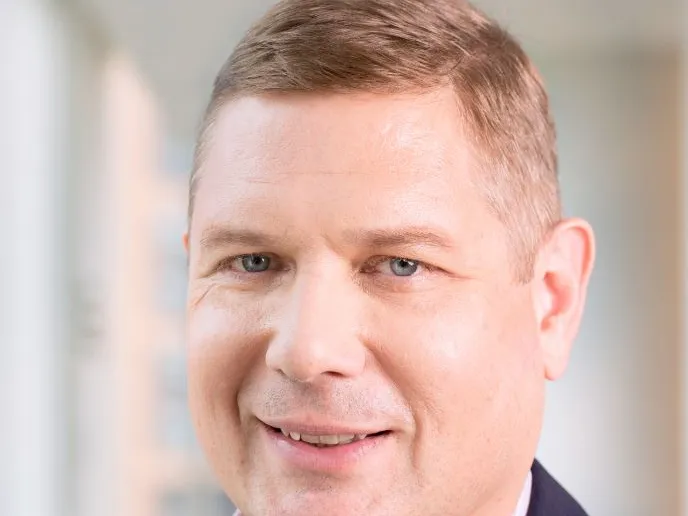
Eric Westervelt is a San Francisco-based correspondent for NPR's National Desk. He has reported on major events for the network from wars and revolutions in the Middle East and North Africa to historic wildfires and terrorist attacks in the U.S.

For a decade as a foreign correspondent, Westervelt served as NPR reporter and bureau chief in Baghdad, Jerusalem, and Berlin. He's covered the Pentagon, the war in Afghanistan, and the U.S. invasion and troubled occupation of Iraq, including the insurgency, sectarian violence, and the resulting social and political tumult.

He has reported on the ground from North Africa during revolutions there, including from Tahrir Square during fall of Egypt's Mubarak, the front lines during the civil war and NATO intervention in Libya, and the popular uprising in Tunisia. He's also reported from Yemen, the Arabian Gulf states, and the Horn of Africa, including Ethiopia, Djibouti, and the Somalia border region.

Westervelt was among the first western reporters to reach Baghdad during the 2003 U.S-led overthrow of Saddam Hussein embedded with the lead elements of the army's Third Infantry Division. He was also among the first western reporters to enter the Gaza Strip via Egypt during the 2008-2009 Israeli ground offensive in the coastal Palestinian enclave known as the Gaza War.

Westervelt has reported extensively across the U.S. on big stories and breaking news, from mass shootings to natural disasters and police use of force. He helped launch NPR's innovative, award-winning education platform NPR Ed, and serves as a guest host for NPR news shows.

Westervelt is currently helping to launch a collaborative team that covers America's criminal justice system, including issues and reform efforts surrounding prisons, policing, juvenile justice, and the courts.

He's been honored with broadcast journalism's highest honors, including the 2002 George Foster Peabody Award for coverage of the Sept. 11 terrorist attacks and the aftermath; the 2003 Alfred I. DuPont-Columbia University Award for coverage of Sept. 11 and the subsequent war in Afghanistan; and 2004 and 2007 DuPont-Columbia Awards for NPR's in-depth coverage of the war in Iraq and its effect on Iraqi society. Westervelt's 2009 multimedia series with the late NPR photojournalist David Gilkey won an Overseas Press Club Award. He also recently shared in an Edward R. Murrow RTNDA Award with NPR Ed for innovative education coverage.

In 2013, Westervelt returned to the U.S. from overseas as a visiting journalism fellow at Stanford University with the John S. Knight Journalism Fellowship

As Jerusalem bureau chief, Westervelt covered the failed diplomatic efforts to broker peace between Israel and the Palestinians, and the social, political, and cultural news across Israel and the occupied West Bank. He reported from the front lines of the 2006 war between Israel and Hezbollah known as the Second Lebanon War. He was on the ground for multiple Israeli-Hamas battles in the Gaza Strip and the Fatah-Hamas civil war and battle of Gaza City that led to the current political split within the Palestinian Authority.

While based in Berlin, Westervelt covered a broad range of news across the region, including the Euro debt crisis, the rise of far right nationalists, national elections, and more.

Prior to his Middle East assignments, Westervelt covered military affairs and the Pentagon out of Washington, DC, reporting on the major defense, national security, and foreign policy issues of the day. He began his work at NPR on the network's national desk where his coverage spanned the mass shooting at Columbine High School, the presidential vote recount following the 2000 election, and the Sept. 11 terrorist attacks reporting from the Ground Zero recovery in New York City, among many other stories.

On the lighter side, Westervelt also produces occasional features for NPR's Arts Desk, including for the series American Anthem, as well as Rock Hall Award profiles of blues great Freddie King and an exploration of roots rock pioneer Roy Orbison for NPR's 50 Great Voices series. His feature on the making of John Coltrane's jazz classic "A Love Supreme" was part of NPR's project on the most influential American musical works of the 20th century, which was recognized with a Peabody Award.

Before joining NPR, Westervelt worked as a reporter in Oregon and the Pacific Northwest, reported for the broadcast edition of the Christian Science Monitor, Monitor Radio, and worked as a news director and reporter in New Hampshire for NHPR.

Westervelt grew up in upstate New York. He's a graduate of the Putney School and received a Bachelor of Arts degree from Reed College. He was a recipient in 2013 of a J.S. Knight Fellowship at Stanford University.

Related Stories