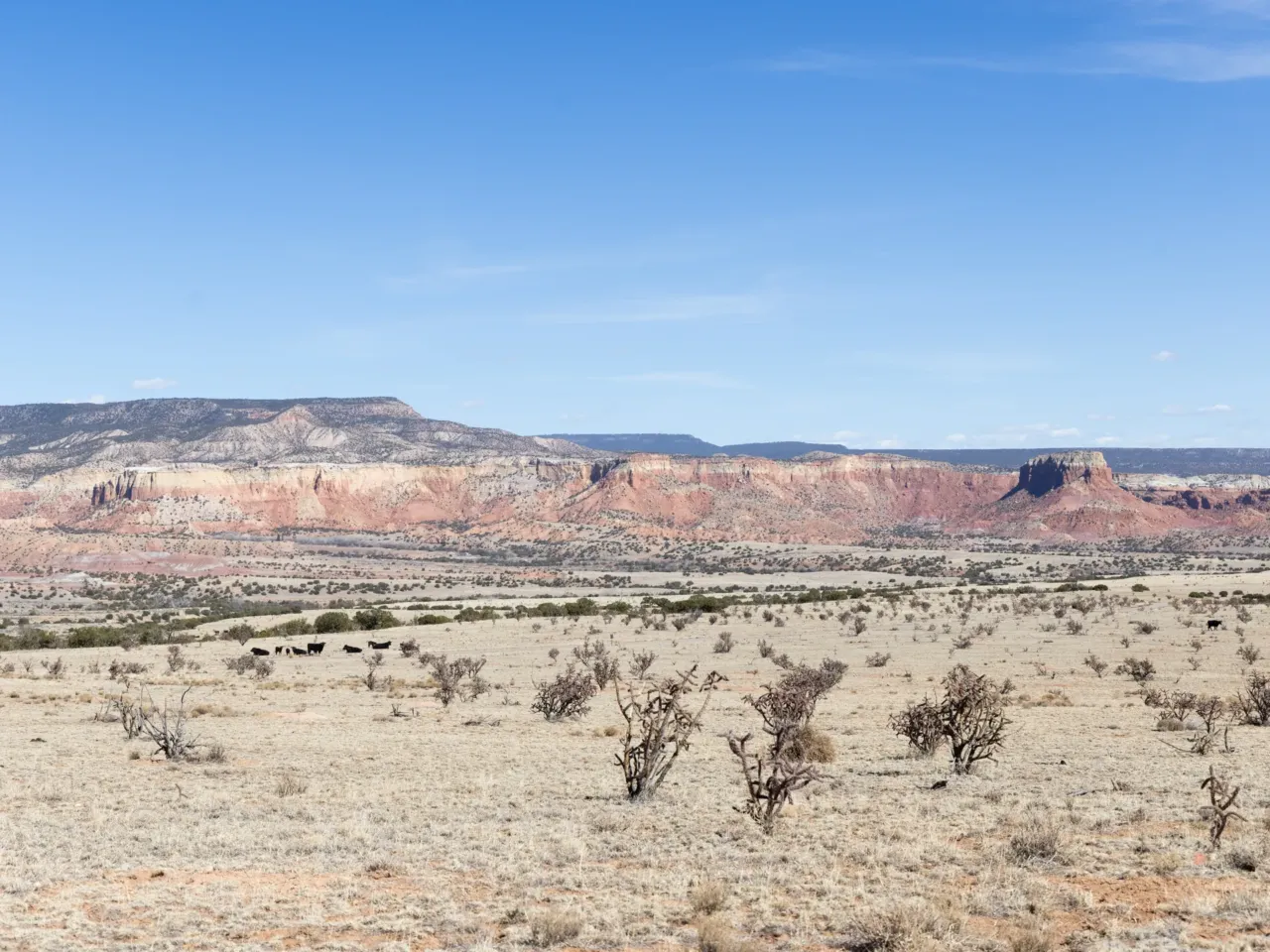
ABIQUIU, N.M. — On a recent afternoon, fluffy clouds drift past the sun, throwing light, then shadow, across distant cliffs layered in yellow, ochre and sienna.
This starkly beautiful, high desert of northern New Mexico is where the artist Georgia O’Keeffe lived and painted the abstract, color-drenched paintings of flowers, bones and landforms that brought her international acclaim as “the mother of American modernism.”
In the 40 years since her death, the area came to be called O’Keeffe County.
Today, however, that identity is shifting — culturally and legally.
There is a move afoot, prompted by Pueblo Indians and Hispanos who’ve been on the land for centuries, to stop calling it O’Keeffe Country. Moreover, a historic new conservation plan will protect that landscape, with its colorful cliffs and buttes, forevermore.
David Evans is the CEO of Ghost Ranch, best known as the home and inspiration of O’Keeffe. He stands on a bluff and scans the storied valley.
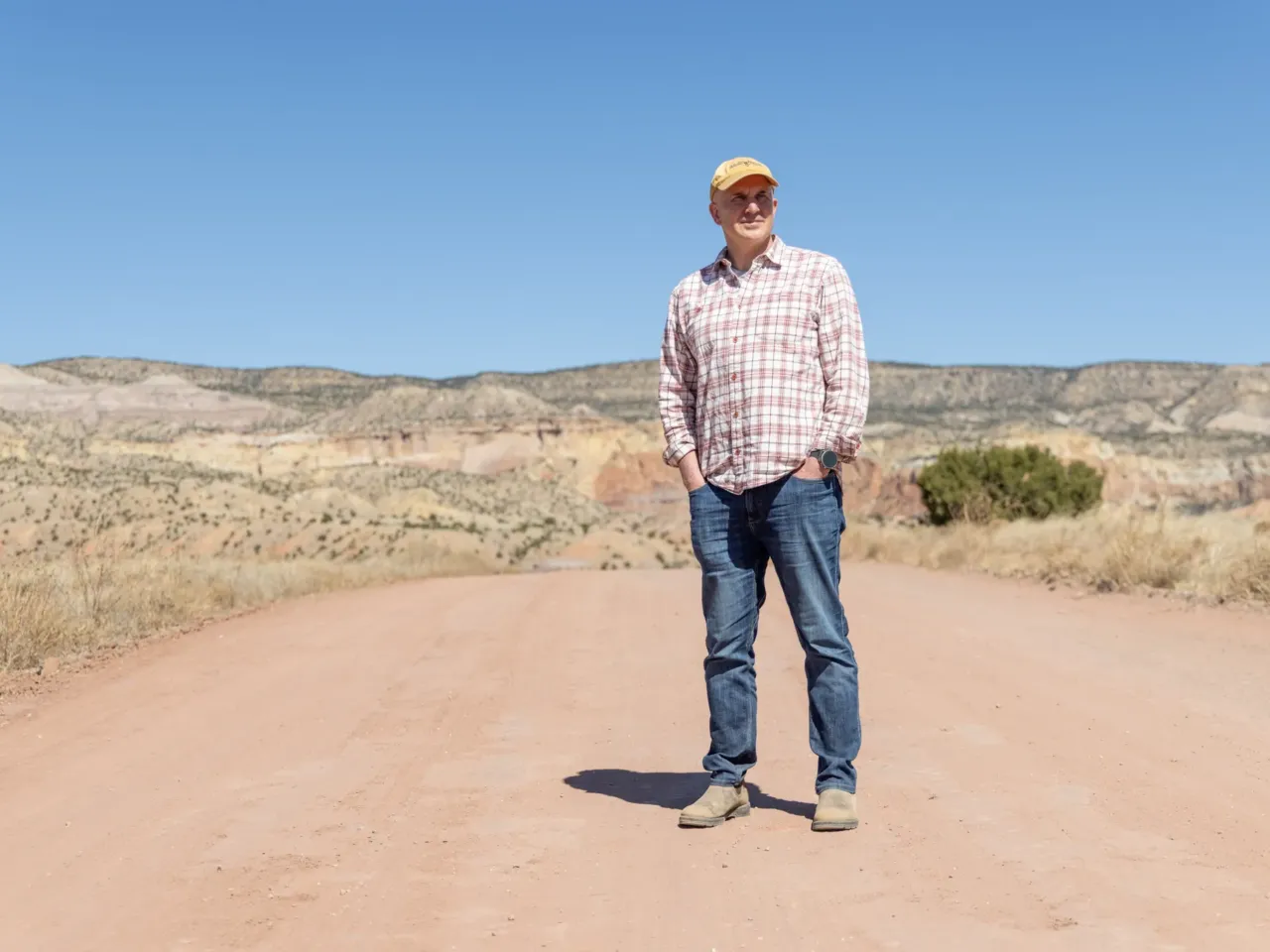
“Georgia O’Keeffe loved [this area] because of the same reasons everyone who visits loves it,” he says, “the richness of the colors of the cliffs against the sky, the way the light plays on it, the way the clouds move in. It’s incredible.”
Ghost Ranch is now a spiritual and educational retreat center just over an hour’s drive northwest of Santa Fe. The longtime owner of Ghost Ranch, Arthur Pack, who is a nationally prominent conservationist, donated it in 1955 to the Presbyterian Church, whose nonprofit foundation owns it today.
O’Keeffe fell in love with Ghost Ranch country when she first visited from New York in the 1930s. In an early letter to her famous photographer husband, Alfred Stieglitz, she described the landscape as “perfectly mad-looking country, hills and cliffs and washes too crazy to imagine, all thrown up in the air by God and let tumble where they would.”
In 1940, when Ghost Ranch was still a dude ranch, she purchased an adobe house there, Casa de los Burros. She spent most of the rest of her life painting the raw beauty of her surroundings. “There’s something in the air, it’s just different, the sky is different, the stars are different, the wind is just different,” O’Keeffe said in a mid-1970s public television documentary.
At 88, the legendary artist, dressed in a black smock, was filmed walking through the eroded sculptural features of the badlands, her face furrowed by age, her eyes still blazing. She died in Santa Fe at the age of 98.
“As soon as I saw it,” she said, “that was my country.”
Rewriting the narrative
My country.
That played well among her legions of admirers, but not so much in northern New Mexico among the Tewa, the indigenous people that include the Pueblo Indians.
Her favorite subject was Cerro Pedernal, the flat-topped mountain that stands like a sentinel over this basin. She painted it 29 times and had her ashes scattered on the summit. In one infamous quote, O’Keeffe said, “It’s my private mountain. It belongs to me. God told me if I painted it enough, I could have it.”
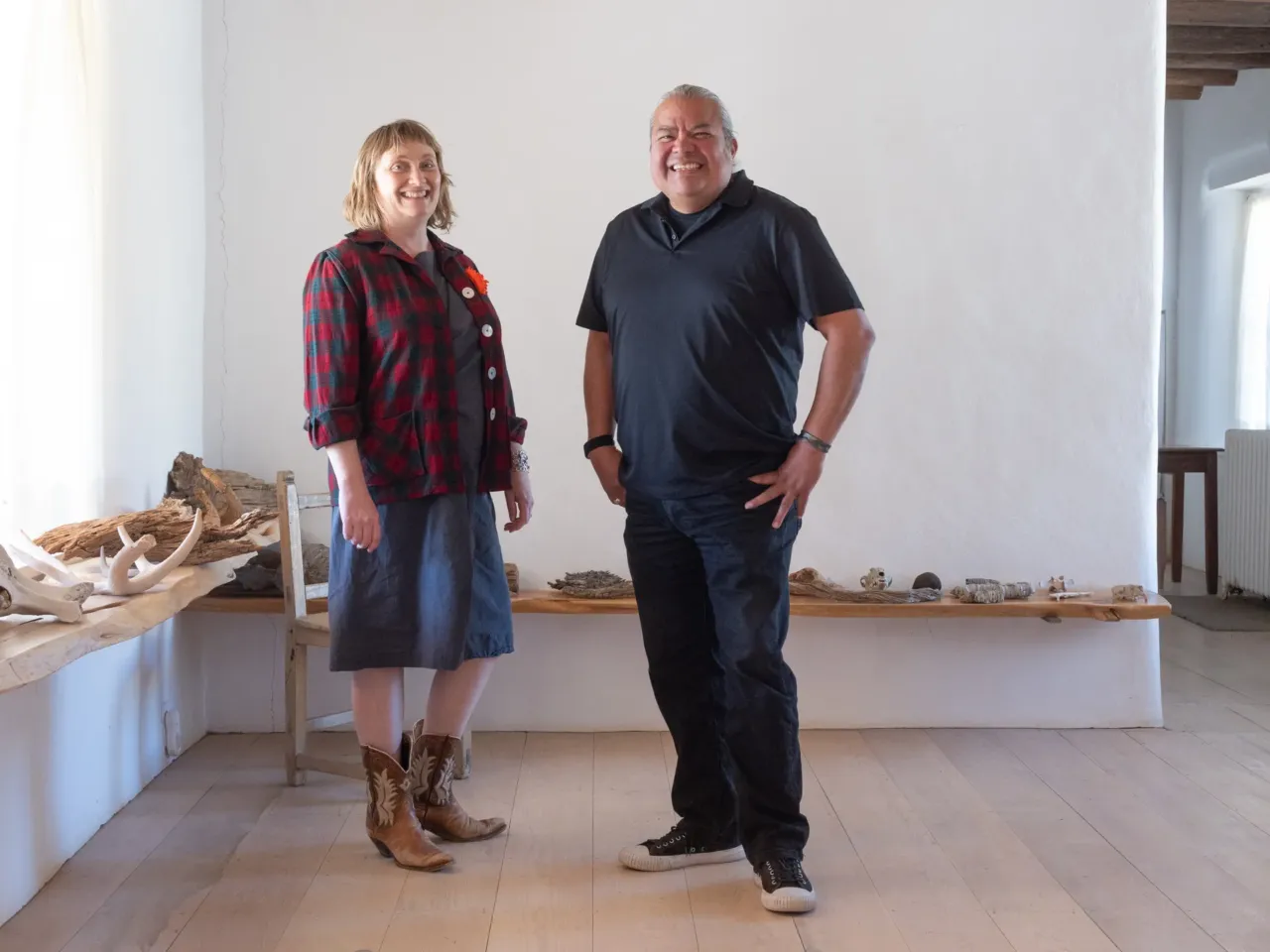
Tewa artist Jason Garcia of the Santa Clara Pueblo chuckles at the statement. He has also painted Pedernal, which Tewa consider a sacred landmark whose native name is Tsi-Pin, flaking stone mountain.
“It’s pretty funny to hear that, to think that one person can say, ‘If I paint this enough I can have it. God told me,’ ” Garcia says. “But it’s just not just hers. You have Tewa people that have lived here on the landscape, as well, since time immemorial.”
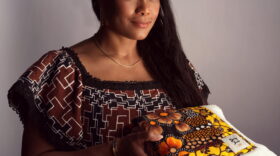
Garcia is co-curator of a groundbreaking exhibition called Tewa Nangeh at the Georgia O’Keeffe Museum in Santa Fe. Twelve Tewa artists respond, with their art, to O’Keeffe’s aesthetic claim to their ancestral land.
“At the O’Keeffe Museum, for so long the story of northern New Mexico has been told only through Georgia O’Keeffe’s eyes,” says Bess Murphy, co-curator of the exhibition and art curator at the museum. “And really we were hoping to create a space in the museum where we can add complexity to that narrative.”
The museum’s official poster for the exhibition highlights that changing narrative. A sign says, “Welcome to O’Keeffe Country” and “Tewa” has been scrawled across her name. Murphy says the Tewa-and-O’Keeffe show has doubled the number of local and native visitors who visit the museum.
Jonathan Hayden, executive director of the New Mexico Land Conservancy, which works closely with Ghost Ranch, gives credit to the museum “for really forcing people to reckon with the erasure of indigenous perspectives from ‘O’Keeffe Country.'”
Protecting the land
The artist’s legacy, nevertheless, remains a huge draw for Ghost Ranch and the region. A yearly music festival is held at the ranch, called Blossoms and Bones, after her still-lifes. The ranch’s classic logo is an O’Keeffe drawing of a cow skull. And just down the road, visitors can sign up for a tour of O’Keeffe’s second home and studio in the village of Abiquiú.
Like the museum, Ghost Ranch has also begun to reframe its narrative.
“O’Keeffe Country is not a frame that we use,” says Evans. “This country has a very rich history, and she’s an important part of it. But it’s not solely her story by any means.”
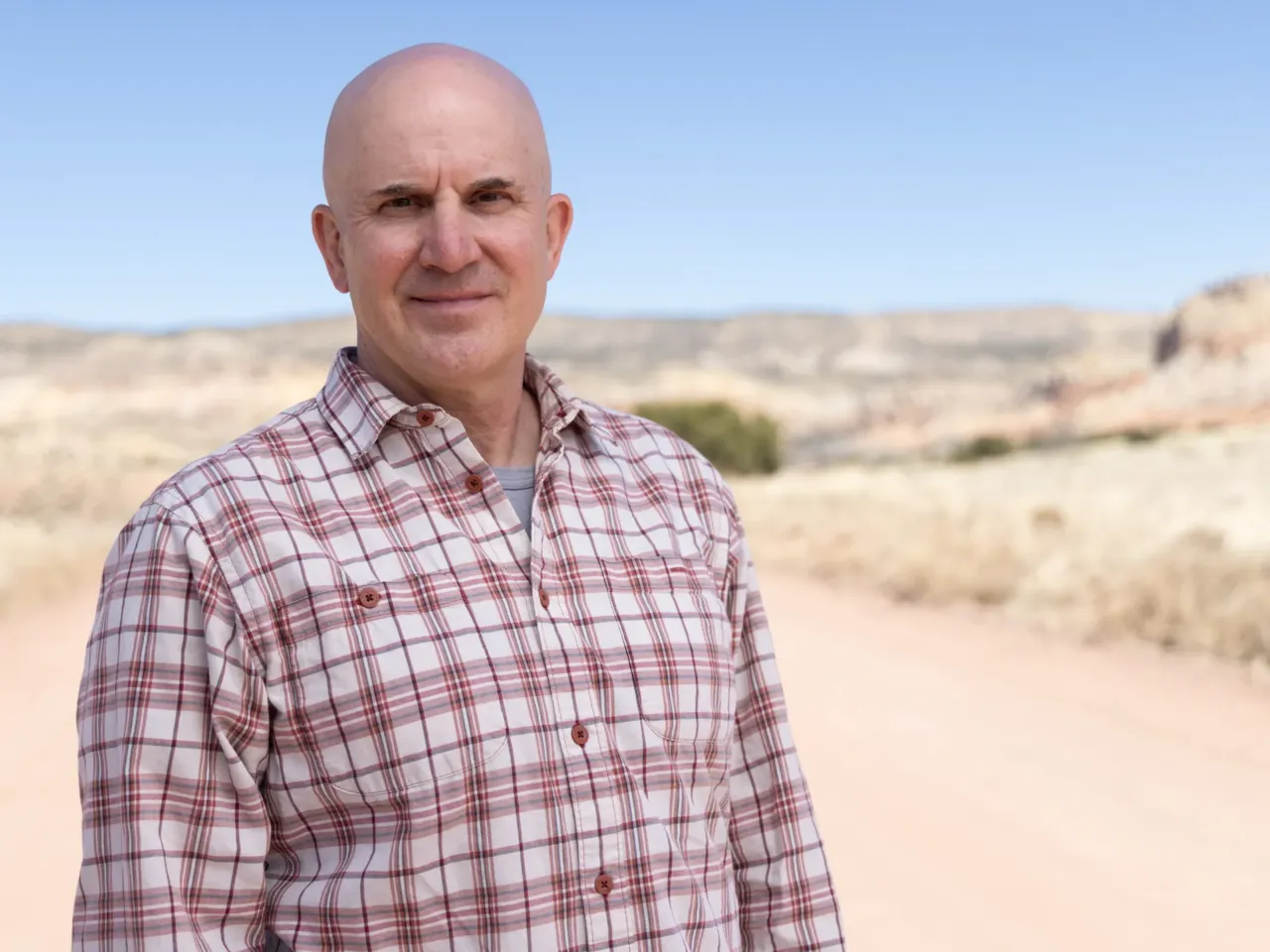
In December, the ranch announced a historic conservation agreement that will protect this pristine emptiness in perpetuity.
In the first phase — that covers 6,000 of the ranch’s 21,000 total acres — the New Mexico Land Conservancy will pay the church foundation nearly $1 million to preserve the vista and never develop the land. Funding comes from the state’s Land of Enchantment Legacy Fund. The arrangement bans things like ranchettes, cell-phone towers and Dollar Stores, while leaving intact the main Ghost Ranch facilities: visitor’s center, trails, lodging, stables, dinosaur museum and O’Keeffe’s home.
“This is truly a once-in-a-generation opportunity to protect one of the West’s most iconic landscapes,” says Hayden. “Acreage-wise it’s not the largest. But in terms of its meaning to people going back to indigenous cultures, to [Spanish] land grant heirs, and everyone inspired by the work of Georgia O’Keeffe, it’s truly a rare opportunity.”
Evans says protecting the ranch’s 30 square miles “is one of the most important parts of Ghost Ranch’s mission.” But, he adds, it’s expensive to maintain the vast property and ensure a great guest experience.
“We have over 100 buildings, 21,000 acres,” Evans says. “So it’s a tough business model. The revenue will really help to support our operating costs and to keep this open for future generations.”
The price of popularity
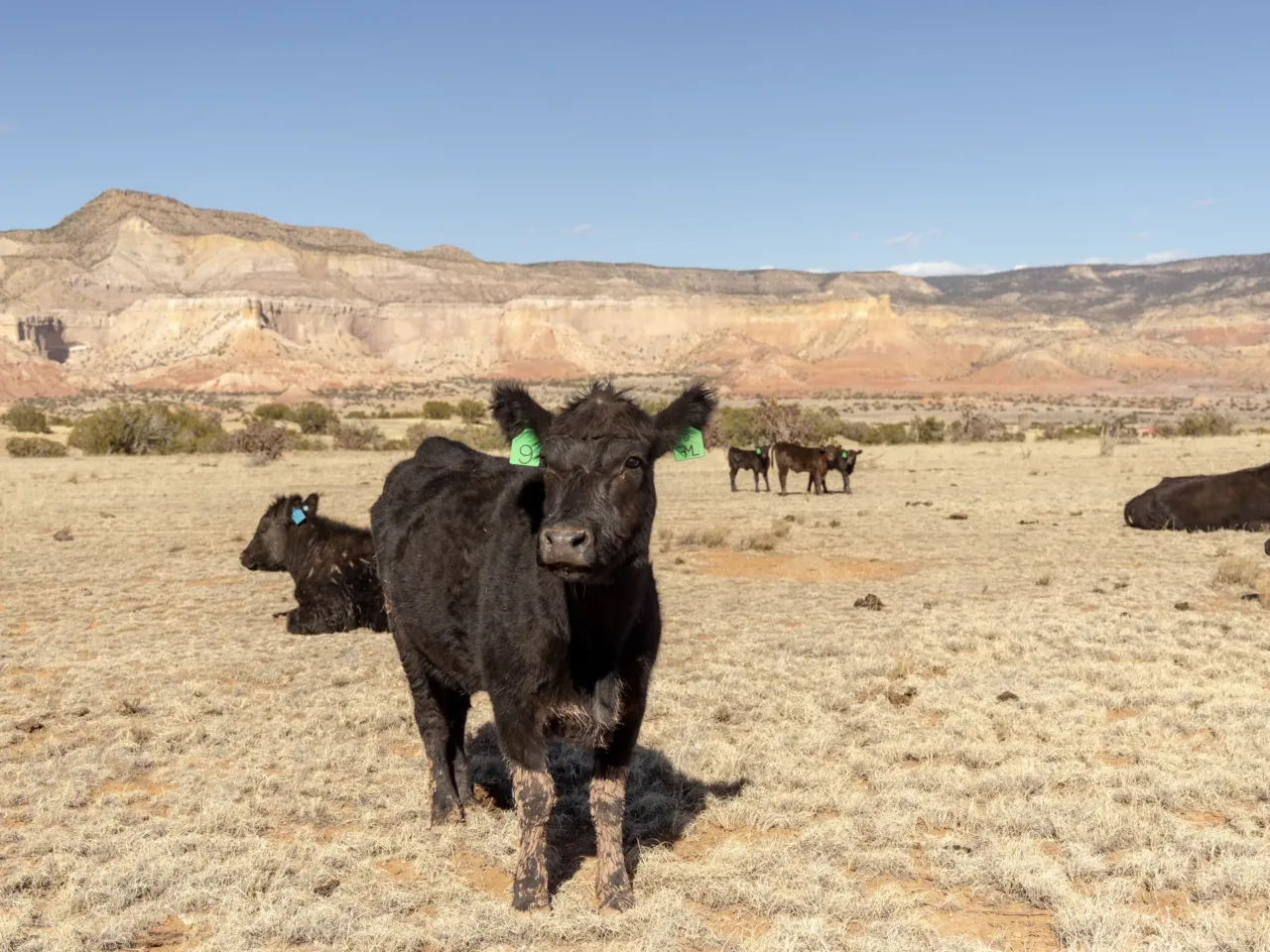
It’s also cattle country.
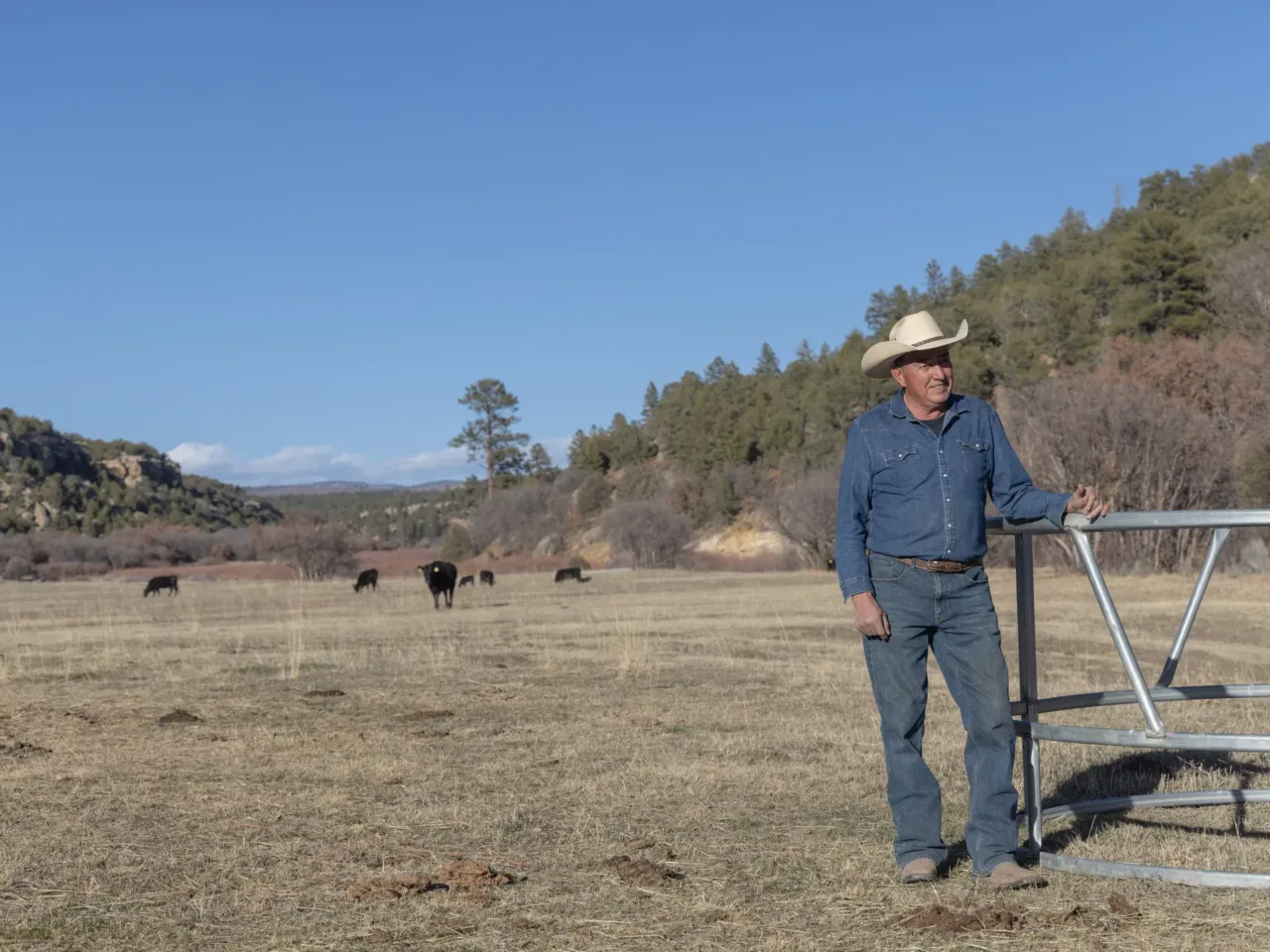
Norman Vigil runs 25 black Angus on Ghost Ranch pastureland. On a recent afternoon, he was out checking on his mama cows. “Hey, vacas!” he called in Spanish, shaking a bucket of feed pellets.
The conservation plan continues the longstanding arrangement that lets local cattlemen use ranch pastures for winter grazing. “It allows us to maintain our culture, our historical use,” Vigil says.
He’s a bit jaded when it comes to the label “O’Keeffe Country.”
While it’s been good for realtors, Airbnbs, cafes, and gift shops, Vigil says for many folks in the region, like him, all it’s done is drive up home prices.
“There’s a lot of people making a good living because of Georgia O’Keeffe, and so can you argue on the economic side for those folks,” he says. “But for us, really the exposure hasn’t been all that great.”
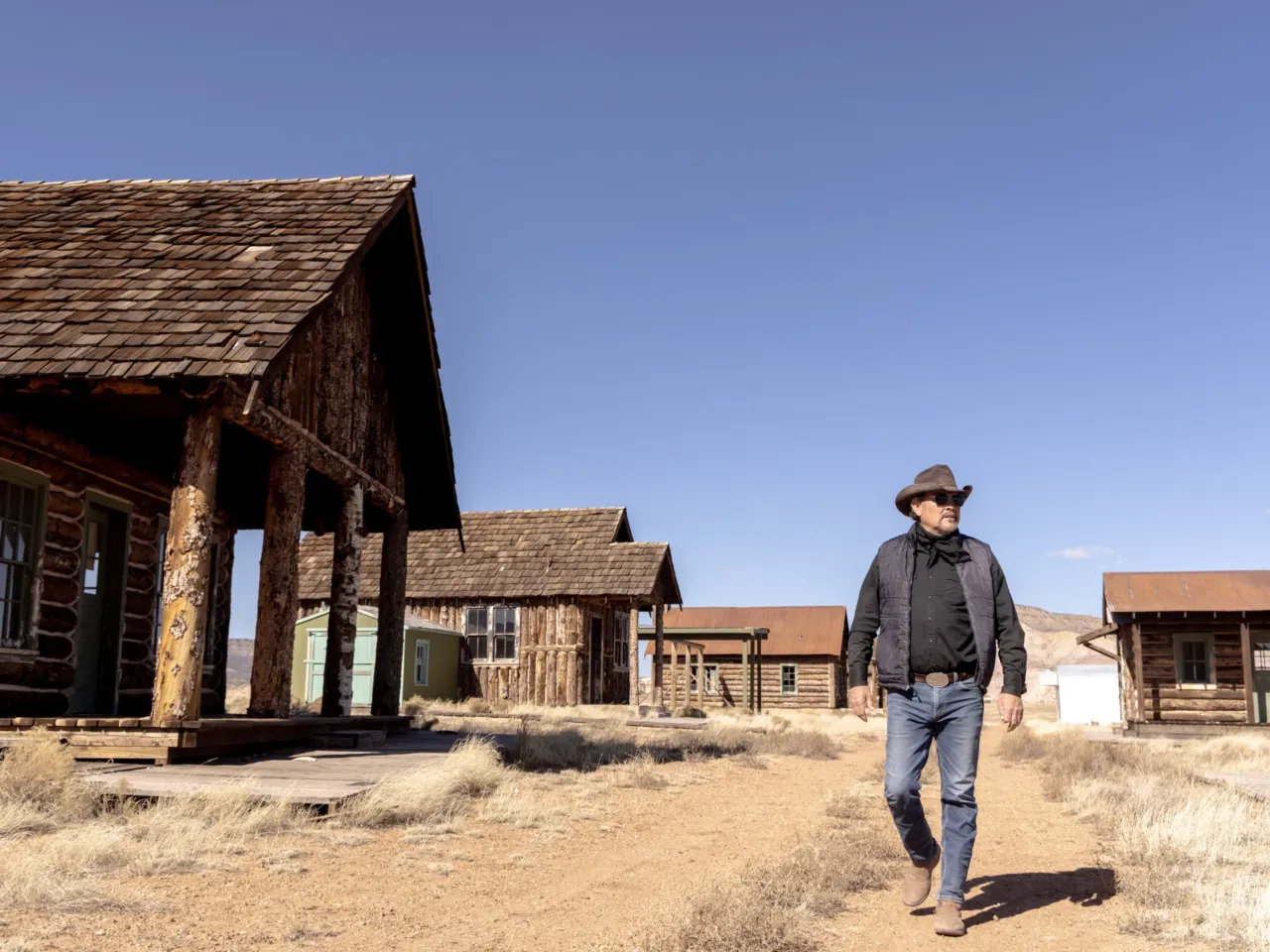
For years, the nonprofit Ghost Ranch has charged film crews to use the stunning panorama as a backdrop. Production companies out here have filmed everything from Chevy truck commercials to the movie Oppenheimer.
Tewa artist Garcia knows why they want to be out here.
“It’s funny when you think about the O’Keeffe quote … ‘There’s something different about New Mexico.’ She’s right. She’s not lying,” he says. “The mountains, the clouds, dusk, dawn, midnight. I mean, it’s a beautiful place. I wouldn’t trade it for anywhere else.”
Copyright 2026 NPR