Copyright © 2026 VPM, all rights reserved.
PBS is a 501(c)(3) not-for-profit organization.
VPM News Morning Edition
NEXT UP: 9:00 AM

Thanks to our sponsors – Become a Sponsor

Monster trucks find a big audience with little kids

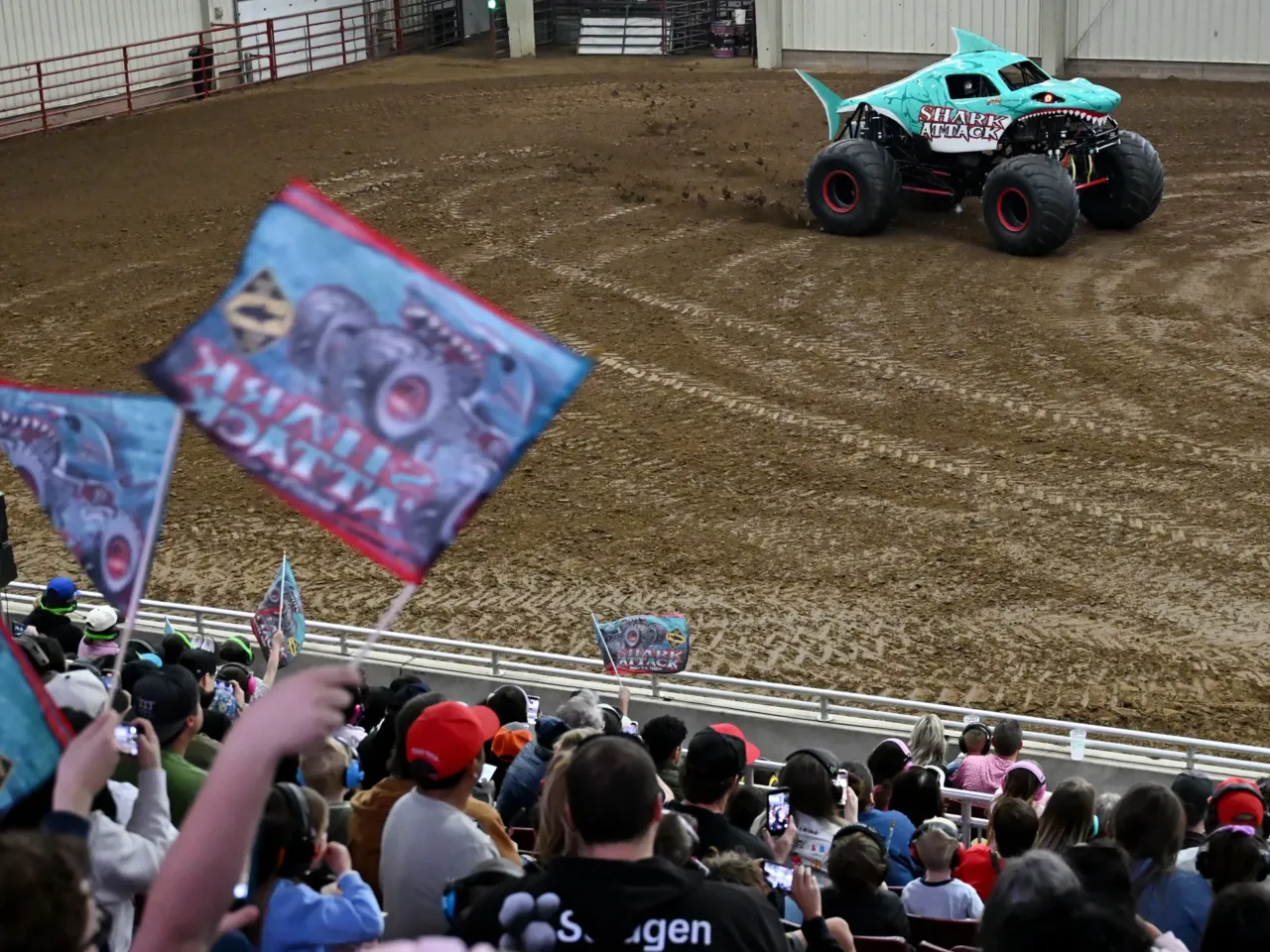
Shark Attack drives on the dirt course during Monster Truck Wars on Feb. 14, 2026, in Levelland, Texas.
Annie Rice for NPR
Shark Attack drives on the dirt course during Monster Truck Wars on Feb. 14, 2026, in Levelland, Texas.

Updated April 19, 2026 at 06:00 AM ET

LEVELLAND, Texas – The Mallet Event Center and Arena is typically a place where folks come to watch riders’ skill with horses – barrel racing, team roping and cutting horse competitions.

On a recent Saturday, Tobias McCurry, 8, stood enraptured before a huge blue vehicle with nearly 6-foot-tall tires, shaped like a hungry shark.

“I like the design and the sound of them,” Tobias said. “I like how they look and how big the tires are.”

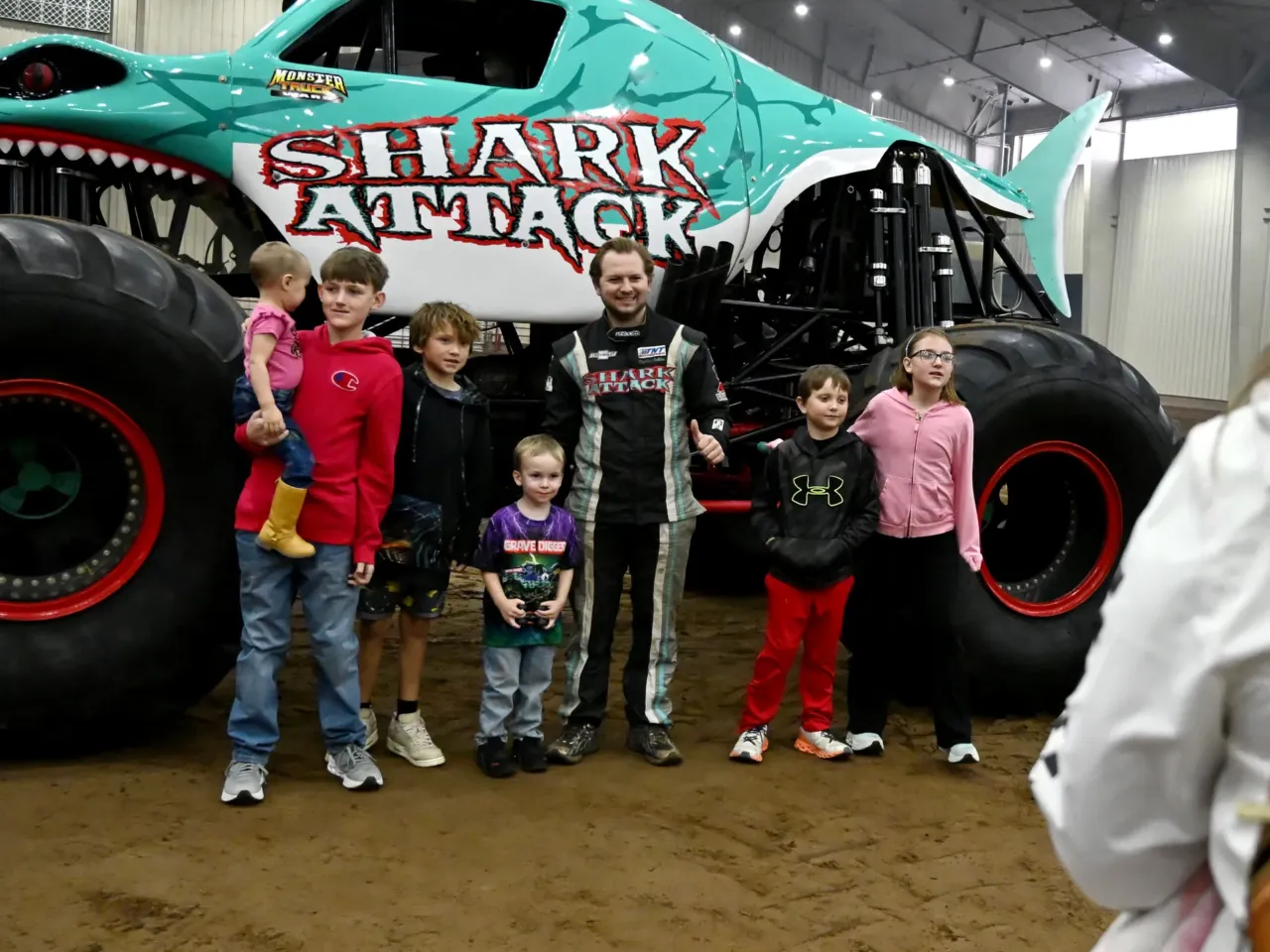
Tobias and his five brothers and sisters were attending the “pit party” in which they touched the fearsome machines and met the drivers before that day’s Monster Truck Wars.

His dad, David McCurry, an engine builder in nearby Lubbock, went all out for the Valentine’s Day show, securing VIP tickets, merchandise, the pit party and rides for his children in a monster bus.

“We already spent – it’ll be close to $500-$600 by the time it’s said and done,” he said with a Texas-size smile, before excusing himself to join Tobias and his other kids to pose for a selfie in front of the “Shark Attack” monster truck, as big as a medium bulldozer.
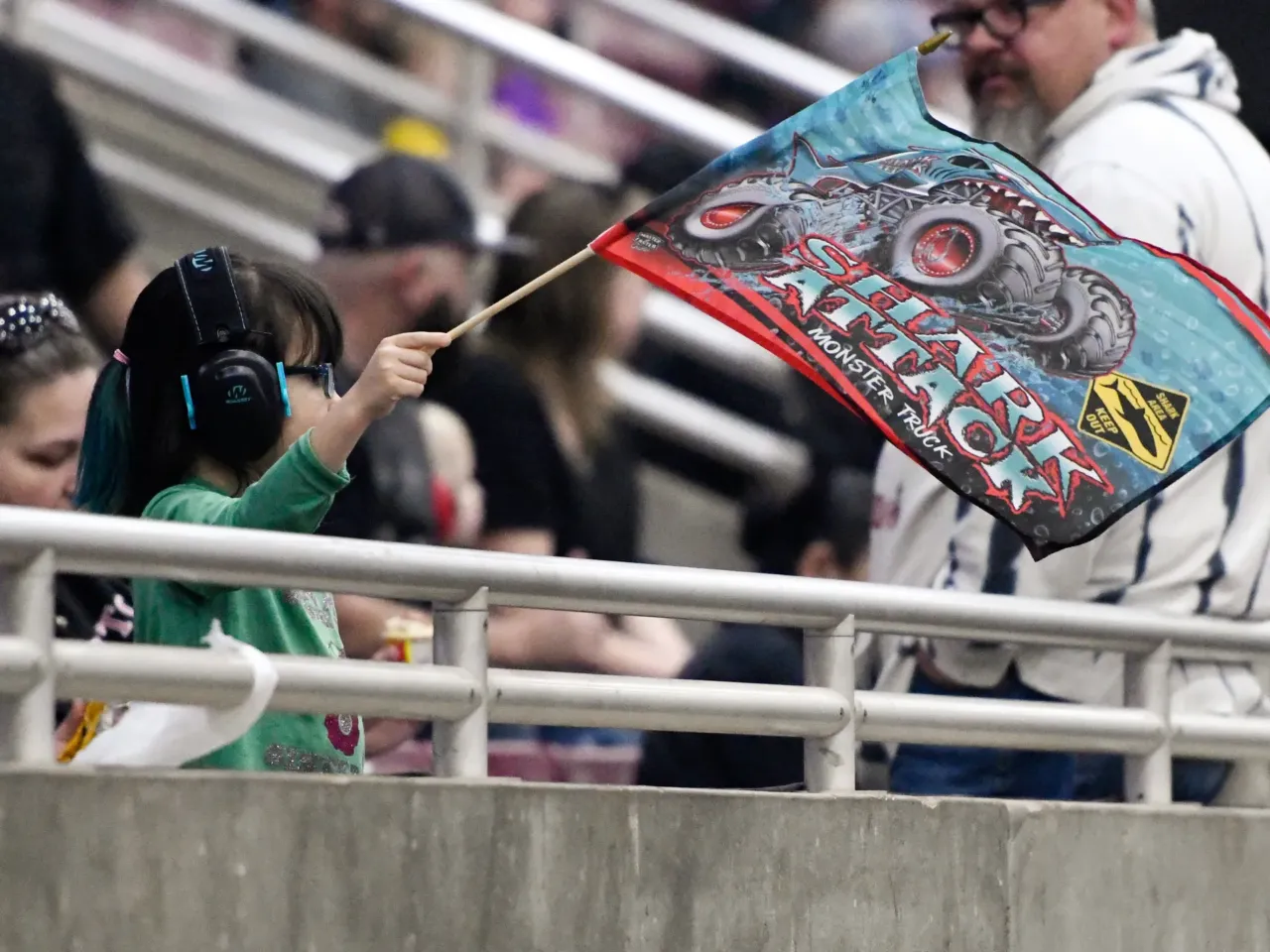
Most fans don protective earmuffs at a monster truck rally because of the, literally, deafening volume of the un-muffled, 1500 horsepower trucks.
Most fans don protective earmuffs at a monster truck rally because of the, literally, deafening volume of the un-muffled, 1500 horsepower trucks. Annie Rice for NPR /
The McCurry children, of Shallowater, Texas, get their photo with Jerry Furajter, driver of Shark Attack. "I like ... the sound of them ... and how big the tires are," says 8-year-old Tobias, second from right.
The McCurry children, of Shallowater, Texas, get their photo with Jerry Furajter, driver of Shark Attack. “I like … the sound of them … and how big the tires are,” says 8-year-old Tobias, second from right.  Annie Rice for NPR /

Around the dirt-floor arena, the stands were packed with families in protective earmuffs, wearing T-shirts of classic monster trucks like “Grave Digger” and “Bigfoot.” The scene validated what industry experts already know: Monster trucks, those ear-splitting, jumbo-tire behemoths that careen around tracks and fly through the air, are one of the fastest growing segments in family entertainment.

And unique in American motorsports, the shows are geared to small children.

“When I started doing monster trucks as a kid, it was sponsored by Budweiser and Red Man Chewing Tobacco,” said Michael Harper, who owns Monster Truck Wars, which produced the Levelland show and puts on 130 events in 70 cities a year.

“Now we’re sponsored by a toy company called Monster Machines. So it’s a different demographic. If you look out there right now you see 3-year-olds, 4-year-olds, 5-year-olds, and … they’re fascinated with a monster truck.”

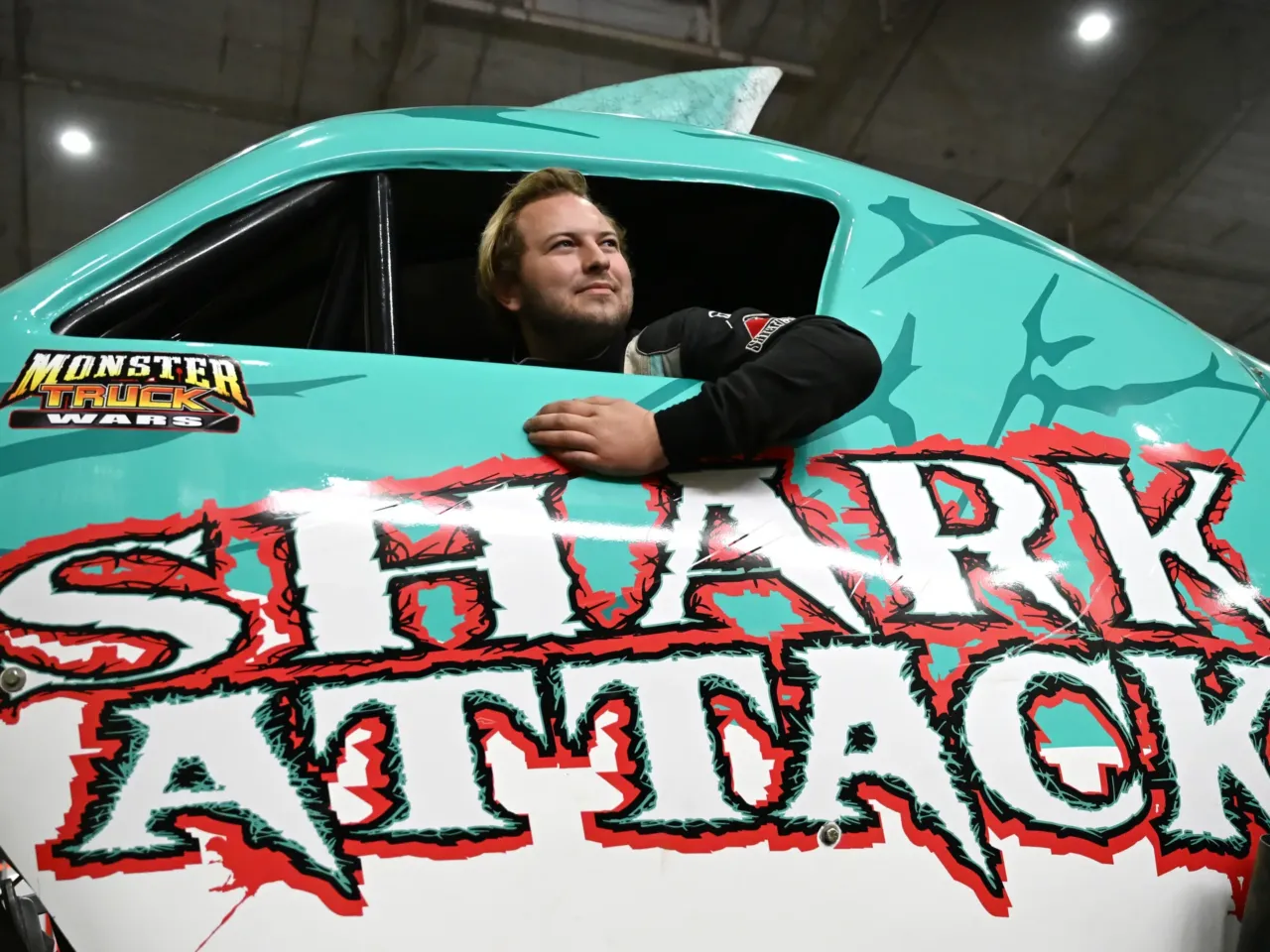
Jerry Furajter, the 26-year-old driver of “Shark Attack,” said the gigantic tires draw the kids in.

“That’s the first thing kids notice when they walk up to them. They all want to touch the tires,” Furajter said. “Then after that you’ll notice the giant engines in it, they got about 1500 horsepower. They make a lot of noise. There’s no mufflers on these. When you start it up you know it’s coming.”
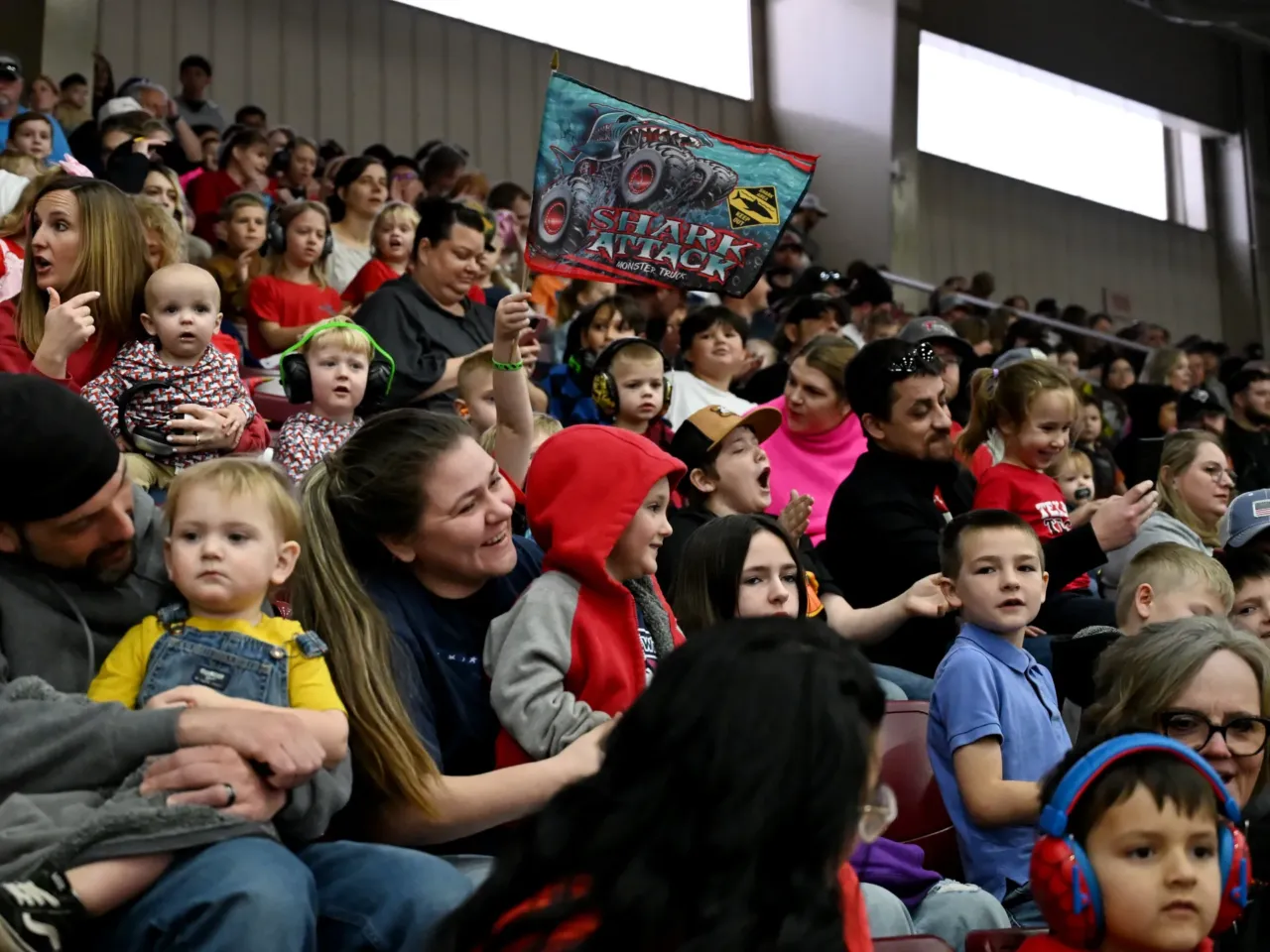
Fans cheer as Monster Truck Wars begins in Levelland, Texas. The show has monster trucks compete for the best tricks on a dirt track.
Fans cheer as Monster Truck Wars begins in Levelland, Texas. The show has monster trucks compete for the best tricks on a dirt track. Annie Rice for NPR /
Shark Attack's driver, Jerry Furajter, says of his monster truck, "They make a lot of noise. There's no mufflers. ... When you start it up you know it's coming."
Shark Attack’s driver, Jerry Furajter, says of his monster truck, “They make a lot of noise. There’s no mufflers. … When you start it up you know it’s coming.” Annie Rice for NPR /

Joshua Conrad, executive director of the International Monster Truck Museum in Butler, Indiana, called it “the stroller test.”

“If the bottom of your bleachers isn’t completely packed with strollers,” he said, “you’re not doing it right.”

Monster truck mania

Industry insiders estimate there are about two dozen players on the monster truck circuit these days — with names like Xtreme Monster Trucks, Monster Truck Throwdown, Full Throttle Monster Truck and Monster Truck Roundup. They range in size from independent promoters with a couple of vehicles, to the industry goliath, Monster Jam, with more than 50 trucks.

Monster Jam is owned by Feld Entertainment, the same company that owns Ringling Bros. and Barnum & Bailey. Monster Jam says it sold 4.5 million tickets last year, produced shows in 30 countries, and has its own cable channel and video game.
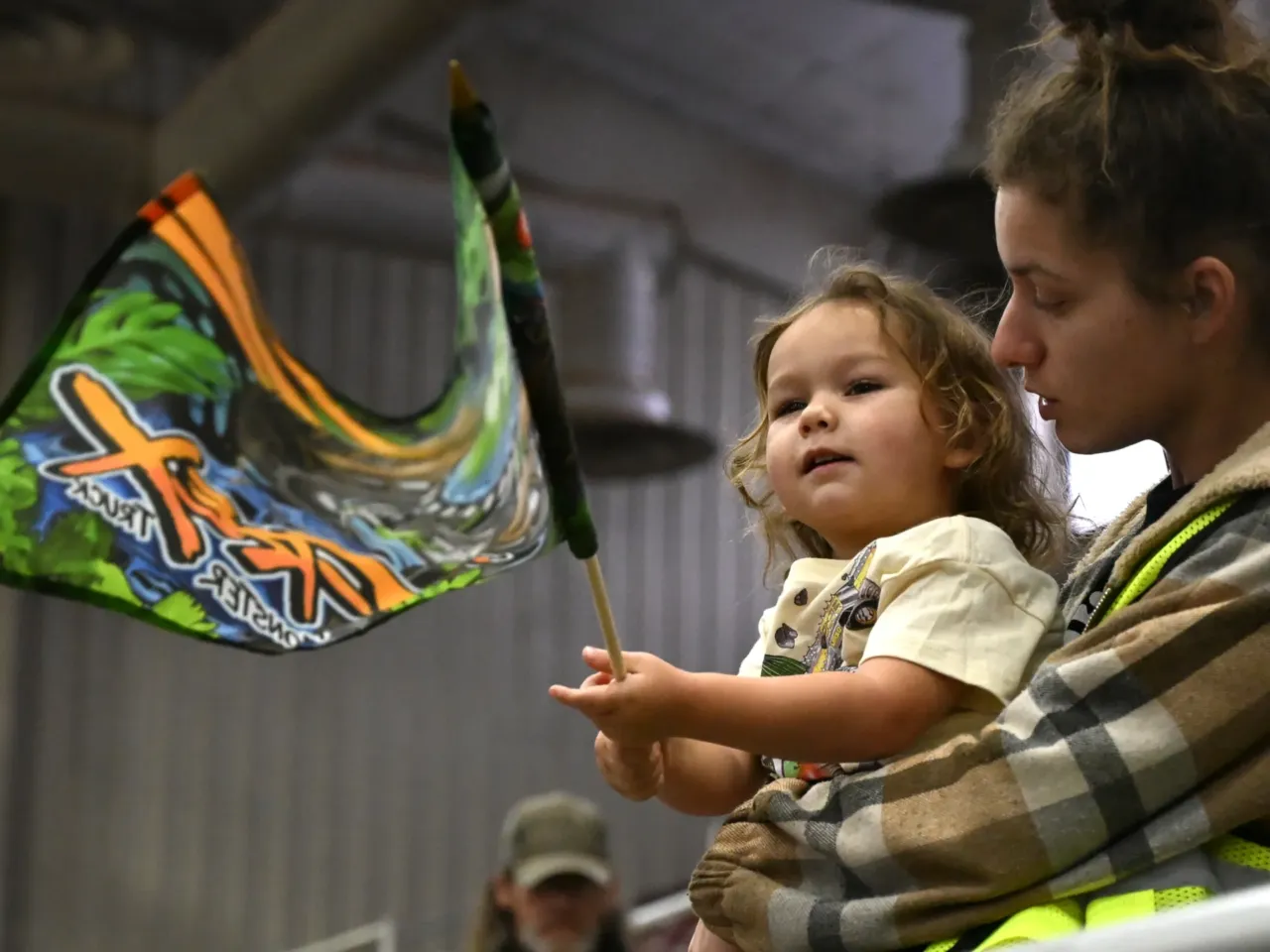
Unlike other American motorsports, in the monster truck world, the target audience is children under 10.
Unlike other American motorsports, in the monster truck world, the target audience is children under 10. Annie Rice for NPR /
Monster Truck Wars sells miniatures of the vehicles that are doing donuts and wheelies in the dirt arena. Merch sales are about a third of their income.
Monster Truck Wars sells miniatures of the vehicles that are doing donuts and wheelies in the dirt arena. Merch sales are about a third of their income. Annie Rice for NPR /

Even toy maker Mattel has jumped into the action with Hot Wheels Monster Trucks Live, a traveling show featuring glow-in-the-dark monster trucks smashing junker cars. The company sells Hot Wheels miniatures of those same trucks at Walmart.

Harper, 47, a bearded Georgia native, worked in the NASCAR world for 20 years and joined Monster Truck Jam as a driver in 2001 before striking out on his own. He now owns 12 trademarked trucks that perform in his Monster Truck Wars shows, and also hires independent owner/drivers.

Harper has three fully-supported teams that typically stage shows in three cities every weekend. They haul the colorful trucks, along with spare parts, from arena to arena in 18-wheelers. Merchandise sales of toy monster trucks, caps and T-shirts contribute about a third of the company’s profits.
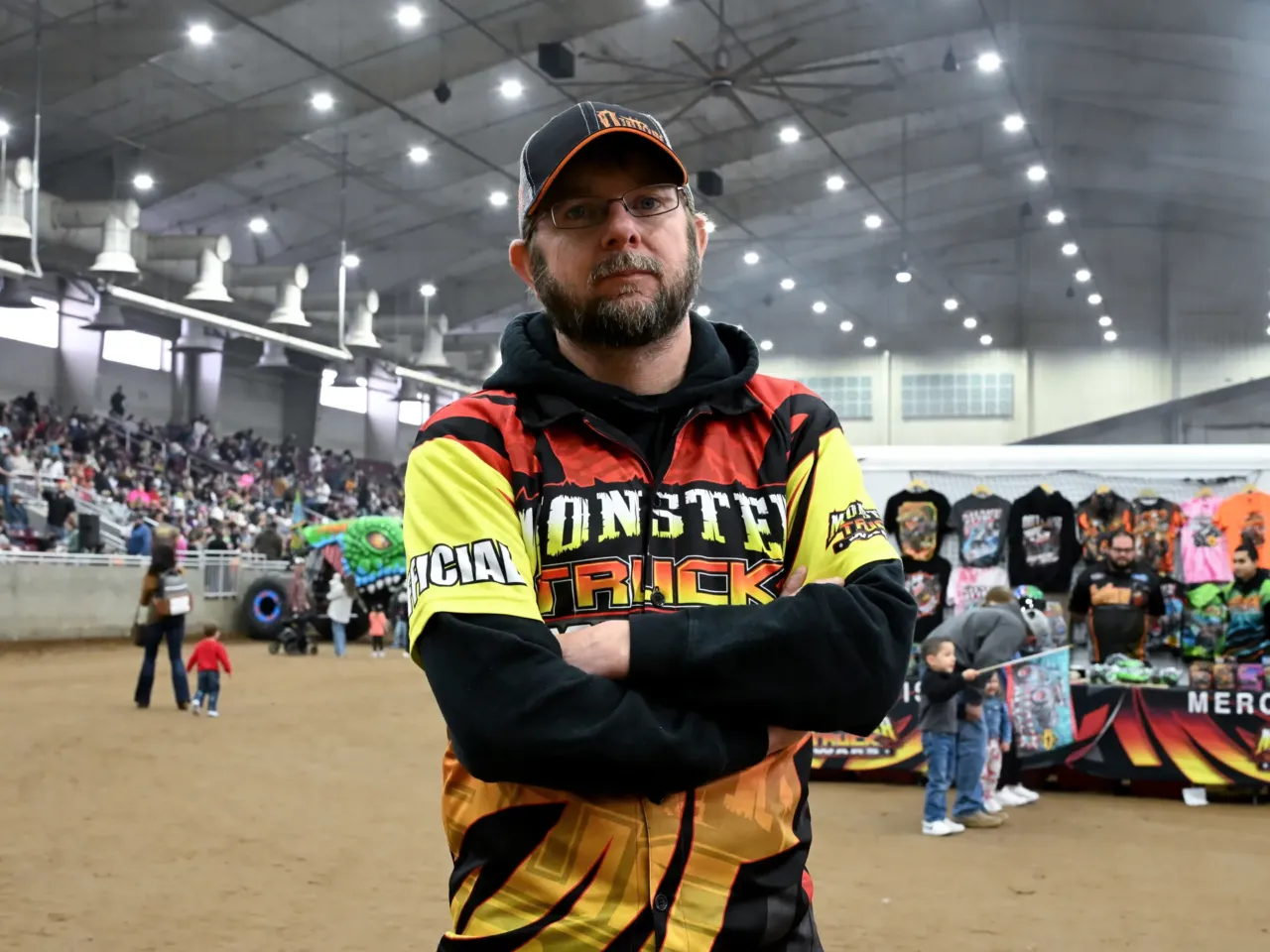
Michael Harper, owner of Monster Truck Wars and 12 of the company's behemoth machines, says driving is still "the most fun thing I've ever done."
Michael Harper, owner of Monster Truck Wars and 12 of the company’s behemoth machines, says driving is still “the most fun thing I’ve ever done.” Annie Rice for NPR /

Harper likes to stay close to the action. On a given weekend, he’ll repair a broken axle, sell hotdogs or pull on a fire suit and climb in the cockpit.

“Driving is probably the most fun thing I’ve ever done because you just do more with it,” he says. “Jump higher, do donuts, wheelies. If you’re on a racetrack you’re highly regulated on what you can do. At the Daytona 500, all the guys are doing the exact same thing.”

Growing faithful fans

Back in 1979, the first monster truck — christened “Bigfoot” — was a souped-up Ford F-250 pickup. Today’s monster trucks no longer resemble a truck. Now, all major components are custom-made, from the nitrogen-charged shocks to the huge tires made of a rubber/plastic composite. The finished vehicles weigh 6 tons, burn methyl alcohol – like dragsters – and cost up to $300,000.

And with more monster truck shows popping up at venues across the country, the stunts also have gotten more extreme.

“Now every truck can do a backflip,” said Conrad, with the monster truck museum. “They just keep pushing it further and further. Like, someone did a double backflip.”
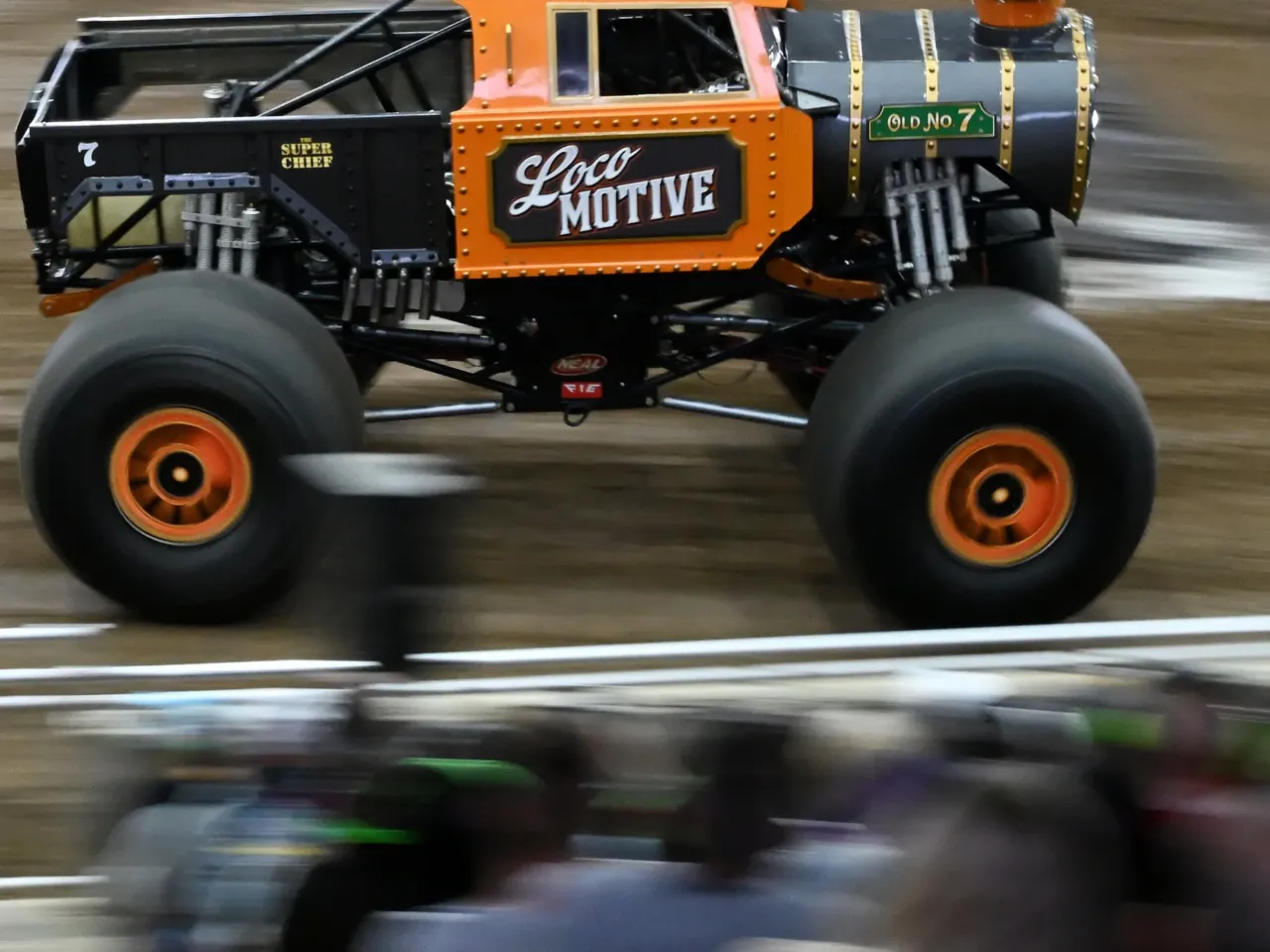
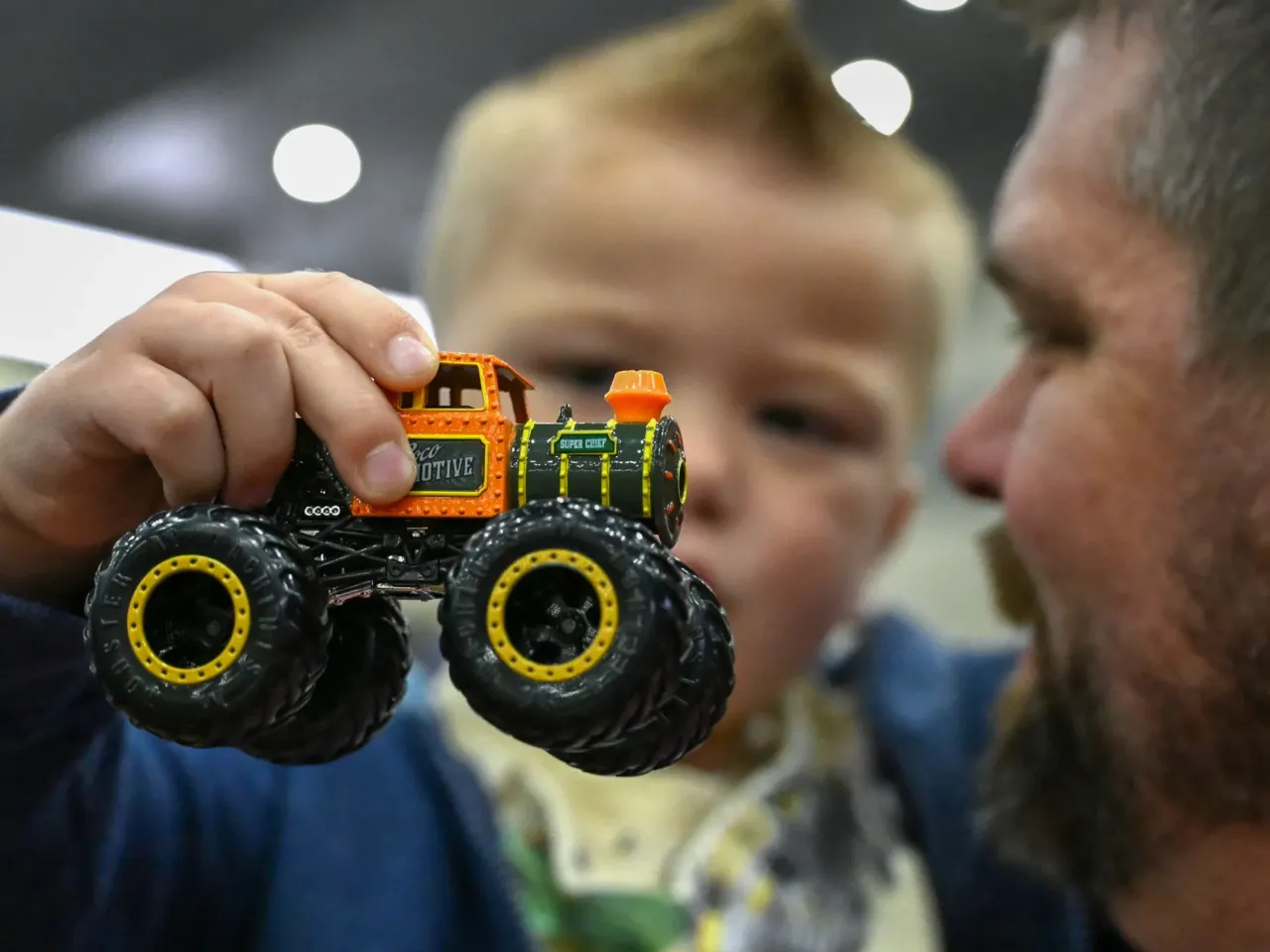
Monster Trucks, like the Loco-MOTIVE, no longer resemble trucks. They have tires nearly six feet tall, burn methyl alcohol, generate 1500 horsepower and are built of custom-made components.
Monster Trucks, like the Loco-MOTIVE, no longer resemble trucks. They have tires nearly six feet tall, burn methyl alcohol, generate 1500 horsepower and are built of custom-made components. Annie Rice for NPR /

Monster truck rallies have been compared to professional wrestling — in other words, they’re scripted. Harper does not disagree.

“This is an entertainment business,” he says. “We’re here to put on a show, not competition.”

The fans, for their part, can’t seem to get enough.

Back in Levelland, the drawling announcer yelled, “Fire ’em up!” and four cartoonish contraptions, Shark Attack, T-Rex (a snarling, scaly dinosaur), Loco-MOTIVE (a train-themed truck) and Outlaw (a pickup emblazoned with a masked bandit) tore around the dirt arena, flying over jumps. The supercharged, 8-cylinder engines were so loud they rattled ribcages.
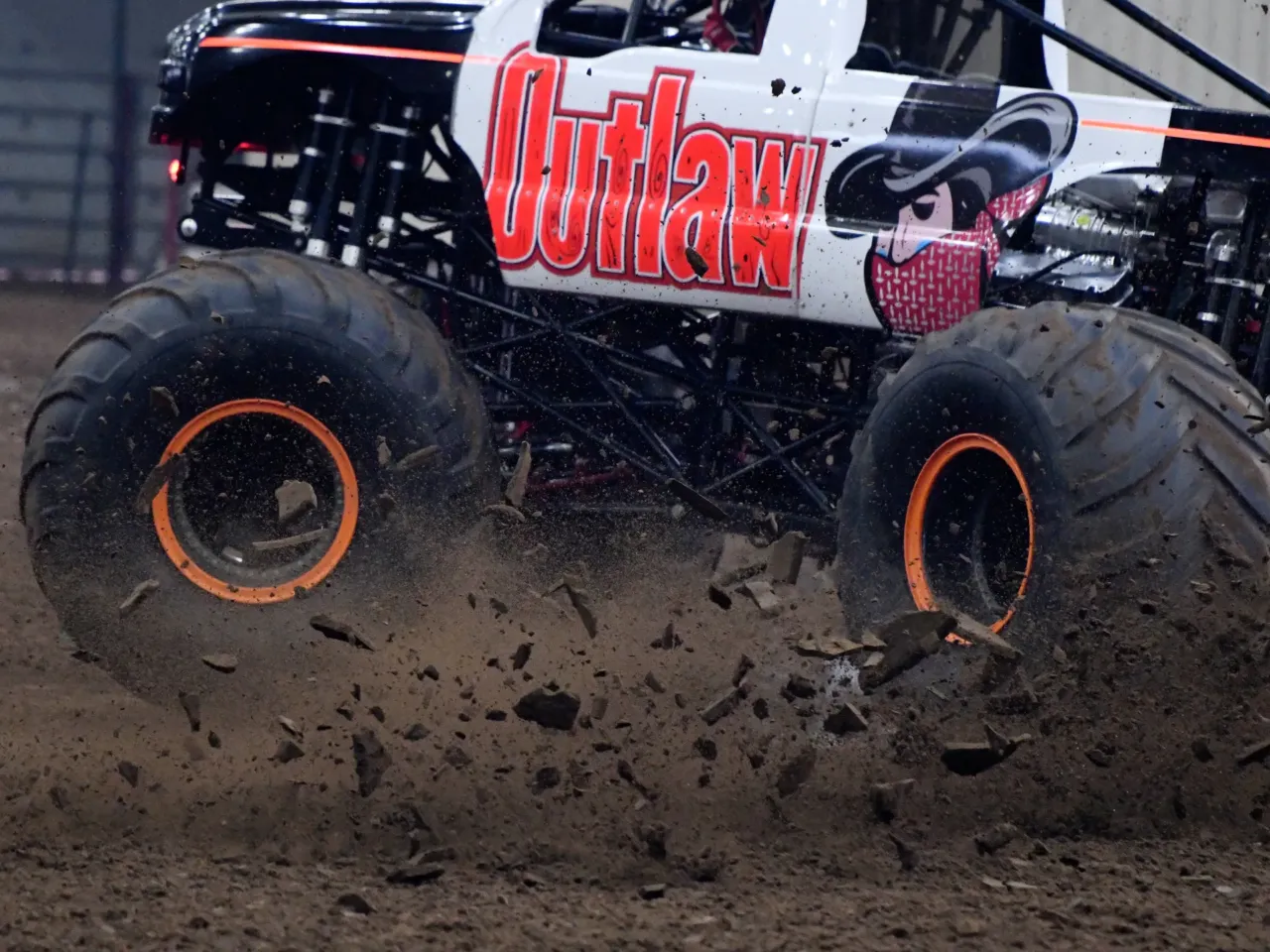
The Outlaw is one of the popular vehicle designs that Monster Truck Wars has trademarked.
The Outlaw is one of the popular vehicle designs that Monster Truck Wars has trademarked. Annie Rice for NPR /

“They go fast and crush cars and they do high jumps,” said a breathless Jedediah Kidwell, 6, who attended the show with his family.

His mother, Kaitlin, said Jed has a collection of 200 model cars and monster trucks at their home in Lubbock, and he and his brother and sister love motorsports.

“He sleeps with a tire,” she said. “He’s had it since he was, like, 2. It’s a go-cart tire and he has it in his bed.”

Copyright 2026 NPR

John Burnett is a national correspondent based in Austin, Texas, who has been assigned a new beat for 2022—Polarized America—to explore all facets of our politically and culturally divided nation. Prior to this assignment, Burnett covered immigration, Southwest border affairs, Texas news and other national assignments. In 2018, 2019 and again in 2020, he won national Edward R. Murrow Awards from the Radio-Television News Directors Association for continuing coverage of the immigration beat. In 2020, Burnett along with other NPR journalists, were finalists for a duPont-Columbia Award for their coverage of the Trump Administration's Remain in Mexico program. In December 2018, Burnett was invited to participate in a workshop on Refugees, Immigration and Border Security in Western Europe, sponsored by the RIAS Berlin Commission.

Though he is assigned to the National Desk, his beat has sometimes stretched around the world.

He has filed stories from more than 30 countries since joining NPR in 1986. In 2012, he spent five months in Nairobi as the East Africa Correspondent, followed by a stint during 2013 as the network's religion reporter. His special reporting projects have included working in New Orleans during and after Hurricane Katrina, as an embedded reporter with the First Marine Division during the 2003 invasion of Iraq, and continuing coverage of the U.S. drug war in the Americas. His reports are heard regularly on NPR's award-winning newsmagazines Morning Edition, All Things Considered, and Weekend Edition.

Burnett's 2008 groundbreaking four-part series "Dirty Money"—which examined how law enforcement agencies have gotten hooked on and, in some cases, corrupted by seized drug money—won three national awards: a Scripps Howard National Journalism Award for Investigative Reporting, a Sigma Delta Chi Society of Professional Journalists Award for Investigative Reporting, and an Edward R. Murrow Award for the accompanying website. His 2007 three-part series "The Forgotten War," which took a critical look at the nation's 30-year war on drugs, won a Nancy Dickerson Whitehead Award for Excellence in Reporting on Drug and Alcohol Problems.

In 2006, Burnett's memoir, Uncivilized Beasts & Shameless Hellions: Travels with an NPR Correspondent, was published by Rodale Press. In that year, he also served as an Ethics Fellow at the Poynter Institute for Media Studies in St. Petersburg, Florida.

In 2004, Burnett won a national Edward R. Murrow Award for investigative reporting for his story on the accidental U.S. bombing of an Iraqi village. His work was singled out by judges for the Alfred I. duPont-Columbia University Award honoring the network's overall coverage of the Iraq War. Also in 2003, Burnett won a first place National Headliner Award for investigative reporting about corruption among federal immigration agents on the U.S.-Mexico border.

In the months following the attacks of September 11, Burnett reported from New York City, Pakistan, and Afghanistan. His reporting contributed to coverage that won the Overseas Press Club Award and an Alfred I. duPont Columbia University Award.

In 2001, Burnett reported and produced a one-hour documentary, "The Oil Century," for KUT-FM in Austin, which won a silver prize at the New York Festivals. He was a visiting faculty member in broadcast journalism at the Poynter Institute for Media Studies in 2002 and 1997. He received a Ford Foundation Grant in 1997 for a special series on sustainable development in Latin America.

Burnett's favorite stories are those that reveal a hidden reality. He recalls happening upon Carlos Garcia, a Mexico City street musician who plays a musical leaf, a chance encounter that brought a rare and beautiful art form to a national audience. In reporting his series "Fraud Down on the Farm," Burnett spent nine months investigating the abuse of the United States crop insurance system and shining light on surprising stories of criminality.

Abroad, his report on the accidental U.S. Air Force bombing of the Iraqi village of Al-Taniya, an event that claimed 31 lives, helped listeners understand the fog of war. His "Cocaine Republics" series in 2004 was one of the first accounts to detail the emergence of Central America as a major drug smuggling region. But many listeners remember the audio postcard he filed while on assignment in Peshawar, Pakistan, after 9/11 about what it was like being, at six-foot-seven, the "tallest American at a Death-to-Americarally."

Prior to coming to NPR, Burnett was based in Guatemala City for United Press International covering the Central America civil wars. From 1979-1983, he was a general assignment reporter for various Texas newspapers.

Burnett graduated from the University of Texas at Austin with a bachelor's degree in journalism.

Related Stories