Copyright © 2026 VPM, all rights reserved.
PBS is a 501(c)(3) not-for-profit organization.
VPM News Morning Edition
NEXT UP: 9:00 AM

Thanks to our sponsors – Become a Sponsor

With Virginia vote, Democrats gain edge over Trump’s national GOP redistricting push

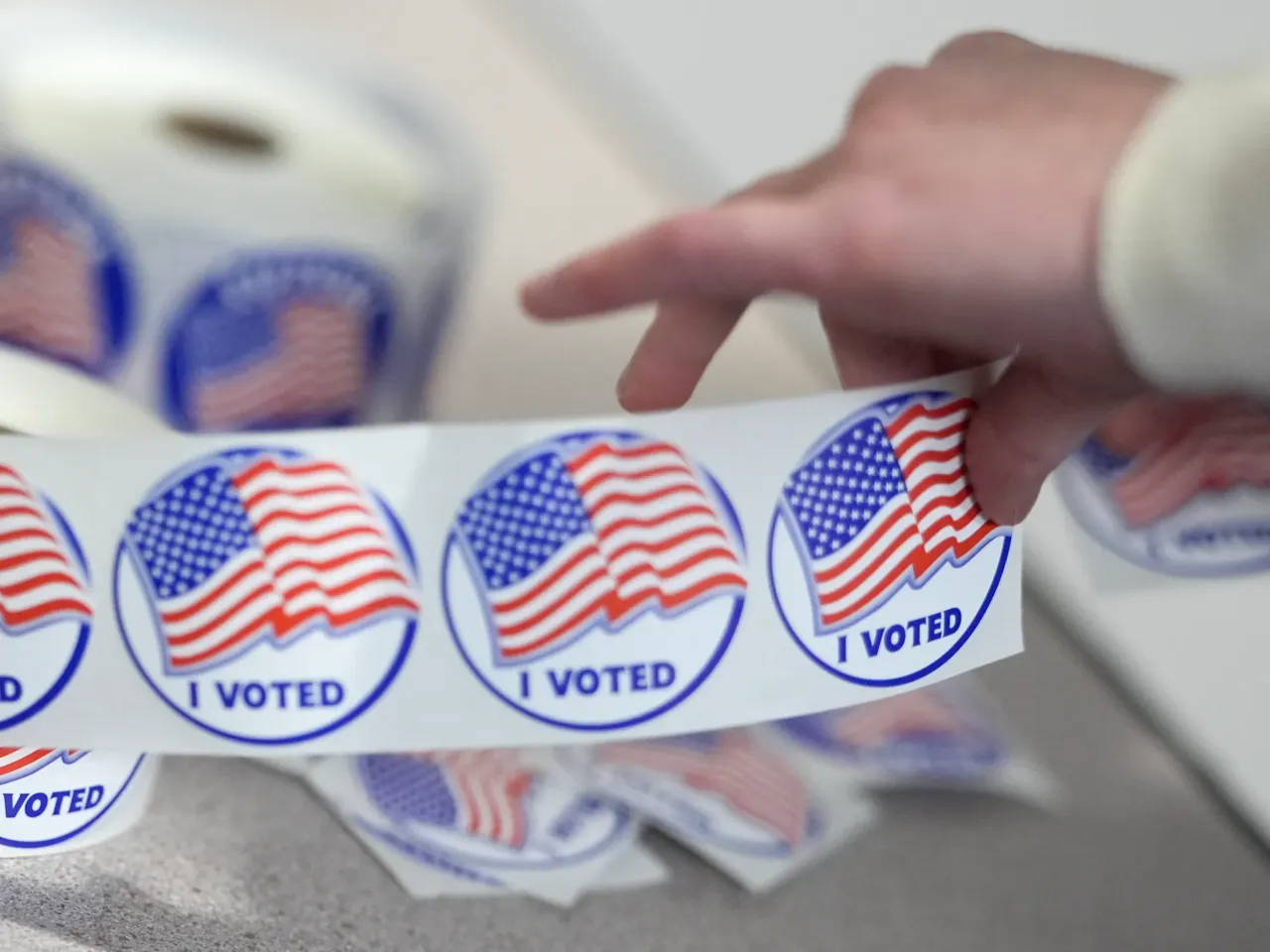
An election worker tears off "I Voted" stickers during the Virginia redistricting referendum at Fairfax Government Center, Tuesday, April 21, 2026, in Fairfax, Va.
Julia Demaree Nikhinson / AP
An election worker tears off "I Voted" stickers during the Virginia redistricting referendum at Fairfax Government Center, Tuesday, April 21, 2026, in Fairfax, Va.
As time runs out before the midterm elections, Virginia took a step on Tuesday to counter and possibly surpass President Trump’s national effort to redraw congressional voting maps in favor of the GOP.

Loading…

Voters narrowly approved a Democratic-backed constitutional amendment to sideline the state’s redistricting commission and let lawmakers directly implement a new map. The Virginia delegation to the U.S. House is currently six Democrats and five Republicans and could go to 10-to-1 under the new map.

The move still faces court challenges but could put Democrats ahead in tilting House seats their way — for now.

Loading…

Florida lawmakers might be up next. Republican Gov. Ron DeSantis has called on them to meet next week and consider redistricting that could favor Republicans picking up more seats.

The debate in Virginia sounded a lot like it did in other states. Opponents said it would make the state’s delegation in the House favor Democrats much more heavily than the proportion of Democratic and Republican voters in the state. Proponents argued that it’s not about what’s going on in the state but about the moves Trump has prompted across the country in Republican-led states.

Redistricting divides up votes and Trump pushed for an edge this fall


Redistricting is when states redraw district lines, which usually happens at the start of a decade when the U.S. census count determines how many seats each state has in the House of Representatives. Gerrymandering is when politicians purposely group voters to benefit one party or another.

Currently, Republicans have control of the U.S. House with just a few seats more than Democrats. But the party in control of the White House usually loses seats in the midterms.

Trump has pushed for mid-decade redistricting and prompted Republicans in Texas to draw a new map that could help them win five seats held now by Democrats. Democrats in California led a redistricting plan — with voter approval similar to Virginia — that counters Texas with five additional Democratic-leaning districts.
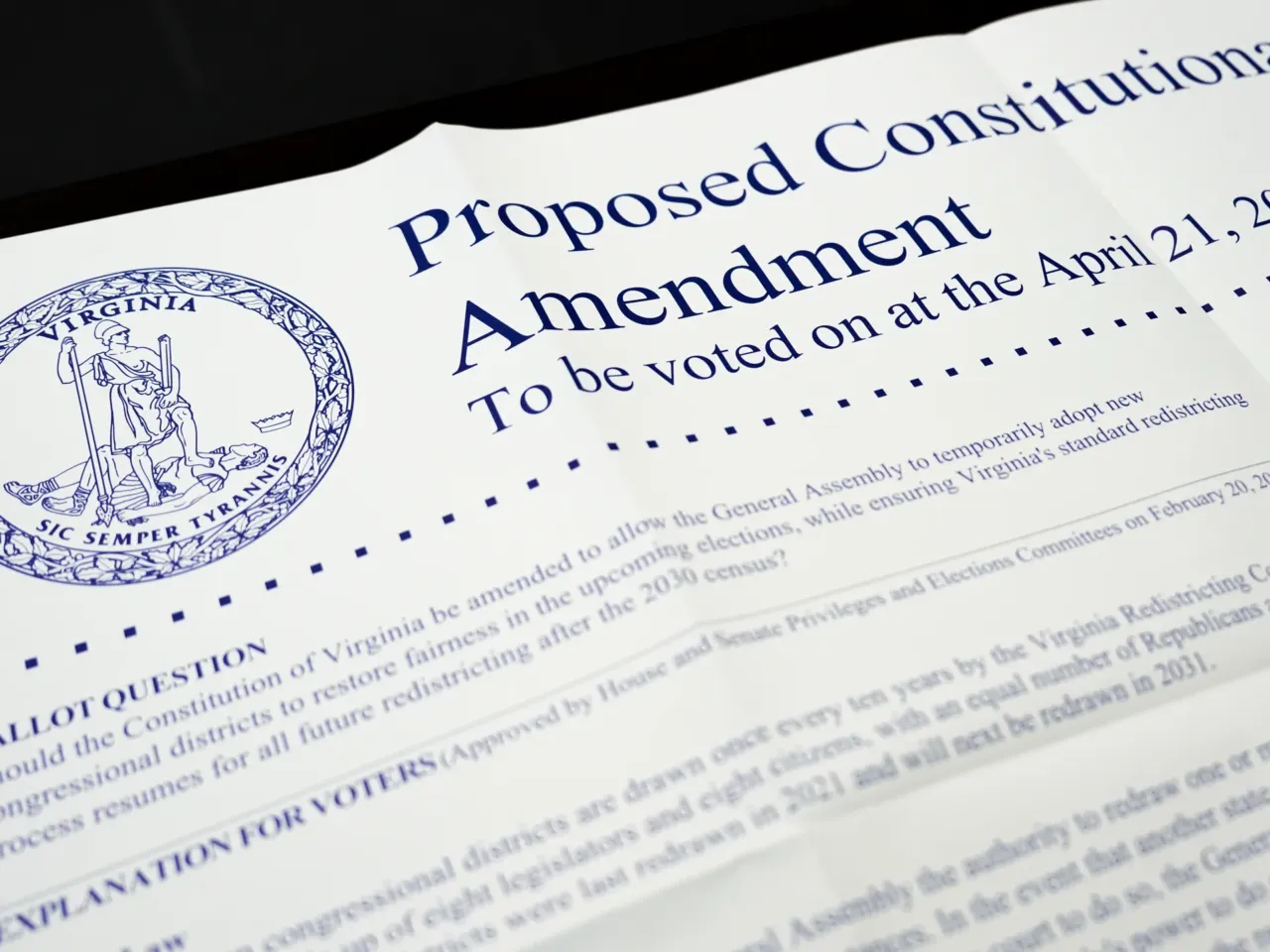
Virginia voters faced a state constitutional amendment on redistricting Tuesday.
Virginia voters faced a state constitutional amendment on redistricting Tuesday. Julia Demaree Nikhinson / AP
North Carolina and Missouri lawmakers redistricted one seat in each state toward Republicans. In an already-scheduled redrawing, Ohio created two more seats that slightly lean toward the GOP. All of those changes could give Republicans nine more seats.

With the move by Virginia, Democrats have gained an edge in 10 seats across the country: five in California, four in Virginia and one court-ordered change in Utah.

Republican lawmakers in the redistricting debate have said maintaining a hold on the House is important for Trump’s agenda and keeping Democrats from launching investigations of his administration or, as Trump has said, impeaching him.

Ultimately, the race for the House will depend on how people vote and whether parties can hold onto the seats they already have, as well as win any new ones. A big wave one way or the other would make redistricting less important.

Most of the states that were able or willing to redistrict have made their move


When Trump started his redistricting effort, it seemed Republicans had more opportunities to remake the maps than Democrats because, among other reasons, they control more state legislatures.

But Republicans in Kansas and Indiana did not answer Trump’s call. In Indiana, Republicans voted against redistricting despite Trump’s threats to support opponents against them in the primaries.
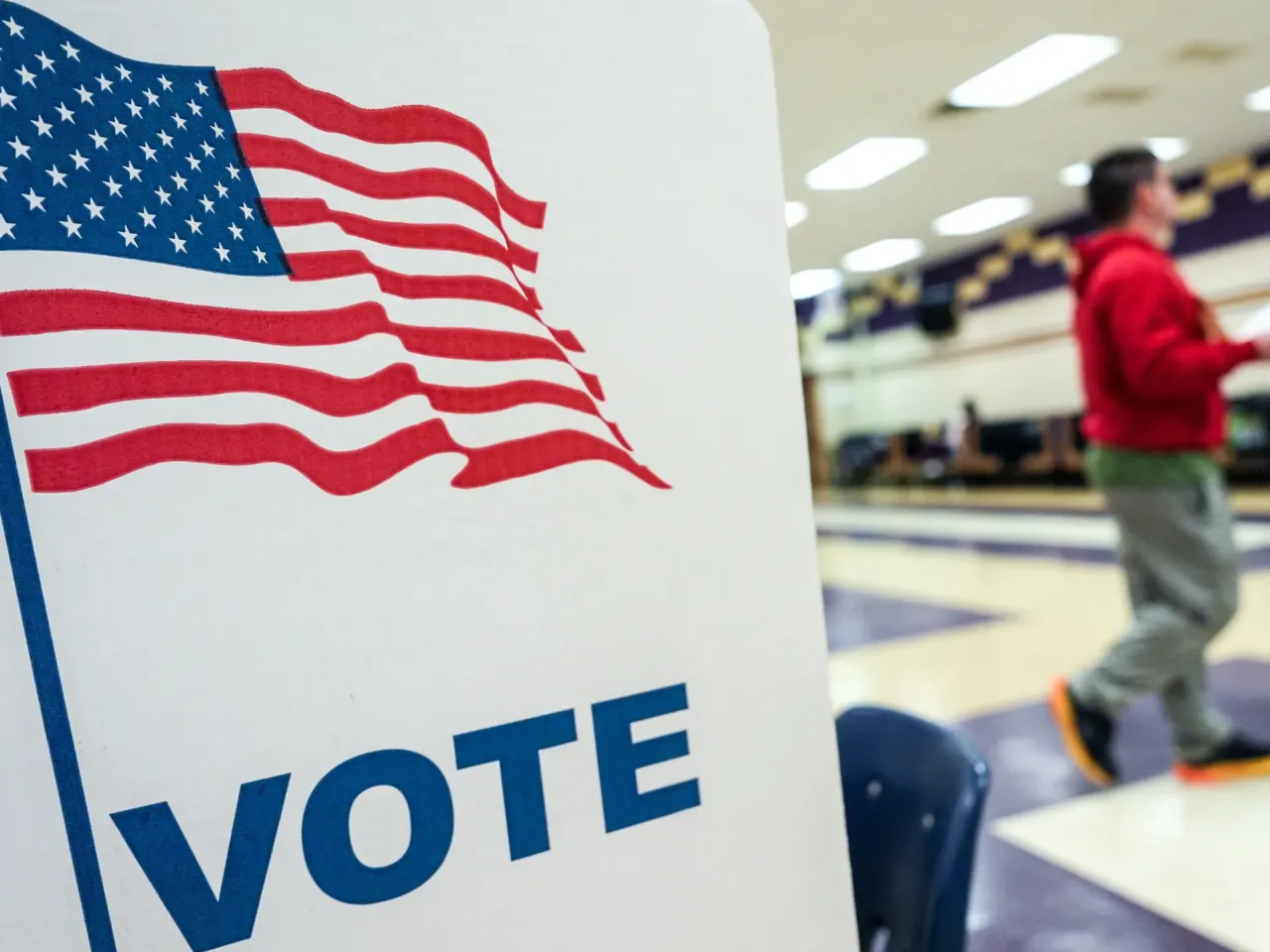
A person votes in the Virginia redistricting referendum in Burke, Virginia.
A person votes in the Virginia redistricting referendum in Burke, Virginia. Julia Demaree Nikhinson / AP
And Democratic efforts to redistrict in Maryland have been blocked by Democrats in the state Senate, where there hasn’t been enough support to bring it to a vote.

With primaries for Congress underway around the country, Florida might have the last word. Republican Gov. DeSantis has called lawmakers back to the Capitol next week, and redistricting is one of the items on the agenda.

But after Democrats made gains in a couple of recent special elections in Florida, it’s unclear if Republicans in the state will want to risk making their current seats more competitive by reaching for more. That can happen as a party tries to divide voters up in new ways.

There’s one other factor on the horizon, though. The U.S. Supreme Court is considering a case that could end up weakening the federal Voting Rights Act. If that makes it harder to mount court challenges against racial gerrymandering — redistricting that undermines the voting power of minority communities — a couple more GOP-led states could try to fast-track voting map changes before the election.

Copyright 2026 NPR


Larry Kaplow edits the work of NPR's correspondents in the Middle East and helps direct coverage about the region. That has included NPR's work on the Syrian civil war, the Trump administration's reduction in refugee admissions, the Iran nuclear deal, the US-backed fight against ISIS in Syria and Iraq, and the conflict between the Israelis and Palestinians.

He has been at NPR since 2013, starting as an overnight news editor. He moved to the International Desk in 2014. He won NPR's Newcomer Award and was part of teams that won an Overseas Press Club Award and an NPR Content Excellence Award.

Prior to joining NPR, Kaplow reported from the Middle East for 12 years. He was the Cox Newspapers' Mideast correspondent from 1997 to 2003, reporting from Jerusalem during the Second Intifada as well as from Egypt, Jordan, Iran, Iraq, and Lebanon. He did reporting stints on the NATO campaign in Kosovo and the toppling of Taliban regime in Afghanistan.

He moved to Baghdad just before the US invasion of Iraq in 2003. He covered the invasion, the fall of the regime and continued reporting from Iraq for Cox Newspapers and eventually Newsweek until late 2009. In 2010, he returned to Iraq to help report an episode of This American Life.

He was part of a team that won the top prize from the Military Reporters and Editors Association for stories about failures in the US system for compensating Iraqi war victims.

He was a freelance reporter in Mexico City from 2011 to 2013. He also reported from Guatemala on the efforts to prosecute soldiers responsible for a massacre in the 1980s.

Before reporting abroad, Kaplow worked at The Palm Beach Post and The Bradenton Herald in Florida, covering courts, schools, and state government. He graduated from Duke University and was in the Peace Corps in Guatemala.

Related Stories