A version of this article was originally published by Gravy and the Southern Foodways Alliance. Gravy: Stories of a changing American South is available on all podcast platforms.
Over the last decade, invasive blue catfish have outcompeted nearly every native fish and shellfish in the
Chesapeake Bay, putting generational watermen and fishmongers out of business. But if managed correctly, researchers from Virginia Tech’s Seafood and Agricultural Research & Extension Center in Hampton believe this invasive fish could spur a lucrative new commercial fishery with an annual economic impact of over $1 billion.
Native to the Mississippi, Missouri and Ohio river basins, blue catfish were introduced to Virginia’s rivers in the 1970s as a new trophy fishery for recreational anglers.
As blue catfish populations grew and food supplies ran short in the James, Rappahannock and York rivers, blue catfish began venturing beyond their freshwater habitats into the brackish waters of the Chesapeake Bay.
Michael Schwarz, associate director of the Virginia Tech center, estimated that between 750 million and 1 billion pounds of blue catfish now swim in the Chesapeake Bay. Their collective biomass is greater than every other Chesapeake Bay species combined. And their habitat is still expanding — blue catfish have made their way into North Carolina, South Carolina and Georgia.
“It’s an uncontrolled invasive species that is eating all of our traditional species that our seafood industries rely on,” Schwarz said.
Surging catfish populations and diminished native fisheries are causing a state of emergency across the industry, said Shelby White, a researcher at the Virginia Institute of Marine Science in Gloucester.
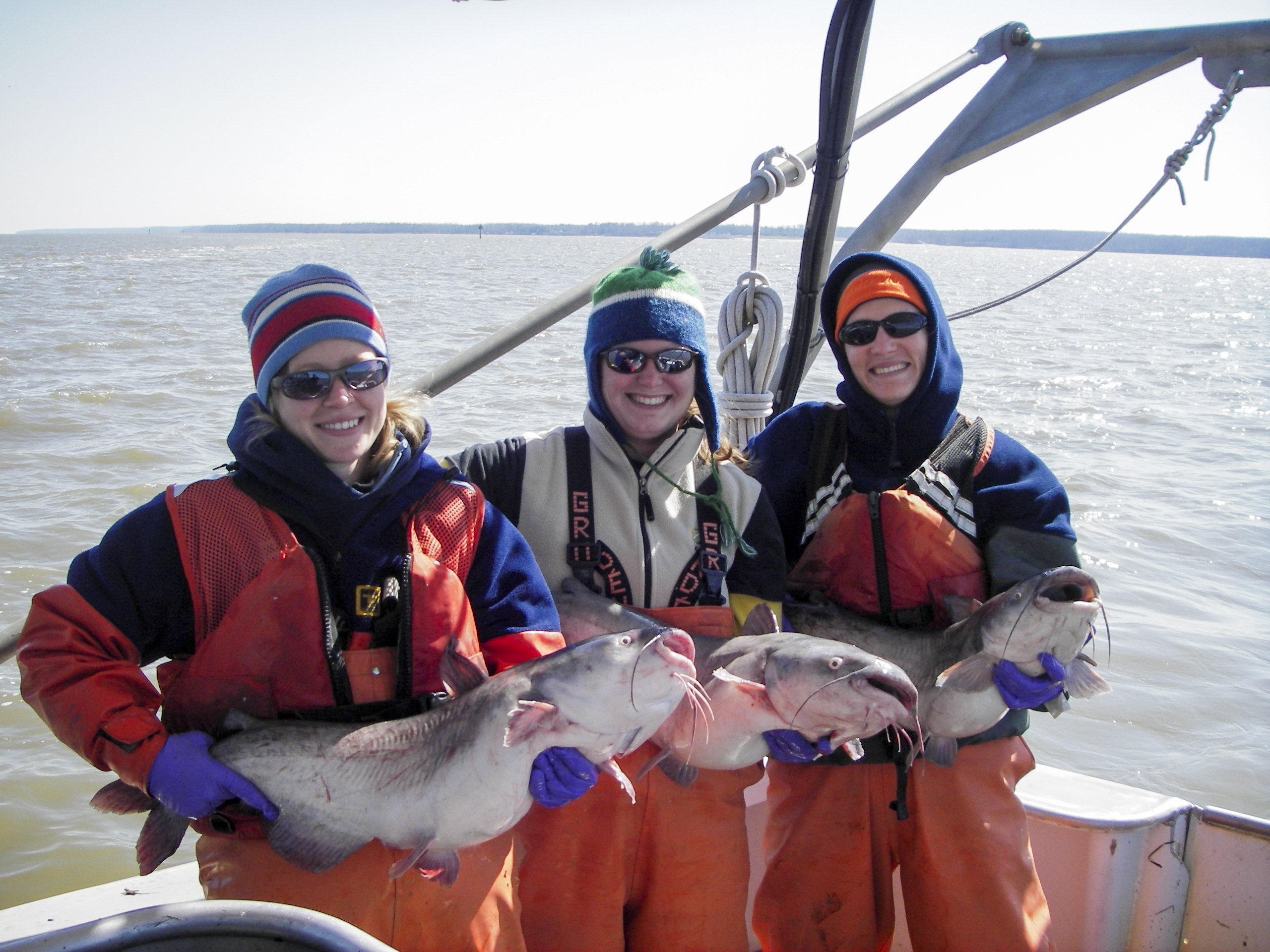
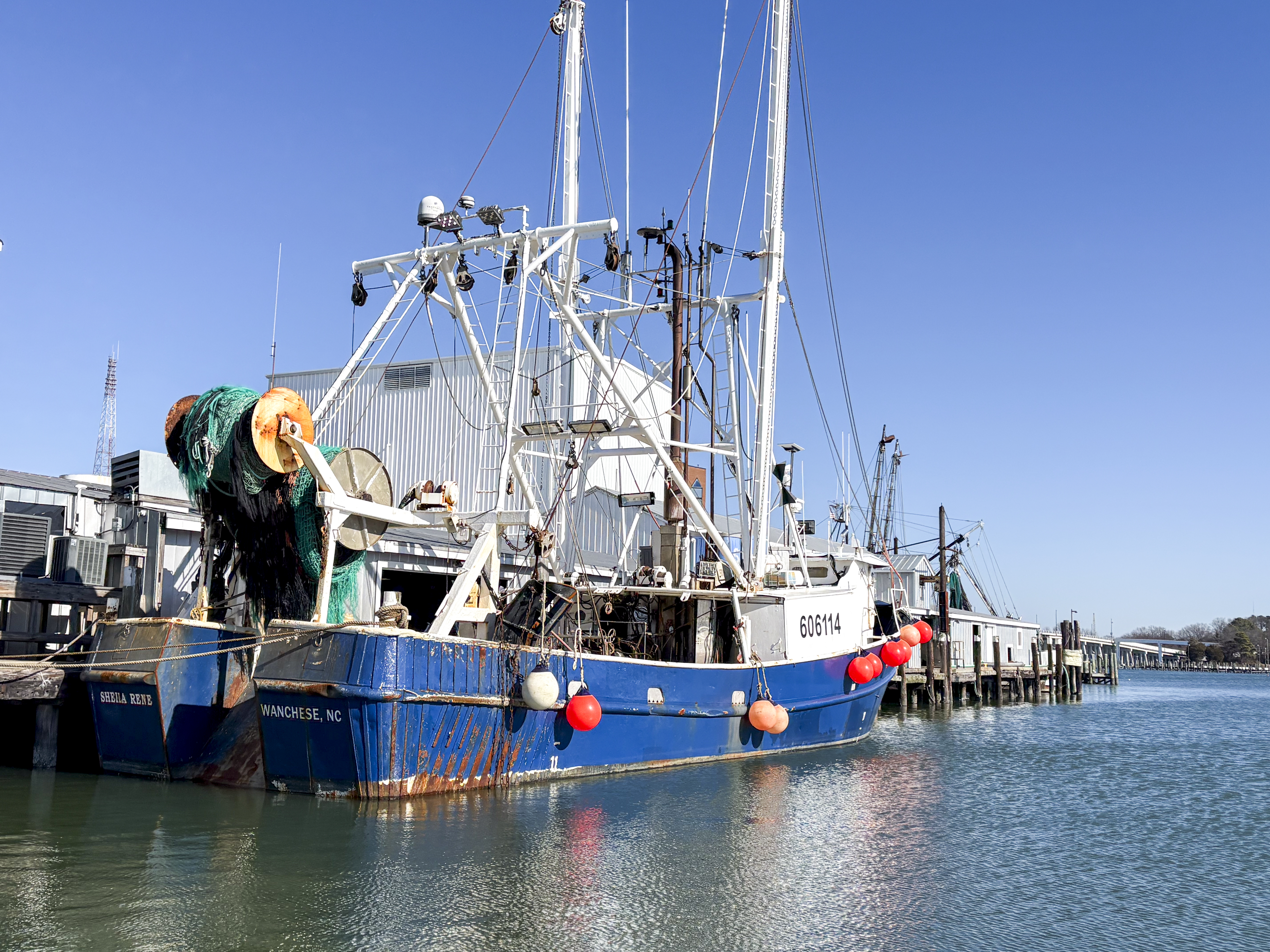
Catfish sell for significantly less per pound than native fish such as flounder and croaker, leaving watermen unable to make ends meet. As the workforce ages, young adults no longer see a future for themselves on the bay.
“ The shortage of young people entering the industry is more problematic than the catfish themselves,” White said.
Without watermen, there’s no one left to remove the catfish from the bay.
Amory Seafood sits near the mouth of the Hampton River in Hampton. Owner Meade Amory’s great-grandfather founded the business over a century ago. In that time, the seafood wholesaler has weathered an onslaught of environmental disasters.
In the 1960s and ‘70s, Allied Chemical and Life Science Products Company dumped a highly toxic pesticide called Kepone into the river. In the ‘80s and ‘90s, algae called Pfiesteria triggered massive fish kills in the bay’s tributaries.
More recently, red tides have killed and contaminated fish.
Meade has endured all of these hardships, but predicted it will be this scourge of invasive blue catfish that forces him to close his doors. A decade ago, he refused to process any catfish.
Now, he hardly processes anything else — and doubts his business will last another 10 years. Though Chesapeake Bay blue catfish are sustainable and wild-caught, Meade can’t compete with cheap imported catfish.
“Families are on a budget,” he said. “They can get a frozen catfish filet already breaded for cheaper than I can sell the whole fish right off the boat here.”
A commercial fishery has three components: watermen to catch the fish, fish processors to filet it and consumers to buy it. For a blue catfish fishery to work, all three components have to grow simultaneously.
That’s a tall order.
Without a stable market, processors don’t have the incentive or the funds to scale up their operations. And without processors in place, watermen have nowhere to sell larger catches.
Still, Schwarz is confident that careful management of this invasive species could be a boon for stakeholders. “It’s a story for the ages,” he said. “There’s never been something this destructive with this high level of opportunity.”
Already, demand for the fish is growing. Skrimp Shack is a seafood franchise with 14 restaurants in Virginia and North Carolina. Chief Operating Officer Kyle Rowley put blue catfish on the menu several years ago after discovering how destructive — and tasty — they can be.
Unlike farmed catfish, which sometimes have a “muddy” taste, wild blue catfish hunt in the middle of the water column, which gives them a clean flavor.
“We’ve talked about saving the bay for my entire life,” Rowley said. “This is actually something we can do.”
International interest in Chesapeake Bay blue catfish has piqued as well. The Virginia Marine Products Board (the marketing arm of the state’s Department of Agriculture and Consumer Services) has provided samples to buyers in Barcelona, Singapore and Norway.
The response was enthusiastic, with purchasers asking for container loads of individually-portioned frozen catfish. But unless they can find the money to scale up, no processor can meet that demand.
Schwarz said raising the price of catfish will incentivize processors to expand and watermen to catch more catfish. One way to do that is by turning leftover carcasses into value-added products. Only one-quarter of blue catfish can be cut into filets. The remaining guts and bone, which are typically trashed, contain collagen, fish oil and calcium. Schwarz said investors want to harness those products, but they’ll have to act soon.
“The damage is so tremendous,” he said. “As a state and as a seafood economy, we need to move fast on solving this fishery and commercializing it and getting more fish out of the water.”
Meanwhile, scientists at the Virginia Institute of Marine Science caution that managing invasive catfish is more complicated than simply removing fish from the bay.
Marine biologist Mary Fabrizio uses computer models to simulate how different levels of harvest could impact the population as a whole. Her research shows that removing too few blue catfish from the bay could actually stimulate population growth.
“What you’re essentially doing is removing competitors,” Fabrizio said. “The fish that are there can now eat more food, grow faster, reach maturity faster, reproduce faster, and so forth.”
The questions scientists, watermen and fishmongers are asking about species management and economic incentives reflect the growth of invasive species worldwide.
”We’re sort of at the point with invasive species where we were with climate change probably 25, 30 years ago,” said Jacob Barney, professor at Virginia Tech’s School of Plant Environmental Sciences and director of the university’s Invasive Species Collaborative. “Scientists [know] lots of information … but it’s just [coming] into the public consciousness.”
Stakeholders are racing against the clock to lower the catfish population, uplift a struggling seafood industry, restore a ravaged ecosystem and remap our ever-evolving foodways. Whatever they do — or don’t — achieve will impact habitats, management plans and fisheries for generations to come.