Copyright © 2026 VPM, all rights reserved.
PBS is a 501(c)(3) not-for-profit organization.
VPM News Morning Edition
NEXT UP: 9:00 AM

Thanks to our sponsors – Become a Sponsor

France downs Morocco 2-0 to advance to the World Cup semifinal

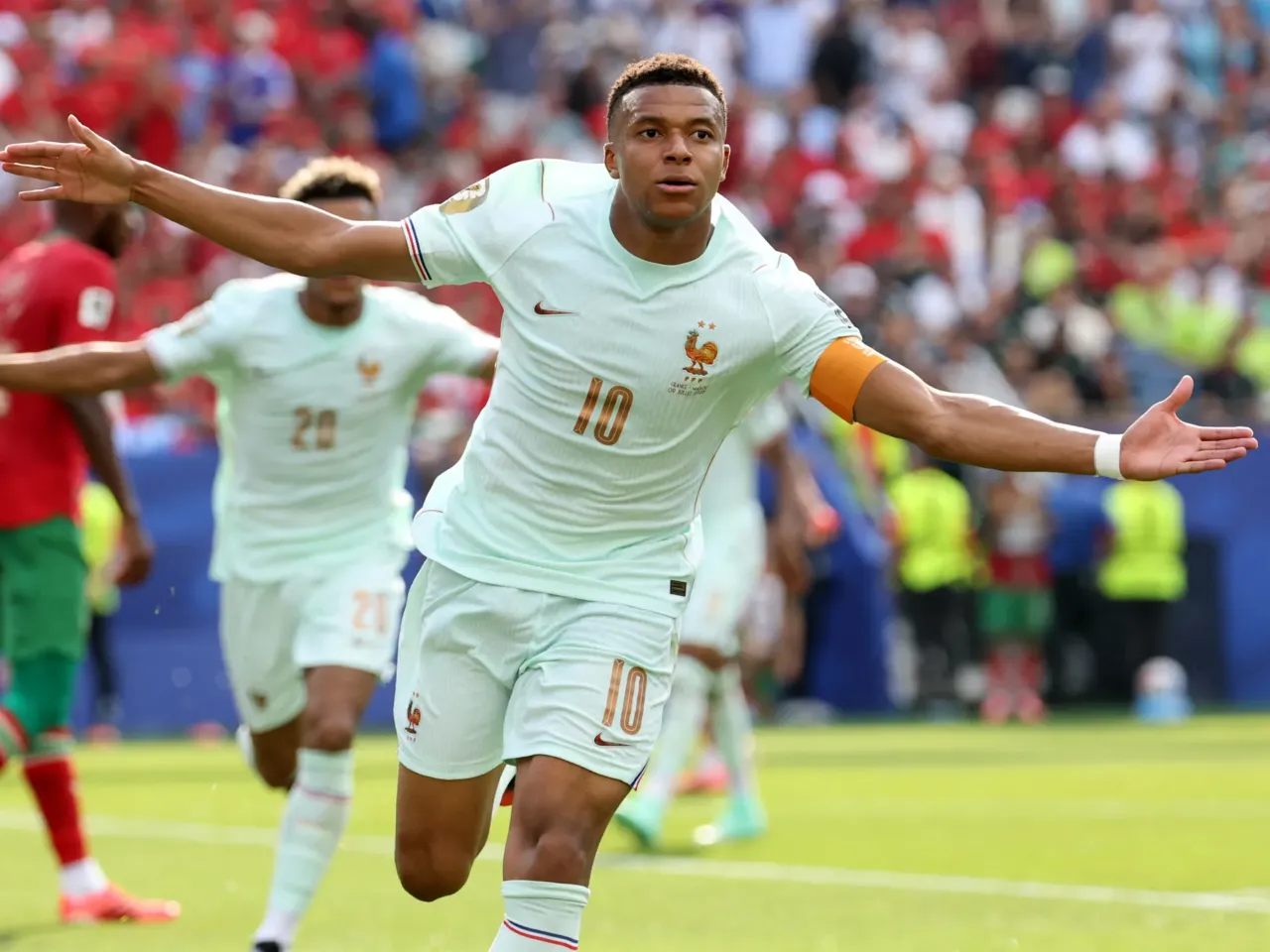
France forward Kylian Mbappe celebrates scoring his team's first goal during the World Cup quarterfinal against Morocco in Foxborough, Mass. on Thursday.
Odd Andersen / AFP via Getty Images
France forward Kylian Mbappe celebrates scoring his team's first goal during the World Cup quarterfinal against Morocco in Foxborough, Mass. on Thursday.

FOXBOROUGH, Mass. — It was billed as a battle of the World Cup heavyweights, and it looked close for a half.

A rematch of the 2022 World Cup semifinal: France, the 2018 champion and 2022 runner-up, against Morocco, the Cinderella from four years ago, and the first Arab and African nation to reach a semifinal. But Morocco could do no better than the quarterfinals this year — losing to France 2-0.

It did not take long for France to go on the attack. In the fourth minute, striker Kylian Mbappé just missed putting Les Bleus up early with a shot that zipped by the left post. France dominated much of the first half, preventing Morocco from even taking a shot until stoppage time at the end.

The best first-half opportunity for France came in the 25th minute. Mbappé was tackled near the Morocco goal and won a penalty kick.

The resulting video review took three minutes, frustrating Mbappé, who wanted to take the kick much sooner. When he eventually shot the penalty, Morocco’s keeper Yassine Bounou dove, low and to the right, easily saving the weak effort by Mbappé.

The French defense stymied Morocco, preventing their offense from getting into a rhythm on a hot, sunny day (it was 89 degrees at kickoff). But France could do no better. At halftime, it was 0-0. The capacity crowd of just over 64,000 at Gillette Stadium wanted more.
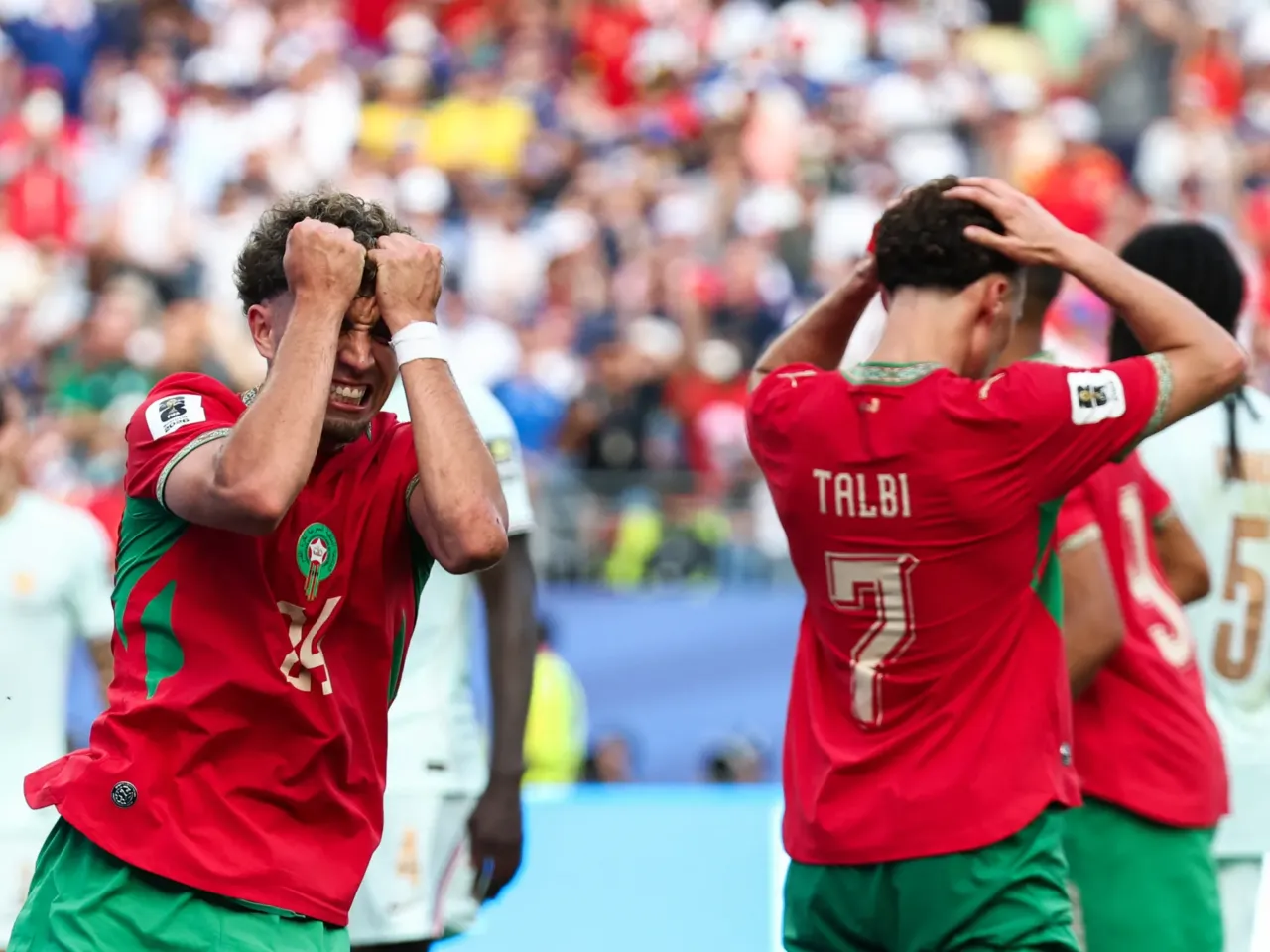
Morocco's midfielder Neil El Aynaoui (left) reacts to a missed chance during the World Cup match against France.
Morocco’s midfielder Neil El Aynaoui (left) reacts to a missed chance during the World Cup match against France. Franck Fife / AFP via Getty Images

Morocco’s ascent to becoming a respected contender at the World Cup is not coincidental. The government has made it a point to invest heavily in the Moroccan national team, even building a state-of-the-art facility and academy, 15 years ago, that experts say rivals France’s soccer training site.

“The king of that country made a decision,” said Zayn Nabbi, host of the podcast On The Whistle, about African soccer. “They were gonna invest in football, and they were gonna use it as soft power. A host of stars are turning down the opportunity to play for European nations to play for Morocco.”

Consider 18-year-old Moroccan midfielder Ayyoub Bouaddi, who was born in France to Moroccan parents, and was courted by the French national team, but ultimately chose Morocco. “Bouaddi is a symbol of a generational shift in which playing for national teams in Europe is no longer treated as the highest form of recognition,” wrote journalists Aomar Boum and Brahim El Guabli in the blog Africa is a Country.

But they were no match for French soccer, which attacked relentlessly in the second half: in the 60th minute came the first French goal. A sensational shot by Mbappé beyond the long stretch of Bounou. It was Mbappé’s eighth goal of this tournament, a record 12th in the knockout round, and his 20th goal in the World Cup.

Shortly thereafter, Moroccan player Issa Diop received a yellow card for tackling Mbappé, the first and only card of the game.

The French scoring continued six minutes later. Mbappé flicked a pass to Ousmane Dembélé, who darted through the Moroccan defense and made it 2-0. Mbappé was subbed out in the 77th minute with a slight limp (he sat on the bench with an ice pack on his right ankle).

Morocco did not give up the fight, creating several scoring opportunities late. But they could not find a way to get the ball into the net.

France now moves on to the semifinal next Tuesday against either Spain or Belgium, which are playing their quarterfinal match tomorrow in Inglewood, Calif.

NPR’s Jasmine Garsd reported from Foxborough, Mass. and Russell Lewis from Birmingham, Ala.

Copyright 2026 NPR
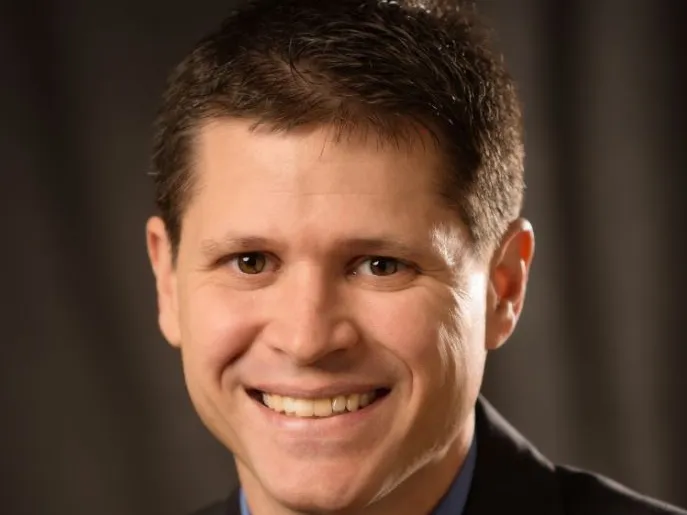
As NPR's Southern Bureau chief, Russell Lewis covers issues and people of the Southeast for NPR — from Florida to Virginia to Texas, including West Virginia, Kentucky, and Oklahoma. His work brings context and dimension to issues ranging from immigration, transportation, and oil and gas drilling for NPR listeners across the nation and around the world.

In addition to developing and expanding NPR's coverage of the region, Lewis assigns and edits stories from station-based reporters and freelancers that air on NPR's news programs, working closely with local correspondents and public radio stations. He spent a year in New Orleans after Hurricane Katrina, coordinating NPR's coverage of the massive rebuilding effort and the reverberations of the storm in local communities. He joined NPR in 2006 and is based in Birmingham, Alabama.

Lewis is also a key member of NPR's 'Go Team' — a small group of experienced NPR producers and reporters who respond to major disasters worldwide. He is often among the first on the scene for NPR — both reporting from these sites as well as managing the logistics of bringing additional NPR reporters into disaster areas that lack functioning transportation systems, basic utilities, food, water, and security.

He was dispatched to Haiti after the 2010 earthquake, where he helped manage a group of NPR journalists. He created an overland supply line for the NPR team between the Dominican Republic and Haiti and brought listeners stories about the slow pace of supply distribution because of border bottlenecks. In Japan in 2011, he was quickly on the scene after the earthquake and tsunami to help coordinate NPR's intensive coverage. In 2013, he was on the ground overseeing NPR's reporting in the Philippines in the aftermath of Super Typhoon Haiyan. Covering the impact of the massive earthquake in Nepal in 2015, he field-produced NPR's coverage and also reported how a lack of coordination by the government and aid workers slowed response. Lewis managed NPR's on-the-ground coverage in 2015 of the terrorist attacks in Paris, France, and reported from Brussels, Belgium. He returned to Brussels in 2016 after the terrorist bombings at the airport and metro station. He helped field-produce NPR's coverage and also reported several stories about the response and recovery. In 2018, he went to Indonesia to field-produce and edit coverage following the earthquake and tsunami in Palu.

Lewis also oversees NPR's sports coverage. He spent six weeks in Brazil in 2014 handling logistics and reporting on the World Cup. In 2015, he did the same in Canada for the Women's World Cup. In 2016, Lewis reported and oversaw NPR's team of journalists at the Summer Olympics in Rio de Janeiro. He also led NPR's coverage from Pyeongchang, South Korea, at the 2018 Winter Olympics and from Tokyo at the delayed Summer Olympics in 2021.

In 2010, the Dart Center for Journalism and Trauma at Columbia University awarded him a prestigious Ochberg Fellowship. The Fellowship is designed to improve reporting on violence, conflict, and tragedy. Lewis has continued his work with the Dart Center and has trained reporters on behalf of the organization in Trinidad and Tobago, the Cayman Islands, and Puerto Rico.

A graduate of the University of Florida, Lewis began his public radio career in 1992 as reporter and executive producer at NPR member station WUFT in Gainesville, Florida. He also spent time at WSVH in Savannah, Georgia, and was Statehouse Bureau Chief at Kansas Public Radio. For six years he worked at KPBS in San Diego as a senior editor and reporter. He also was a talk show host and assistant news director at WGCU in Fort Myers, Florida.

When he's not busy at work, Lewis can be found being creative in the kitchen or outside refereeing soccer games.

Related Stories