Updated July 11, 2026 at 17:40 PM ET
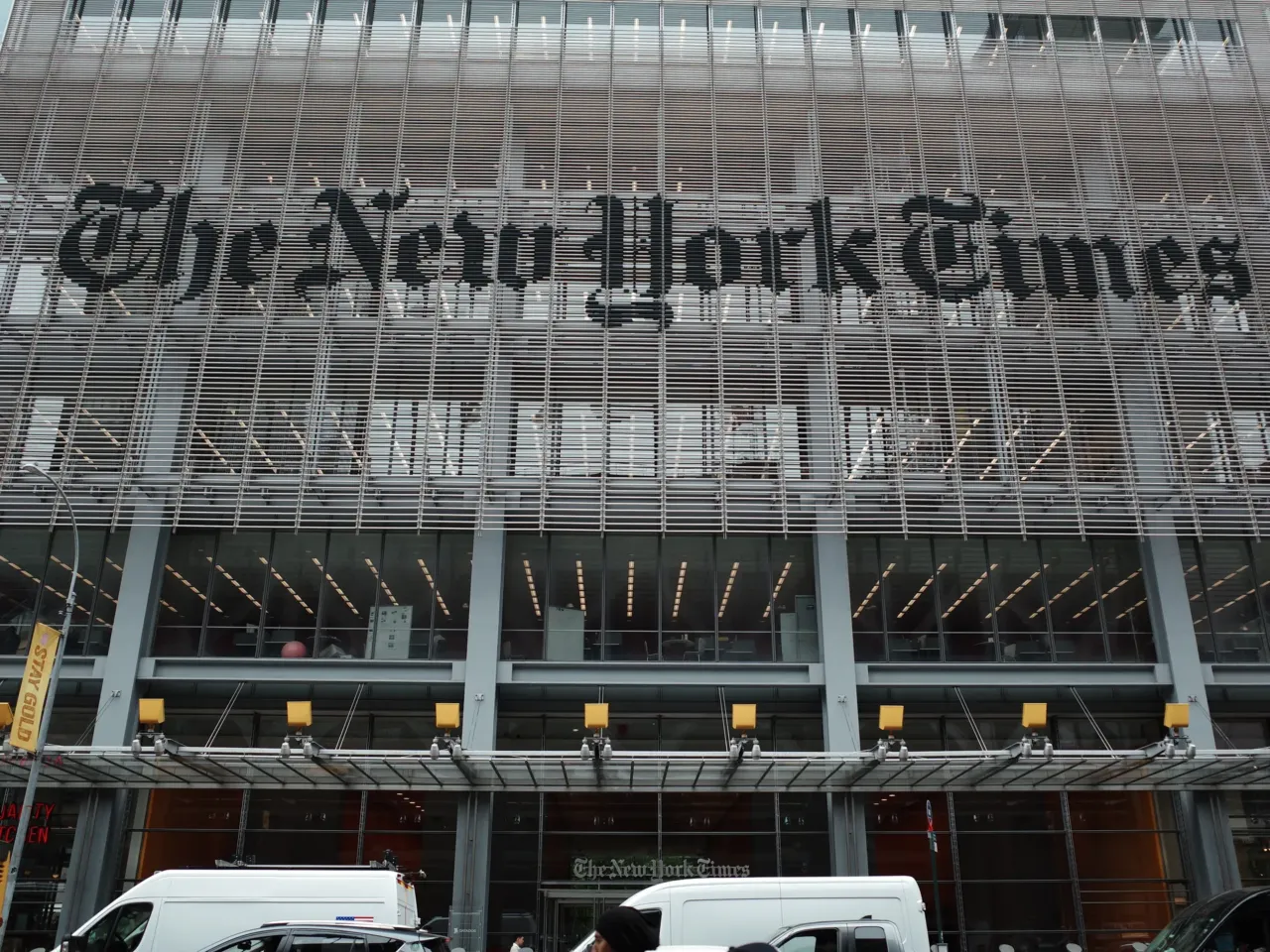
The New York Times says several of its journalists have been subpoenaed by the Department of Justice over their reporting on Air Force One, describing it as a “brazen act.”
On Wednesday, the newspaper published an anonymously sourced story that the Secret Service urged President Trump to leave the recent NATO summit in Turkey on an older version of Air Force One instead of the Boeing 747 donated by Qatar last year because of security concerns. The following day, the Times reported, again citing anonymous sources, that the gifted plane lacked “defensive countermeasures that were security features of the old model, including its advanced antimissile capabilities.”
The four reporters bylined on Wednesday’s article — Julian E. Barnes, Eric Lipton, Tyler Pager and Eric Schmitt — all received subpoenas, according to the Times. The paper said federal agents delivered the subpoenas Friday evening to some reporters at their homes.
The subpoenas “seek to force the reporters to testify before a federal grand jury in Manhattan on Wednesday,” the Times reported. Their testimony, according to the subpoenas, was requested “in regard to an alleged violation of federal criminal law.”
“The appearance of Federal law enforcement agents on the doorstep of news reporters should shock the conscience of any American who believes in the Constitution and the press freedom it protects,” David McCraw, senior vice president and deputy general counsel for the Times, said in a statement. “Our journalists report the facts and advance the American public’s right to know how their government is operating and their taxpayer dollars are being used. This brazen act should be seen as nothing more than an attempt to prevent the public from knowing what is happening in their country by intimidating journalists from doing their jobs.”
Before the Times published the Wednesday article, a senior FBI official had contacted a reporter and editor and asked that the story be held, without explaining why, a New York Times spokesman tells NPR. The FBI official also asked that the sources for the story be identified. Both Times employees refused to do either. (The Times itself was first to report an account of these events.)
The subpoenas were issued by U.S. Attorney Jay Clayton of the Southern District of New York, who was recently nominated by Trump to be the next national intelligence director. Both the White House and the FBI declined to comment for this story. NPR reached out to the Southern District of New York but did not hear back.
The president of the Reporters Committee for Freedom of the Press, Bruce D. Brown, said in a statement Saturday, “The subpoenas … issued to journalists at The New York Times break from longstanding Justice Department practice to protect the public interest and press independence by requiring prosecutors to only seek information from reporters as a last resort when all other avenues have been exhausted. When Jay Clayton appears before the Senate Intelligence Committee on Wednesday, members of both parties must not let him escape accountability.”
The move to subpoena the Times journalists is the latest escalation in Trump’s years-long effort to cow and control U.S. media outlets, following previous financial settlements with ABC News and CBS News’ 60 Minutes program, alongside civil lawsuits and federal criminal actions taken against The Wall Street Journal, The Washington Post, the BBC and others since he resumed office last year.
In an unusual step earlier this year, the FBI searched the property of Washington Post reporter Hannah Natanson, seizing her phones and laptops, as part of an investigation into leaked information. Natanson had written a series of in-depth stories about the Trump administration’s attempts to reduce the federal workforce.
Trump is currently embroiled in several simultaneous personal legal disputes with the Times over its coverage of him. He has accused the publication of disparaging his reputation, undermining his efforts to win reelection and defamation. The newspaper has rejected his claims.
The Times has also launched its own legal action against the Defense Department for seeking to restrict Pentagon access to reporters, and the paper is involved in a separate claim and counterclaim with the U.S. Equal Employment Opportunity Commission. The commission accuses the paper of discriminatory employment practices based on a complaint filed by a white male editor who said he had been passed over for a promotion, while the Times said the commission’s lawsuit was part of the Trump administration’s retaliation for its coverage of the president.
Copyright 2026 NPR