Copyright © 2026 VPM, all rights reserved.
PBS is a 501(c)(3) not-for-profit organization.
VPM News Morning Edition
NEXT UP: 9:00 AM

Thanks to our sponsors – Become a Sponsor

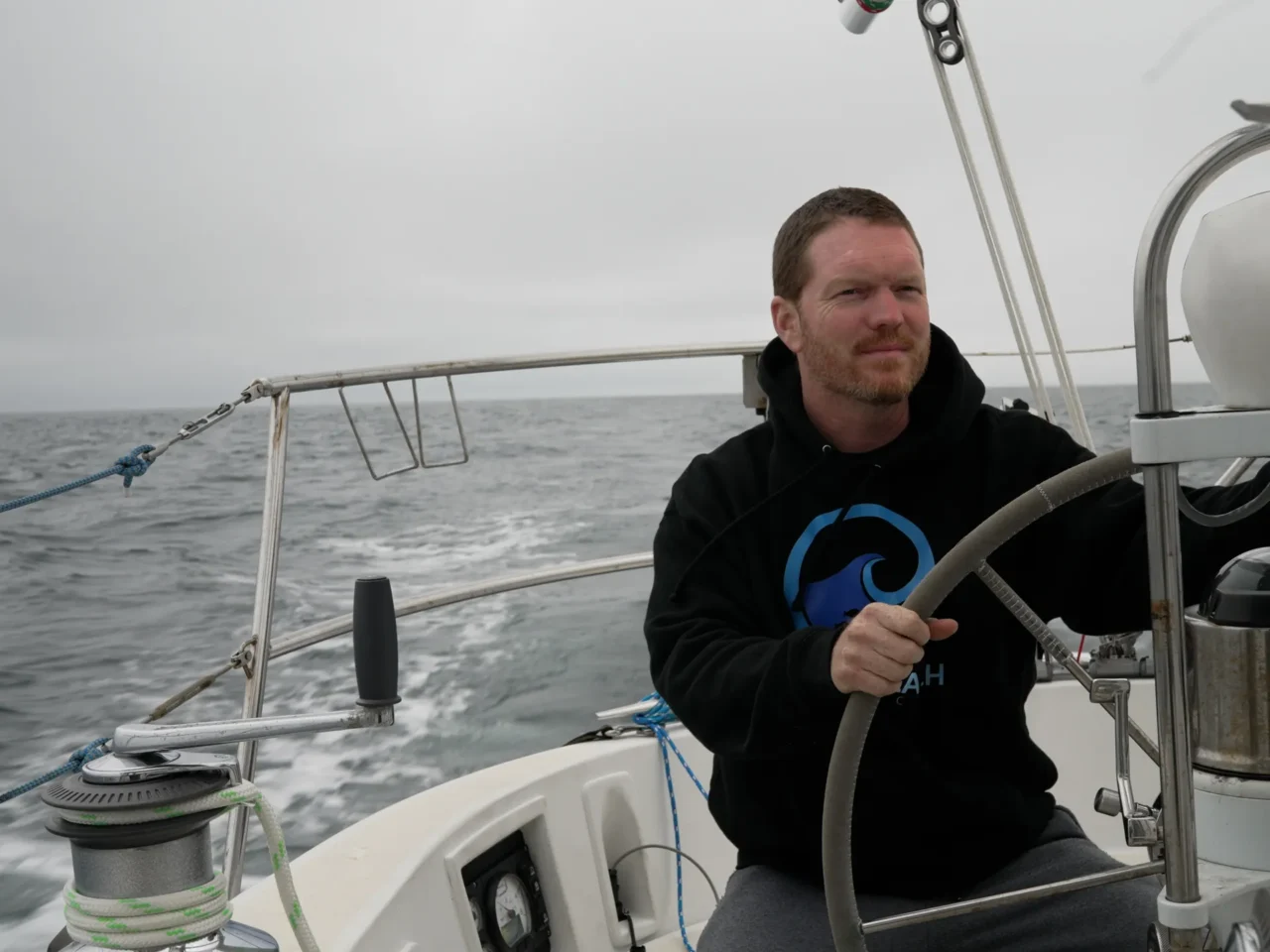
Meet the man circumnavigating the Arctic Ocean, alone

Sailor Matt Rutherford at the helm of a sailboat. He hopes to be the first to circumnavigate the Arctic Circle alone.
Matt Rutherford / Ocean Research Project
Sailor Matt Rutherford at the helm of a sailboat. He hopes to be the first to circumnavigate the Arctic Circle alone.

Updated August 09, 2026 at 10:54 AM ET

When sailing alone, even sleep is dangerous.

Matt Rutherford knows this all too well. As he travels the Arctic, far from his home port of Annapolis, Md., the moments Rutherford does get to rest are precious.

“It just becomes extremely difficult to get any sleep because if you hit the ice, you essentially die,” he said.

Rutherford is attempting a maritime first: to circumnavigate the Arctic Ocean completely alone, some 10,000 nautical miles in total. The 45-year-old veteran sailor’s journey takes him across the North Atlantic, along the Russian Arctic coast and eventually through the Northwest Passage in Canada.

In an interview with NPR’s Rob Schmitz, he said the level of risk will rise as he travels into seas with denser patches of ice, and with worsening conditions.

“It’s also going to get dark soon,” he said, speaking via Starlink connection from his 42-foot sailboat in the Barents Sea. “I got 24-hour daylight now. How do you see the ice in the dark?”

Rutherford’s boat is armed with some helpful tools: Radar can spot the bigger chunks of ice, thermal binoculars help him avoid smaller ones — and he has a life raft if things take a turn for the worse.

But the clock is ticking. If he takes too long on his odyssey, and summer turns to fall, the pack ice will freeze his boat in — dooming the expedition.
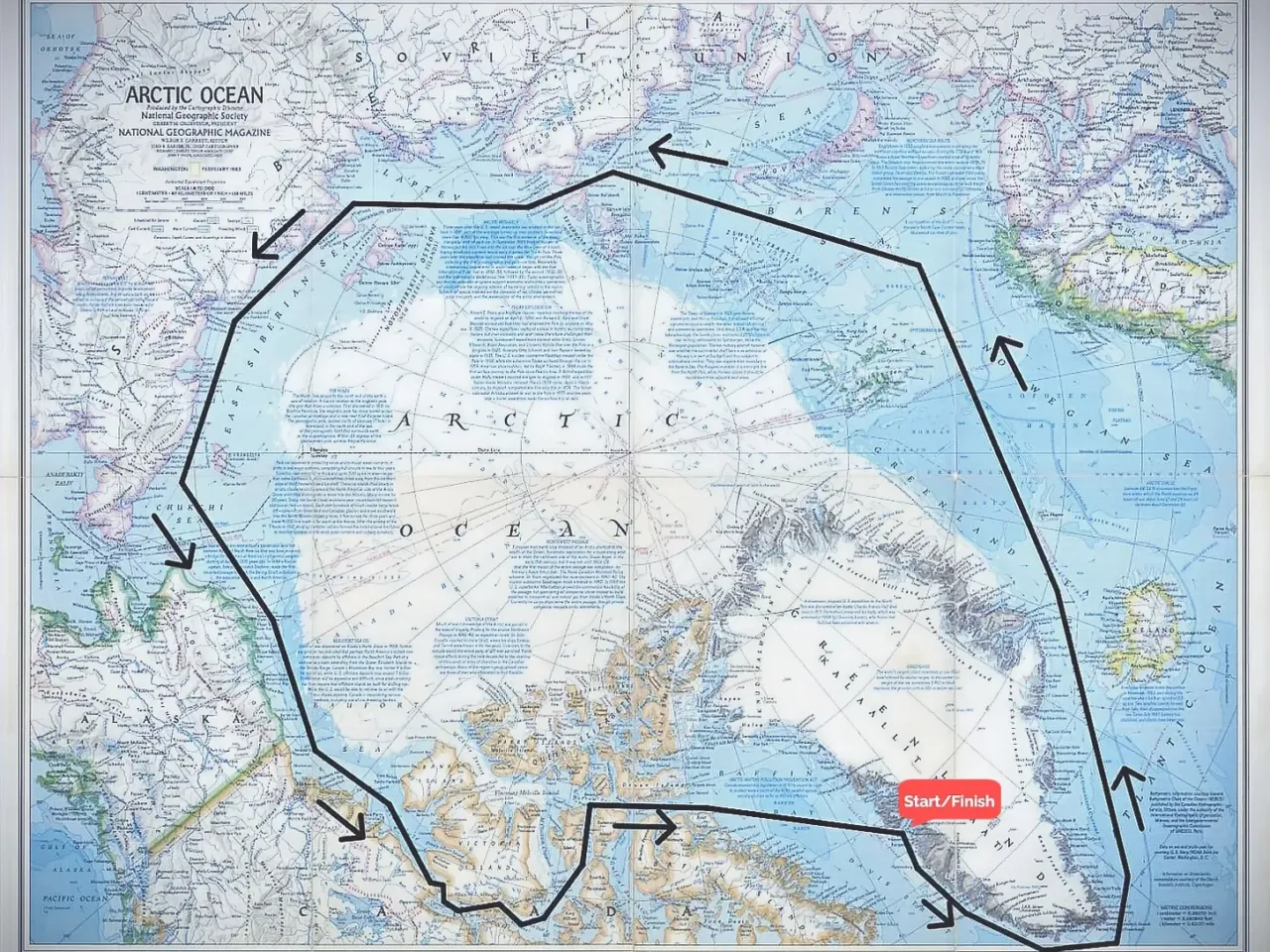
The route Rutherford plans to take is some 10,000 nautical miles long. No one has completed it unassisted.
The route Rutherford plans to take is some 10,000 nautical miles long. No one has completed it unassisted. Matt Rutherford / Ocean Research Project

Yet for all this obvious danger, Rutherford is steadfast. His voyage, which began on June 25 on the western coast of Greenland, is partly driven by his love of exploration. It’s also meant as a fundraiser for his climate science nonprofit, the Ocean Research Project.

“Normally, I’m running a research schooner and we’re studying glaciers in Greenland. And this year, because there’s no funding … I’m doing a little side trip,” he joked.

The federal government has slashed funding for climate science over the past two years. With his “side trip,” Rutherford hopes to attract new donors to his Arctic research group. The group’s vessel needs a new engine, among other repairs.

Climate change, in some ways, has made Rutherford’s solo voyage more attainable. Arctic sea ice has shrunk by about a third since the early 1980s, according to figures from the National Snow and Ice Data Center.

“[The ice loss is] not everywhere,” he said. “I mean, there’s still going to be some really heavy ice I have to deal with down the road that could make or break the trip.”

The thick ice above Alaska is of particular concern, he said — and so is the pack around eastern Siberia.
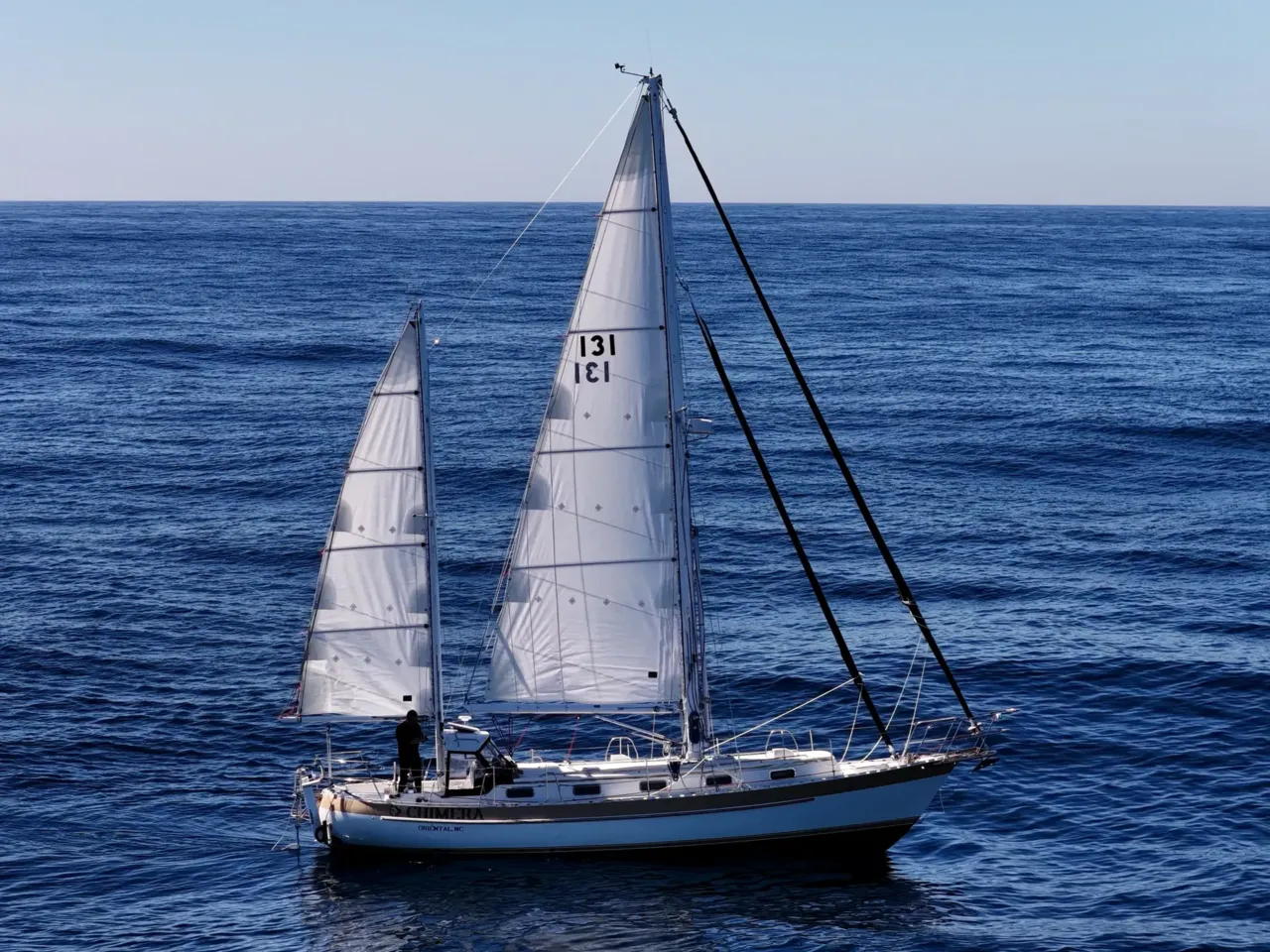
Rutherford's sailboat, the Chimera, on an earlier voyage.
Rutherford’s sailboat, the Chimera, on an earlier voyage. Matt Rutherford / Ocean Research Project

But so far, the voyage has been mild. Rutherford sailed past the Nordic countries of Norway and Sweden just a few days ago and crossed into waters controlled by the Russian government this weekend.

That presents its own set of challenges. Rutherford said he had to get a permit from the Russian government to allow a pleasure craft like his into the Northern Sea Route, the path along Russia’s northern coast connecting the Barents Sea to the Pacific Ocean.

Upon reaching the route, Rutherford has to check in with Moscow every day. He said he’s also expected to report his position to the FSB, Russia’s security service, if he gets too close to shore.

“You better believe I’m going to be doing that on time,” he said. “I don’t want to ruffle any feathers.”

Rutherford also expects his Starlink connection to stop working at some point inside Russian waters, meaning he’ll lose most of his communication capabilities for weeks.

“I don’t know what’s going to happen. But look, this wouldn’t be an adventure if we knew the ending,” Rutherford said.

For now, he’s confident and comfortable. When NPR spoke with Rutherford, the weather forecasts were encouraging.

It looked like he’d be able to have a restful few days.

Copyright 2026 NPR

Rob Schmitz is NPR's international correspondent based in Berlin, where he covers the human stories of a vast region reckoning with its past while it tries to guide the world toward a brighter future. From his base in the heart of Europe, Schmitz has covered Germany's levelheaded management of the COVID-19 pandemic, the rise of right-wing nationalist politics in Poland and creeping Chinese government influence inside the Czech Republic.

Prior to covering Europe, Schmitz provided award-winning coverage of China for a decade, reporting on the country's economic rise and increasing global influence. His reporting on China's impact beyond its borders took him to countries such as Kazakhstan, Mongolia, Vietnam, Thailand, Australia, and New Zealand. Inside China, he's interviewed elderly revolutionaries, young rappers, and live-streaming celebrity farmers who make up the diverse tapestry of one of the most fascinating countries on the planet. He is the author of the critically acclaimed book Street of Eternal Happiness: Big City Dreams Along a Shanghai Road (Crown/Random House 2016), a profile of individuals who live, work, and dream along a single street that runs through the heart of China's largest city. The book won several awards and has been translated into half a dozen languages. In 2018, China's government banned the Chinese version of the book after its fifth printing. The following year it was selected as a finalist for the Ryszard Kapuściński Award, Poland's most prestigious literary prize.

Schmitz has won numerous awards for his reporting on China, including two national Edward R. Murrow Awards and an Education Writers Association Award. His work was also a finalist for the Investigative Reporters and Editors Award. His reporting in Japan — from the hardest-hit areas near the failing Fukushima nuclear power plant following the earthquake and tsunami — was included in the publication 100 Great Stories, celebrating the centennial of Columbia University's Journalism School. In 2012, Schmitz exposed the fabrications in Mike Daisey's account of Apple's supply chain on This American Life. His report was featured in the show's "Retraction" episode. In 2011, New York's Rubin Museum of Art screened a documentary Schmitz shot in Tibetan regions of China about one of the last living Tibetans who had memorized "Gesar of Ling," an epic poem that tells of Tibet's ancient past.

From 2010 to 2016, Schmitz was the China correspondent for American Public Media's Marketplace. He's also worked as a reporter for NPR Member stations KQED, KPCC and MPR. Prior to his radio career, Schmitz lived and worked in China — first as a teacher for the Peace Corps in the 1990s, and later as a freelance print and video journalist. He also lived in Spain for two years. He speaks Mandarin and Spanish. He has a bachelor's degree in Spanish literature from the University of Minnesota, Duluth, and a master's degree from Columbia University's Graduate School of Journalism.

Related Stories