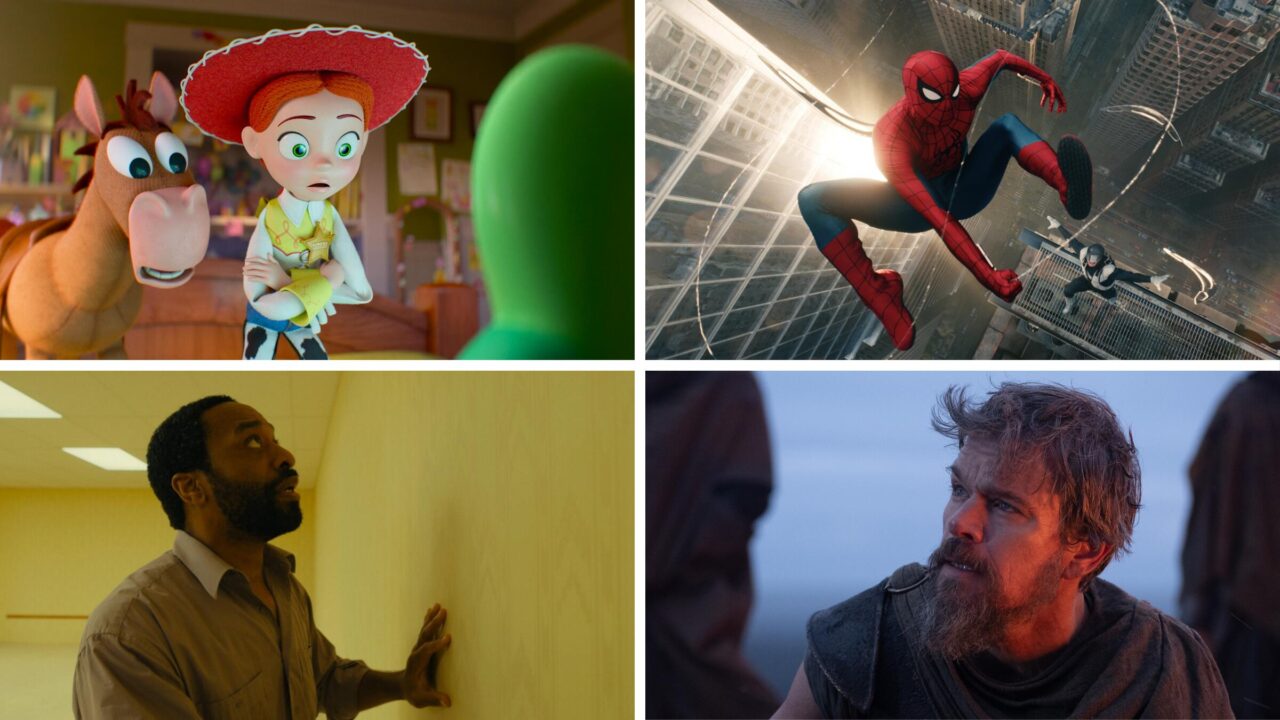
Summer blockbusters — including the smash hits Spider-Man: Brand New Day and Christopher Nolan’s The Odyssey — have busted plenty of blocks this year. American cineplexes are on track to rake in more dollars than they have in a decade, a gratifying outcome after years of losing audiences to streaming.
And while the big box office numbers come with equally big caveats, it’s reasonable to revel in the good news first. With Spidey entertaining superhero fans, the Michael Jackson biopic Michael capturing the pop music crowd, The Odyssey for folks who like epics, The Devil Wears Prada 2 for fashionistas, and Toy Story 5 for kids, Hollywood has managed to have something for everyone this summer.
It even found room for a couple of unexpected, low-budget thrillers from YouTube creators — Obsession and Backrooms — that together added $460 million to the North American box-office pot.
All of which has theater owners cheering, and Tinseltown’s trade papers buzzing about what’s shaping up to be a $4.5 billion summer, easily topping not just the Barbenheimer summer of 2023 but also the Lion King/Avengers: Endgame summer of 2019. (In Hollywood, “summer” means the first Friday in May through Labor Day.)
This is great news for a film industry that seemed to lose its way when the pandemic accelerated the growth of streaming services six years ago. For a few months in 2020, when theaters shut down entirely, movie studios became reluctant-but-active participants in the weaning of audiences away from the habit of attending movies in cinemas.
Disney sent its Pixar attractions, reliably successful in theaters, straight to Disney+, Warner Bros. made Dune, its most promising blockbuster, available for home viewing on HBO Max the same day it opened in more than 4,000 theaters. Other studios delayed openings or sent films straight to streaming services that would normally have gone first to theaters.
And movie patrons, once they had been trained to look for the latest movies in their living rooms, had to be strenuously wooed back to cinemas with films that were spectacle-oriented, star-studded, and in every sense bigger than what was available at home.
More money
It took a while, but in dollar terms, the industry has now recovered. Five 2026 films (Spider-Man: Brand New Day, The Odyssey, Toy Story 5, Michael, and The Super Mario Galaxy Movie) have each earned more than $1 billion worldwide, more than in any year since the start of the pandemic. And that’s before the presumed Christmas bonanza that fans are already calling “DunesDay” — when rival blockbusters Dune: Part Three and Avengers: Doomsday both open on Dec. 18 — a one-two punch that’s expected to cap the best year American theaters will have had since $10 billion years were commonplace in the 2010s.
But there are some notable differences now.
Fewer screens
Cineplexes are crowded partly because the pandemic left the industry with fewer of them. According to research firm Omdia, there were 44,283 movie screens in North America at the end of 2019. By the end of last year, more than 7,000 of those screens had permanently shuttered.
Fewer moviegoers
And the industry’s recovering box office numbers mask another issue — dollars are up, but attendance is down. Data and analytics company S&P Global reports that through mid-August in the year before the pandemic, cinemas sold 795.9 million tickets. This year’s ticket sales for that same period, although they’re up from the last couple of years, are still only 547.1 million; a drop of almost a quarter of a billion admissions.
A shortfall that enormous would have been catastrophic if prices hadn’t risen. Seven years ago, the trade group Cinema United tallied the average movie ticket at around $9. Today, audience fondness for pricey premium formats like IMAX has pushed the average adult ticket price above $13, according to research firm EntTelligence. (Audiences are paying $18.46 for premium format and $12.87 for standard tickets, per EntTelligence data.)
So, fewer patrons, but bigger event films like The Odyssey.
Fewer movies
And there’s one other difference: In the summer of 2019, about 400 movies played in theaters; this year, barely 300 will. That means on average, each individual film is doing better, but there aren’t as many choices for folks who’ve had a good time and want to come back, the audiences that multiplex theaters were designed to capture.
So, what Hollywood is looking at as it concludes its most successful summer in years is more dollars, but fewer theaters, fewer patrons, and fewer movies — not really, as Miranda Priestly of The Devil Wears Prada might put it, a great look for an industry in recovery.
Studios and cinemas will need to grapple with whether their current business model is sustainable. But this summer, after a long slog back to profitability, they can be forgiven for basking in a slew of box office records, including — when Spider-Man: Brand New Day first joined The Odyssey and Toy Story 5 in theaters — the highest collective take for a single weekend in Hollywood history.
Transcript:
MICHEL MARTIN, HOST:
Hollywood blockbusters have been busting a lot of blocks this summer. So have movie theaters bounced back from the pandemic? We asked NPR film critic Bob Mondello.
BOB MONDELLO, BYLINE: With “Spider-Man: Brand New Day” for superhero fans…
(SOUNDBITE OF FILM, “SPIDER-MAN: BRAND NEW DAY”)
TOM HOLLAND: (As Spider-Man) You sure you want to do this, Scorpion?
MONDELLO: …”Michael” for the music crowd…
(SOUNDBITE OF SONG, “BILLIE JEAN”)
MICHAEL JACKSON: (Singing) Billie Jean is not my lover.
MONDELLO: …”The Odyssey” for folks who like epics, “The Devil Wears Prada 2” for fashionistas, “Toy Story 5” for kids…
(SOUNDBITE OF FILM, “TOY STORY 5”)
TIM ALLEN: (As Buzz Lightyear) We’re going to need backup.
MONDELLO: …Hollywood seemed to have something for everyone this summer, even a couple of unexpected thrillers from YouTube creators.
(SOUNDBITE OF FILM, “OBSESSION”)
INDE NAVARRETTE: (As Nikki Freeman, shouting) Why don’t you love me?
MONDELLO: Low-budget horror flicks “Backrooms” and “Obsession” together added almost half a billion dollars to the North American box office pot, all of which has theater owners cheering and Hollywood trade papers buzzing about what’s shaping up to be a $4.5 billion summer, easily topping the Barbenheimer summer of 2023.
(SOUNDBITE OF FILM, “BARBIE”)
UNIDENTIFIED ACTOR #1: (As Ken) Hi, Barbie.
MARGOT ROBBIE: (As Barbie) Hi, Ken.
MONDELLO: This is great news for a film industry that seemed to lose its way when the pandemic accelerated the growth of streaming services six years ago. For a few months in 2020, theaters shut down entirely, and movie patrons, having been trained to find entertainment options at home…
(SOUNDBITE OF NETFLIX LAUNCHING)
MONDELLO: …Had to be wooed back to cinemas by the likes of Vin Diesel touting his latest “Fast & Furious” epic.
(SOUNDBITE OF AD)
VIN DIESEL: The movies – there’s nothing like that moment when the lights go down…
(SOUNDBITE OF PROJECTOR WHIRRING)
VIN DIESEL: …The projector ignites…
(SOUNDBITE OF ENGINE REVVING)
VIN DIESEL: …And we believe.
MONDELLO: It took a while, but in dollar terms, the industry has now recovered. Five of this year’s films have each earned more than a billion dollars worldwide, more than in any year since the start of the pandemic, and that’s before the coming Christmas bonanza that fans are calling Doomsday when rival Blockbusters “Dune: Part Three ” and “Avengers: Doomsday” both open on December 18. They are expected to cap the best year American theaters will have had since $10 billion years were commonplace before 2019.
(SOUNDBITE OF FILM, “AVENGERS: ENDGAME”)
CHRIS EVANS: (As Captain America) Avengers, assemble.
MONDELLO: But there are differences this year. Cineplexes are crowded, partly because the pandemic left the industry with fewer of them. According to the research firm Omdia, there were about 44,000 movie screens in North America before the pandemic. By the end of last year, more than 7,000 of those screens had permanently closed, and those recovering box office numbers mask another issue – dollars are up, but attendance, though it’s climbing back, is still down.
S&P Global, which tracks corporate data, reports that through mid-August of this year, cinemas sold fewer tickets – a quarter of a billion fewer – than in the year before the pandemic, a drop that would be catastrophic if prices hadn’t risen. Seven years ago, the average movie ticket cost a little over $9. Today, audience fondness for premium formats like IMAX has pushed the average adult ticket price above $13, so fewer patrons but bigger event films like “The Odyssey”…
(SOUNDBITE OF FILM, “THE ODYSSEY”)
UNIDENTIFIED ACTOR #2: (As character, shouting) Let’s go.
MONDELLO: …And there’s one other difference. In 2019, Hollywood had about 400 movies in release during the summer. This year, it will barely get to 300. So, on average, each individual film is doing better, but there aren’t as many choices for folks who’ve had a good time and want to come back.
(SOUNDBITE OF ARCHIVED RECORDING)
UNIDENTIFIED ACTOR #3: (As character) Now in MinionVision.
MONDELLO: The audiences that multiplex theaters were designed to capture. So what Hollywood is looking at as it ends its most successful summer in years is more dollars but fewer screens, fewer patrons and fewer movies. Not really what “The Devil Wears Prada” crowd might call a great look.
(SOUNDBITE OF FILM, “THE DEVIL WEARS PRADA 2”)
MERYL STREEP: (As Miranda Priestly) I hope that’s not what you’re wearing to the dinner. That’s all.
MONDELLO: The film industry will need to grapple with whether its current business model is sustainable. But this summer, it has led to a slew of box office records, including when “Spider-Man” first joined “The Odyssey” in theaters, the highest take for a single weekend in Hollywood history. I’m Bob Mondello.
(SOUNDBITE OF SONG, “BABY I’M BURNIN'”)
DOLLY PARTON: (Singing) Baby, I’m burning out of control.