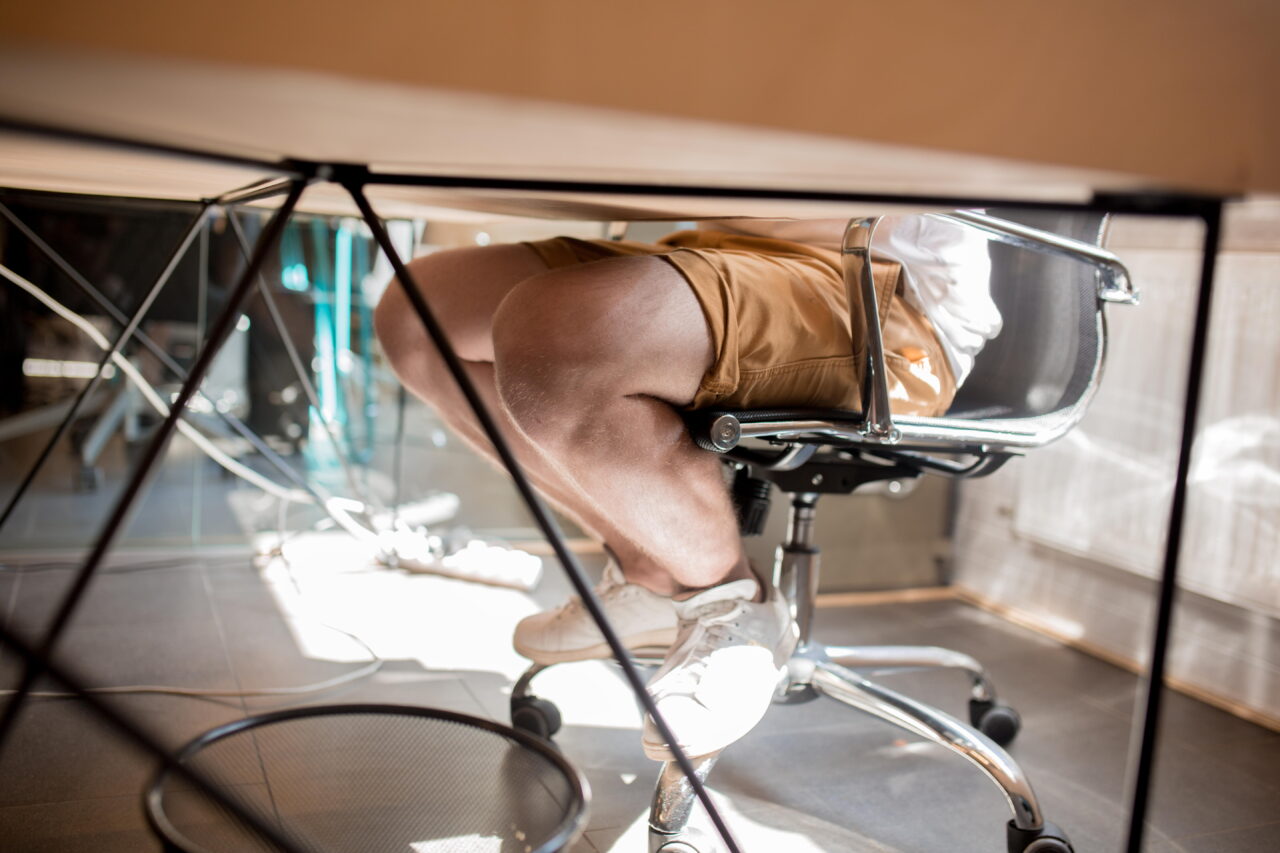
AI data analyst Edwin Zee recently sat through a conference call with a colleague on the East Coast who was wearing shorts.
“He was sitting at a table, and the way he was positioned, the table covered up all of his shorts. But you could see his bare legs sticking out,” said Zee. “So it looked like he had no pants on.”
To wear shorts to work? Or not to wear shorts to work? The question is coming up at water coolers and beyond this summer.
Nearly half of the traders, portfolio managers and strategists surveyed in a recent Bloomberg poll said short pants are fine for work. But Silicon Valley men seem to be shying away from showing their legs at the office as the stereotype of the scruffy tech genius in shorts and flip-flops fades.

“I’ve definitely noticed a lot less shorts in the office lately,” Zee said. “I would say there has been a move to the more dressed-up look — straight leg chinos or corduroys and a shirt.”
“I wore them on occasion pre-pandemic, but only when it was exceptionally hot out,” said William Dunn, who manages a technical support team for a software company in San Francisco.
“I’ve seen a transformation,” said James Brown, chief product officer at a B2B software and financial technology company. “You go back 10 to 15 years ago, there was this vibe of engineering-driven tech companies where people were super, super casual in shorts and T-shirts. But I’ve seen a rising of the tide since then of how people look.”
Looking the part
For Victoria Hitchcock, a style consultant who works with tech sector clients, shorts are verboten — whether they are a tailored pair with lambskin details from Hermès (price tag $1,175) or baggy, hand-me-down boardshorts from Old Navy.
“I don’t think anything above the knee is appropriate, really,” Hitchcock said. “It’s distracting.” (Hitchcock said this edict applies to women as well as men.)
Hitchcock said male workers across Silicon Valley have been gravitating toward more polished looks in recent years to reflect the maturing industry, employees’ growing disposable incomes, and the power of social media influencers like Adam Gallagher and Tim Dessaint in the men’s style space.
“It’s finally catching up that you’ve got to dress the part,” Hitchcock said.
Convergence toward the middle
San Francisco-based menswear writer Derek Guy said he wonders if the growing acceptability of shorts in some finance offices on the East Coast — and the mirroring decline of their popularity in the tech sector on the West — may signal a convergence toward the middle.
“Essentially, everyone’s moving to business casual — this very vanilla, bland uniform, which is a button-up shirt and non-jeans,” said Guy.
He said he is opposed to this idea — “I think it looks very bad” — and thinks it would be preferable if everyone just wore whatever they wanted to work. Guy acknowledges, though, that this could lead to the level of chaos depicted in a memorable 2009 episode of The Office, where staff show up in an array of unsuitable outfits. (“Dammit, Meredith, where are your panties?!”)
Meanwhile, an isolated few in the tech industry still say “Yes!” to shorts in the workplace in 2026. “I am pro,” Instagram head Adam Mosseri said earlier this month in an interview on the men’s fashion and lifestyle podcast Throwing Fits. “But not everyone can pull them off. And not all shorts are created equal.”