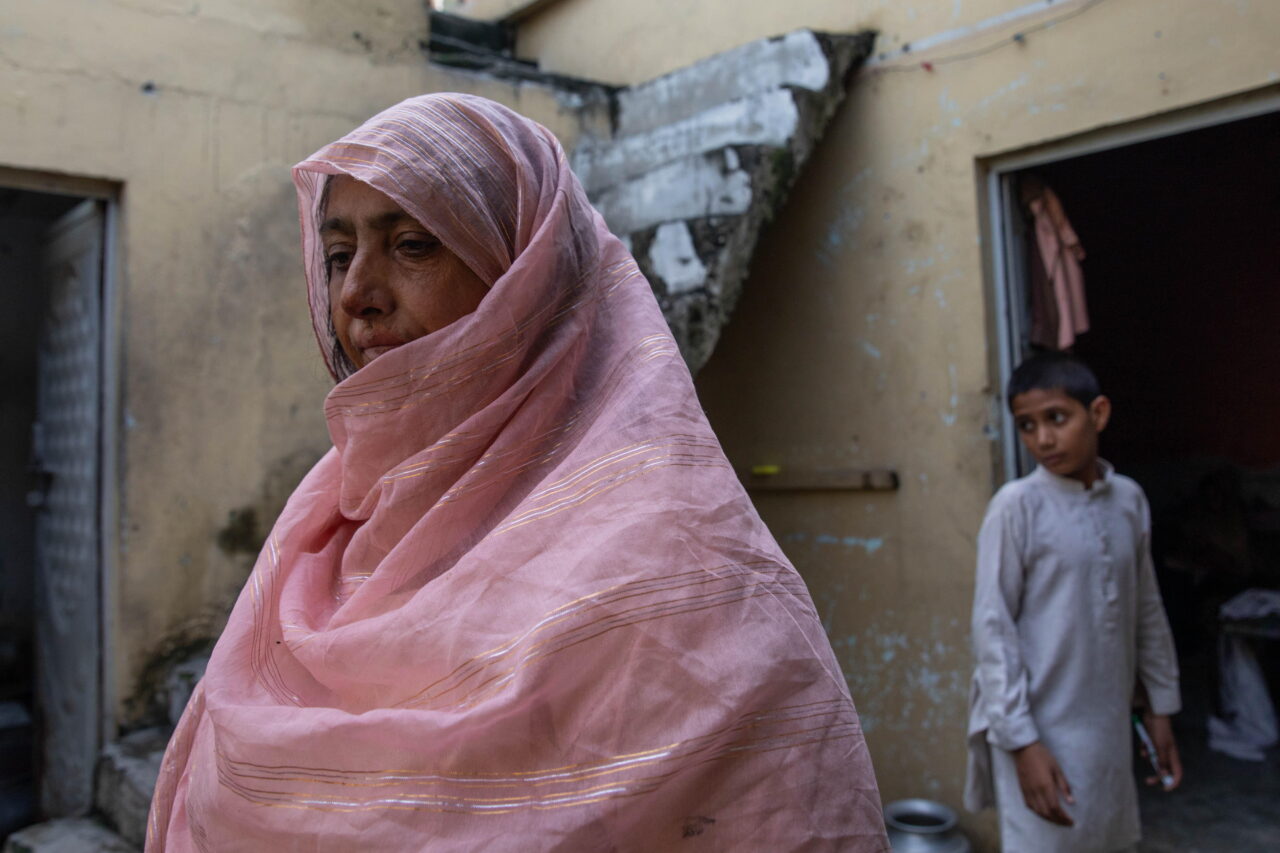
ISLAMABAD, Pakistan –- For more than 300 years, people have settled around the soaring marble shrine of the Sufi saint known as Bari Imam, nestled at the foothills of the Himalayas. Some served the hundreds of pilgrims who visit each day, others to seek the saint’s blessings. They include the ancestors of 30-year-old Wirasat Aly, who for generations lit evening lamps to honor the saint whose shrine now abuts upscale areas of Islamabad, the capital of Pakistan.
But on a recent day, Aly was salvaging bricks from his razed home, tossing the good ones in a pile to sell to construction companies. A truckful is worth the equivalent of $5.40, and it’s how he’s scraping together $70 monthly rent to shelter his family, including 8 children in his care.
They include the nieces and nephews of his disabled brother.
“We have to do something for the children,” he says. “I’m going crazy. “Our stomachs are empty.” Aly says he had to pull the children out of school because he couldn’t afford the monthly bus fees, lunch money or books.
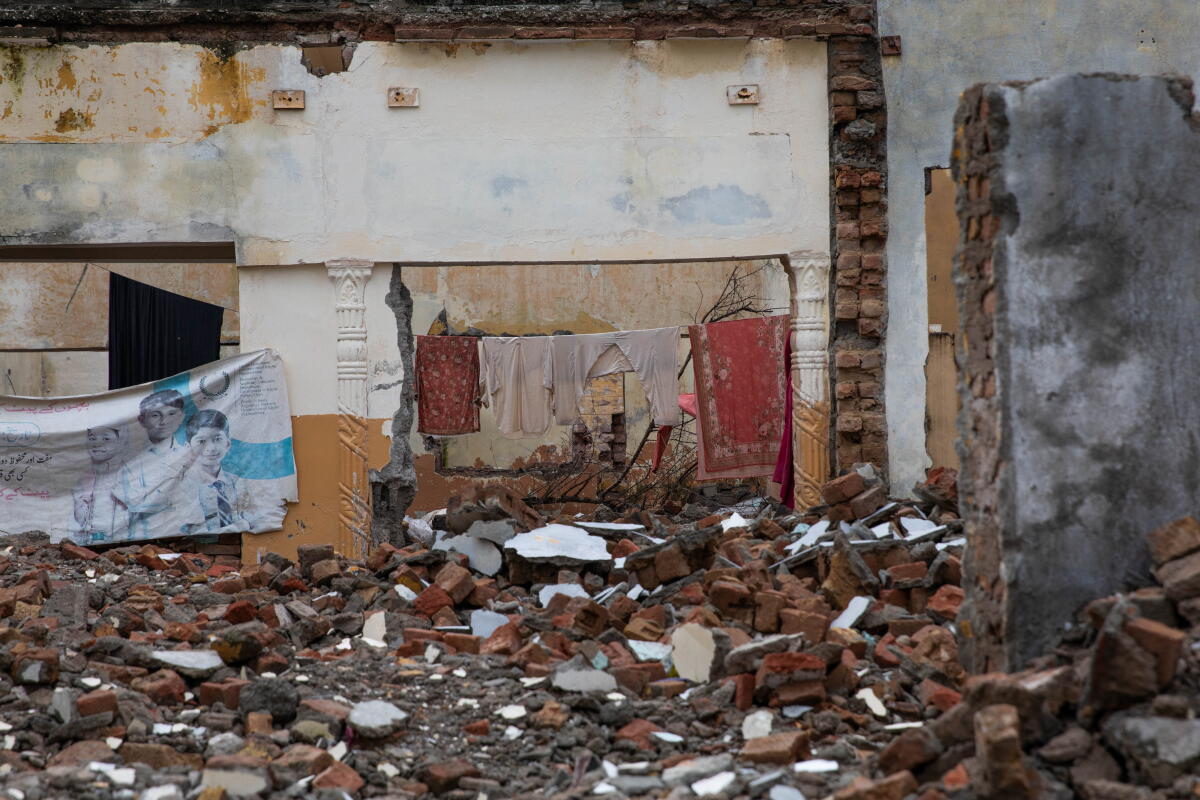
In a roughly one-mile radius around Aly, there’s rubble where there were once tightly-packed homes, as well as roadside stalls offering trinkets like meditation beads and prayer carpets. There were also tiny tent-like kitchens manned by cooks who, for a price, would prepare cauldrons of rice to serve at the free cafeteria adjacent to the Bari Imam shrine: a hall crowded with pilgrims and families of the working poor. Worshippers pay for those cauldrons as a way to seek the saint’s blessings.
A neighborhood’s demolition
But between December 2025 and April, local authorities razed much of the neighborhood, including hundreds of homes and shops.
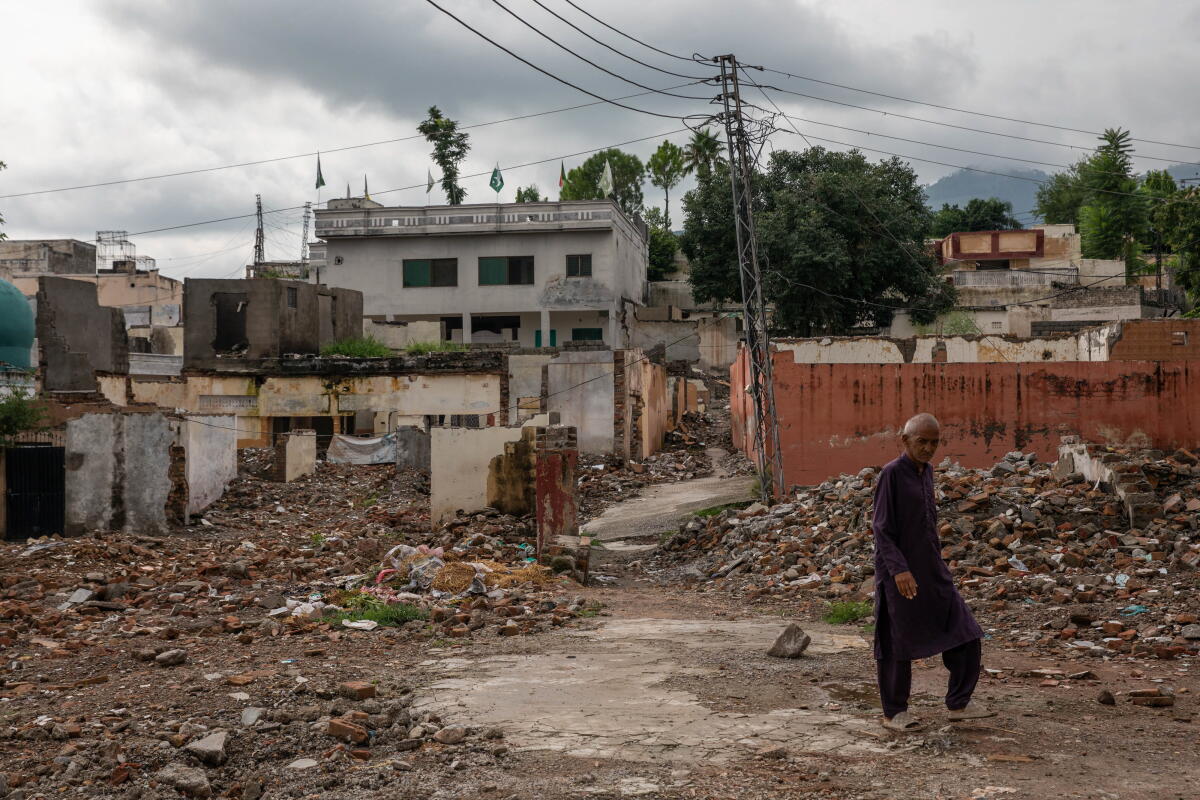
It was unprecedented, says leftist academic and housing rights activist Aasim Sajjad Akhtar: “I have never seen the intensity that I’ve seen,” he said, referring to the demolitions, describing it as “something that is far more brazen than I’ve seen before.” Akhtar and other activists estimated that 50,000 people lost their homes, or about a tenth of the estimated 500,000 residents of Islamabad’s slums, or informal settlements.
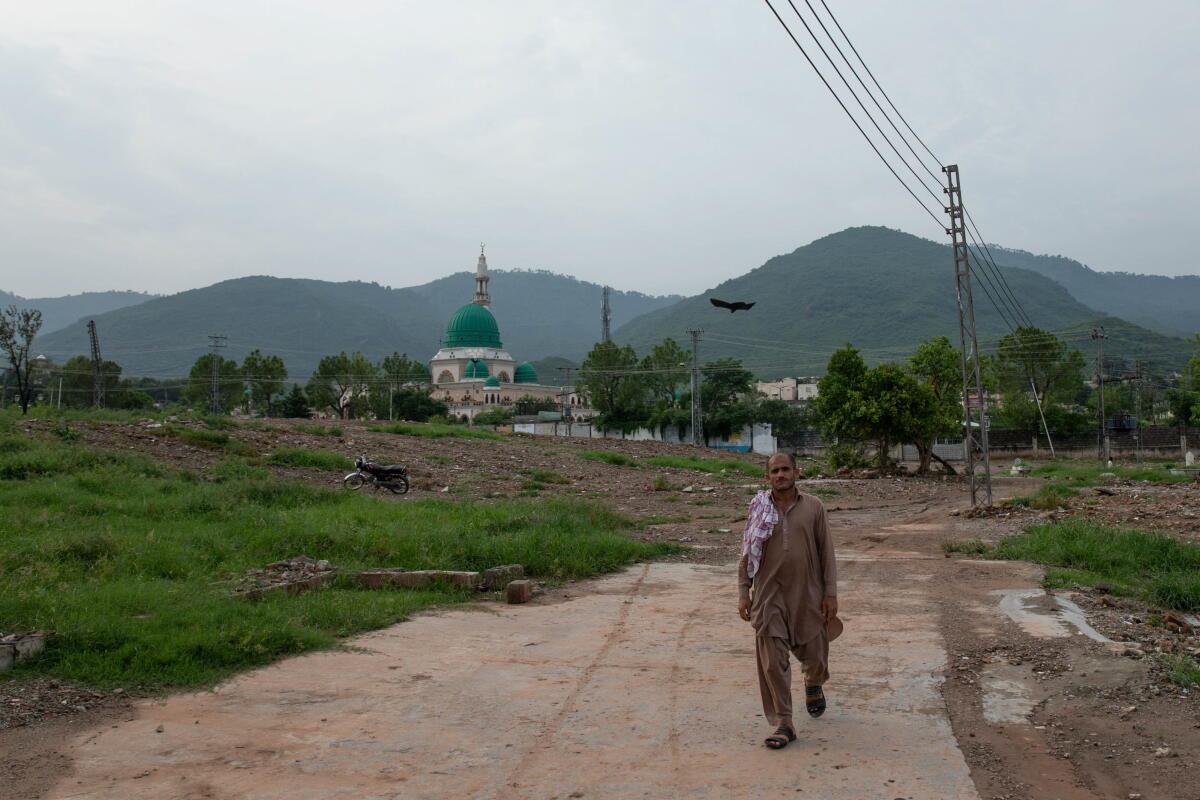
Residents say they believe this demolition drive took place because one of Pakistan’s most powerful men indicated his interest in developing the area: the interior minister, Mohsen Naqvi. He’s widely considered to be close to the chief of the army, which is Pakistan’s most powerful institution. And in April, Naqvi said he had a vision of converting the area behind the prime minister’s residence into a futuristic hybrid of Shanghai and Manhattan.
The area behind the prime minister’s house is the Bari Imam shrine and its surrounding neighborhoods.
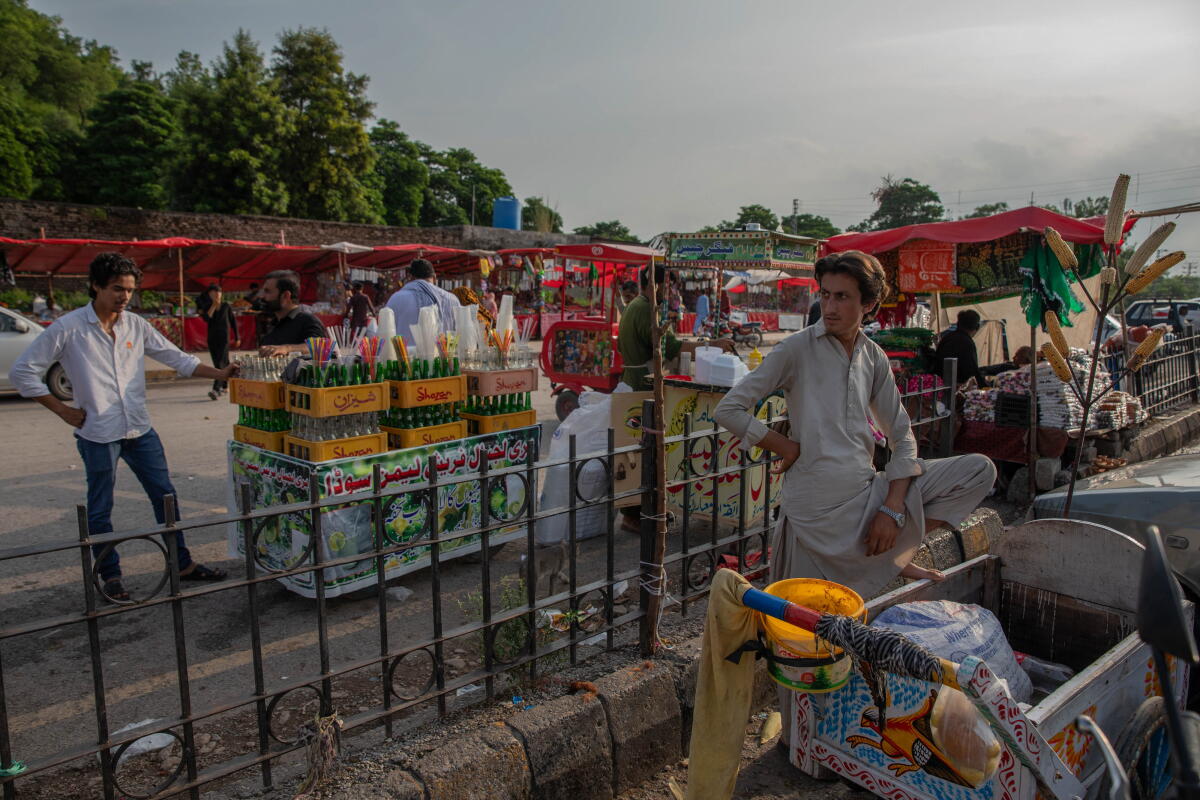
“See how you can come and invest,” Naqvi told businessmen in comments carried on local media outlet City21. He did not respond to NPR’s request for comment about his involvement in these developments.
But an official at the Capital Development Authority, which governs Islamabad, said most razed homes belonged to an informal settlement known as Muslim Colony, and they had exhausted all legal avenues to stay.
The official, who requested anonymity because she wasn’t allowed to speak to journalists, said residents who lived there before 2005 were compensated. But residents who stayed on or rented out their illegally-built homes, were expecting more compensation to move. “A perverse initiative was at play,” she said.
Residents and activists told NPR that many of those people who came after 2005 were displaced because of conflict with militants near the Afghan border, an earthquake in Pakistan-held Kashmir, and by floods and droughts. Most worked to serve the city’s elites as guards, cleaners, tailors and butchers. But the official said residents who could not afford Islamabad’s expensive rents should go. “It’s better to not move in a city if you cannot afford the price of living.”
Local media reported that another 200 razed homes belonged to a neighborhood that was once a village, Nurpur Shahan. The official says authorities compensated residents for their land in 1957 after it was seized to build the capital city, Islamabad.
She said residents would not be compensated again. Some neighborhoods still stand for now, but a billboard planted near their homes warns: “All structure and activities on this land are unauthorized and illegal.”
A local resident and lawyer representing families here, Tanvir Hussain, told NPR that the decades-old compensation was never properly carried out. He also noted other residents were promised relocation to other Islamabad neighborhoods, which never happened. The CDA official said the protesters were simply trying to extract more money because “this land is very valuable.”
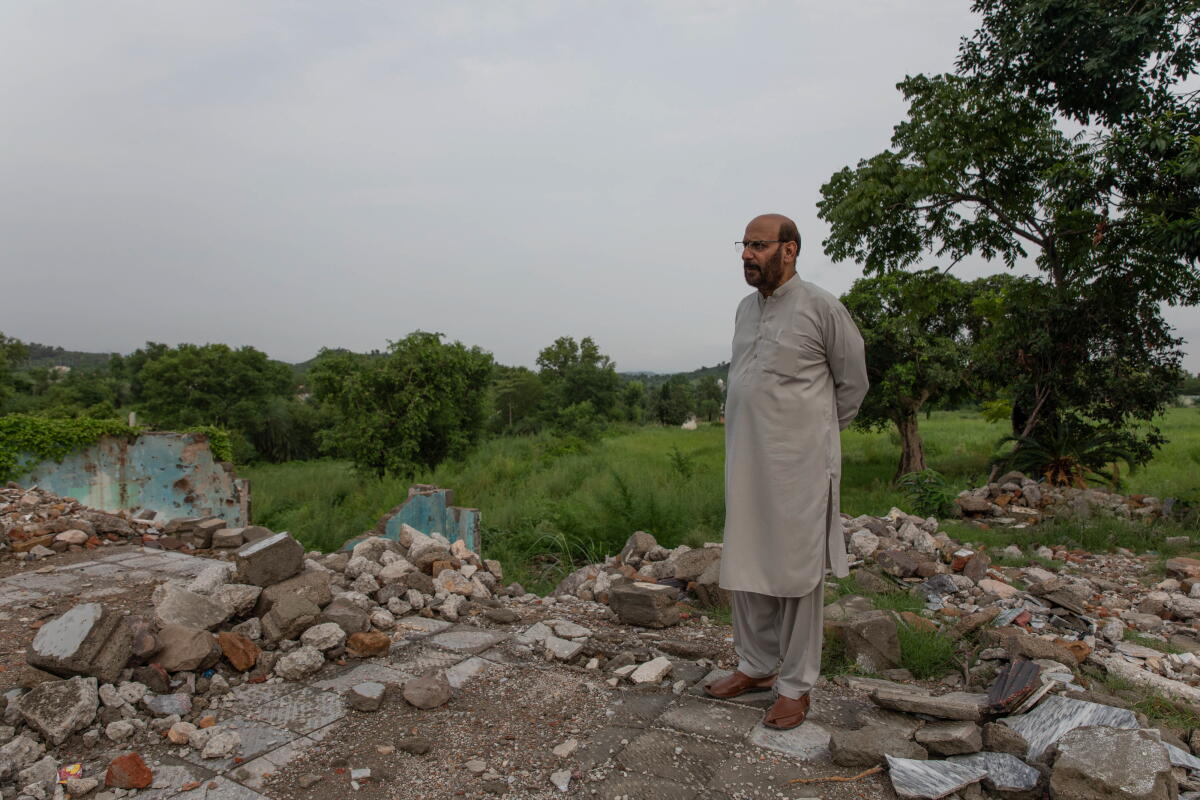
Hussain said the argument was galling. His village existed before the state of Pakistan, and their lands were seized to build upscale areas, including “the prime minister house, foreign ministry, all this land,” and yet, he says, they were treated like squatters.
Fearing the future
On a recent summer day, Atif Mehmood, 30, stood on the balcony of his home, threatened with demolition. He and his sister, and their children, watched worshippers squeeze through their alley as they marched toward the shrine of Bari Imam to commemorate Ashura, the slaying of the prophet Mohammad’s grandson.
“This house is all we have,” said Mehmood. He gestured to his niece Noor Fatima, 11, who has cerebral palsy and is confined to a wheelchair. Mahmood stroked her hair and asked, “if we lose this house, where will we go?”
The lawyer Tanvir Hussain contrasted how they were treated, and spoken of, to residents of a nearby luxury high-rise called One Constitution Avenue. It was built without proper authorization and media reported that developers failed to keep up with court-mandated payments to authorities.
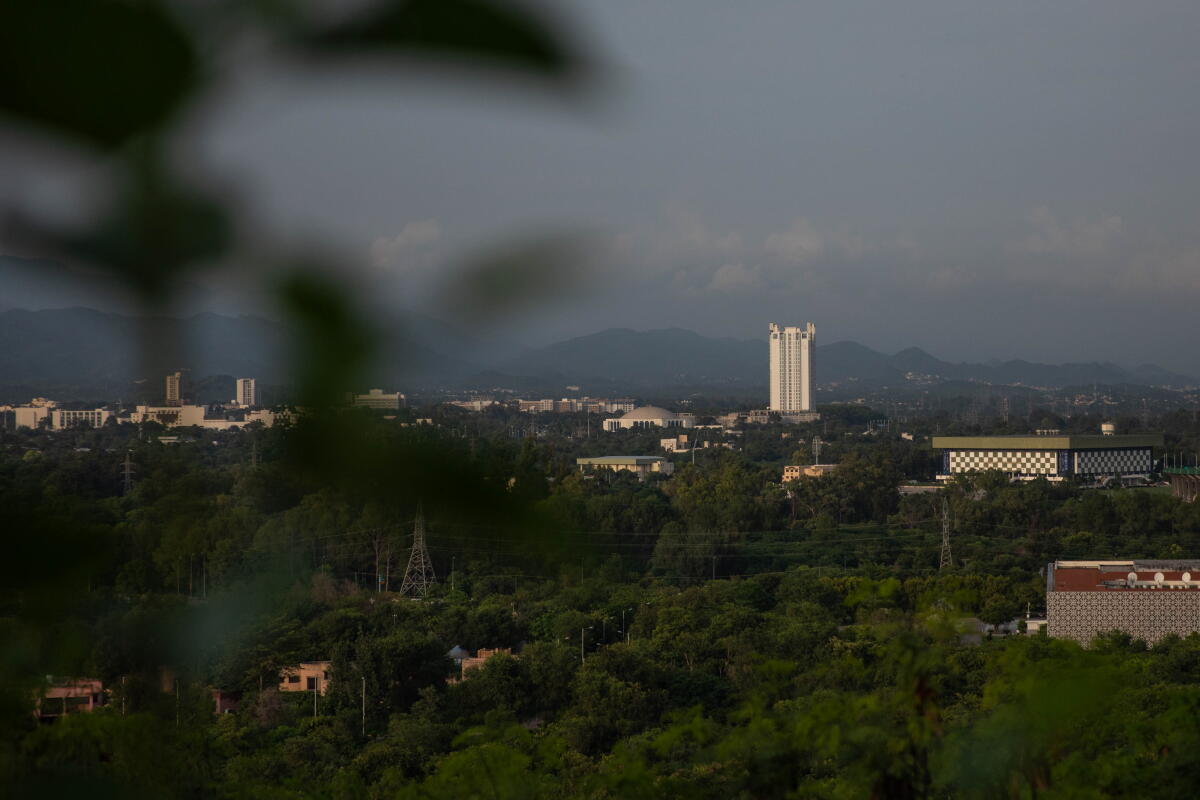
On May 1, police ordered its wealthy residents to evacuate. After an outcry that lasted a day, Prime Minister Shehbaz Sharif ordered authorities to halt operations and formed an investigation committee. A spokesman for Sharif referred questions regarding the high-rise to the interior ministry.
Amid the rubble around Bari Imam, Saida Tanvir, 50, was also given a reprieve of sorts, after her son Azeem Ahmed, 16, died while trying to block a bulldozer from crushing their roadside grocery store over the winter. Tanvir says police pushed her son hard and he hit his head on rocks. Days later, he died. Islamabad police did not respond to repeated requests for comment, but journalists at the time reported there were clashes between residents and security forces. They did not report any deaths.
Her home was visible, because the outer walls were cracked, but still standing. Tanvir managed to run a fan using an unwieldy connection of power cords.
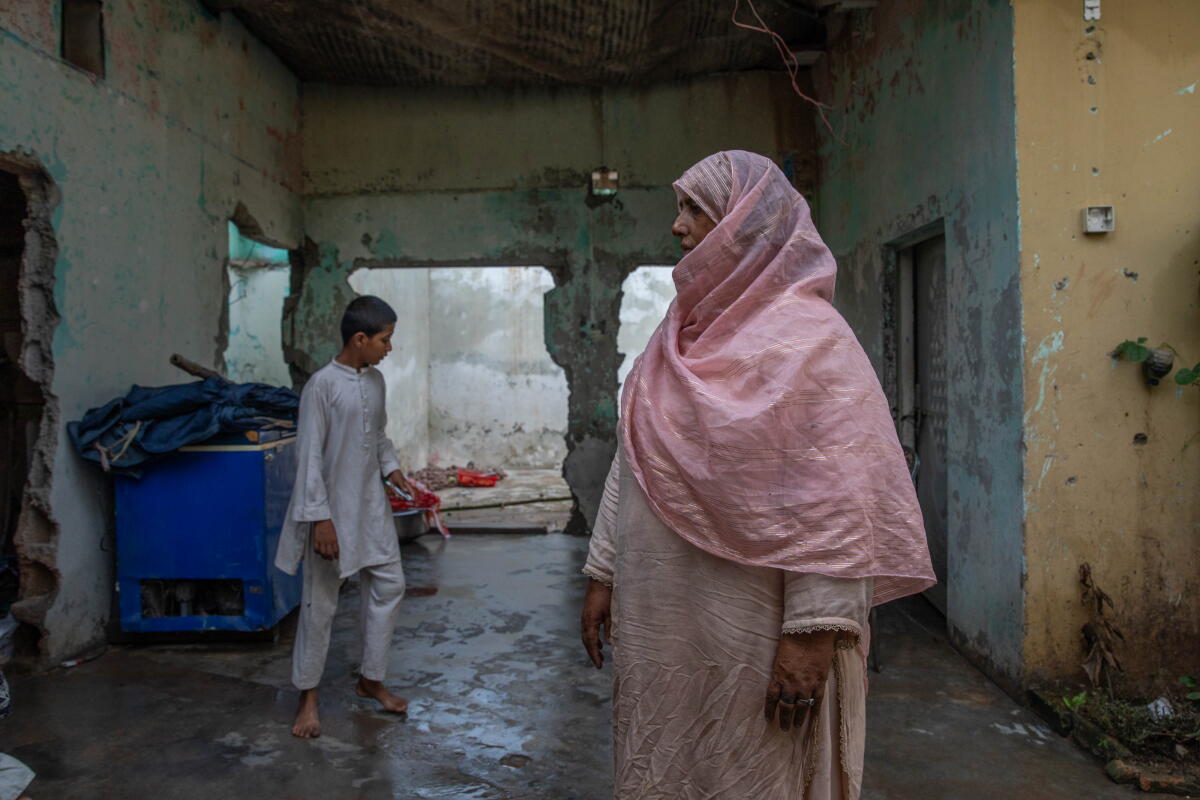
Tanvir says authorities let her stay a little longer in her home, despite the order.
Tanvir tells NPR that she used her last $180 to bury her son. Tanvir gestures toward the Bari Imam shrine and the cafeteria where volunteers serve free food. “That’s where we eat now.”
She said it hurt, because she’d worked hard her whole life, even as a widow with 8 children. “I never once begged. Now, we ask for the saint’s charity.”
With reporting by Zia Rehman in Islamabad.