Olivia Rodrigo knew her inaugural Daisy Chain Fields music festival had become what she’d envisioned when she looked out into the audience and saw a woman breastfeeding her baby under a tree.
“I was like, this is exactly what I envisioned it to be,” Rodrigo told NPR’s Leila Fadel.
After signing with Geffen Records in 2020 and releasing her debut album Sour in 2021, Rodrigo, 23, has risen to become one of pop music’s biggest stars — with her topping the charts and building a loyal fanbase through her songs about heartbreak, growing up and the messy emotions in between.
Now, Rodrigo is thinking about how to turn that connection with listeners into something bigger than the songs themselves.

Rodrigo announced Daisy Chain Fields on June 22, and tickets sold out within 30 minutes when they went on sale two days later. Held Aug. 29 in Irvine, Calif., the festival brought together an all-women lineup that included Stevie Nicks, Sarah McLachlan, Chappell Roan and Doechii. All the artists on the festival lineup performed for free, helping the festival raise $20 million for 10 organizations supporting women and girls.
Rodrigo seemed most taken with what happened around the music — little girls and older women dancing together, daughters on their fathers’ shoulders, strangers looking after one another.
“The whole thing was just joyful from start to finish,” she said.
Joy is a word Rodrigo returns to often when she talks about the festival.
“I think that the people who want to keep us down are really relying on us feeling alone and overwhelmed,” she said. “And I think the antidote to that is joy and community.”
What has changed — and what hasn’t
Daisy Chain Fields builds on the legacy of Lilith Fair, the women-led touring festival co-founded by McLachlan in the 1990s. Rodrigo said McLachlan’s generation “broke down so many barriers” for the women who came after them.
Rodrigo could see those generations converging in the Daisy Chain Fields audience, as “Gen-X dads” watched Chappell Roan and little girls screamed “Rebel Girl” during a set by ’90s punk band Bikini Kill.
But comparing the era of Lilith Fair with today also offered a less comforting measure of how much has, and hasn’t, changed.
“Women in the music industry have come so far,” Rodrigo said. “And, we’re headlining festivals and so many of the old misogynistic rules of the music industry have changed. But also at the time of Lilith Fair, women had more bodily autonomy in America than they do now.”Rodrigo carried that celebration of women into her own performance, down to the details.
Rodrigo performed “Serena Joy” live for the first time, a track from her new album, you seem pretty sad for a girl so in love, which she released in June.
The song takes its name partly from a character in Margaret Atwood’s The Handmaid’s Tale. Rodrigo said she wrote it around “the principle that a threat to one person’s human rights is a threat to all of our human rights.”
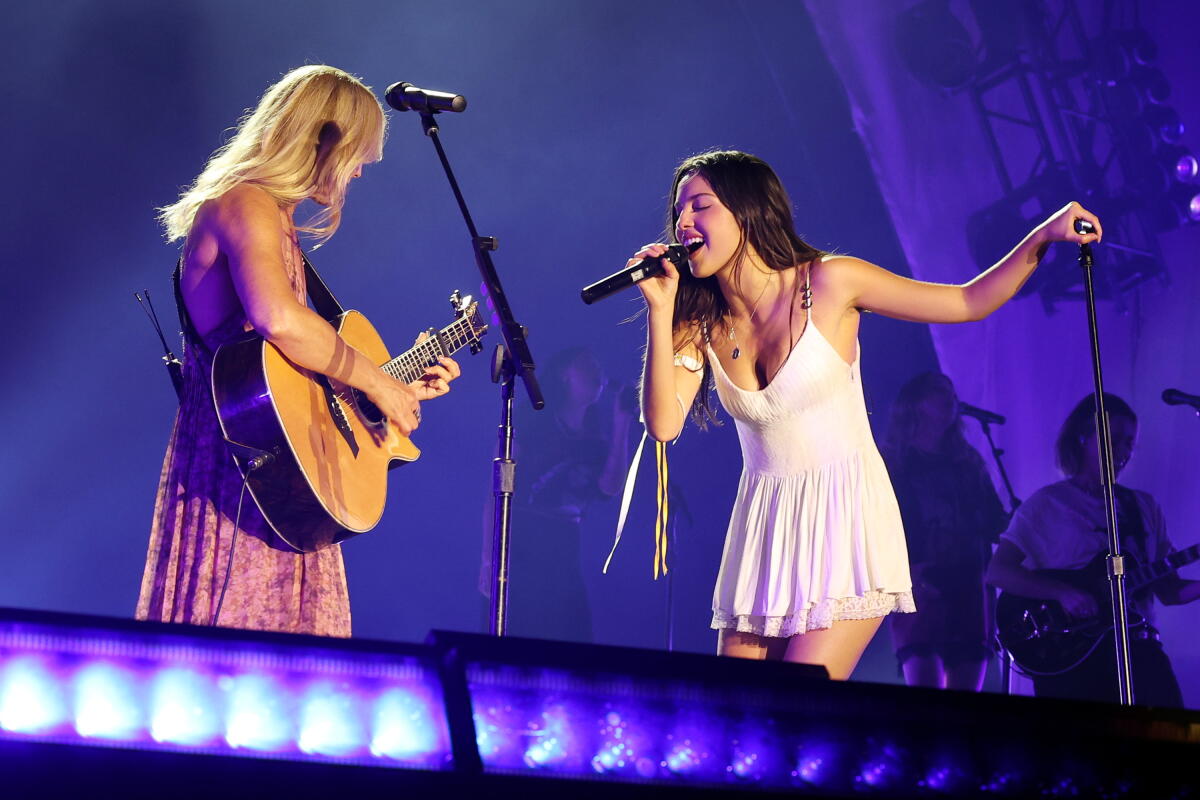
When it came to what Rodrigo wore for the show, she chose a pale pink dress with traditional Palestinian tatreez embroidery, handmade in Ramallah. Rodrigo had seen videos of the women making the dress.
“I loved the story behind it, and it really moved me,” she said.
Where the songs come from
Rodrigo has confronted questions about politics and her music before, including when the Trump administration used her song “all-american bitch” in a November 2025 video showing immigration arrests and promoting self-deportation. She made her opposition to the use of her song clear online at the time.
“It was just awful to see a song that I wrote about feeling trapped in a misogynistic box that we put women in — this song being put to these just grotesque, cruel scenes of ICE raids,” she said.
Looking back, Rodrigo said she sees the episode as a distraction.
“Picking fights with pop stars is a great distraction,” she said. “You know, while they do kind of other really awful, awful things.”
For Rodrigo, the political and the personal come from much the same place.
“I consider myself an artist and I think an artist’s job is to reflect the world around them and also to be honest about how they’re feeling,” she said.
Her latest album, you seem pretty sad for a girl so in love, turns to a different vulnerability: what falling deeply in love can do to a person’s sense of reason.
Rodrigo says she was “obsessed” with the idea of limerence and how it “sort of drives you totally insane.” Her recent read of Annie Ernaux’s novel Simple Passion, which follows the story of a woman consumed by an affair, also left Rodrigo musing over the topic of romantic passion.
“It’s obviously a great feeling to really fall in love with someone so deeply, but it also kind of makes you lose touch with reality. And I thought that that was a really beautiful sort of concept and something interesting to write about,” Rodrigo said.
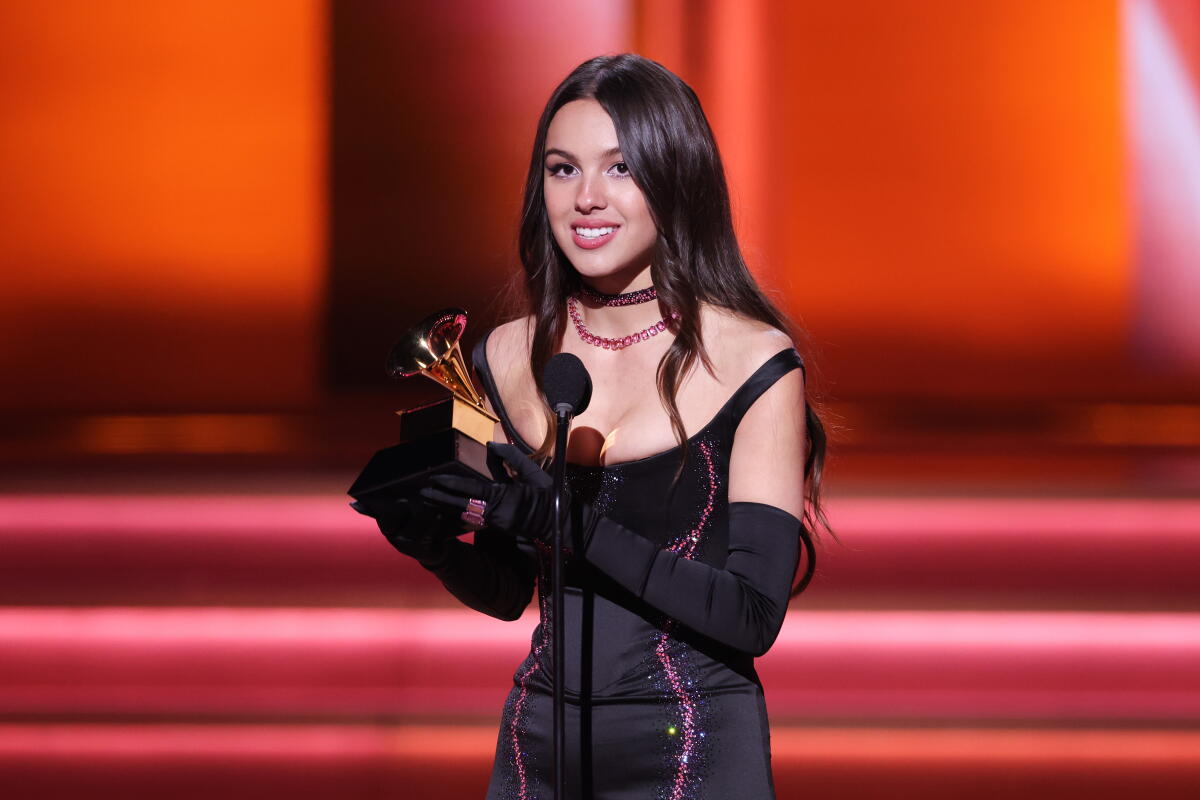
For someone whose confessional lyrics are dissected by millions, Rodrigo tries not to think about her audience while she writes.
“I really try to write from a place that’s just for me,” she said. “I love writing songs. And even if nobody heard the songs, I would still write them.”
Blocking out those outside voices has gotten easier with age, Rodrigo said. Now, she tries “to tune all that out and put your horse blinders on and just, like, follow your heart.”
Perfection isn’t her goal, either.
“My motto is always done is better than perfect,” Rodrigo said.
With a new album and her debut music festival behind her, Rodrigo is readying for her next artistic pursuit. The North American leg of her Unraveled Tour kicks off Sept. 25 in Hartford, Conn, and will run through February of next year.
And when it comes to Daisy Chain Fields, she’s preparing for that too, with her already beginning planning for next year’s festival.
Editor’s note: Some of the material in this story was not included in the version that aired on Morning Edition. Listen to the interview by clicking the blue button above.
The radio interview was produced by Lilly Quiroz. The digital version was edited by Treye Green.
Transcript:
LEILA FADEL, BYLINE: Some of the biggest names in music – all of them women – performed at the Daisy Chain Fields Festival in Irvine, California, this past weekend.
(SOUNDBITE OF ARCHIVED RECORDING)
OLIVIA RODRIGO: (Singing) Good for you, you’re doin’ great out there without me, baby.
UNIDENTIFIED CROWD: (Singing) Like a damn sociopath.
FADEL: Grammy-winning singer-songwriter Olivia Rodrigo headlined and created the festival. She performed with Chappell Roan, Doechii, Sarah McLachlan, Stevie Nicks. It was to raise money for nonprofits focused on women’s and girls’ rights. All the big names volunteered their time, and no surprise, it sold out in 30 minutes. At the end of the night, she made a promise to the crowd.
(SOUNDBITE OF ARCHIVED RECORDING)
RODRIGO: See you next year.
(CHEERING)
FADEL: I spoke with Rodrigo about what it was like bringing her vision to life.
RODRIGO: I mean, it was incredible. The whole thing was just joyful from start to finish. Obviously, Saturday was beyond my wildest dreams and getting to sing with Stevie Nicks and Sarah McLachlan and…
FADEL: Yeah.
RODRIGO: …Alanis Morissette and getting to see all these girls really sharing in this experience and building this community. Like, I saw a woman breastfeeding her baby underneath a tree. I was like, this is exactly what I envisioned it to be. But also, I mean, all of the proceeds of the festival we raised $20 million, which is so insane. I’m so proud of that. And all of those proceeds are going to these women’s charities and repro health groups. And so I got to learn about them over the past year and kind of talk to the founders and the people who were on the frontlines of these issues. And that was such a joy, too. So the whole thing was just magnificent.
FADEL: Now, Sarah McLachlan was in the lineup. She also co-founded the Lilith Fair back in the ’90s.
RODRIGO: Yeah.
FADEL: And you said that inspired this festival and what it did to show that you can have more than one woman, and people will come and see them with Daisy Chain Fields Festival. Were you out to prove something? Was this the right moment because of what’s going on politically in the country? Why now?
RODRIGO: Totally. I mean, Lilith Fair definitely was a huge inspiration. I really think that Sarah and her generation really broke down so many barriers so that girls my age could really thrive in the music industry and feel protected.
I think it was really important for me to do this festival right now ’cause I just think we’re so discouraged right now. I think that the people who want to keep us down are really relying on us feeling alone and overwhelmed. And I think the antidote to that is joy in community.
FADEL: What do you mean by the people trying to keep us down?
RODRIGO: Oh, you know, people who are trying to strip us of our rights. And at the time of Lilith Fair, women had more bodily autonomy in America than they do now.
FADEL: You performed your single “Serena Joy” on the stage at this festival for the first time.
(SOUNDBITE OF ARCHIVED RECORDING)
RODRIGO: (Singing) If they do it to them, they’re gonna do it to you. That’s what you – that’s what you – what you get, what you get.
FADEL: That song is named for a character in “Handmaid’s Tale,” Margaret Atwood’s novel. What is the message from the song?
RODRIGO: It was just kind of based on the principle that a threat to one person’s human rights is a threat to all of our human rights.
FADEL: Yeah.
RODRIGO: That’s something that I think about a lot, watching so much of the sadness and destruction go on in the world. I think, even in terms of reproductive healthcare, like, it’s easy for someone in my position to be like, well, I live in California, and, you know, I obviously have means, and so this is not really going to affect me that much. But I think that’s a really dangerous vicious cycle, ’cause, you know, I think that the slope is really slippery when rights start being taken away. It’s terrifying for us all.
FADEL: I’ve heard that sentiment across a lot of different things, including immigration, which started with only segments of the country’s population and then expanded. And you were dragged into the center of that when DHS used one of your songs, “All-American B****,” as the soundtrack to a video of ICE agents detaining people last fall. And you were mad. You made that clear online. Tell me about seeing that, when you heard your song being used in that way and how you reacted and maybe how it impacted what you did after that.
RODRIGO: Oh, my God. It was just awful to see a song that I wrote about feeling trapped in, like, a misogynistic box that we put women in.
(SOUNDBITE OF SONG, “ALL-AMERICAN B****”)
RODRIGO: (Singing) Forgive, and I forget. I know my age, and I act like it. Got what you can’t resist. I’m a perfect all-American.
To see that song being put to these just grotesque, cruel scenes of ICE raids, it was awful. Looking back at it now also I think that it’s sort of a little bit of a tool that they use. Picking fights with pop stars is a great distraction, you know, while they do kind of other really awful, awful things.
FADEL: I want to talk about your latest album also. You seem pretty sad for a girl that’s so in love.
(SOUNDBITE OF SONG, “STUPID SONG”)
RODRIGO: (Singing) I’m a heart made of wax, and I’m melting in the sun. I’m a thread on your shirt that is coming undone. I feel right, I feel wrong, I feel totally insane and I want you more than any stupid song could ever say.
FADEL: You take us through a journey of both the euphoria and the terror of love.
RODRIGO: (Laughter).
FADEL: What inspired that?
RODRIGO: I was really obsessed with this idea of limerence.
FADEL: Yeah.
RODRIGO: (Laughter).
FADEL: I know what you mean. Yeah.
RODRIGO: Yeah. Just how limerence sort of drives you totally insane. And it’s, like, obviously a great feeling to really fall in love with someone so deeply, but it also…
FADEL: Yeah.
RODRIGO: …Kind of makes you lose touch with reality. And I thought that that was a really beautiful sort of concept and something interesting to write about. And I just read this book, “Simple Passion” by Annie Ernaux, and that is about her, like, having an affair and just, like, totally losing it in the midst of the affair. And I thought that that was inspiring. And, you know, haven’t we all been there (laughter)?
FADEL: Right? I mean, you do put words to the kinds of things maybe we don’t want to admit out loud when we’re going completely insane around love, even toxic love. There’s, like, a confessional quality to some of the lyrics.
(SOUNDBITE OF SONG, “LESS”)
RODRIGO: (Singing) If loving me means letting go and wishing me the best, then I guess I wish, I wish, I wish you loved me less.
FADEL: When you sit down to write, is there ever anything, like, yeah, you won’t write about?
RODRIGO: You know, I’m sure. I can’t think of anything off the top of my head, but I really try to write from a place that’s just for me. You know what I mean?
FADEL: Yeah.
RODRIGO: I love writing songs. And even if nobody heard the songs, I would still write them. And so I try to always maintain that sort of sanctity of creation. And then I sort of think about the way that they’re going to reverberate into the world after.
FADEL: Olivia Rodrigo, fresh out of her first Daisy Chain Fields Festival. Thank you for speaking with me.
RODRIGO: Oh, thanks so much for having me. It’s an honor.
FADEL: And Olivia Rodrigo is on her Unravel Tour later this month.
(SOUNDBITE OF SONG, “DROP DEAD”)
RODRIGO: (Singing) Oh, one night I was bored in bed and stalked you on the internet.