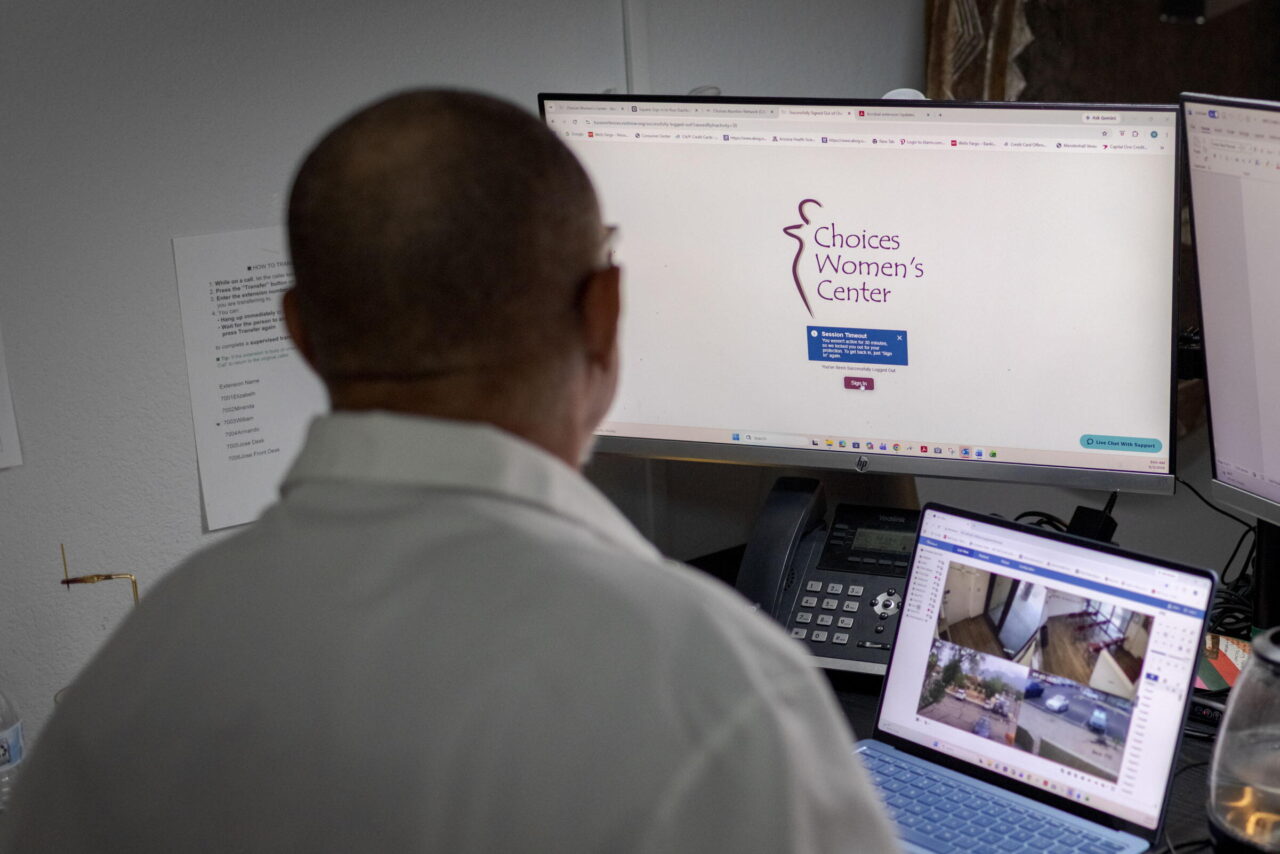
TUCSON, Ariz. — Dr. William Richardson says his patients are pretty floored that telehealth is now an option for abortion.
“I think people are shell shocked,” says Richardson, a board-certified OB-GYN in Tucson, Ariz. “‘What do you mean? I can just get on my cell phone and get abortion pills? What? You know, that can’t be possible.’ People just don’t get after all this time that that’s possible.”
It’s actually been possible in much of the country for several years. During the COVID-19 pandemic, the Food and Drug Administration began allowing the abortion pill mifepristone to be prescribed through telehealth and sent to patients in the mail. The agency then made that rules-change official in 2023.
In Arizona, although abortion is legal, mifepristone hasn’t been available through telehealth because of state-level restrictions. That changed in February of this year, after a judge ruled in favor of Richardson in a lawsuit filed by the Center for Reproductive Rights clearing the way for telehealth access.
After 25 years of providing abortion in person in his Tucson clinic, Choices Women’s Center, he launched telehealth services in May, and it’s taken off. “I would say 95% of our patients want to use telemedicine in some form,” he says. “Patients are loving it.”
Want the latest stories on the science of healthy living? Subscribe to NPR’s Health newsletter.
He’s very aware, though, that telehealth access could go away again. This week, the Fifth Circuit Court of Appeals in New Orleans hears oral arguments in Louisiana v. FDA, which aims to end telehealth access to the abortion pill mifepristone for the whole country.
“Our victory has the potential to be short-lived,” he says. “We’re just going to have to brace and see what happens.”
Richardson’s telehealth set-up
Choices Women’s Center is a brown stucco building in a medical center. He shows off the room he calls the “telehealth suite.” It has colorful portraits of famous women on the wall like Rosa Parks, Princess Diana and Angela Merkel, plus a few comfy chairs.
Medication abortion is approved by the FDA for use before 11 weeks of pregnancy. When patients aren’t sure of the date of their last period, they can come into the office for an ultrasound, and then sit in the telehealth suite for a consult with the doctor.
To demonstrate, Richardson goes down the hall to his office, and soon his face appears on an enormous screen.
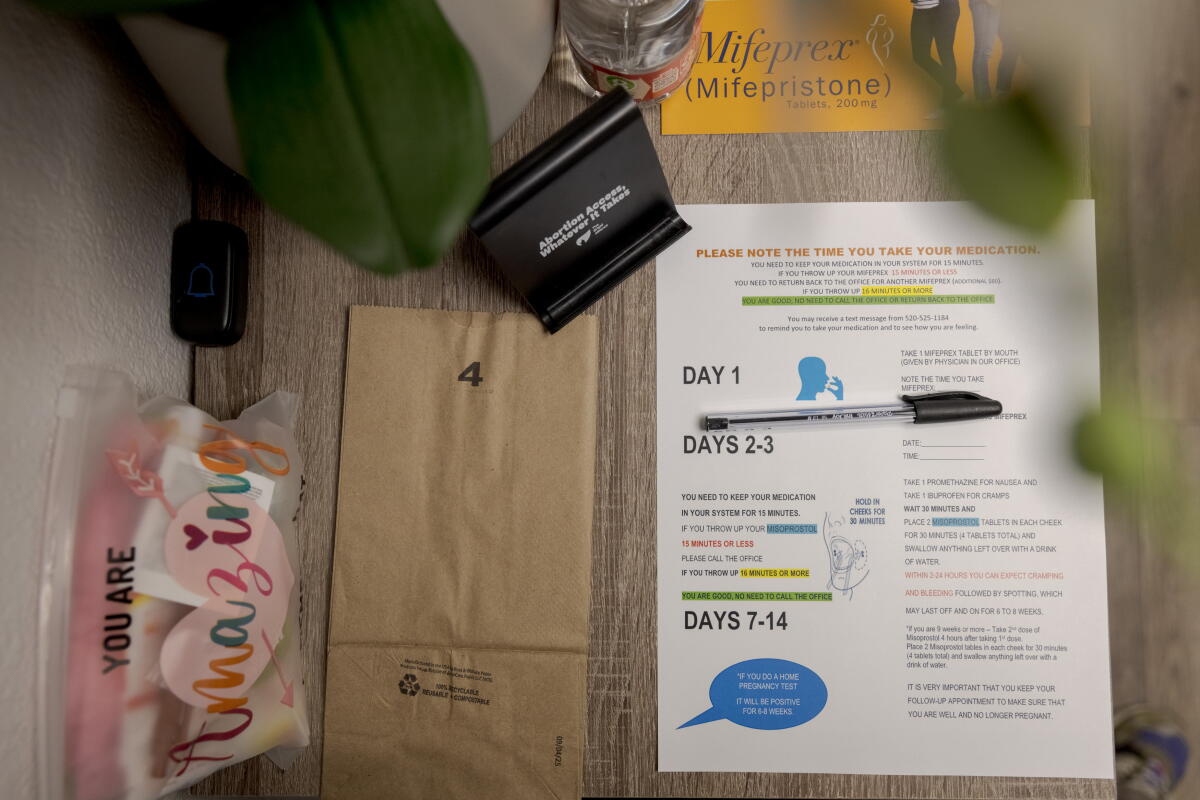
He says whether he’s seeing a patient in person or virtually, he begins by talking with a patient about their medical history, and then gives them information about the two medications used for abortion: mifepristone, known by the brand name Mifeprex, and misoprostol.
“Mifeprex stops the pregnancy from developing by blocking the action of one of the critical hormones,” he says, as if he’s explaining the process to a patient. “24 hours to 48 hours later, we’ll have you take your four misoprostol tablets all at once by placing two on either side between the cheek and the gum for 30 minutes and swallow. Expect cramping and bleeding within 4 to 6 hours of swallowing.”
If that’s too much information or too fast for the patient, the instructions are all written out along with a 24/7 number for the clinic that patients can call if they have questions or concerns.
“That pretty much is what the appointment looks like,” he says. “I would say that most of the time it’s less than 30 minutes.”
Patients in the office can receive the medications right away from a small stockroom down the hall. If they’re doing the telehealth appointment on their phone or laptop, the medication comes to their house from a mail-order pharmacy in a few days.
“Sometimes I have to catch myself, like – I can’t believe that that was that easy,” Richardson says.
He’s seeing a patient virtually later in the day who lives 100 miles from the clinic. Because of this option, he explains, she won’t have to drive the whole way and back, or take time off her hourly job, or find childcare for her two children. When you’re facing those kinds of obstacles to get to the clinic, he says, telehealth access is “the difference between receiving care and not receiving care.”
A legal challenge to stop telehealth access
The problem, as far as anti-abortion rights activists and politicians see it, is that when patients can have a telehealth appointment on their phone and receive abortion medications through the mail to their house, state level abortion bans really can’t stop people from ending their pregnancies.
A patient in Louisiana, which has a strict abortion ban, can consult over telehealth with a doctor in a state with a shield law, like Colorado, and have abortion medications shipped in the mail right to their door.
That’s why anti-abortion rights groups have filed several lawsuits to stop telehealth abortion access nationally.
Louisiana Attorney General Liz Murrill told a Senate committee in January why she thinks the FDA telehealth rules must be changed. “Until then, Louisiana’s efforts to protect mothers and their unborn children and to hold out-of-state abortion pill traffickers accountable for the harm they inflict will be all but futile,” she said.
In Louisiana v. FDA, the state questions FDA’s decision-making process for allowing telehealth access, argues that the rules violate states’ rights, and alleges that it’s less safe for patients not to see a doctor in person. If the lawsuit succeeds, telehealth abortion access could be restricted across the country.
The case has already been considered by the Supreme Court earlier this year and is likely to end up there again.
Contingency plans
Dr. William Richardson says that his connection with patients and the information he shares is the same, whether he sees a patient in person or through telehealth. The medications that patients take are the same, too.
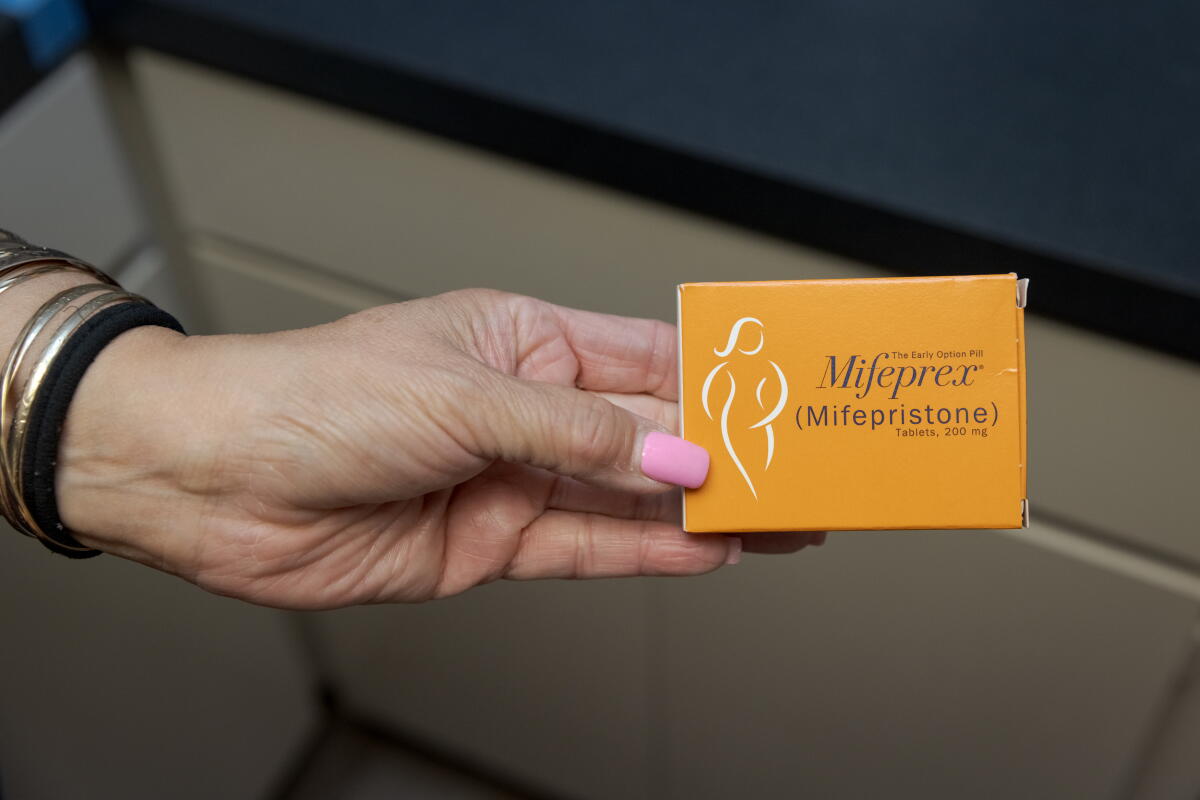
“My sense, as well as the sense of every other legitimate medical organization, is that medication abortion has been proven to be safe, effective and well-tolerated by patients worldwide,” he says.
Beyond the federal court cases, Arizona could restrict telemedicine abortion again at the state level, through new laws or through an appeal of Richardson’s lawsuit. He says, at age 66, instead of fretting, he’s made contingency plans to be completely remote, completely in person or anything in between.
“We are ready to do all of those things if we have to, based on what happens here locally or what happens at the federal level,” he says. “We try to be ready for all of that.”
Transcript:
SACHA PFEIFFER, HOST:
Abortion medication is back in the spotlight. Tomorrow morning, the 5th Circuit Court of Appeals in New Orleans will hear oral arguments in the case Louisiana v. the Food and Drug Administration. Abortion is illegal in Louisiana, and the lawsuit aims to roll back telehealth access to the abortion medication mifepristone not just for Louisiana, but for the whole country. The popularity of telehealth for abortion has grown dramatically in recent years. To understand why, NPR’s Selena Simmons-Duffin traveled to Arizona where abortion is legal.
SELENA SIMMONS-DUFFIN, BYLINE: Dr. William Richardson says his patients in Tucson are pretty floored that telehealth is now an option for abortion.
WILLIAM RICHARDSON: I think people are shell-shocked. What do you mean I can just get on my cell phone and get abortion pills? What? You know, that can’t be possible. People just don’t get, after all this time, that that’s possible.
SIMMONS-DUFFIN: We’re standing in his clinic, Choices Women’s Center, a brown stucco building and a medical center. He explains that telehealth abortion has only recently become legal in Arizona after Richardson and the Center for Reproductive Rights sued over state-level restrictions and won. After 25 years of providing abortion in person in the clinic, he began offering telehealth services in May, and it’s taken off.
RICHARDSON: I would say 95% of our patients want to use telemedicine in some form. Patients are loving it.
SIMMONS-DUFFIN: We walk over to what he calls the telehealth suite. It has colorful portraits of famous women on the wall, like Rosa Parks and Angela Merkel, plus a few comfy chairs.
RICHARDSON: It’s really a room, but maybe y’all could call it a suite (laughter).
SIMMONS-DUFFIN: Medication abortion is approved by the FDA for use at 10 weeks of pregnancy or earlier. When patients aren’t sure of the date of their last period, they can come to the office for an ultrasound and then sit in here for a telehealth consult with a doctor. To demonstrate, Richardson goes down the hall to his office, and soon his face appears on an enormous screen in front of me.
(SOUNDBITE OF DOOR CLICKING SHUT)
SIMMONS-DUFFIN: OK. So we’re – like, imagine this is an appointment. What do you start with?
RICHARDSON: I would basically say, I went over your medical history and there doesn’t appear…
SIMMONS-DUFFIN: Richardson says whether he’s seeing a patient in person or virtually, he gives them the same information about the two medications used for abortion – mifepristone, or mifeprex, and misoprostol.
RICHARDSON: Mifeprex stops the pregnancy from developing by blocking the action of one of the critical hormones. Twenty-four hours to 48 hours later, we’ll have you take your four misoprostol tablets all at once by placing two on either side between the cheek and the gum, 30 minutes in and swallow. Expect cramping and bleeding within four to six hours of swallowing.
SIMMONS-DUFFIN: If that’s too much information or too fast, the instructions are all written out, along with a 24/7 number for the clinic that patients can call if they have questions or concerns.
RICHARDSON: And that pretty much is what the appointment looks like. I would say that most of the time, it’s less than 30 minutes.
SIMMONS-DUFFIN: Patients in the office can receive the medications right away from a small stockroom down the hall. If they’re doing the telehealth appointment on their phone, the medication comes to their house from a mail-order pharmacy in a few days. We end the mock telehealth appointment.
RICHARDSON: I’ll be right there.
SIMMONS-DUFFIN: Richardson comes back to the telehealth suite.
RICHARDSON: Sometimes I have to catch myself – like, I can’t believe that that was that easy.
SIMMONS-DUFFIN: The problem, as far as antiabortion rights activists and politicians see it, is that when patients can have a telehealth appointment on their phone and receive abortion medications through the mail to their house, state-level abortion bans really can’t stop people from ending their pregnancies. That’s why antiabortion rights groups have filed several lawsuits to stop telehealth abortion access nationally. Louisiana Attorney General Liz Murrill told the Senate committee in January why she thinks the FDA telehealth rules must be changed.
(SOUNDBITE OF ARCHIVED RECORDING)
LIZ MURRILL: Until then, Louisiana’s efforts to protect mothers and their unborn children and to hold out-of-state abortion pill traffickers accountable for the harm they inflict will be all but futile.
SIMMONS-DUFFIN: For his part, Dr. William Richardson says that his connection with patients and the information he shares is the same, whether he sees a patient in person or through telehealth. The medications that patients take are the same, too.
RICHARDSON: My sense, as well as the sense of every other legitimate medical organizations, is that medication abortion has been proven to be safe, effective and well-tolerated by patients worldwide.
SIMMONS-DUFFIN: Richardson knows the risk that telehealth abortion will get restricted again is real. He says, at age 66, instead of fretting, he’s made contingency plans to be completely remote, completely in person or anything in between.
RICHARDSON: We are ready to do all of those things if we have to, based on what happens here locally or what happens at the federal level.
SIMMONS-DUFFIN: He says he’s ready for anything.
Selena Simmons-Duffin, NPR News, Tucson, Arizona.