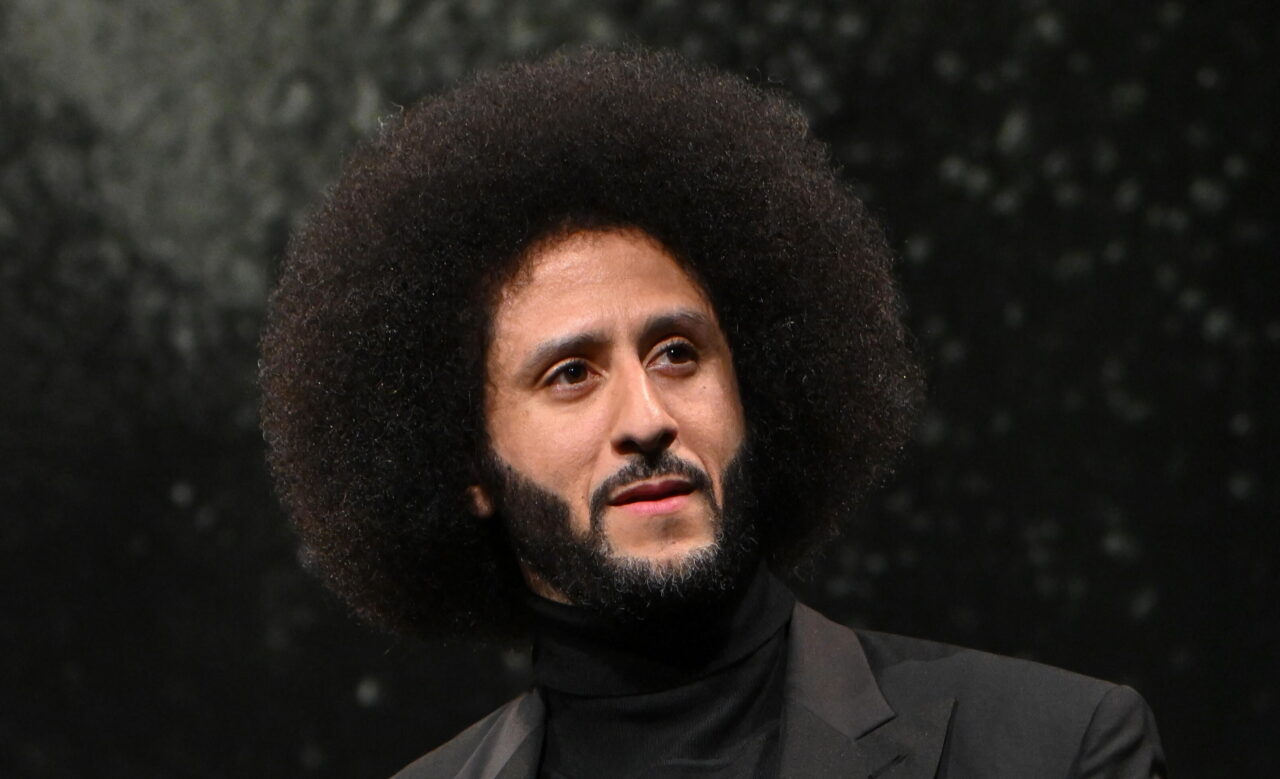
A decade after Colin Kaepernick took a knee during the national anthem, the moment still follows him.
In 2016, the former San Francisco 49ers player first sat, then knelt, during the anthem to protest police brutality. The gesture spread across professional sports and turned Kaepernick from an NFL quarterback into one of the country’s most recognizable athlete-activists.
It also ended his football career.
Kaepernick has not played in the NFL since that season. He told NPR’s Morning Edition he still trains and prepares to play.
“If there’s a small chance of success or probability, my goal is to be able to go out and capture that, ” said the Superbowl quarterback on the odds of him returning to the field.
In his new memoir, The Perilous Fight, due out Sept. 15, Kaepernick goes back much further than the summer of 2016.
He opens with a memory from childhood: neighborhood children tying him to a rose tree. Growing up as the adopted Black son of white parents, Kaepernick told Morning Edition, meant encountering racism early and not always knowing whether the people closest to him would understand what was happening to him.
Years later, as videos of police killings of Black people spread across the country, Kaepernick said he had already spent years studying Black history and the systems behind what he was watching.
“You then have to ask yourself, well, what am I going to do about it?” he said.
Kaepernick sees that fight partly as one over power. He said NFL players have far more of it than they may realize, and that his protest exposed just how uncomfortable that could make the people running the league.
“I think this was really a dynamic of we need to make an example out of Colin in this situation to try to send a message to the rest of the players to stay in line,” he said.
The Perilous Fight also revisists Jay-Z’s 2019 decision to partner with the NFL through the rapper’s entertainment company Roc Nation — with the deal including Roc Nation advising on the selection of talent for the Super Bowl. Roc Nation’s partnership with the NFL came while Kaepernick remained out of the league and during a time that Kaperinck said players “were still actively protesting during that time and carrying the work forward.”
In his conversation with NPR’s Michel Martin, Kaepernick described being let down by Jay-Z’s partnership with the NFL.
“I find it disappointing,” Kaepernick said. “I had seen him come out publicly [to] support me, wear my jersey on Saturday Night Live. I had reached out prior to try to connect with him just to say thank you.”
“His organization, Roc Nation, tried to recruit me as an athlete previously, which I had turned down at that point. And then to see him come out and sign a deal with the NFL to deliberately undercut and undermine the protest is disappointing, to say the least,” Kaepernick continued.
Kaepernick added that he was additionally frustrated to finally receive a phone call from the rapper possibly anticipating questions about the Roc Nation and NFL partnership.
“That’s the only reason that he had called — to be able to say that he had spoken to me in that press conference,” Kaepernick said.
Kaepernick contends Roc Nation went as far as trying to plant stories about him in the media.
“I’d say the part that was even more disappointing was after the fact — because of the backlash that he got for doing the deal to undermine the protests — was [him] trying to go out and place hit pieces against me and say that I didn’t want to play football anymore,” Kaepernick said.
When asked by NPR if he knows “for a fact” that Jay-Z and Roc Nation attempted to place hit pieces against him, Kaepernick doubled down by saying the media told him so.
“We got the calls from reporters. We got the calls from journalists trying to validate are these things true,” Kaepernick said. “Ultimately some of those stories got pulled. But some of [the stories] organizations ran with.”
NPR reached out for comment from Roc Nation and did not hear back. In his interview, Kaepernick also discusses what came after the kneeling: the football career he still wanted, the teams he says wanted him and the NFL owners he believes kept him out.
And after a decade of everything that followed, was taking the knee worth it?
“Absolutely,” Kaepernick said.
Editor’s note: Some of the material in this story was not included in the version that aired on Morning Edition. Listen to the interview by clicking the blue button above.
Transcript:
MICHEL MARTIN, HOST:
It’s been a decade since NFL quarterback Colin Kaepernick made headlines for taking a knee during the national anthem in protest of police brutality and racism. That quiet act of protest cost the former San Francisco 49er his football career, but not his voice. In a new memoir titled “The Perilous Fight,” he writes of the years before and after the 2016 season. He details a lifetime of navigating being the adopted Black son of a white family in a white community and about the physical and emotional costs of his sport, and about the civil rights work that has become his life’s work. And he’s with us now to tell us more about it. Colin Kaepernick, thank you so much for joining us.
COLIN KAEPERNICK: Oh, Michel, thank you for having me on. I’m excited for the conversation today.
MARTIN: Same here. You know, you open the book with a really harrowing incident that happened when you were a child. Can you just briefly tell us what happened and why you wanted to open the book with this story?
KAEPERNICK: Yeah. Like any kid in the middle of summer, you were outside in the neighborhood, running around. And some of the neighbor kids were standing at their house as I was walking home. And I realized – as I was trying to get closer to see if I could play with them, they grabbed me and tied me to a rose tree in the front yard. And it was a moment that I wasn’t prepared for. I hadn’t been taught about this as a young Black boy in a white family. And the only thing that really saved me in that moment was a neighbor driving by and yelling at the kids.
And then the moment of running back home and realizing I can’t tell my parents about this ’cause I don’t know how they would respond to it, and I don’t know if they would have my back in that. And I think it’s important to open the book that way because so often I have been asked, like, why do you care about this? Like, why are you doing this? You’ve had a great life. You were adopted into a white family. You made it to the NFL. And all of those things are true. And also, there’s still the reality of being a Black boy and a Black man within the United States and the very real consequences of that.
MARTIN: You had had a lifetime of thinking about these issues. Can you just take us inside your decision that – I want to do something; I have to do something?
KAEPERNICK: Yeah. Leading up to the protests, we had seen a number of killings of Black people very publicly on video. At this point, I had a lifetime of experiences. I had spent the years prior studying and educating myself around systems in Black history and how we got to this present moment and having a understanding of the history and context. You then have to ask yourself, well, what am I going to do about it?
MARTIN: Initially, you sat during the national anthem, but then you decided to take a knee. Did you expect it to be as significant and as widespread as it became?
KAEPERNICK: Did I think there would be backlash? Yes, because history tells us so. Do I think it would reach the level of magnitude that it did? I don’t think you could ever predict that.
MARTIN: After your protest, Jay-Z signed a deal with the NFL, arranging halftime show talent for the Super Bowl and other ventures. His argument, as I understand it, is that this is a way of solidifying games in a concrete way to ensure Black companies and Black artists get their due. You just don’t buy that.
KAEPERNICK: I think to see him come out and sign a deal with the NFL – to deliberately undercut and undermine the protest – is disappointing, to say the least. The argument would hold weight if there weren’t already actions that were happening across the community. It would also hold weight if players were not still actively protesting during that time and carrying the work forward. While I can understand why you would want to make that argument, all of the supporting work around it says otherwise.
MARTIN: There are those who would say, well, wait a minute. There’s an off-season, and during the off-season, you can do whatever you want as private citizen Colin Kaepernick. What do you say to that?
KAEPERNICK: The NFL also imposes on us significantly. As a player, you are constantly put in positions where this is not just about football. And for me, looking at that dynamic, we are football players. We are paid to go out and do a job. We went out, and we’re doing our job at the highest level. We’re also still people, and your humanity as a person shows up with you at work.
MARTIN: You wanted to keep playing after 2016. I think you’ve made that clear. That hasn’t happened. Are you still disappointed? Does it still hurt?
KAEPERNICK: Of course. To have that taken away because you’re trying to fight for a better society and for people to be able to live and thrive – it’s disappointing. It’s revealing. It lets me know how much work we still have to do. And I also still continue to train and prepare. That has just become part of my discipline – to make sure that at any given moment, I’m always going to be ready.
MARTIN: You have had a private NFL workout. And you had – you have had it said to you that there were teams that wanted you, but the owners did not. Why do you think that is?
KAEPERNICK: Because we’ve had coaches and GMs explicitly tell us that. And I think the bigger question for the NFL owners and Roger Goodell, the commissioner of the NFL, is more so a conversation around power. The amount of power that players have within the NFL is significant. I don’t think they truly realize that power, and I think the protests help expose some of that. And I think this was really a dynamic of, we need to make an example out of Colin in this situation to try to send a message to the rest of the players to stay in line.
And I think there should be more questions asked to Roger Goodell and the NFL owners – why they are so afraid of players realizing their power, and why they would take action against someone that’s trying to create a better future and environment for everyone.
MARTIN: So when all is said and done, was it worth it?
KAEPERNICK: Absolutely.
MARTIN: Colin Kaepernick. He’s the author of his new memoir, “The Perilous Fight.” Thank you so much for talking with us.
KAEPERNICK: Thank you, Michel. Really appreciate the time today.
(SOUNDBITE OF ODDISEE’S “BEACH DR.”)