Five years ago, I was in the shower fighting an internal battle for my life. My son was 3 months old, the living joy of everyone in the house. But I could not feel that joy.
I was living with severe postpartum obsessive-compulsive disorder that had turned into psychosis. I had experienced a traumatic birth and was hospitalized for postpartum preeclampsia a week after my son was born. As the hours ticked by, my anxiety intensified and the intrusive thoughts about harming my child would not stop. I did not want to hurt my son, but I feared I could. And those thoughts made me want to harm myself.
At my six-week postpartum visit (held over Zoom because of the pandemic) my obstetrician asked me how I was doing. I told her I was “anxious.” What I did not say was that my mind had become a nonstop loop of fear that I was a danger to my own baby. Even as a licensed clinical social worker — someone trained to recognize exactly what I was experiencing — I couldn’t say it out loud. I was afraid that if I told her the truth, I would be hospitalized and separated from my infant. I had worked in those hospitals, and I didn’t think I belonged there.
My obstetrician offered to connect me with a social worker and a support group. The wait was six weeks.
____
This is the gap that needs to close: The space between when a mother finally works up the courage to say something is wrong, and when she can see someone who knows how to treat her. Six weeks is not a long wait by healthcare standards. For a mother in psychiatric crisis, it can be the difference between recovery and catastrophe.
Maternal mental health disorders are among the most common complications of pregnancy, affecting 1 in 5 mothers. Postpartum depression affects some 13% of women, while postpartum OCD affects fewer, an estimated 2% to 9%. Postpartum psychosis is rarer still, affecting 1 to 3 women per 1,000 births. Regardless, there is almost always a waitlist for perinatal care. A 2022 study of perinatal women on a mental health waitlist found that anxiety was often most severe in the earliest weeks after birth — precisely when women were being told to wait.
Because of the wait, I sought out the care I could access quickly. That included therapy for OCD and therapy to process my son’s traumatic birth. I tried a meditation program my doctor suggested, but that made the delusions and internal looping worse.
Eventually I asked for medication. My provider put me on 25 milligrams of Zoloft, daily, and it helped — fast. Zoloft, or setraline, is an SSRI commonly used to treat anxiety and OCD, and is considered one of the preferred antidepressants during breastfeeding because very little of the medication typically reaches the infant through breast milk. My doctor explained that the side effects of the medication could include increased anxiety and insomnia, particularly when starting the medication or adjusting the dose.
But antidepressants can sometimes (in 3.7% of individuals) destabilize a person’s mood rather than stabilize it, and this is what happened to me when we increased my dose to 50 milligrams. The delusions intensified. I became suicidal. Sleep would not come, and severe sleep disruption itself can contribute to psychiatric instability during the postpartum period. When my son cried, it went through me like electricity. I cannot know with certainty where the medication ended and the illness began. What I know is that after my dose increased, my sleep deteriorated and my mental state rapidly worsened.
I told my husband — as I nursed our son — that I wanted to die. I didn’t think I could ever be happy; I told him about my horrible thoughts and delusions. He couldn’t understand what I was feeling but he knew something was very wrong.
____
What changed my outcome was not the system. It was two friends, both fellow social workers, whom I told the truth over text. I told them I was having repetitive intrusive thoughts about my son; I couldn’t escape the idea that he was the reincarnation of my abusive ex and that God was punishing me. Many postpartum psychotic delusions are related to spiritual delusions, although I didn’t know it then. I told them I couldn’t sleep and did not feel like myself. One friend validated and normalized my feelings. I asked the other friend if it would be worth paying out of pocket for a psychiatrist, since I could not find one who would take my health insurance. The response was immediate, “Absolutely,” and then reassurance, “This will pass.”
I found a psychiatrist who specialized in postpartum mental health, and made an appointment for the following day. She was the first clinician who asked me what I was actually thinking, not just how I was feeling. I told her, through tears, that this was not who I was. The psychiatrist did not flinch. She told me plainly that I would not stay this way, that I needed sleep and different medication. She started me on an antipsychotic that very day.
She was right. I did not stay that way. I recovered. I got better because I got the right care fast, and because I did not have to carry my illness alone.
My husband heard the treatment plan directly from my new psychiatrist and stepped in as primary caregiver while I continued to breastfeed my son. My mother took time off through the Family and Medical Leave Act to help with the baby. My mother-in-law ran the household. It was still a hard road. For a while I could not shower without my husband sitting on the closed toilet lid a few feet away, because I was too afraid to be alone with my own mind.
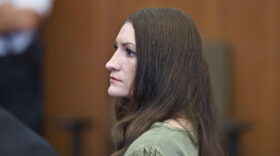
Like many of us, I have been following the trial of Lindsay Clancy, the Massachusetts mother charged with strangling her three young children. It has brought up many thoughts and feelings, but I am not interested in judging her. I am interested in the fact that our stories started in similar places, and that mine did not end where hers did, because I had something she may not have: Quick access to a specialist who took my symptoms seriously, and people around me who could act on what I told them.
That access should not depend on whether a mother happens to know other clinicians, or can pay for an out-of-network psychiatrist, or is brave enough to say the unspeakable thing to a doctor she may have only just met.
____
For years, maternal health advocates have suggested the need to bridge the gap between obstetrics and mental healthcare early in the perinatal journey. This isn’t a radical idea. Maternal mental health experts have laid out exactly what real integration looks like, and it starts long before the six-week visit that failed me.
It means screening before conception, especially for women with a psychiatric history or who are already on medication. It means screening again during pregnancy, not waiting until after birth. It means every inpatient stay — high-risk pregnancy, immediate postpartum, the NICU — includes a mental health check, with close watch for postpartum psychosis in women with bipolar disorder, because that onset can be sudden. And it means that screening continues for the full 12 months after birth, not just once.
Every obstetrician and midwife should be trained to ask direct questions about intrusive thoughts, not just mood. We need family psychiatric units where mothers aren’t separated from their babies (there are only five perinatal inpatient psychiatric units in the United States).
Mothers should hear, plainly and often, that having violent or terrifying thoughts about their baby does not mean they are dangerous. It means they need care immediately.
I am alive. My son is thriving. I am offering my story as evidence of what happens when a mother in crisis gets the care she needs before it is too late.
Subscribe to Cog’s weekly newsletter. Essays on friendship, love, loss, parenting, politics and more, from Boston’s NPR.
This article was originally published on WBUR.org.