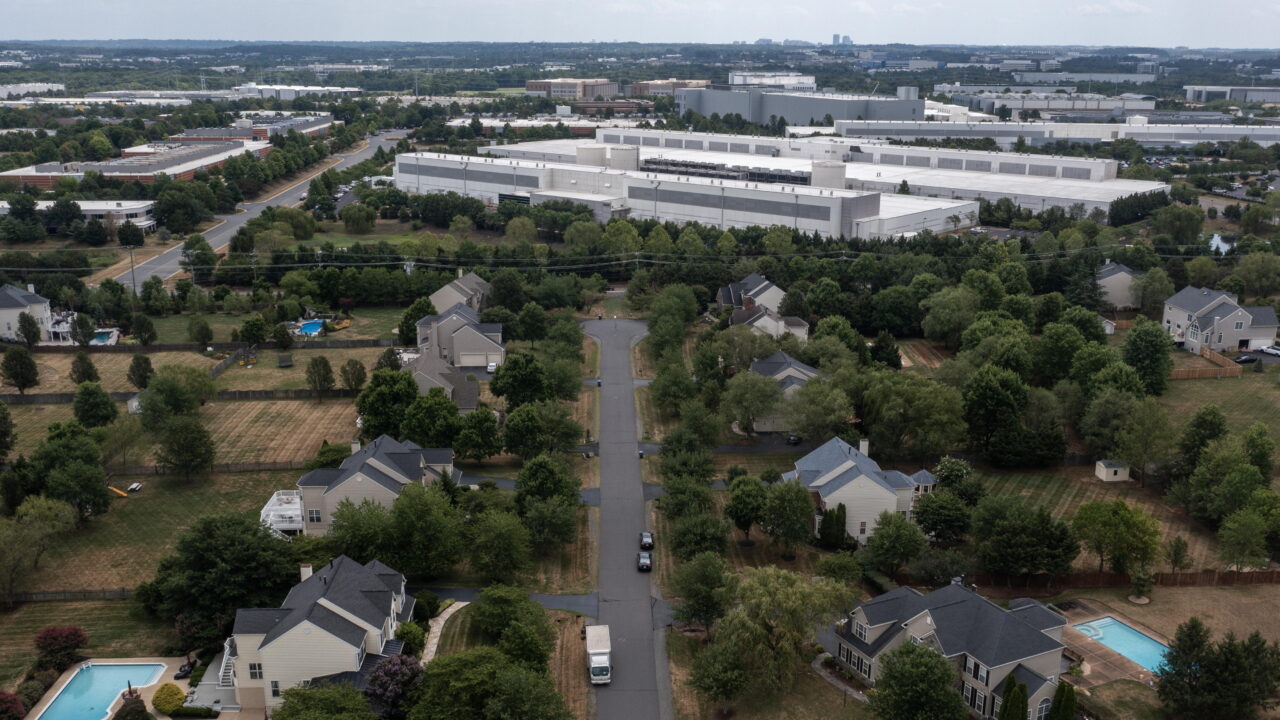
As construction of large data centers in the United States continues to accelerate, so, too, have questions about how these massive facilities could affect the housing market.
To help real estate agents address these concerns, the National Association of Realtors commissioned a first-of-its-kind study aimed at evaluating data centers’ impact on the real estate market. The study found that data centers’ effects differ dramatically from place to place.
“We talk about data centers as though they are one category, and they are not,” said Nadia Evangelou, the principal economist and director of real estate studies for the National Association of Realtors.
While some data center-rich counties have shown signs of economic growth, others have experienced strain on their energy supply.
The servers housed in these facilities power all internet functionality — from the growing artificial intelligence industry to basic web searches. As the demand for more computing power has grown amid rapid advances in AI technology, so, too, have these massive warehouses. And many, researchers noted, are being built in and around residential neighborhoods.
The NAR study overlaid several datasets: information about the location and physical footprint of about 1,500 data centers; property values; rates of home sales; demographic data and a survey of more than 2,300 realtors in different regions of the country.
It found that although data center construction has been accelerating, the distribution of these tech hubs is concentrated in just 1% of the country.
“Northern Virginia, Silicon Valley, Phoenix, Central Ohio and Grant County, Washington, are all very different places,” Evangelou said. “They have different economies, they have different markets and different reasons for attracting data centers. So when we look at things like home values, employment, electricity rates, we didn’t find one pattern that can explain all of them.”
Northern Virginia, for example, is home to 319 mapped data centers — about 19% percent of the country’s facilities — while there is a single data center in the entire state of Louisiana, the report noted. Other major hubs include Silicon Valley, central Ohio, central Washington state and south Texas.
Many of the areas where data centers are being built already had stronger-than-average housing markets and higher-than-average income levels, which, researchers said, have not seemed to waver in the presence of data centers.
While the study focused on the impact of already up-and-running facilities, realtors said housing markets begin to feel the presence of data centers long before construction projects are complete.
Abilene, a midsized city in the western part of Texas, is experiencing an influx of workers as construction of the Stargate Project, a massive $500-billion data center set to become the largest in the nation, continues.
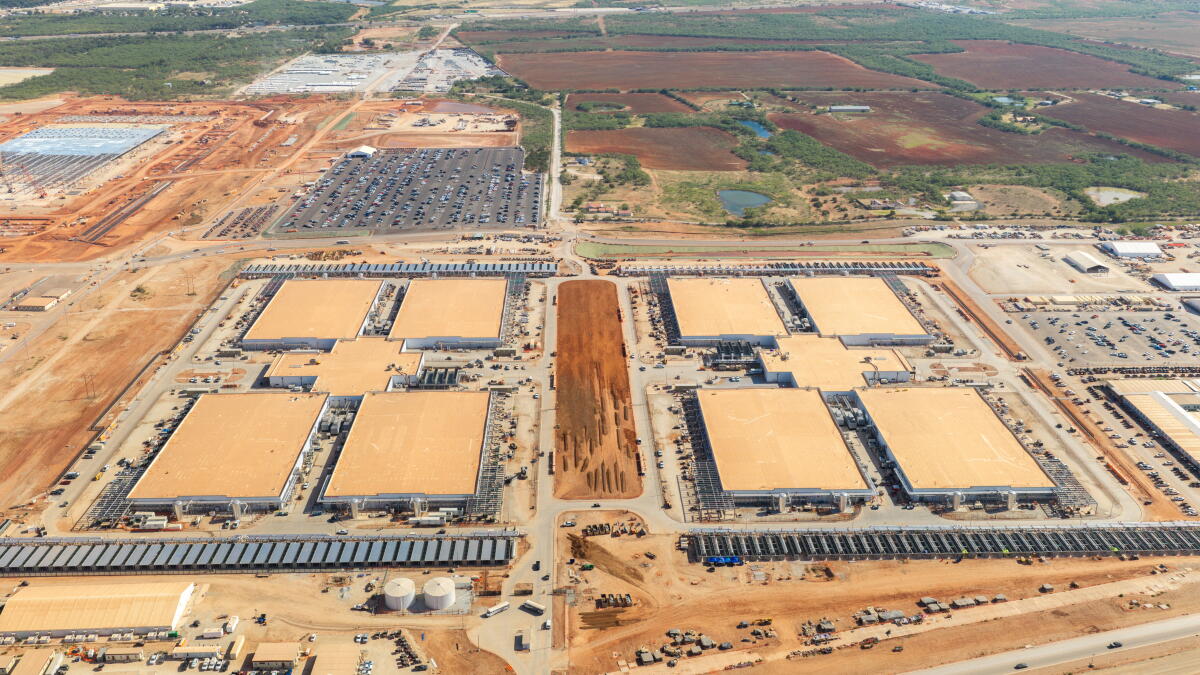
Local realtor Steve Stovall said more people coming to the city has created more revenue, which has helped bolster infrastructure and generate a stronger commercial economy. But it has also put such a strain on the residential market that there simply aren’t enough homes to keep up with demand.
“It’s not a secret at all that there’s a big data center north of town being built, and buyers that are currently in the market are well aware of it because they’re having trouble finding housing,” Stovall said. “That’s where a lot of our housing shortage has come from: the people who were going to sell have sold. The rentals are full. The hotels are full. Many of the rentals have become Airbnbs or short-term rentals and the prices are all just going up.”
The median home price in Abilene, Texas, is about $342,000, Stovall said, up from about $250,000 just six years ago.
It’s impossible to know what other impacts the Stargate Project could have on nearby properties before its completion, he said. Though, he added, some longtime residents have already expressed concerns over energy usage and the environment.
Whatever the consequences are for Abilene — good or bad — they are likely to intensify. Two more large data centers have already been approved for construction on the outskirts of town.
Evangelou said that is exactly why the study will need regular revisions to keep up with the pace of data center construction.
The national realtor group said it intends to publish an update as soon as six months from now.
Transcript:
STEVE INSKEEP, HOST:
Prospective homebuyers naturally ask questions about the neighborhood. How close are the schools? How close are the parks? How bad is the traffic or the noise? Some also ask questions now about the giant data center next door. Here’s NPR’s Marissa J. Lang.
MARISSA J LANG, BYLINE: For homebuyers and sellers, data centers loom large. And as more of these massive tech hubs go up around neighborhoods, real estate agents have been trying to get a handle on what to tell clients.
NADIA EVANGELOU: So how close it is, like, whether it’s visible, local, like, noise conditions, their infrastructure plans and what’s happening in that specific housing market.
LANG: That’s Nadia Evangelou, the director of real estate research for the National Association of REALTORS. To help guide agents, the group released a study this week that combines data center mapping with analyses of home sale prices and public perception drawn from a survey of more than 2,300 realtors from around the U.S. Evangelou said what surprised her is that there is no one-size-fits-all answer.
EVANGELOU: This may be a national conversation, but the actual realistic impact is very concentrated in a relatively, like, small number of local markets.
LANG: The report said some data centers affect communities in a positive way, raising home values and bolstering the economy by bringing in jobs, while others have spurred growing concerns about energy consumption, density and how land is being used. Steve Stovall is a realtor in Abilene, Texas, a mid-sized city about 180 miles west of Dallas.
STEVE STOVALL: It’s not a secret at all that there’s a big data center north of town being built. And the buyers that are currently in the market are well aware of it because they’re having trouble finding housing. That’s really the net result of this thing, is it’s caused a shortage in housing.
LANG: That data center is set to be the biggest in U.S. history, and at $500 billion, one of the most expensive. It’s already heightening anxieties, but it’s not finished yet, so it’s hard to know how it might impact residents. Stovall does see a bright side, though – more people, more activity, more revenue. Whatever the effects are, they’re likely to compound. Two more data center projects are already planned nearby.
STOVALL: This is really a once-in-a-lifetime thing for Abilene, Texas. I’ve been here all my life, and I’ve never seen anything like this.
LANG: The national realtor group says with new data centers going up as rapidly as they are, it will need to update the results of its survey as soon as half a year from now.
Marissa J. Lang, NPR News.
(SOUNDBITE OF MUSIC)