The bill extends that right to, among others, home health workers and service workers at public universities — a group that includes janitors, maintenance workers, groundskeepers, administrative assistants and more.
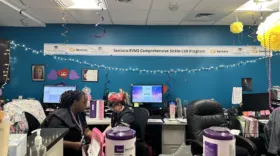
Margarette Moore, a custodian at William & Mary, said she’s hopeful the legislation will help resolve a number of issues she’s been facing on the job: poor working conditions, a lack of accommodations and more.
She said the university denied a workers’ compensation claim after she severely sprained her ankle on her lunch break on campus last fall — and was unwilling to adjust her working hours so she could take her daughter, who has a rare type of cancer, to doctor’s appointments on Mondays.
“With collective bargaining, we have somebody to help us and allow us to speak up,” Moore told VPM News. “We have a voice now.”
However, the collective bargaining legislation leaves out faculty members and graduate students.
That’s led to mixed emotions for academic faculty like Ian Mullins, an associate professor of sociology at the University of Virginia.
He said extending public sector bargaining rights to campus service workers is “a huge win,” but he’s also disappointed that some campus employees — including himself — are left out.
“I feel like no one should be left behind,” Mullins said. “It’s a partial victory.”
Mullins said he’s not tenured and is not on the tenure track, either. (Tenured positions typically provide greater job security, which experts say also allows for academic freedom.)
“I have as much job security as I’m ever going to have,” Mullins said, adding that he’s among many other faculty members at UVA and across the country in a similar position, who have less job security and also make less money than tenured faculty.
“The vast majority of faculty are not living lives of luxury.”
Tim Gibson, president of the Virginia conference of the American Association of University Professors, also has mixed emotions about the collective bargaining legislation.
He called the situation of some adjunct faculty members (part-time faculty who, in many cases, teach at multiple schools or hold other employment) “an injustice” — noting that they’re working the equivalent of a full course load across multiple different universities, but still not able to make a living wage or secure benefits.
As VPM News previously reported, there’s been a long-term trend of universities hiring fewer tenured faculty members. Roughly 1 in 3 faculty members were either tenured or on the tenure track as of 2023, down from approximately half in 1987, according to the AAUP.
“If you want a strong university that can protect itself against political attacks, you want a strong faculty,” Gibson said. “And that means collective bargaining.”
Gibson said that if Spanberger — who has until April 13 to sign, veto or amend bills passed during the General Assembly session — doesn’t add academic faculty into collective bargaining, advocates will continue pushing for them to be added next year.
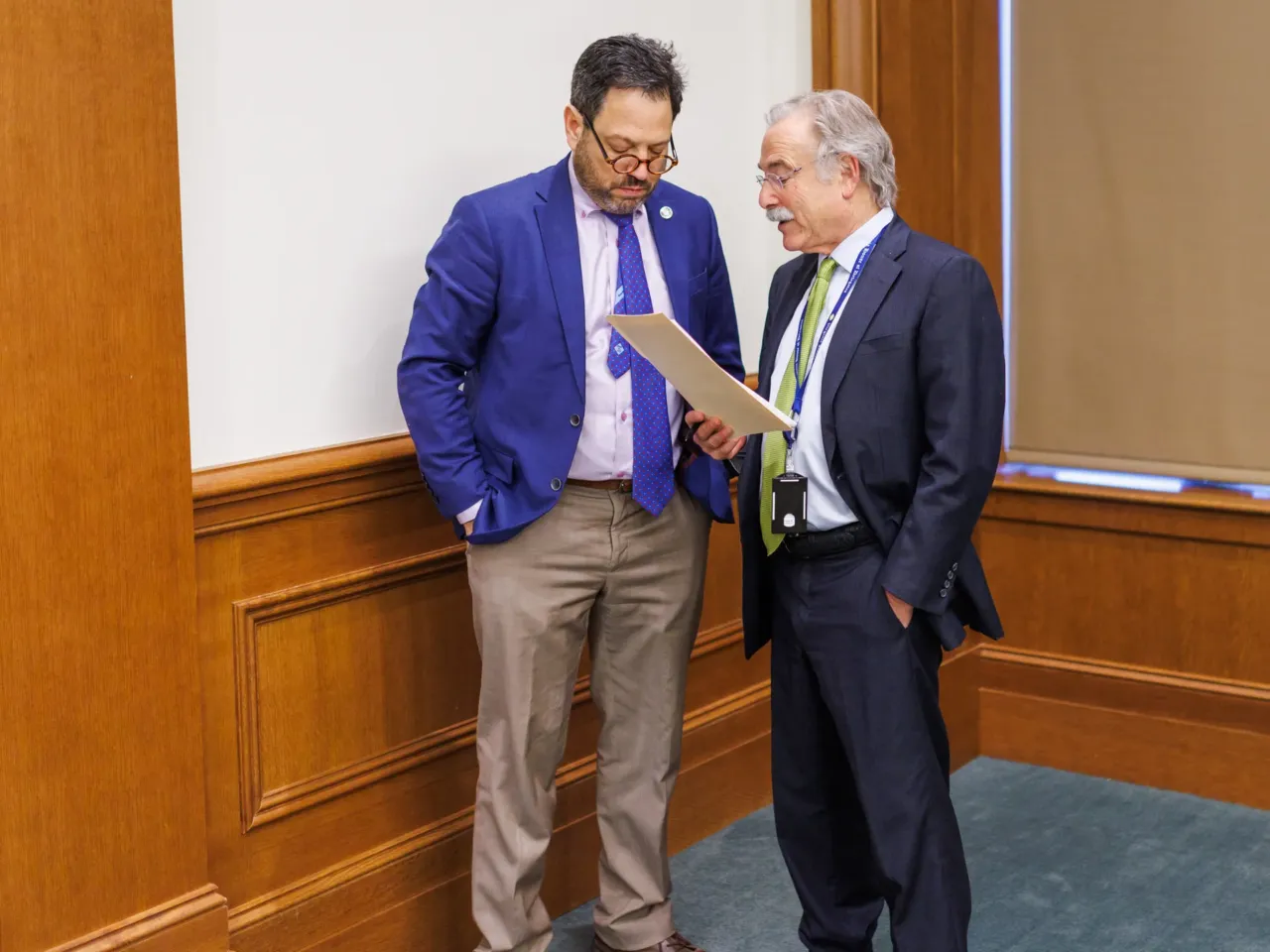
Separate legislation is also headed to Spanberger’s desk that would make some changes to university board governance.
It adjusts the term length for board members from four to six years, and would require all universities to include a faculty and staff representative — but won’t give them voting rights. (Original bills’ language would’ve given faculty, staff and student representatives voting rights).
“We were really hoping to see students, staff and faculty get a meaningful seat at the table to vote,” Mullins said. “They’re the ones that have the practical knowledge about how the institution runs.”
It also won’t make any changes to how university counsel are hired — for now.
Surovell said he’s hopeful a study of additional board reforms ordered by Spanberger will ultimately allow universities to appoint their own independent counsel. (The Senate’s original bill language would’ve given them that right.)
“I think it’s our job to draft laws that take the long view, not take into account who happens to be in office right now,” he said.
For more on the impact of Virginia’s move to end a longstanding ban on collective bargaining for (most) public sector employees, listen to the latest episode of RVA’s Got Issues. Michael O’Connor, a reporter at Dogwood, and Chris Saxman, president of Virginia FREE, join host Rich Meagher for a discussion of how the commonwealth’s new labor laws will play out in Richmond:
Copyright 2026 VPM