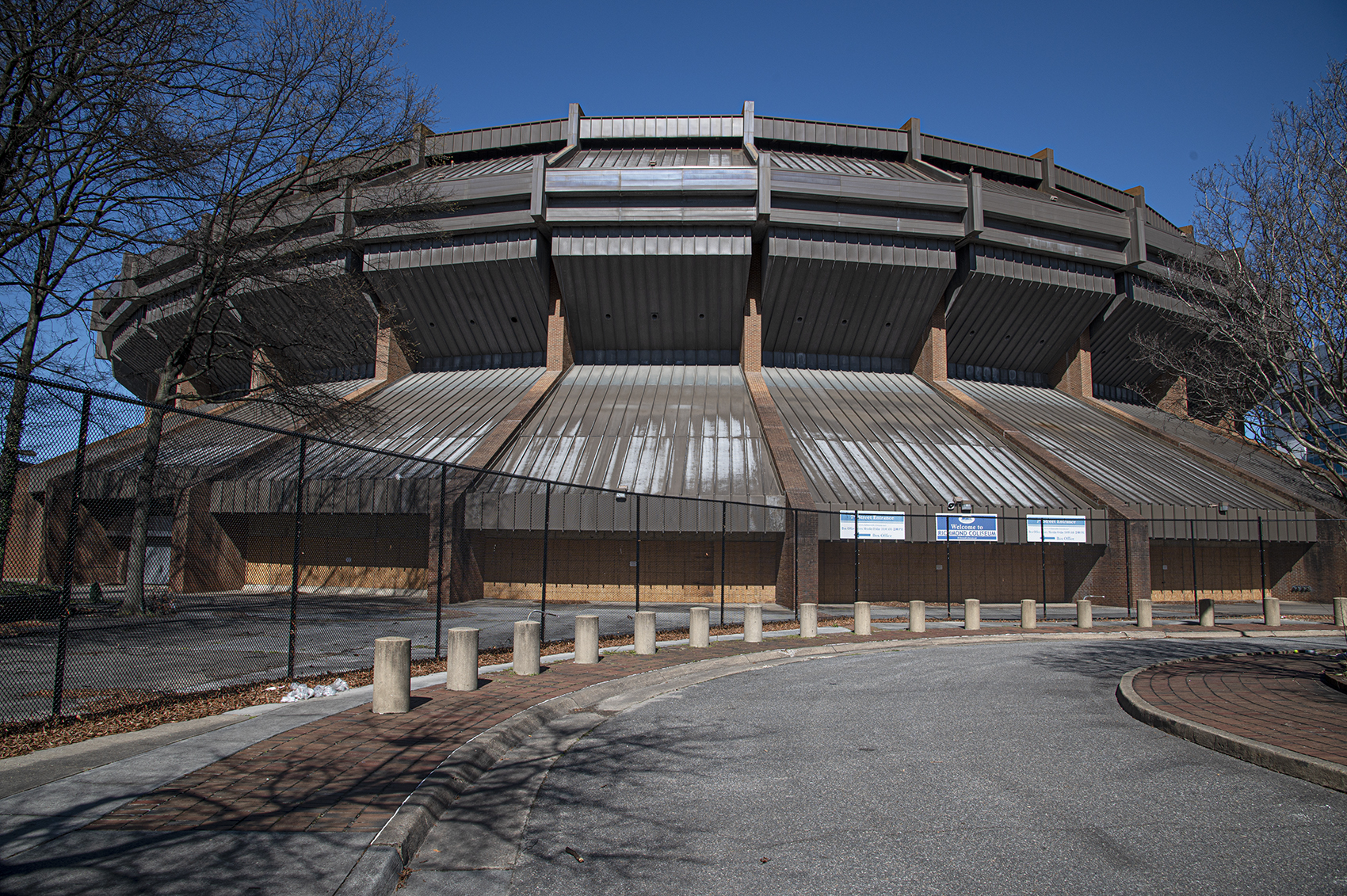
More than 55 years after the Richmond Coliseum opened — and seven years after it closed for good — city officials are eyeing to demolish the vacant arena with the help of $15 million in state funding.
From 1971 to 2019, the Coliseum hosted concerts, sports, the circus and other major events. But it has since sat empty, as the city’s efforts to revamp the area have failed.
The plans are to replace the Coliseum with a new 500-room hotel with underground parking that would anchor the Richmond Convention Center and future City Center plans to redevelop the surrounding downtown blocks.
Mayor Danny Avula’s goal is to raze the arena within a year, but “it is still a little too early to say definitively whether that would occur in late 2026 or early 2027,” city spokesperson Michael Hinkle wrote in a June 24 email.
The shuttered relic may be gone soon, but its history won’t.
The Coliseum’s storied legacy
Modeled after Rome’s Colosseum, the Richmond Coliseum opened on Aug. 24, 1971, as a venue for concerts and sporting events.
The arena, located at 601 E. Leigh St., hosted a roster of music icons including Aretha Franklin, Prince, Bruce Springsteen, Janet Jackson, the Jackson 5 and Elvis Presley.
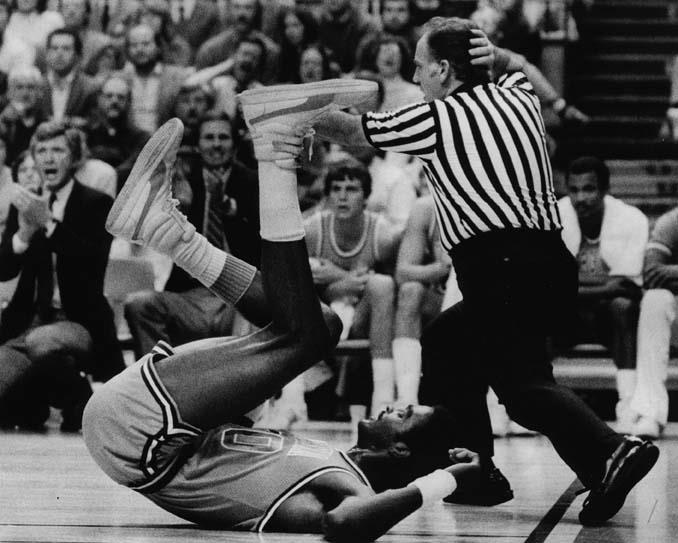
It was also home to memorable sporting moments. Julius “Dr. J” Erving played in the Coliseum when the American Basketball Association’s Virginia Squires (officially based in Norfolk) played some home games there — and Virginia Commonwealth University played its home basketball games there until the Siegel Center opened.
It’s also where one of the greatest buzzer-beaters in college basketball history happened.
In 1994 — the year the NCAA Women’s Basketball Tournament expanded its field to 64 teams to match the men’s tournament — the Richmond Coliseum hosted the women’s championship game between the University of North Carolina and Louisiana Tech.
There wasn’t even a second left on the clock — just 0.7 of a second — when Charlotte Smith nailed the three-pointer that gave UNC a 60–59 victory.
“I’m in the company of a lot of greats,” Smith said on June 30 when asked about her place in the Coliseum’s history.
Smith, who’s now the head coach of Elon University’s women’s basketball team, told VPM News that she doesn’t have specific memories of the arena from that day. But she’s found ways to stay connected to the moment and Coliseum.
“Most of the memories that I have about the arena are the memories that I try to recreate by simply stopping through to see the Coliseum while I’m out on the recruiting trails,” she said.

Redevelopment has been more stop than start
The Coliseum — which was owned by the city and operated by stadium management firm SMG — shuttered its doors in 2019 without a public discussion, leaving the city with an empty arena to loom over the center of downtown.
The office of then-Mayor Levar Stoney said the arena was closed because it was a “public liability” in need of millions in renovations to meet certain safety and operational standards.
The value of the Coliseum and the land it sits on, which is owned by the city’s Economic Development Authority, has gone up from $49 million to nearly $65 million since 2019, per city property records.
The Coliseum sits in the heart of downtown Richmond, between Fifth and Seventh streets, next to the convention center and just a few blocks away from City Hall and The National.
Attempts to reshape the area surrounding the Coliseum haven’t worked out, either.
While in office, Stoney tried to get a new publicly-funded arena built as part of the Navy Hill redevelopment, but it was rejected by Richmond City Council in 2020.
Stoney’s administration then initiated the City Center project to redevelop 9.4 acres of property, including the Coliseum. A contract wasn’t agreed to before Stoney left office in 2024, leaving Avula’s administration to move forward with a different vision.
The City Center project is ongoing, and Avula told the Richmond Times-Dispatch last fall that he was considering plans to transform a 10-block area around the Coliseum.
City officials said that the previous financial strategy for the City Center plan wasn’t viable because it proposed renovating the whole area all at once. Instead, Avula wants to develop parcels piecemeal.
Part of the plan is a project to bring a GRTC bus transfer station and mixed-use space where the city-owned Public Safety Building once stood (500 N. 10th St., between East Clay and East Leigh streets). GRTC is now seeking proposal requests from developers.
“It’s time to turn the page”
City officials said that tearing down the arena is a key initial hurdle to redevelopment plans.
While the effort stalled after the Navy Hill proposal failed and the City Center development wasn’t finalized and ultimately reworked, city officials said the intention was always for the Coliseum to come down.
Officials and the Greater Richmond Convention Center Authority were looking for ways to finance the demolition, but then an unexpected thing happened: Virginia lawmakers set aside $15 million in the state budget for the project.
State Sen. Lamont Bagby, a Democrat who represents most of the city, pushed for the state funding to back up Richmond’s demolition efforts.
He said the state dollars will help city officials avoid having to make “tough choices” to cut priorities out of their budget.
Bagby added that it would allow the city to transform the area, including reimagining the Blues Armory building, and help complement hotels near the convention center.
“The Coliseum served us well. We have a lot of memories in the Coliseum,” he said in an interview. “Now, it’s time to turn the page and that space needs to be developed.”

Richmond Chief Administrative Officer Odie Donald II said Avula is focused on revitalizing the area and fulfilling the City Center project.
“I was really surprised upon arriving, just looking at the state of disrepair,” Donald recalled when asked about seeing the Coliseum after taking the CAO job.
Donald agreed with Bagby that the convention center can’t meet its full potential without the hotel space for guests. He said more tourism offers the city a chance to bring in tax revenue without relying on its residents.
The first step is finding experienced developers to carry out the city’s plans, Donald said.
“So, not only do we get the appropriate developer, but we also get those who can deliver on time and hopefully within or under budget,” Donald said in an interview.
Donald said while taxpayer money is expected to help pay for the redevelopment plans, he believes Richmond will ultimately benefit from the tax revenue a hotel will bring.
He said that the tourism dollars the city gets once the hotel is up offer a way to generate tax revenue without relying on residents.
Hinkle, the city spokesperson, said that several implementation and coordination steps need to be taken before the demolition can happen.
After hearing about the demolition plans last year, Charlotte Smith came back to Richmond to walk around the arena and take photos. Smith, a former WNBA player, said it was her way of getting “one last living memory of the Coliseum.”
“I was saddened by the fact that they’re demolishing it, because there’s so much rich tradition and history in that building,” Smith told VPM News.
Copyright 2026 VPM