VPM PBS: WVPT, serving Staunton, Harrisonburg, and the Shenandoah Valley is operating at reduced power during scheduled tower maintenance. The broadcast signal will return to full strength upon completion of this work.
Copyright © 2026 VPM, all rights reserved.
PBS is a 501(c)(3) not-for-profit organization.
VPM News Morning Edition
NEXT UP: 9:00 AM

Thanks to our sponsors – Become a Sponsor

Facts Aren’t Enough: The Psychology Of False Beliefs

The myth that vaccines cause autism has persisted, even though the facts paint an entirely different story.
Renee Klahr
The myth that vaccines cause autism has persisted, even though the facts paint an entirely different story.

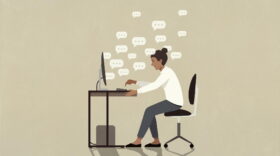
In 2012, as a new mom, Maranda Dynda heard a story from her midwife that she couldn’t get out of her head. The midwife told her that years earlier, something bad had happened after she vaccinated her son. One minute he was fine, and the next, he was autistic. It was like “the light had left his eyes,” Maranda recalled her saying. The midwife implored Maranda to go online and do her own research. So she did.

She started on Google. It led her to Facebook groups, where other moms echoed what the midwife had said.

“And they were just practically bombarding me with information,” says Maranda. “Telling me, ‘Your midwife’s right. This is why I don’t vaccinate. This is what happened to my child who I did vaccinate versus my child who I didn’t vaccinate.’ Things like that.”

Maranda trusted them. She says it wasn’t long before she had decided she wasn’t going to vaccinate her child, either.

Eventually, she did more research and realized that the purported link between vaccines and autism wasn’t real. She changed her mind, and vaccinated her daughter. But looking back, she can’t believe how easy it was to embrace beliefs that were false.

“It is so, so easy to Google ‘What if this happens’ and find something that’s probably not true,” Maranda says. “Don’t do that.”

This week on Hidden Brain, we look at how we rely on people we trust to shape our beliefs, and why emotion can be more powerful than facts.

Hidden Brain is hosted by Shankar Vedantam and produced by Parth Shah, Jennifer Schmidt, Rhaina Cohen, Thomas Lu and Laura Kwerel. Our supervising producer is Tara Boyle. You can also follow us on Twitter @hiddenbrain.

Additional Resources:

The Influential Mind: What the Brain Reveals About Our Power to Change Others by Tali Sharot

The Misinformation Age: How False Beliefs Spread by Cailin O’Connor and James Owen Weatherall

Do as I Say, Not as I Do, or, Conformity in Scientific Networks by James Owen Weatherall and Cailin O’Connor

Copyright 2025 NPR

Tags

Shankar Vedantam is the host and creator of Hidden Brain. The Hidden Brain podcast receives more than three million downloads per week. The Hidden Brain radio show is distributed by NPR and featured on nearly 400 public radio stations around the United States.

Vedantam was NPR's social science correspondent between 2011 and 2020, and spent 10 years as a reporter at The Washington Post. From 2007 to 2009, he was also a columnist, and wrote the Department of Human Behavior column for the Post.

Vedantam and Hidden Brain have been recognized with the Edward R Murrow Award, and honors from the American Association for the Advancement of Science, the Society for Personality and Social Psychology, the International Society of Political Psychology, the Society of Professional Journalists, the National Association of Black Journalists, the Austen Riggs Center, the American Psychoanalytic Association, the Webby Awards, the Pennsylvania Associated Press Managing Editors, the South Asian Journalists Association, the Asian American Journalists Association, the Pennsylvania Newspaper Association, the American Public Health Association, the Templeton-Cambridge Fellowship on Science and Religion, and the Rosalynn Carter Mental Health Journalism Fellowship.

In 2009-2010, Vedantam served as a fellow at the Nieman Foundation for Journalism at Harvard University.

Vedantam is the author of the non-fiction book, The Hidden Brain: How our Unconscious Minds Elect Presidents, Control Markets, Wage Wars and Save Our Lives. The book, published in 2010, described how unconscious biases influence people. He is also co-author, with Bill Mesler, of the 2021 book Useful Delusions: The Power and Paradox of the Self-Deceiving Brain.

Related Stories