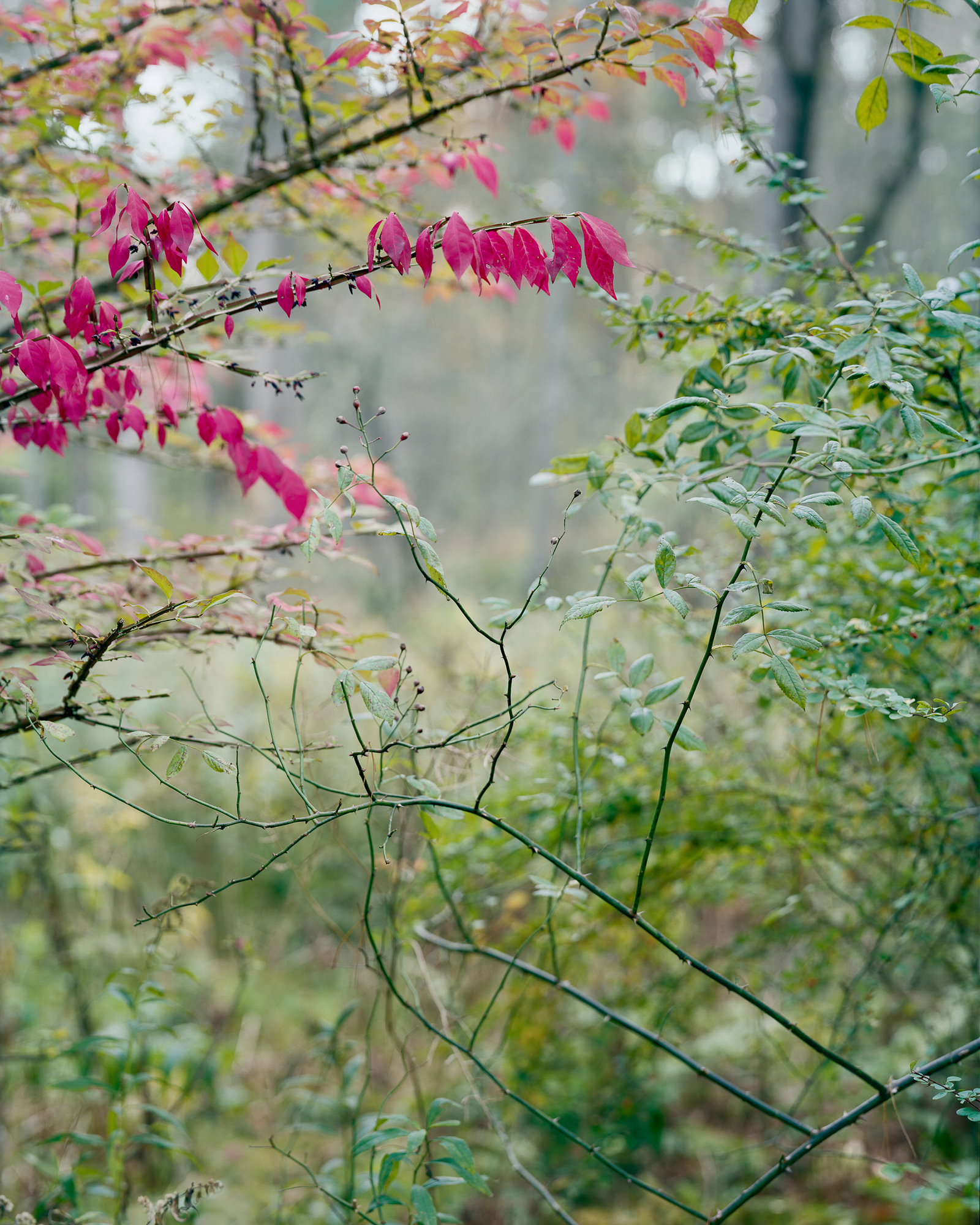
At first glance, you might see a jumble of weeds, a thicket of twigs, a heap of dying leaves. You might be inclined to stop looking at this point.
Janelle Lynch invites you to look closer, and slower. She’d want you to see each image as a world in itself — not an accidental grouping of plant matter, but a well-ordered composition created by nature and fixed in time and space by her 8-by-10-inch large-format camera.
Her implicit message is that one needs only to be still, take your time and pay close attention to find the beauty that surrounds you. But, like meditation, this seemingly simple act is often more difficult than it appears.
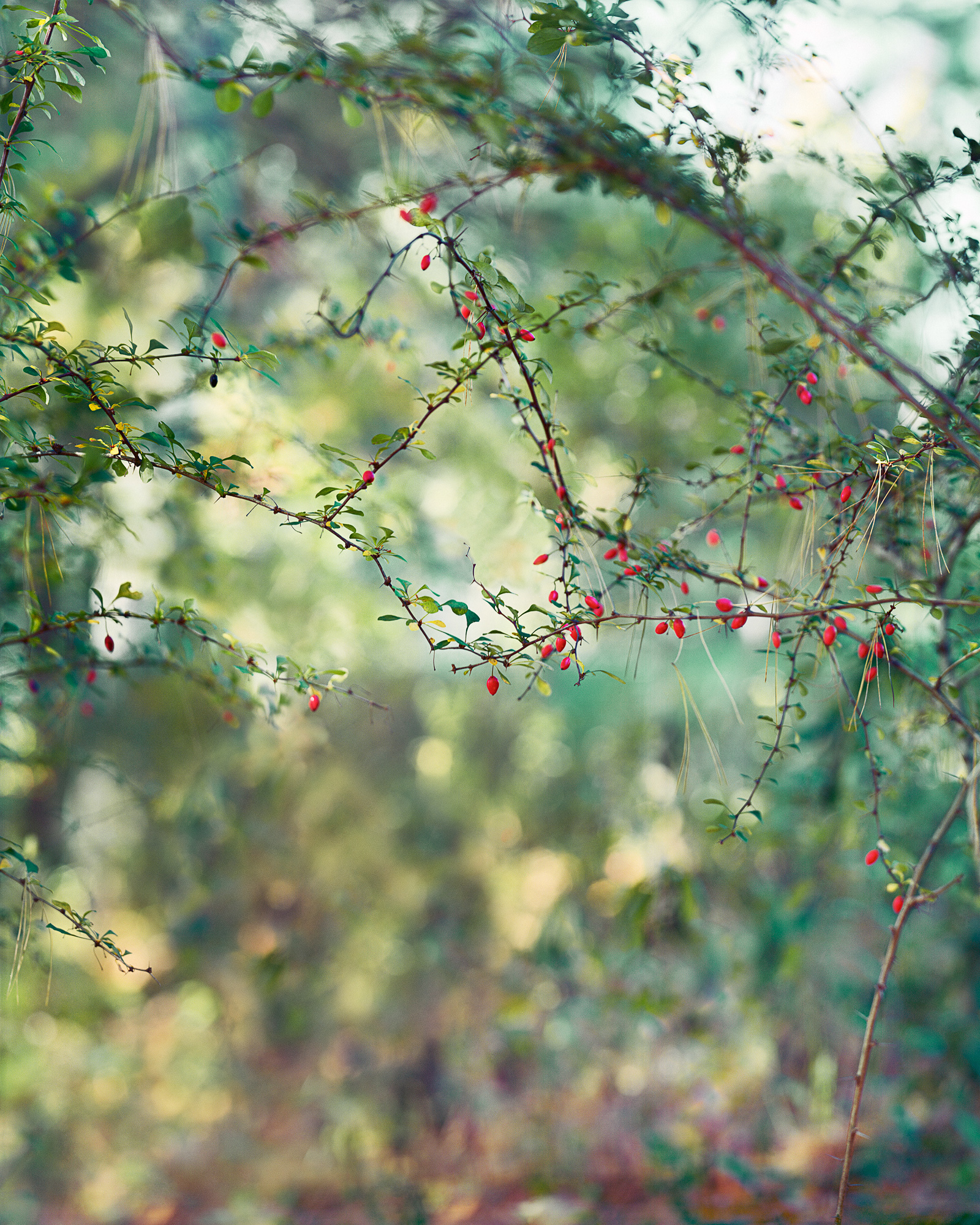
Lynch points to the poetry of Mary Oliver, keen observer of the natural world, and especially the poem “The Summer Day.” After spending a day in the grass, both “idle and blessed,” the poet asks: “Tell me, what else should I have done? / Doesn’t everything die at last, and too soon? / Tell me, what is it you plan to do / with your one wild and precious life?”
Nothing is more important to Oliver and Lynch than a deep immersion in the present as felt through the senses, and the accompanying feelings of beauty, belonging and connection.
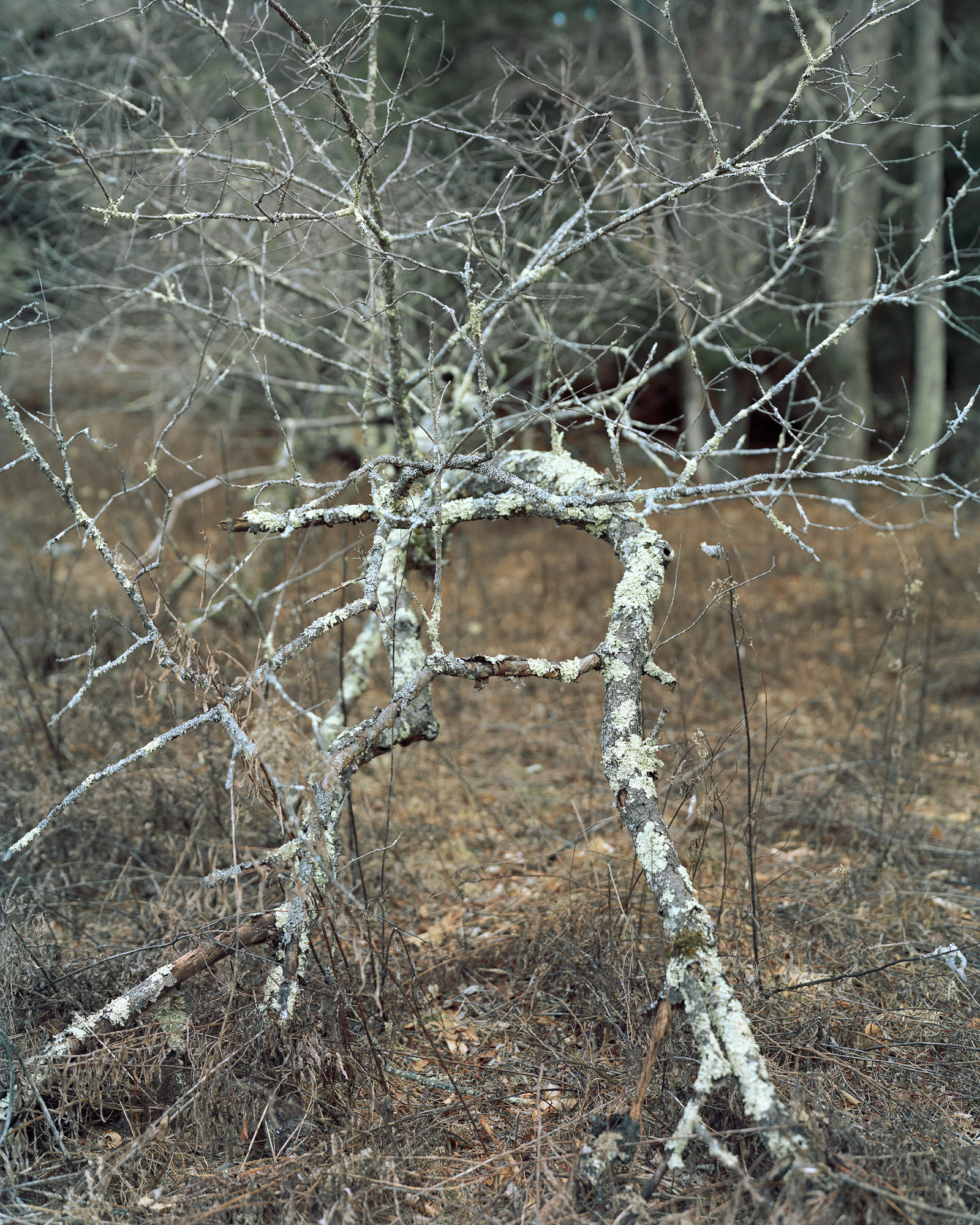
In practice, Lynch’s method sounds a lot like Oliver’s. She says she often would shoot from the ground, sitting in the grass, sometimes flanked by her dogs. That gives an animal-eye view to scenes only a foot or two high. Lynch says that this perspective gave her a sense of grounding — to the earth and the plant life she was photographing.
The idea of connection is crucial for Lynch, and it helps explain her photo book’s mysterious title, Another Way of Looking at Love. It comes from something she heard on the radio, an interview with the philosopher Alain de Botton; he said: “Another way of looking at love is connection.” In this sense, love is not a romantic imperative, but a feeling of belonging with others and with the world.
Visual connections are also created by the many lines and geometries of branches, stalks and twigs, which come alive under Lynch’s focused gaze: the way a string of tiny blooms folds back on itself to create the appearance of an eye in Seeing Anew; the way a fallen branch is held parallel to a barberry plant in Orthogonal Reality; the way entwining branches of pokeweed and goldenrod appear to create a Summer Wreath.
“I do innately find beauty in all of nature,” she says. “So whether it’s a weed or a dead branch, there’s surely something beautiful there.”
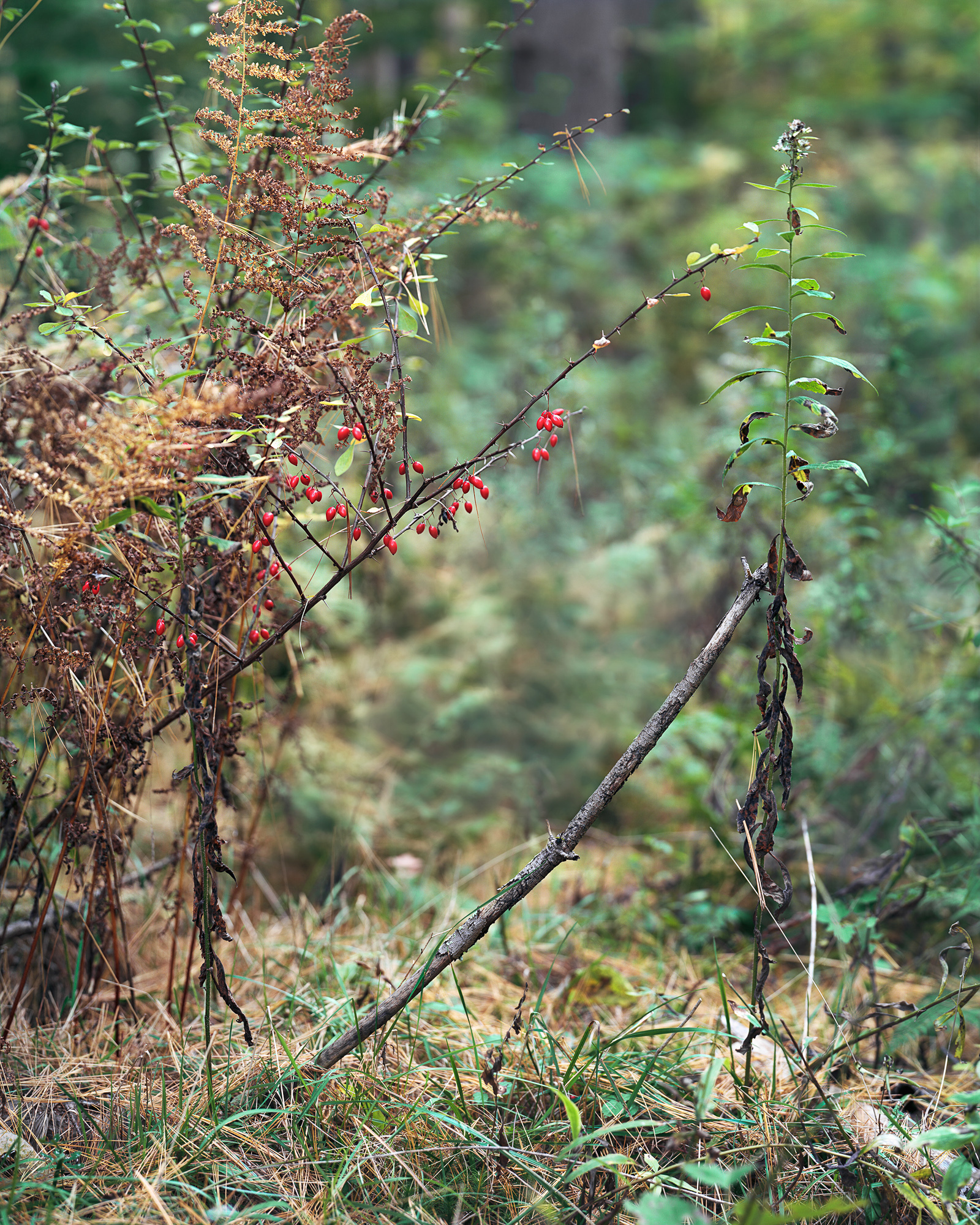
Lynch’s process seems conducive to this slow, exploratory seeing. Her large-format camera is heavy and requires a tripod. And the focusing screen is dim, requiring Lynch to drape a dark cloth over the camera and her head. Often, she says she also used a measuring tape to physically measure the distance between the camera’s focal plane and the object she wanted to appear in sharpest focus. Making photographs this way is a slow and deliberate process.
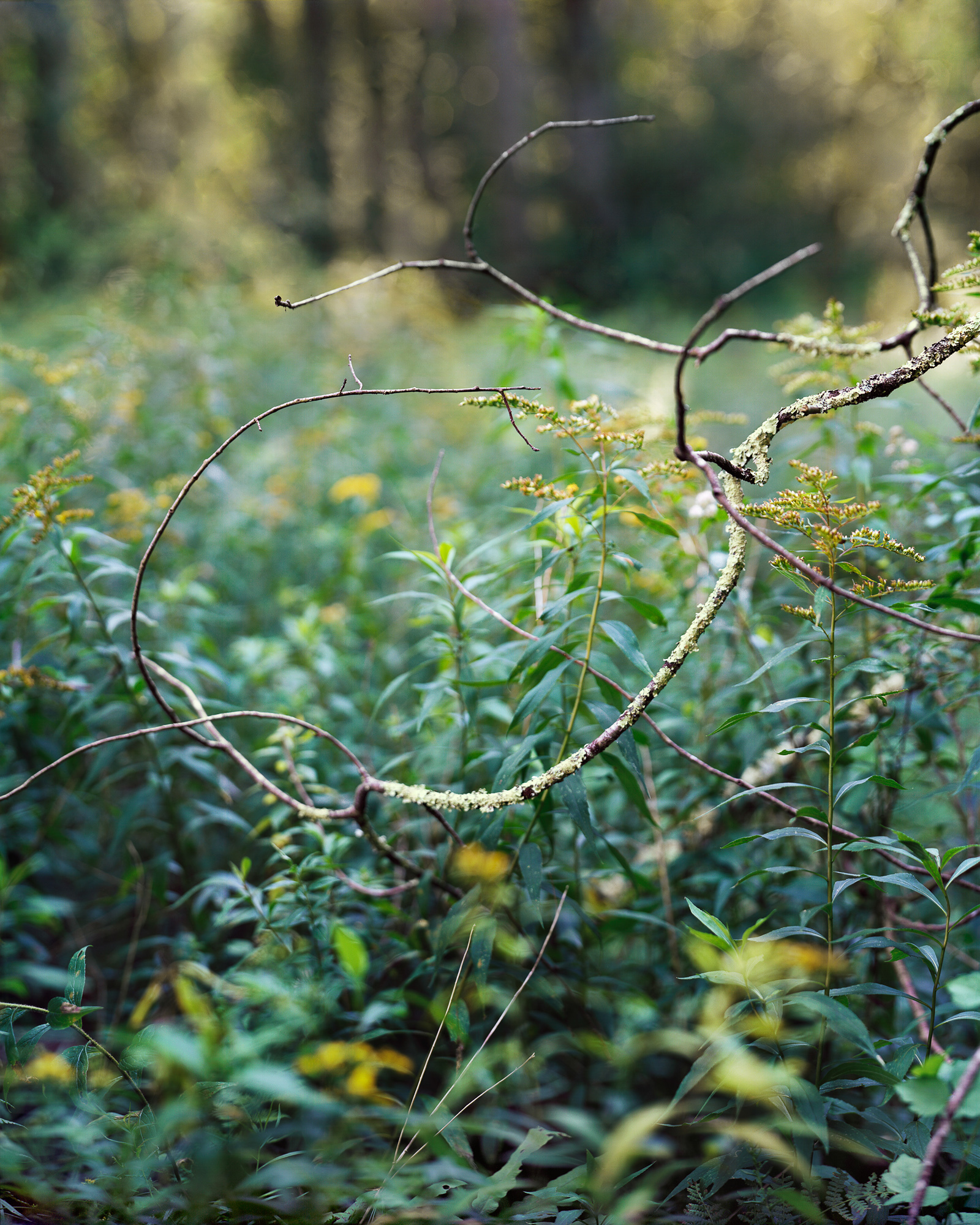
On a personal level, Lynch points to her grandmother as the person who set her on the path to becoming a landscape photographer. She remembers when she was a girl: “I witnessed her in front of the kitchen window, looking out into the landscape, into nature. And I watched her come alive. Seeing her body language shift, her facial expression … the tone of her voice changed when she would call me over and she’d say, ‘Look!’ ”
“How long does it take to see something?” asks Rebecca Solnit in a quotation near the beginning of the book. Another Way of Looking at Love could be part of the answer to that question, encouraging us to take all the time in the world to become alive to our senses and our surroundings.
Copyright 2023 NPR. To see more, visit https://www.npr.org. 9(MDM3NjYwMjA5MDE1MjA1MzQ1NDk1N2ZmZQ004) "A Photographer's Guide To 'Slow Seeing' The Beauty In Everyday Nature 5")