Updated April 17, 2022 at 8:46 AM ET
BUCHAREST, Romania — In the courtyard of an elite high school here, a group of mothers stand around waiting for their children to finish up their classes.
Soon, primary school students pour out of the building, some running into their mothers’ legs, others showing off their new turquoise backpacks — UNICEF printed on them in bright white.
Looking out over the courtyard, making sure all the students find their families, is Anastasiia Konovalova.
Just over a month ago, Konovalova, 30, was the head teacher of the Ostrovok Primary School in Odesa, Ukraine. But when Russia invaded Ukraine, Konovalova decided she needed to leave the country.
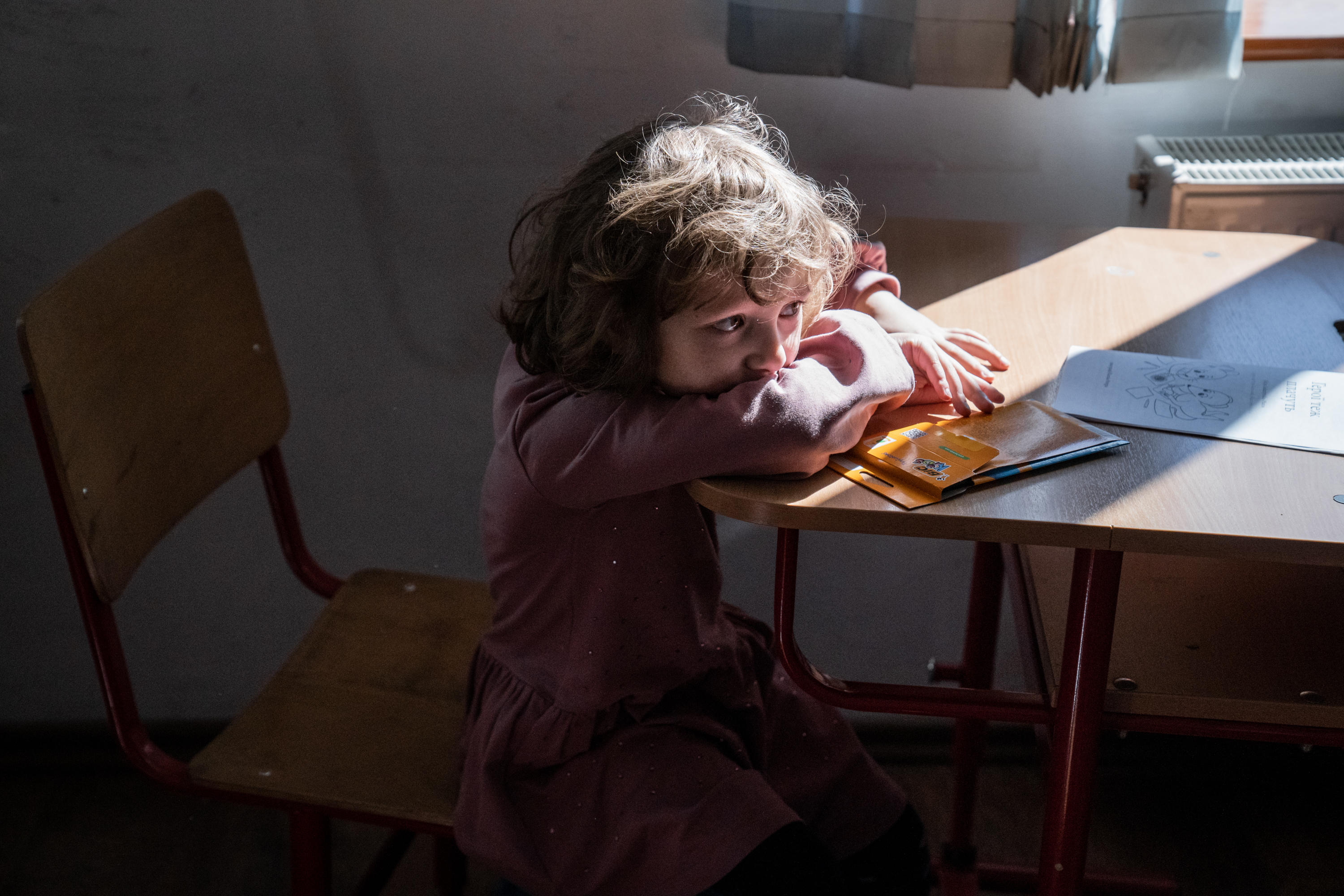
At the time Konovalova wasn’t thinking about anyone other than her 2-year-old son. But while packing, she decided to bring along her school’s math books, instead of more clothing. She admits that subconsciously she probably knew she would open a school.
After finding a place to stay in Bucharest, Konovalova helped evacuate 40 teachers, mothers and children from Odesa.
Once everyone was safely across the border, she turned her attention to the well-being of displaced Ukrainian children. “For children, it’s really important to be in a safe and familiar environment, and the safest and the most familiar environment for any child is a school,” Konovalova says.
So she went in search of one.
Konovalova went to Gara de Nord, a train station in Bucharest that has become a main hub for refugee assistance. She started asking around about classes for Ukrainian children, but no one had heard of any.
“It was a very hard time for us,” Konovalova admits. “We weren’t stable mentally. So at some point I started to yell at the station that ‘we are teachers and there are a lot of children here which need our help and we can teach just give us space.’ ”
Finally, someone came up to her and told her of a center for refugee children. It wasn’t meant to be a school, but Konovalova and others started teaching there. Soon the demand was too great for the space and Konovalova convinced the Ministry of Education to help them find a new place to teach.
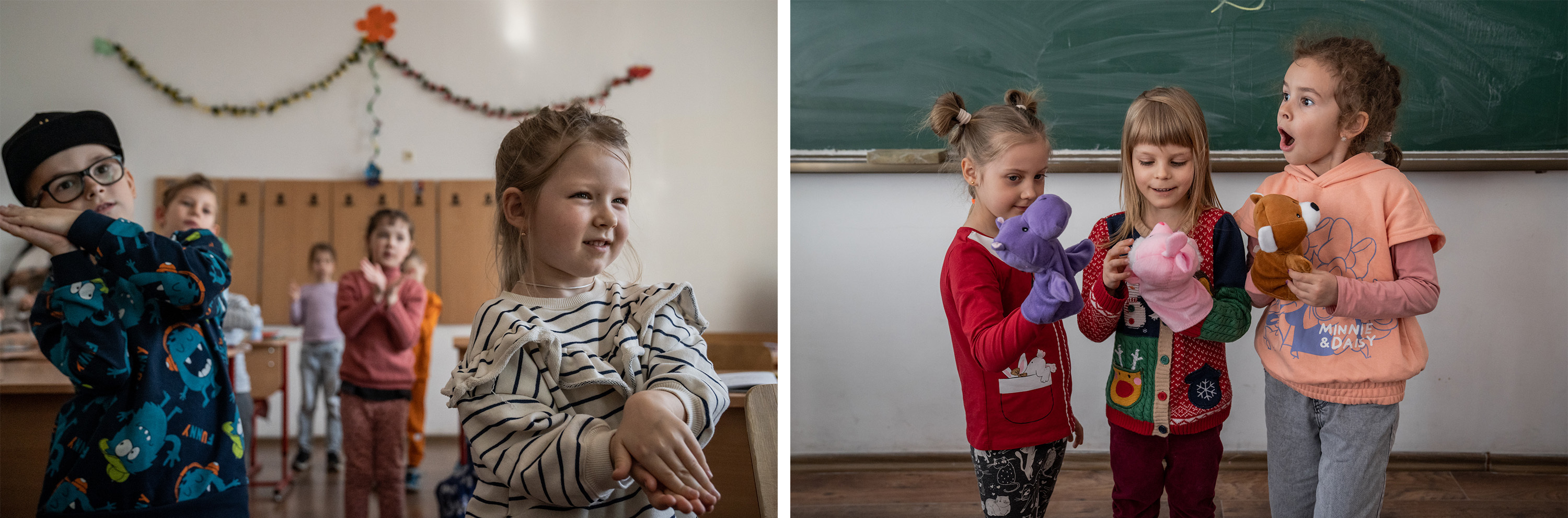
Now, she and her colleagues have eight classrooms in an actual school. During the day, it’s a high school, but from 3 p.m. to 6 p.m., it becomes a Ukrainian primary school.
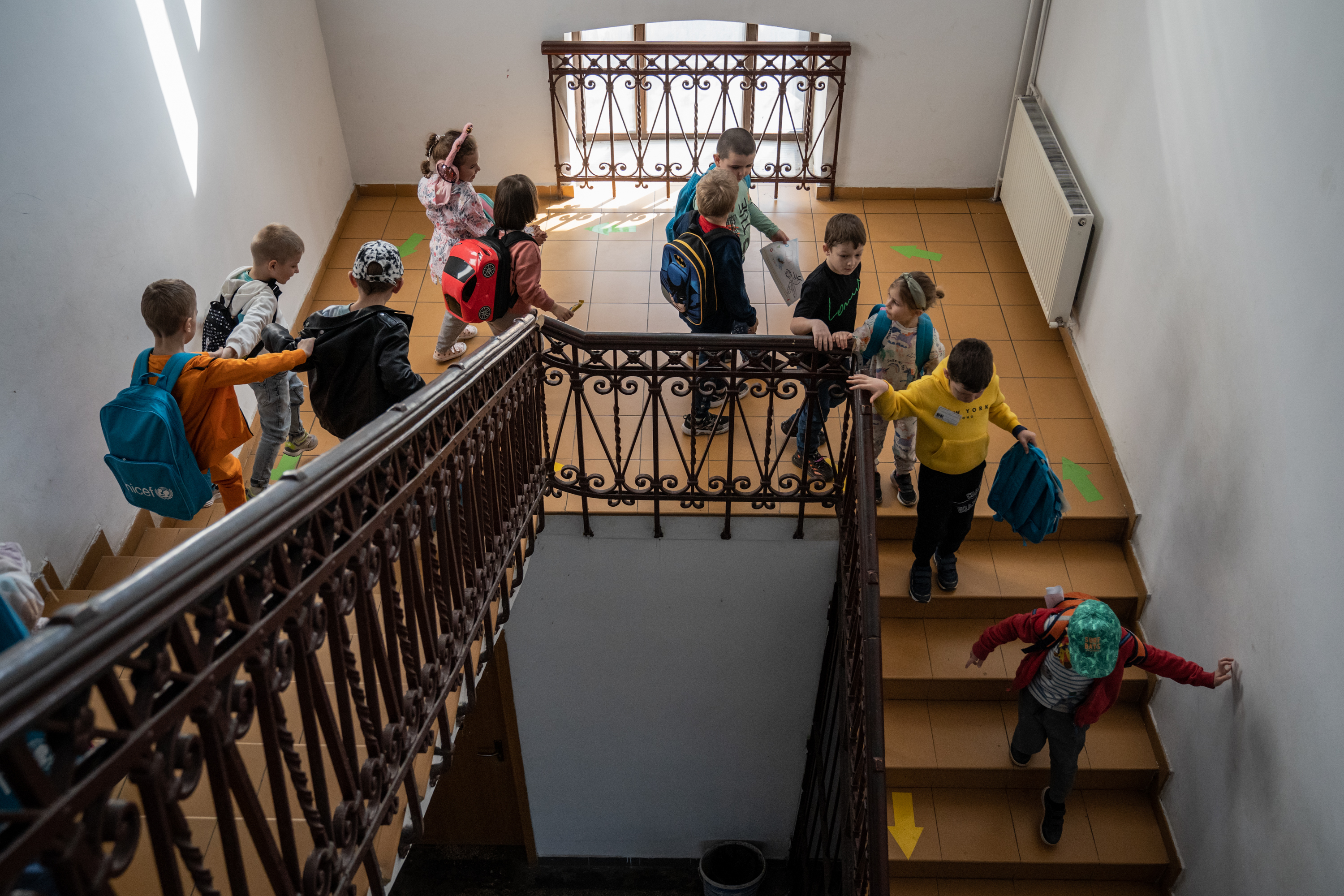
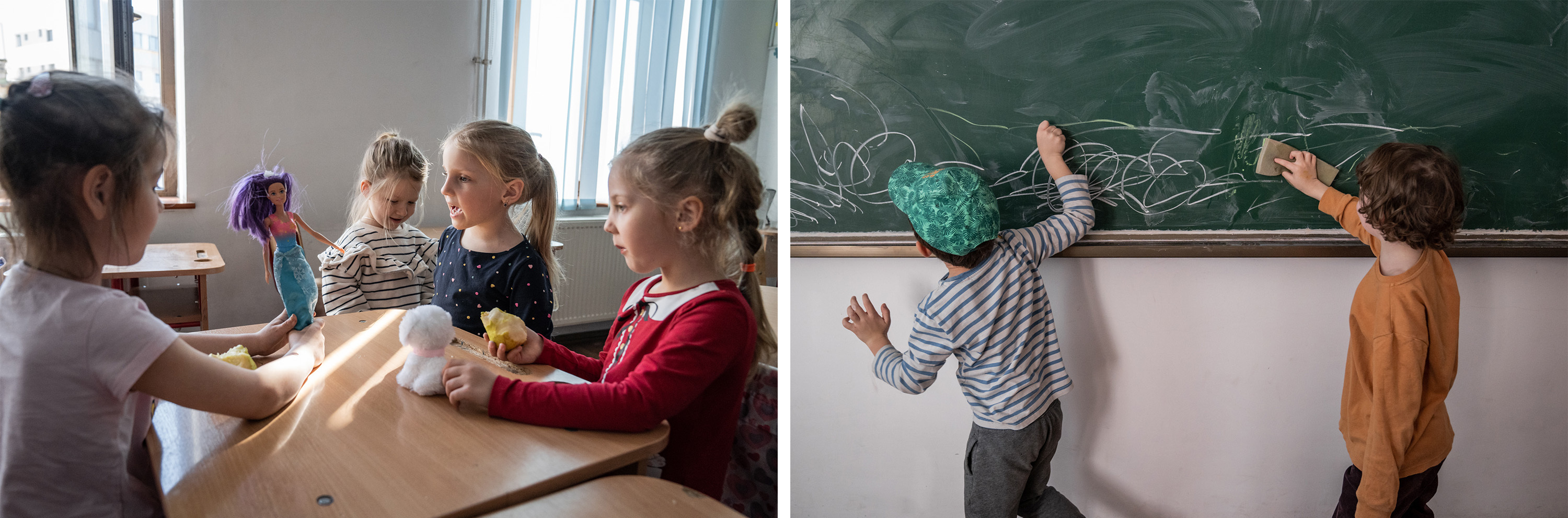
There are 227 students age 4 to 11 — with 600 more on the waiting list. There are 35 children in each class but only 32 desks, Konovalova says. So far, not everyone has shown up every day, so it hasn’t been a problem.
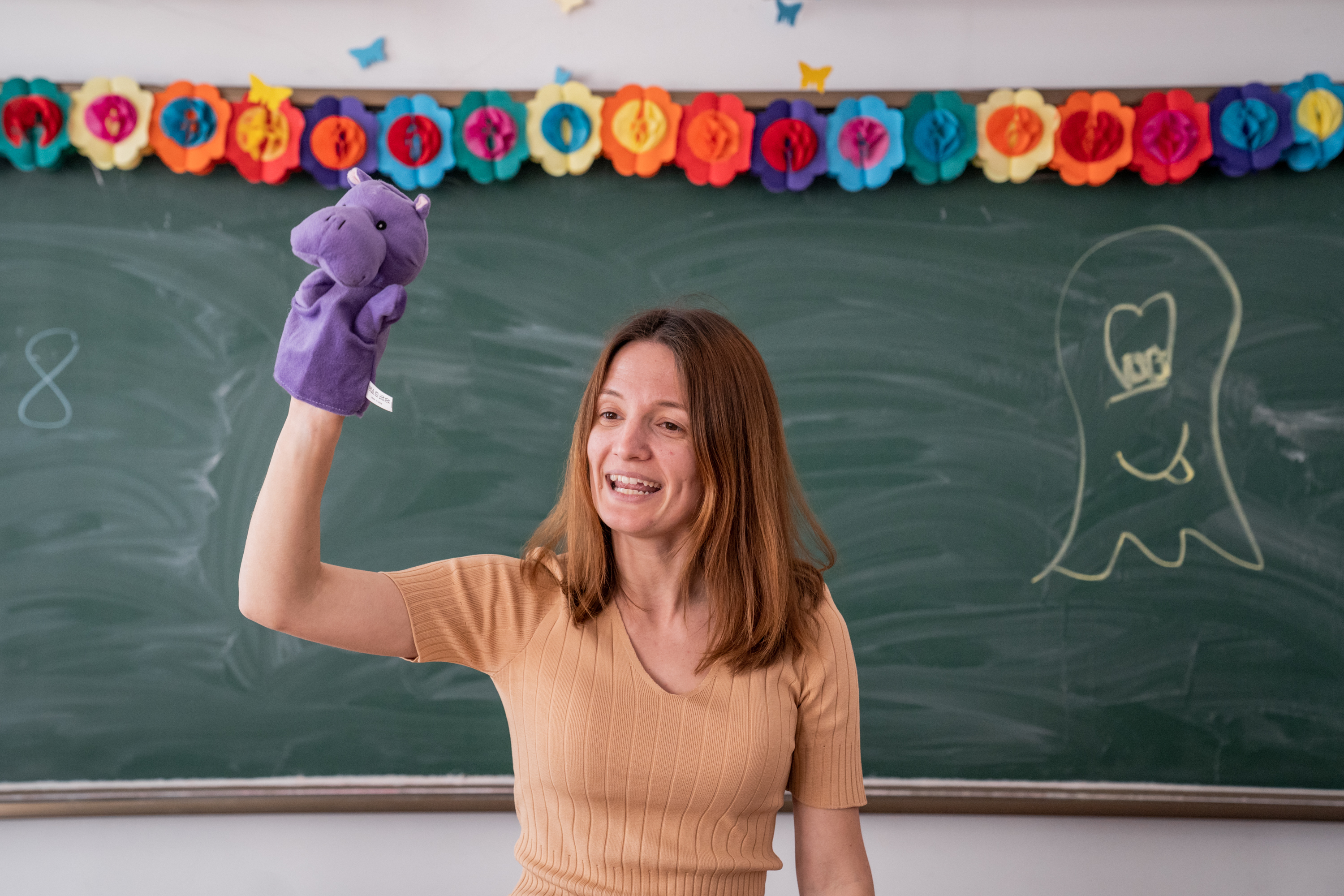
Konovalova teaches English. In Class Zero, which is filled with 4-, 5- and 6 year-olds, she starts her lesson with a few songs and gets them moving out of their seats. Then she passes out worksheets and helps students identify letters.
“The huge problem which the Ukrainians are facing everywhere is the language barrier,” Konovalova says.
Odesa, where so many of the children are from, is a Russian-speaking city in Ukraine. Others speak Ukrainian, but none of the students know Romanian. Konovalova has been trying to recruit teachers who can teach Romanian as a second language, but is having trouble. There hasn’t been a huge need for this skill set in Romania before. The search continues, but in the meantime, Konovalova and her colleagues are looking into language learning apps.

If the war continues and it’s still not safe to return to Ukraine, Konovalova’s students will be integrated into the Romanian school system.
“We’re making plans for September because we’re preparing for the worst and hope for the best,” she says. “Because everybody told us that there is going to be a war, has anybody packed a suitcase? No. So now we’re taught if someone tells you something, listen. Prepare for the worst. Because every day we think if only we did that, if only we did that. We didn’t. Because who would believe in a full-scale war with our dear neighbor with whom we share so much.”
Copyright 2023 NPR. To see more, visit https://www.npr.org. 9(MDM3NjYwMjA5MDE1MjA1MzQ1NDk1N2ZmZQ004) "A teacher set up a school for Ukrainian refugee children in Romania 7")