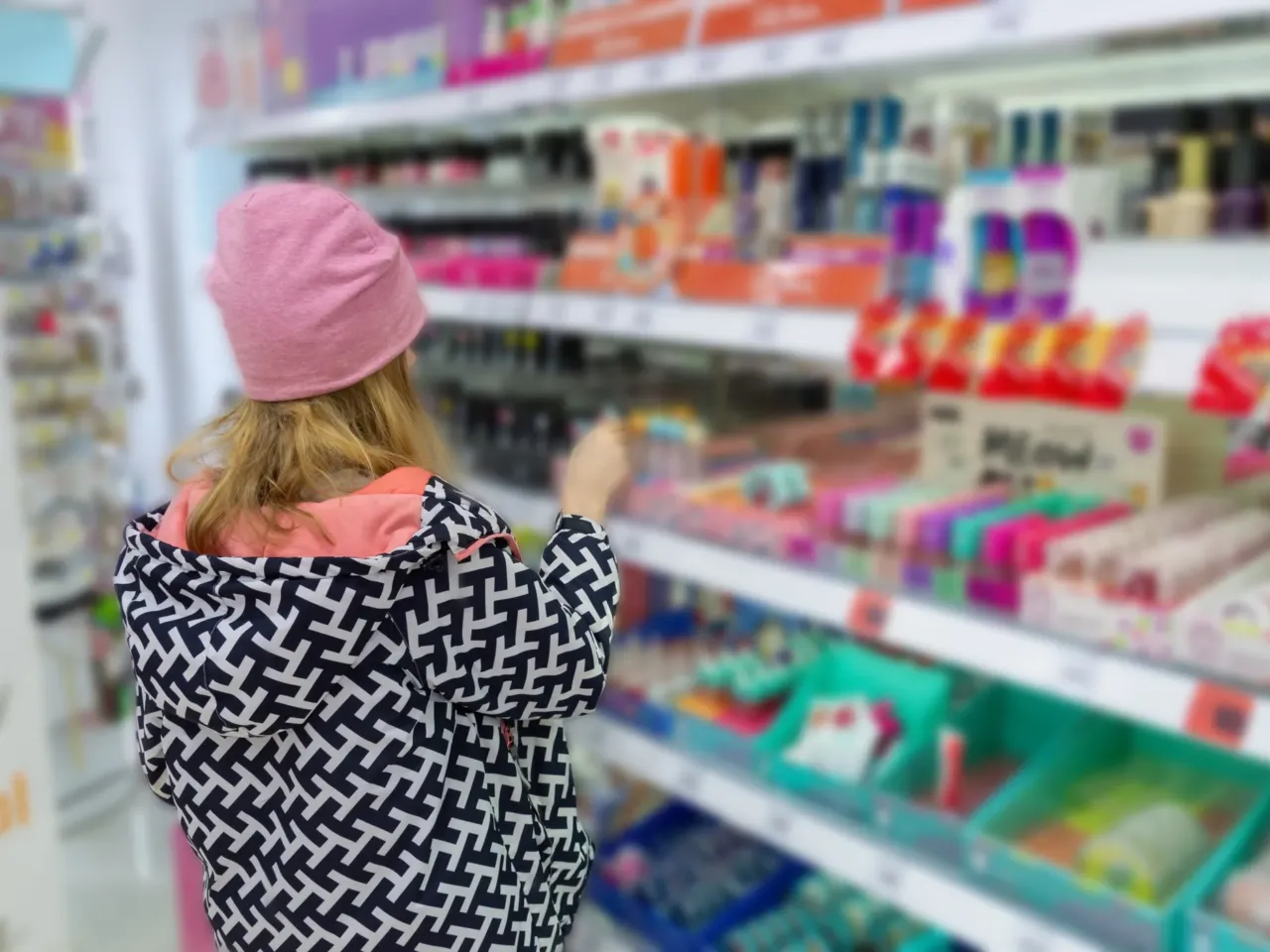
Dermatologist Elizabeth Houshmand sees a lot of tweens and teens in her Dallas practice. A few months ago, a mother brought her 9-year-old daughter in with a significantly red, itching face. It turns out the daughter had been using a moisturizer that she’d seen promoted on social media.
“The mom felt so bad,” she says, “because she had purchased it for her. A lot of her friends were using this particular brand’s products.”
But neither mother nor child realized that the moisturizer contained glycolic acid, an exfoliating ingredient that can be too harsh for the thinner skin of preteens.
“It’s not the product. Those are good products if used by the right person. It’s the fact that it’s the wrong product for that age demographic,” Houshmand says.
As teens and tweens have become major consumers of skin care products, dermatologists are seeing more of these types of cases. It’s a trend fueled by social media, which is awash with young influencers demonstrating their multistep skin care routines, some of which feature products that are quite pricey.
Carol Cheng, a pediatric dermatologist at the University of California, Los Angeles, says she’s also seeing more kids and adolescents come in with rashes caused by layering on too many products in pursuit of a flawless, poreless look promoted on Instagram and TikTok as “glass skin.”
“Unfortunately, that can backfire, causing redness, peeling, flaking, burning,” Cheng says. “And so we see patients coming in for these concerns more than we did a couple years ago, at younger ages.”
In some cases, she says patients as young as 8 or 9 are coming in with bad reactions to these beauty products.
One problem is that kids — along with their parents — may not realize that some of these viral beauty products include active ingredients, such as chemical exfoliants known as AHAs and BHAs, which help remove dead skin cells and oil. While those ingredients can be appropriate for teens with oily skin, Cheng says they’re too harsh for the thinner skin of preteens who have yet to go through puberty.
“Their skin barrier can be compromised more easily,” Cheng says. “Their skin is more sensitive, you know — the skin’s not as robust. And so, any of these products can affect their skin more easily or cause irritation.”
Jayden Galamgam, a pediatric dermatology fellow at UCLA, says he has also seen kids come in with allergic contact dermatitis caused by repeated exposure to active ingredients. “If your skin repeatedly comes into contact with an ingredient, it can become sensitized to it and you can develop allergic rashes from it,” he explains.
So what should a skin care routine look like for a tween or young teen? Houshmand says to keep it simple.
“Basic skin care for that demographic should just be just a very mild, gentle cleanser. Maybe some moisturizer and a sunscreen — nothing more,” Houshmand says.
She says for teens battling acne, over-the-counter products with ingredients like benzoyl peroxide are fine, though it’s a good idea to check in with their pediatrician or a dermatologist.
Cheng notes that even though many of the viral beauty products promoted to teens on social media come with hefty price tags, good skin care doesn’t have to cost a lot.
“Drugstore products are completely fine and have the same sort of benefits as the fancy ones you can find at Sephora or some of the department stores,” Cheng says.
Parents should be alert to the active ingredients in the products their children are using, Cheng advises, so they can steer their kids away from potential irritants.
Houshmand says there are upsides to this social media-fueled interest in skin care. For one thing, kids are learning about the importance of using sunscreen at an earlier age. And it’s also an opportunity to educate teens and tweens that good skin begins with healthy habits.
“I always tell patients, I can’t give you beautiful skin unless you are healthy and you take care of yourself, because the skin really reflects what’s going on internally,” Houshmand says.
She says exercise, a balanced diet and a good night’s sleep can all play a role not just in good health but in good skin too.
This story was edited by Jane Greenhalgh.
Copyright 2024 NPR