Updated August 29, 2024 at 14:44 PM ET
The writer Richard Reeves is an expert on the challenges facing boys and men. Two years ago, he published a book called Of Boys and Men and founded the American Institute for Boys and Men, a think tank. Reeves recently spoke with Morning Edition’s Steve Inskeep about how different ideas of masculinity fit into a potential presidential contest between former President Donald Trump and Vice President Kamala Harris.
“The irony is that this was supposed to be an election about women and about women’s rights. And of course, it still is.” Reeves says, “But it’s striking to me how much of the debate and so much of the performance, almost of the election so far, has actually been about competing views about masculinity and manhood.”
This summer, philanthropist Melinda French Gates distributed $1 billion to causes supporting women and girls. Reeves was surprised when his institute received some of that money.
“What she’s come to realize is that a world of floundering men is not likely to be a world of flourishing women, and that we do have to rise together. And that actually, if men really start struggling to do their bit on the home front or in the labor market, it’s not like that women end up unscathed from that,” he told Morning Edition.
According to the American Psychological Association, boys tend to perform worse in school than girls, statistically, and are now less likely than girls to attend college. Reeves, in his analysis, says that boys go on to live unhealthier lives as well.
Republican masculinity and Democratic masculinity
Reeves says Republican demonstrations of masculinity have become more performative, with increased bravado and machismo. This shift is evident in who has introduced Trump at past Republican National Conventions. Trump’s daughter, Ivanka Trump, introduced him at the last two conventions, but this year he was introduced by Dana White, the head of the Ultimate Fighting Championship.
On the Democratic side, Reeves says the fact that Harris is a woman gives her more “permission” to speak on the issues of boys and men.
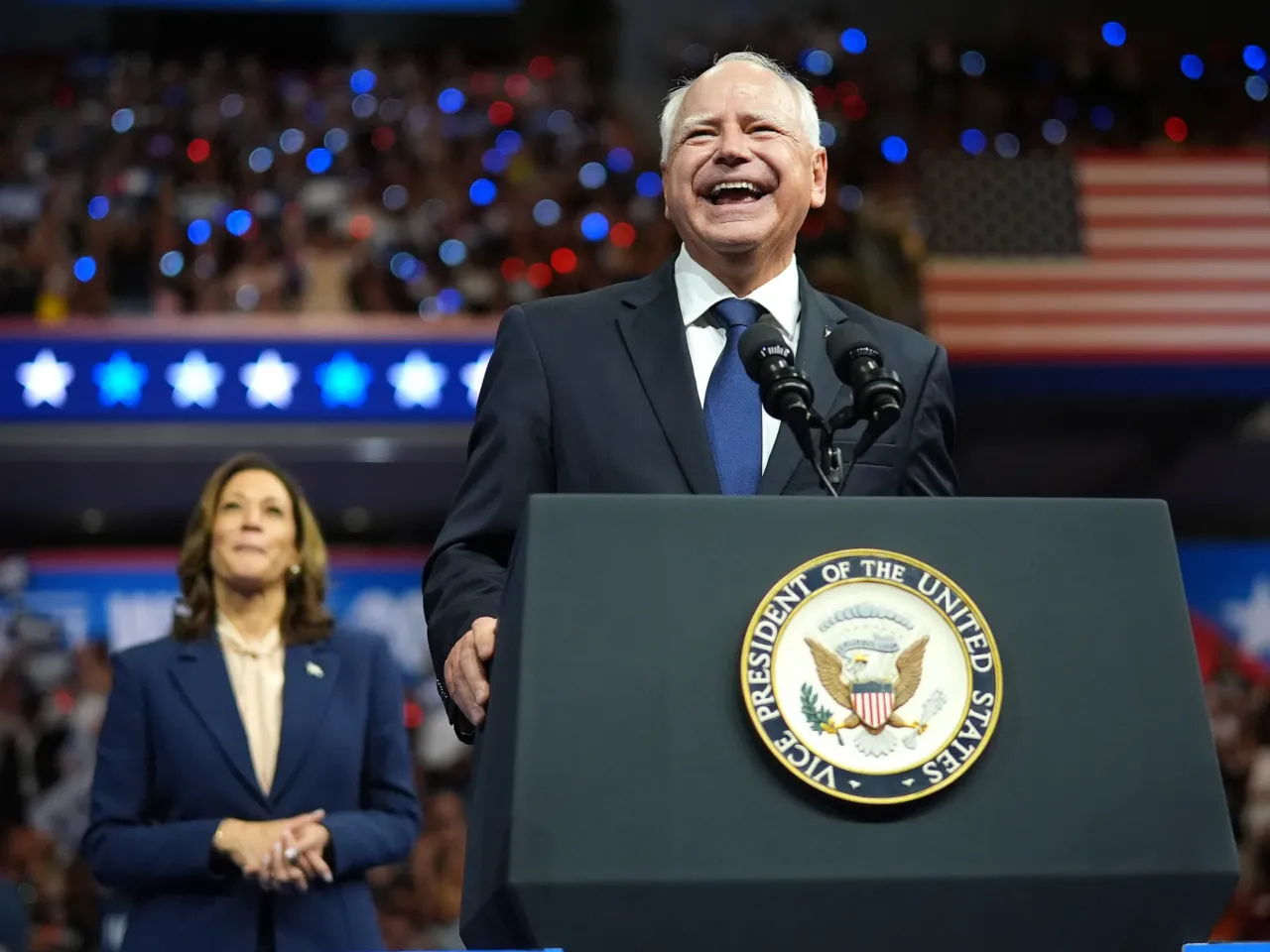
He also highlights the significance of Harris choosing Governor Tim Walz as her running mate to contrast Trump’s style of masculinity. “It’ll be interesting to see if they follow this up with any policies. But a high school coach, a high school teacher—there’s a way in which Tim Walz is embodying a more service-oriented form of masculinity.”
Reeves points to memes about Walz that praise his masculine traits.
“There’s all these memes now he’ll fix your car. He’ll make sure you get home safely. Like he’ll put his arm around you. Be a coach.”
When asked what actions and beliefs define masculinity, Reeves was initially reluctant before sharing his perspective.
“There are very many different ways of being masculine. But I would say that the longest and best established definition of masculinity that I found as I’ve done this work is really of being of service to others, of being of for more than yourself.”
Reeves explains that historically, what has distinguished a man from a boy is the ability to “generate more of something than you need for your own survival.” It conjures up the idea of the “breadwinner” of a family, though Reeves says it doesn’t necessarily mean that.
“I think the idea of a man who exists only for himself, that’s actually the opposite of masculinity. And so there’s a certain selflessness to all of the definitions of masculinity that I think is positive, that I think should define what modern manhood is.”
For him, one of the biggest challenges facing the progressive left on the issue of masculinity is “the reluctance either to admit that there is a difference between masculinity and femininity or to be willing to accept that there are some aspects of masculinity.”
Policy solutions are needed on both the left and the right
Recent polling from the Pew Research Center shows that more men tend to vote Republican. But even among the younger demographic of Gen Z, women are heavily Democratic, while men are more likely to lean Republican.
“It really is more driven by the movement of young women to the left than of young men to the right, although it is now both,” Reeves says, “But what’s interesting about this is that if you look at the attitudes of young men, of Gen Z men towards gender equality, for example, there is no evidence that they are in any way less supportive of gender equality than previous generations. If anything, they’re more supportive.”
He goes on to say, “I think it’s a real mistake on the part of people on the left to see the move of young men towards the right and see that as a turning towards the right when it could just as easily be a turning away from the left, because they don’t see themselves in the rhetoric and aesthetic and politics of the left.”
Reeves says that many young men feel “quite homeless politically,” and that sense of not belonging makes them open to the right if they feel that they are being heard.
“The problem is that on the right there are absolutely no policy solutions to help young men.”
Editor’s Note: The Bill and Melinda Gates Foundation is among NPR’s financial supporters.
Copyright 2024 NPR