On a recent Tuesday morning, a team from NPR’s All Things Considered and member station WUWM embarked on a journey along one of Milwaukee’s most diverse streets: North Avenue.
This 15-mile road runs east to west, starting near Lake Michigan and stretching all the way into the suburbs. It cuts through every type of neighborhood: urban, suburban, rich, poor, racially segregated and racially diverse.
There’s a reason we chose this spot. Wisconsin is a state of 6 million people where the presidential vote has regularly been decided by a margin of 20,000 voters. That’s less than 1%.
And it’s not just one demographic group or bloc that can make the difference in 2024 — it’s all of them. So we spoke with voters of many political persuasions about what’s important to them this election season.
Because as people here like to say: As goes North Avenue, so goes Wisconsin.
Stop 1: Bradford Beach
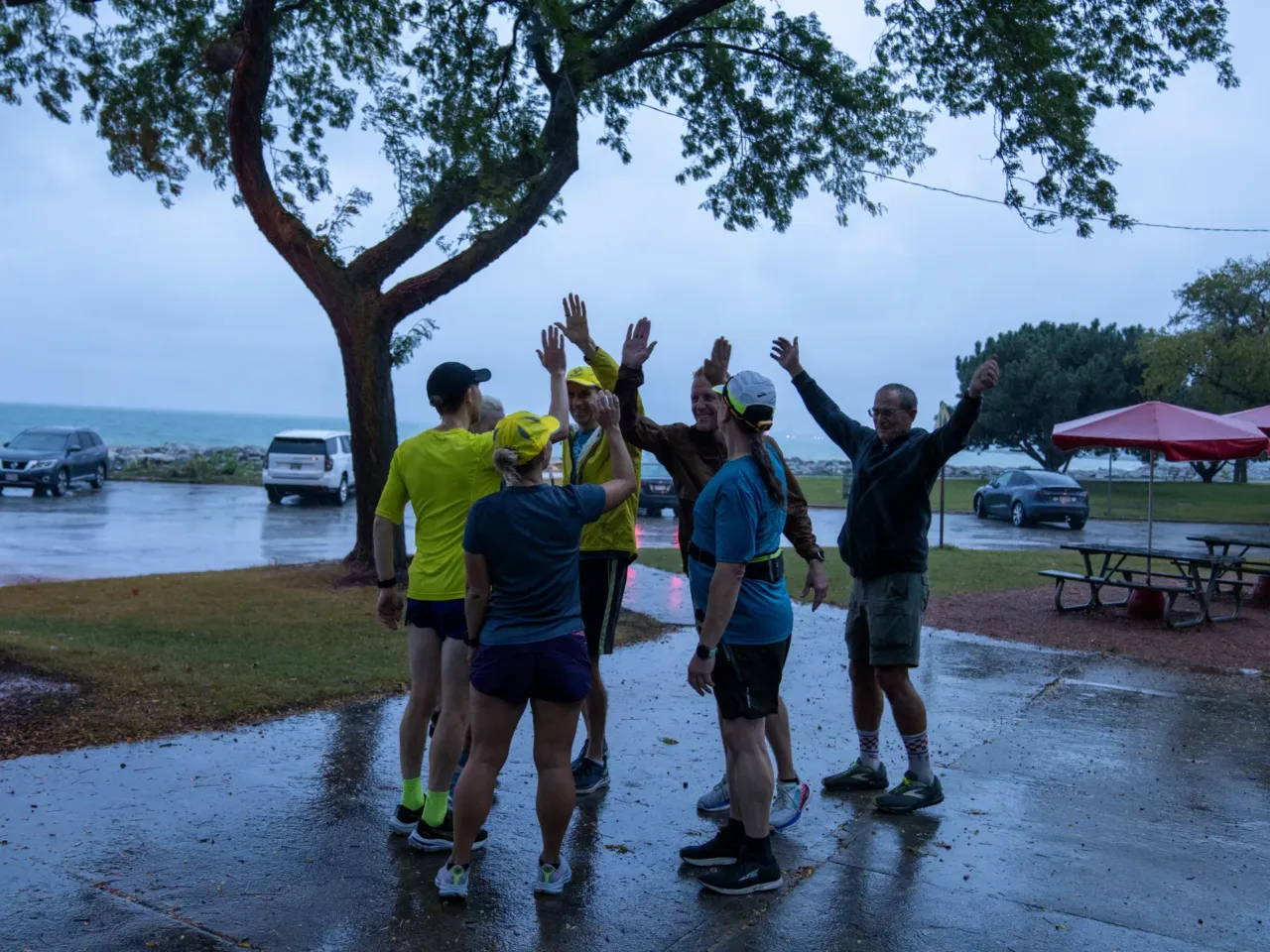
We began our journey of North Avenue on the banks of Lake Michigan, where a handful of runners were braving the rain and assembly before the sun had even risen.
The group doesn’t normally talk about politics. But on this day, Hans Goldenberg, 34, was happy to share his thoughts.
“I may or may not vote. I don’t like either candidate to be completely honest,” he said.
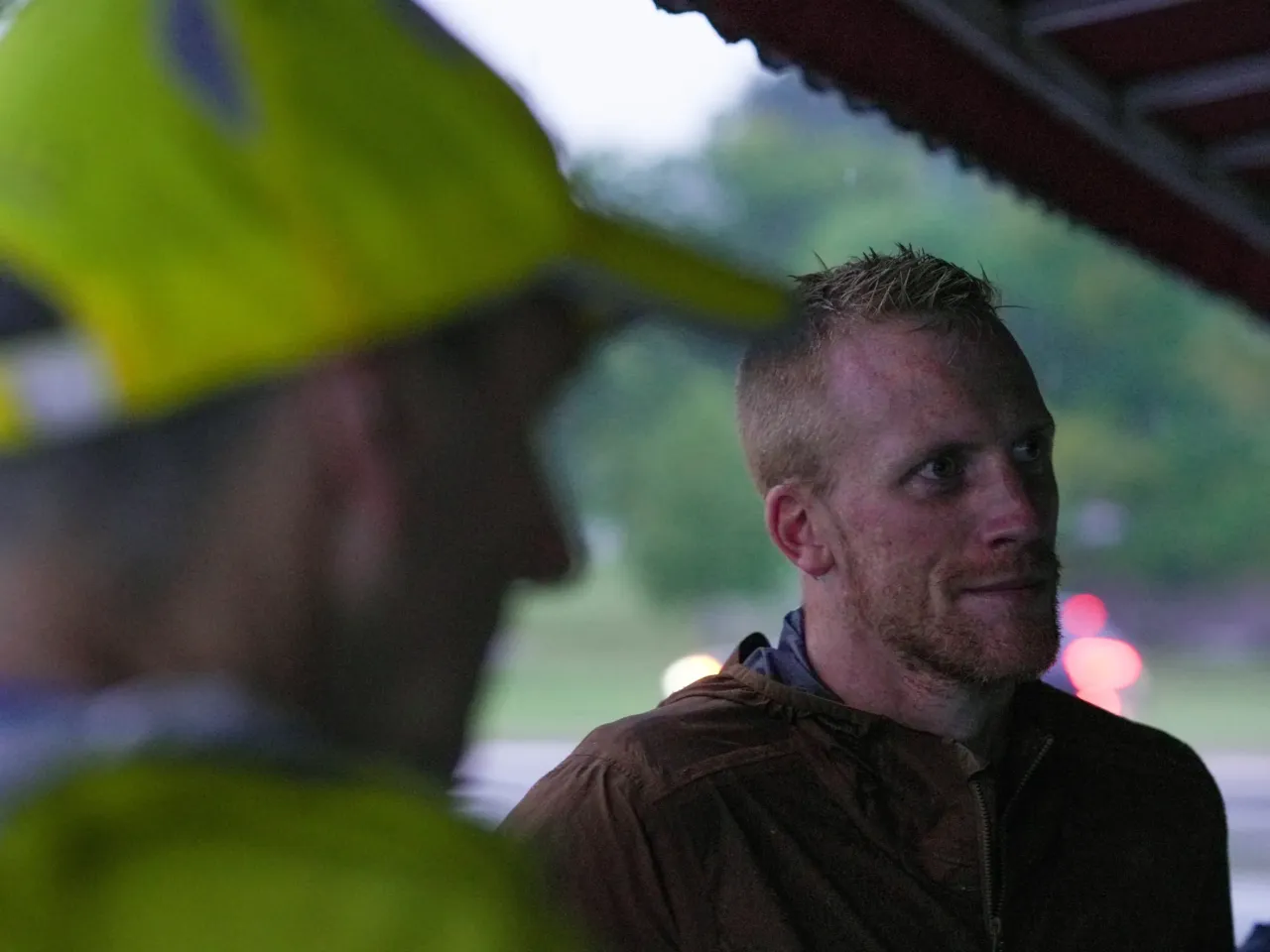
Goldenberg thinks Republicans would do a better job addressing what he feels are high taxes and crime, but he’s also socially liberal and wrestles with that.
“I’ve gone both ways in the past … I feel like sometimes my vote doesn’t matter,” he said.
Jackie Breen, 32, jumps in. Breen said she’s a committed Harris voter, but she gets why Goldenberg is frustrated.
“I have felt for many, many elections for a very long time, like, who am I voting for? I don’t want either,” she said. “Where’s someone who is actually closer to my age, who understands that my generation is going to have debt for the rest of their lives?”
Stop 2: Beans and Barley
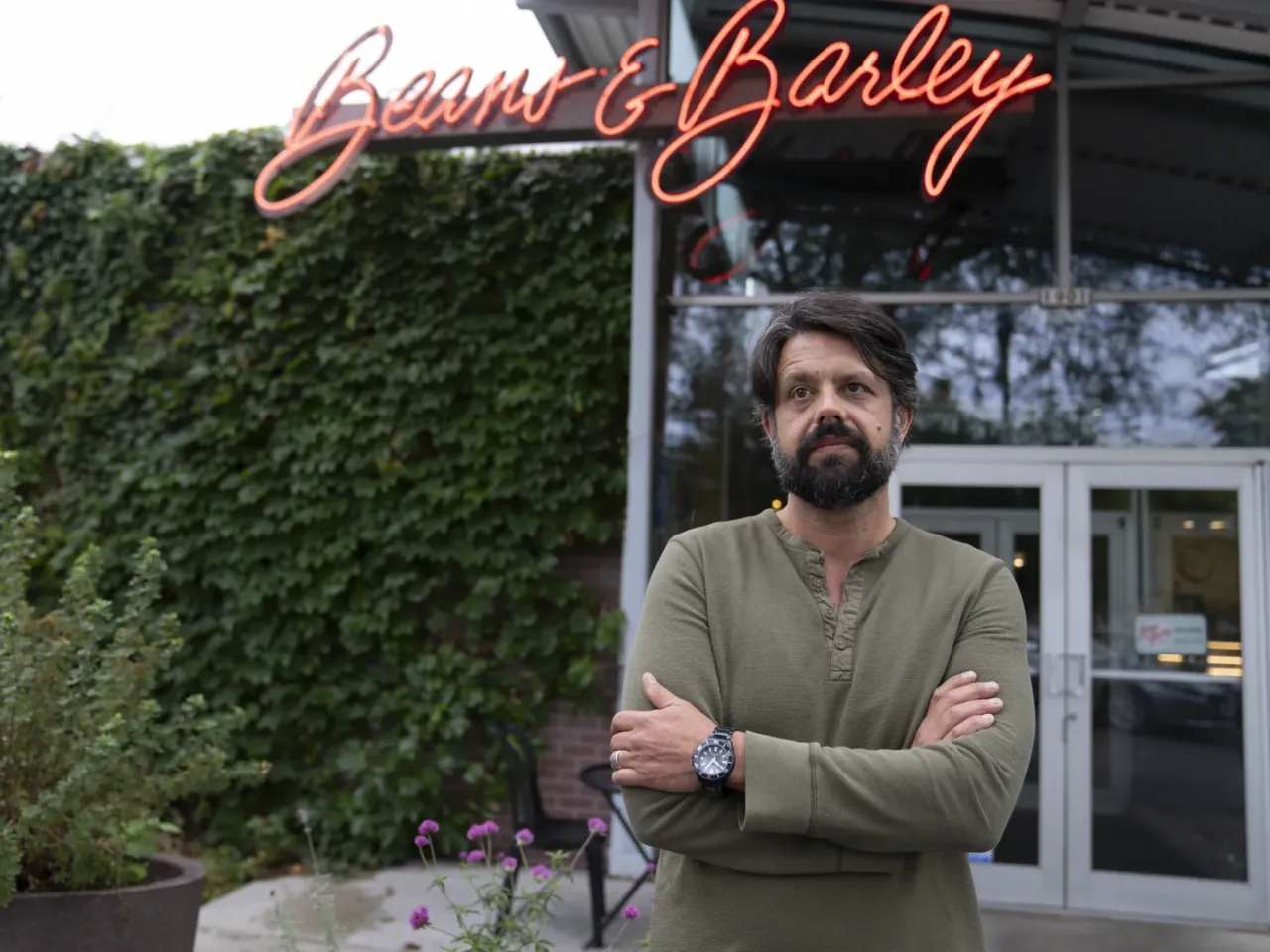
Our next stop along North Avenue is Beans & Barley — a deli, gift shop and restaurant rolled into one.
Jim Neumeyer, 44, began working here as a dishwasher when he was a teen and now he owns the place, which he described as “kind of like a hippie Cracker Barrel.”
Neumeyer is a staunch Democrat and has a Harris sign in his office, but there are no other political signs easily visible to customers. He wants everyone to feel welcome.
As a small business owner, one of the biggest challenges Neumeyer faces is the price of ingredients. He said some of his costs have gone up 20%.
“We’re not like a super duper fancy restaurant. We’re like an everyday restaurant. And in order to be a place that people in the community can gather daily, we have to keep it really reasonable,” he said.
So when it comes to politics, Neumeyer wants someone who is interested in small businesses.
“Not necessarily tax breaks for only the largest of businesses,” Neumeyer said. “We also need to see some relief from the prices and hopefully see some of them be able to come down.”
Behind the scenes in the bakery, Rayna Hartmann, 20, is making a vegan almond apricot cake. She’s a student at the University of Wisconsin-Milwaukee, where she joined protests against the war in Gaza.
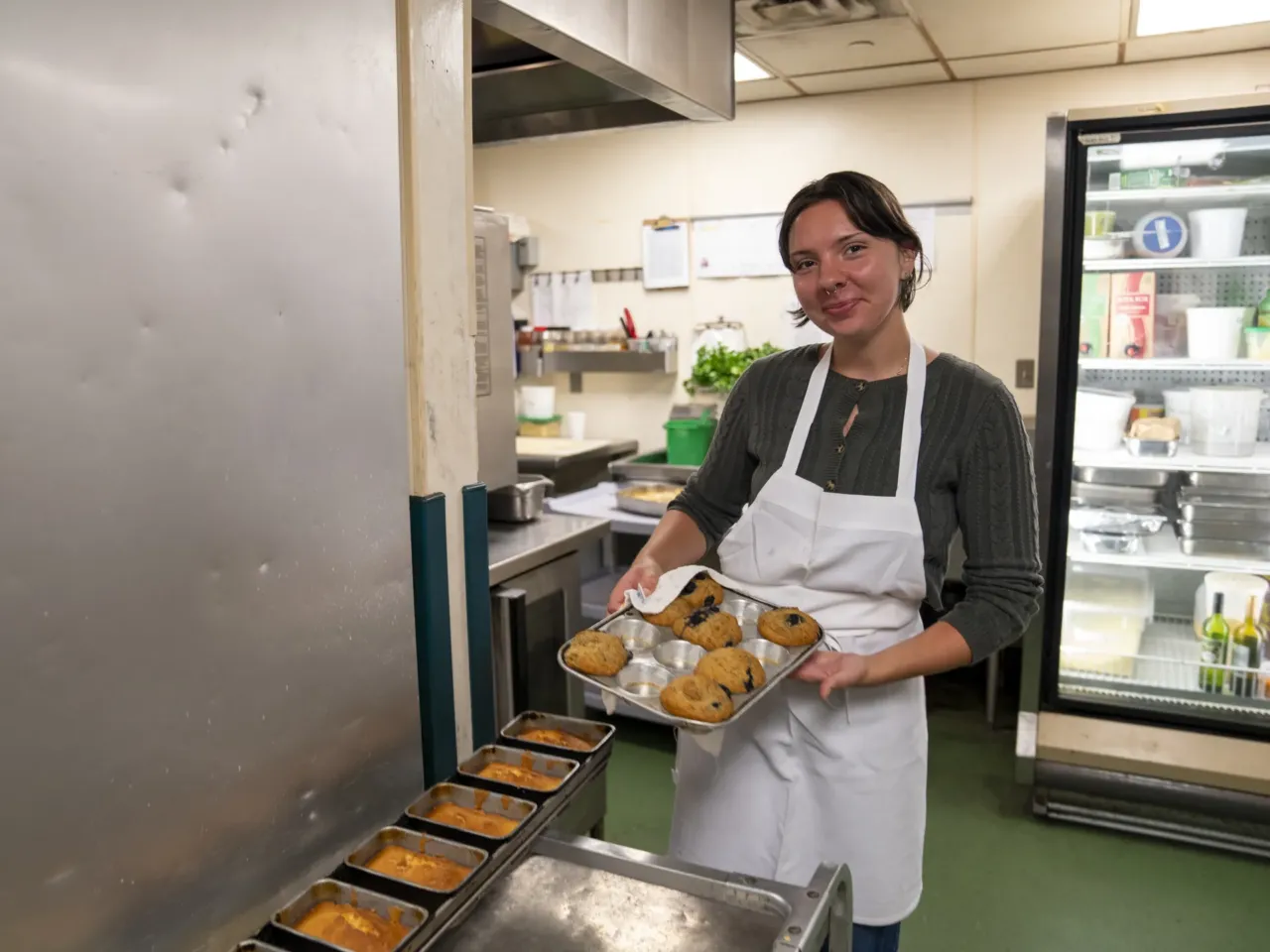
“A lot of the way our money is allocated feels very surreal sometimes, especially being a student,” she said. “Seeing more money going to the military than it does education and schools.”
This is the first time she’s old enough to vote for president, but she has already wielded her power. In the Democratic primary this year, she was one of almost 50,000 people in Wisconsin to vote “uninstructed,” the state’s version of an “uncommitted” vote protesting the war in Gaza.
“Obviously I don’t want to vote for Trump,” she said. “And it’s kind of tough, the next best choice being Kamala. It’s like, OK yes she’d be our first Black woman president, [but] it’s hard to improve a system that is inherently just broken.”
She still doesn’t know whether she’ll vote and for whom, and added that a lot of her college classmates feel the same.
Stop 3: The Milwaukee Times
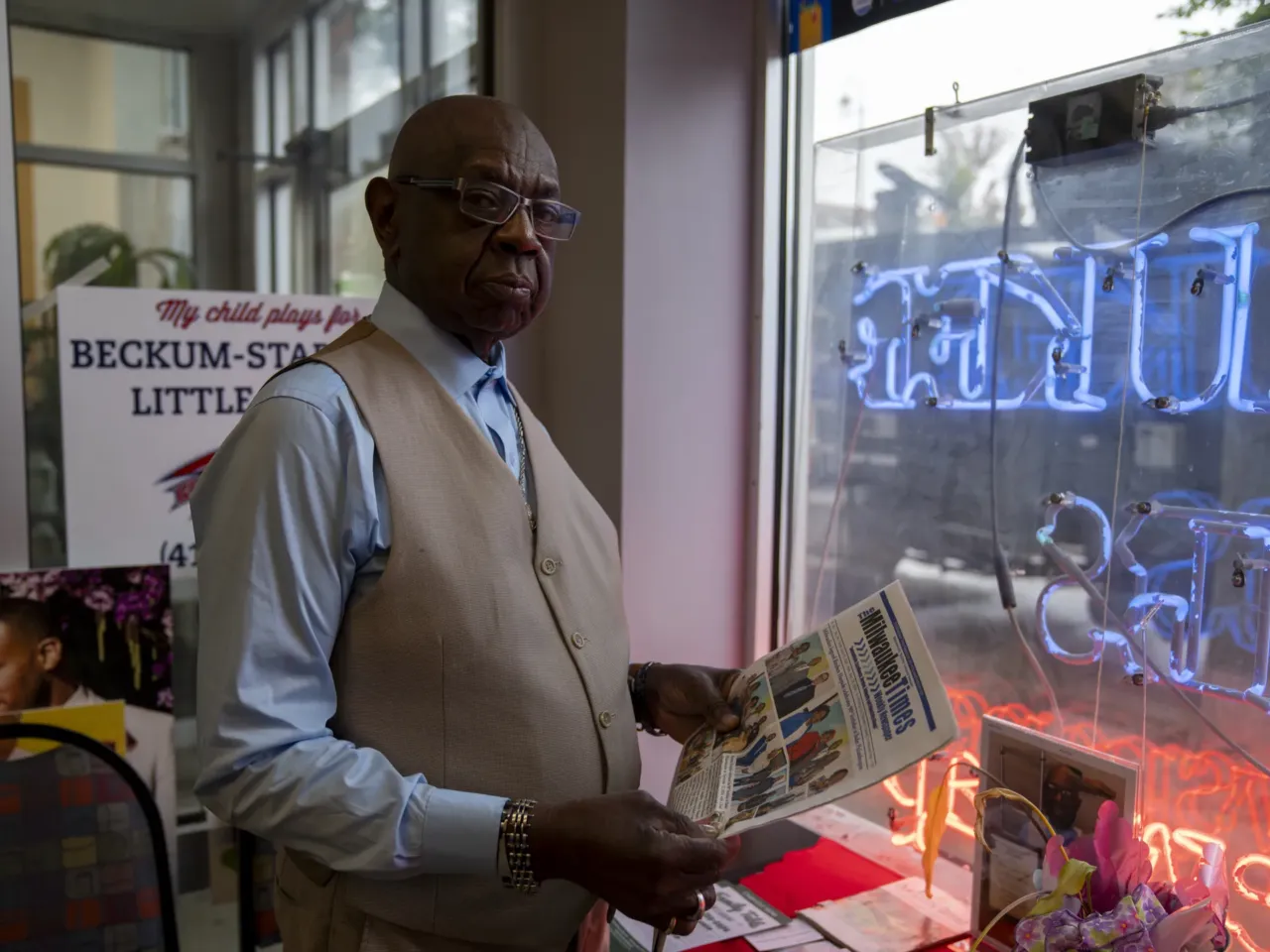
Harold Turner, 82, is a pastor and owner of the Milwaukee Times, a weekly newspaper published in the historically Black neighborhood of Bronzeville.
Turner said he will vote for Harris in November.
“I do believe that Kamala … is going to be the next commander in chief,” he said.
On the corner of this block, Turner has a neighbor that stands out: the Wisconsin GOP field office. The windows are plastered with political signs and posters for Trump. When our team stopped by, the lights were on but the door was locked.
Stop 4: Bill the Butcher
A couple of miles further west along North Avenue, we arrive in Metcalf Park, where Bill the Butcher is an institution.
Owner Latoya James, 45, says the corner store and butcher shop has been around for more than 50 years. She took over three years ago and remembers shopping here with her family when she was a kid.
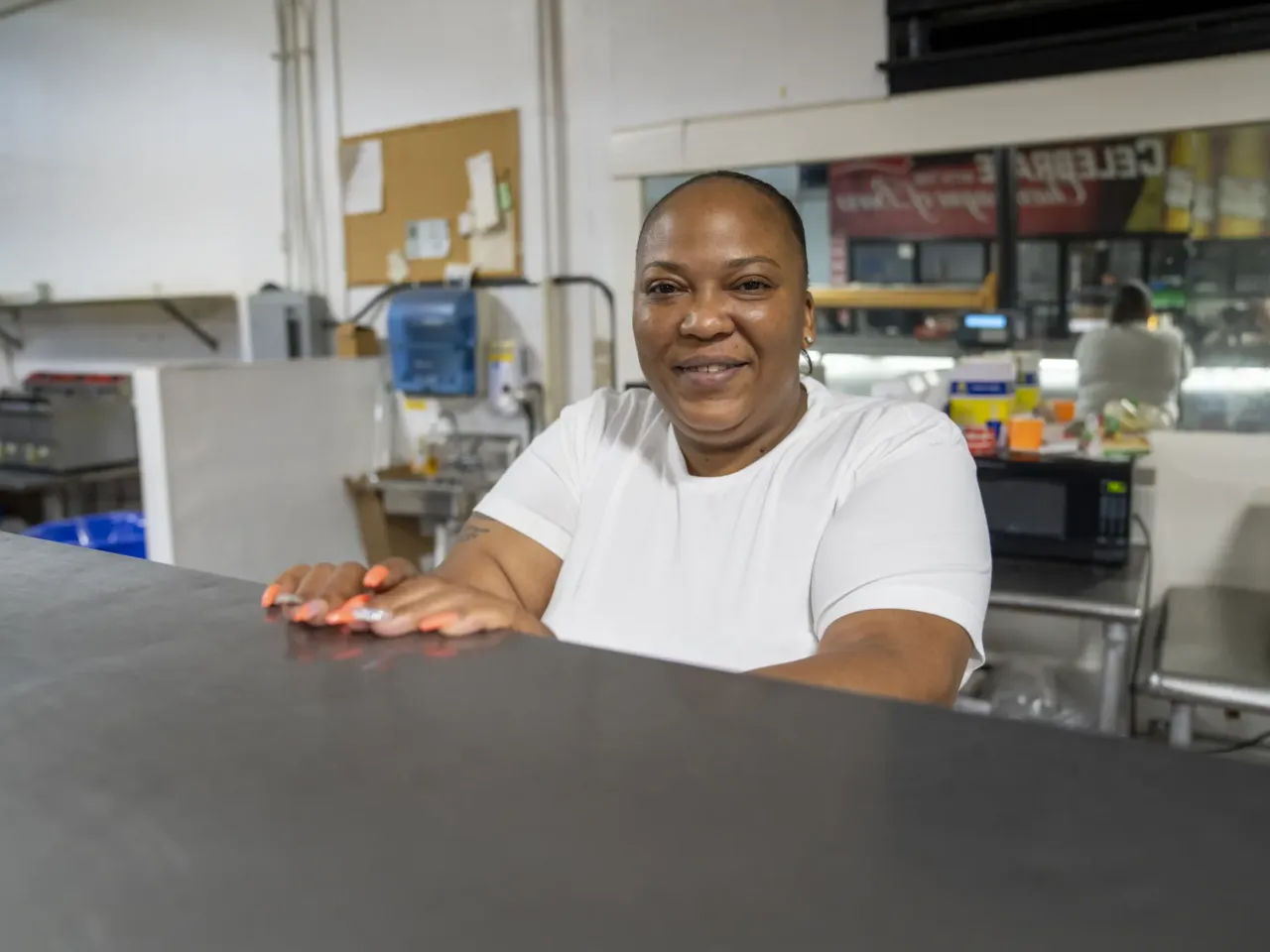
When thinking about the election, James is torn. She voted for Hillary Clinton and then Joe Biden in the last two elections, but this time, she might be leaning towards Trump.
“[Trump] makes good points,” she said. But then, so does Kamala, she added. “Trump is kind of firm. He says what he means.”
Bill the Butcher is not a place people talk about politics, James said. Customer Lekeisha Ashford agreed. She can’t wait for the campaign to be over.
Ashford’s top issues are the price of rent and food. She’ll be voting for Harris.
Stop 5: Little Village Play Cafe
Nestled on a busy block in the suburb of Wauwatosa we found The Little Village Play Cafe, a coffee shop and indoor play space.
Among the parents in this cafe were Leah Bomber, a labor and delivery nurse, and her husband Chris.
Leah Bomber said this election was really important for them because they had their 14-month-old son Jude via IVF.
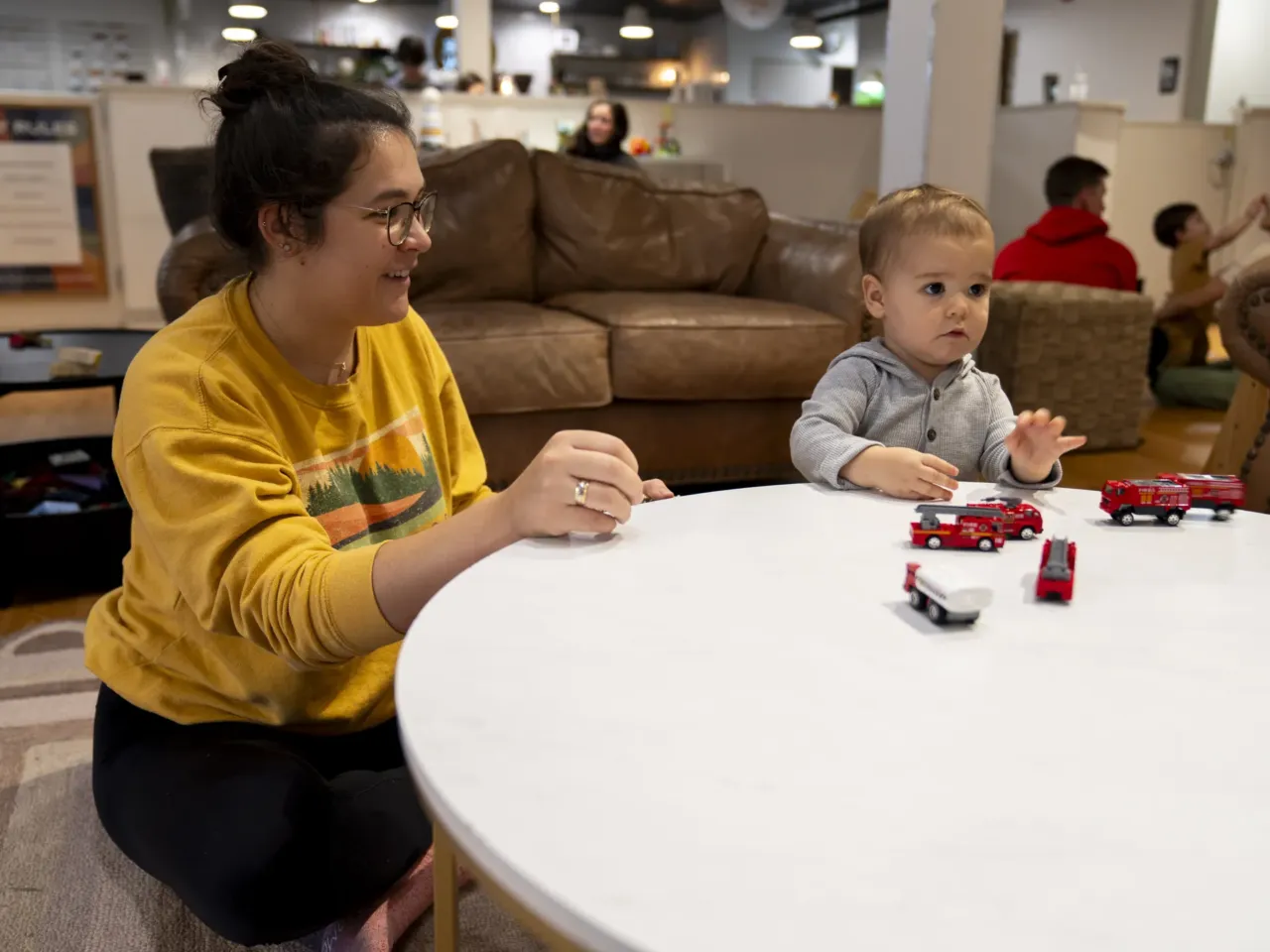
“It really affects every aspect of my life right now,” she said.
“I hate that so much of our life is in the balance as well,” Chris Bomber added. “We have eggs in the freezer. … If Trump gets elected, there’s a very good chance that legislation goes into effect that makes our situation illegal.”
Another parent, Duane Tomka, voted for Trump in 2016 and sat the election out in 2020.
This time, he’s leaning Republican but can’t commit just yet.
“[Trump is] abrasive, which I think that shoots him in the foot a lot of times,” Tomka said. “Honestly, I think lots of people like me don’t want to say what they feel, that they may vote for Trump.”
While the big city [and its neighboring city, Wauwatosa] is heavily Democratic, as North Avenue continues out into the suburbs west of Milwaukee, Trump lawn signs start to appear and the voting patterns shift from blue to red.
Stop 6: Ruby Commons
The last stop on our trip is in suburban Brookfield, located in Waukesha County — a base for Republican support, which went for Trump in 2016 and 2020.
Brookfield now is a battleground city within a battleground county within a battleground state.
At the Ruby Commons retirement community, happy hour starts at 2 p.m. so the residents can start dinner at 4 p.m. At a game of bingo, Joanne Carstens, 94, said she avoids talking politics with other residents, but she thinks about it a lot.
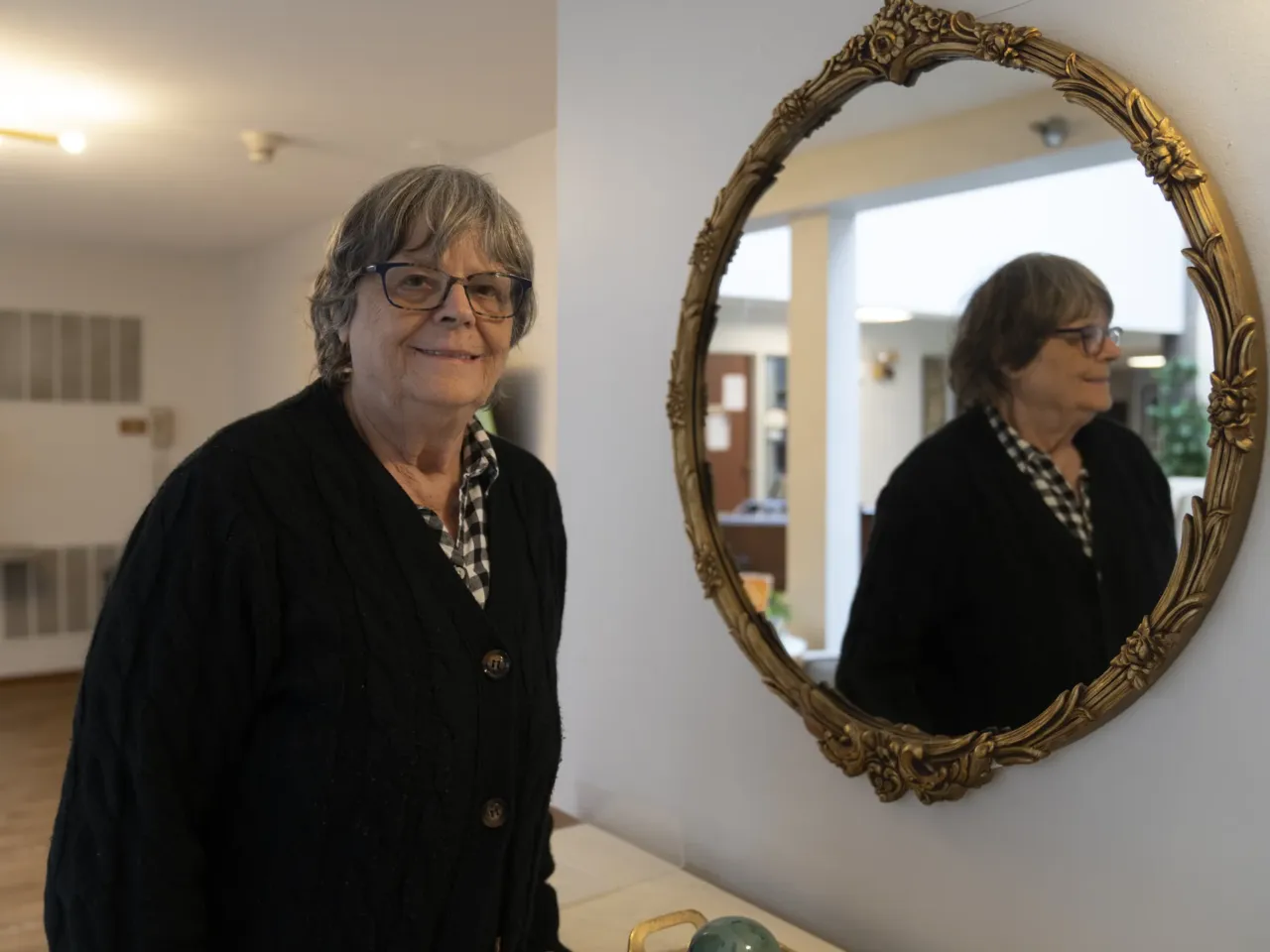
“I’m very concerned about the election,” she said, adding that “open borders” and “lack of police support” are among the main reasons.
“I’m worried that Trump will not win,” Carstens said.
Phyllis Glandt, 81, another resident and bingo player, feels the opposite.
“How can a convicted felon run for office? I don’t understand that one,” she said.
Glandt was once a Republican, but switched to supporting Democrats more than 60 years ago over the issue of abortion rights.
“That disturbed me so much because these young kids that might end up pregnant could have to carry a baby to term. I just think that’s awful, if they don’t want to,” she said.
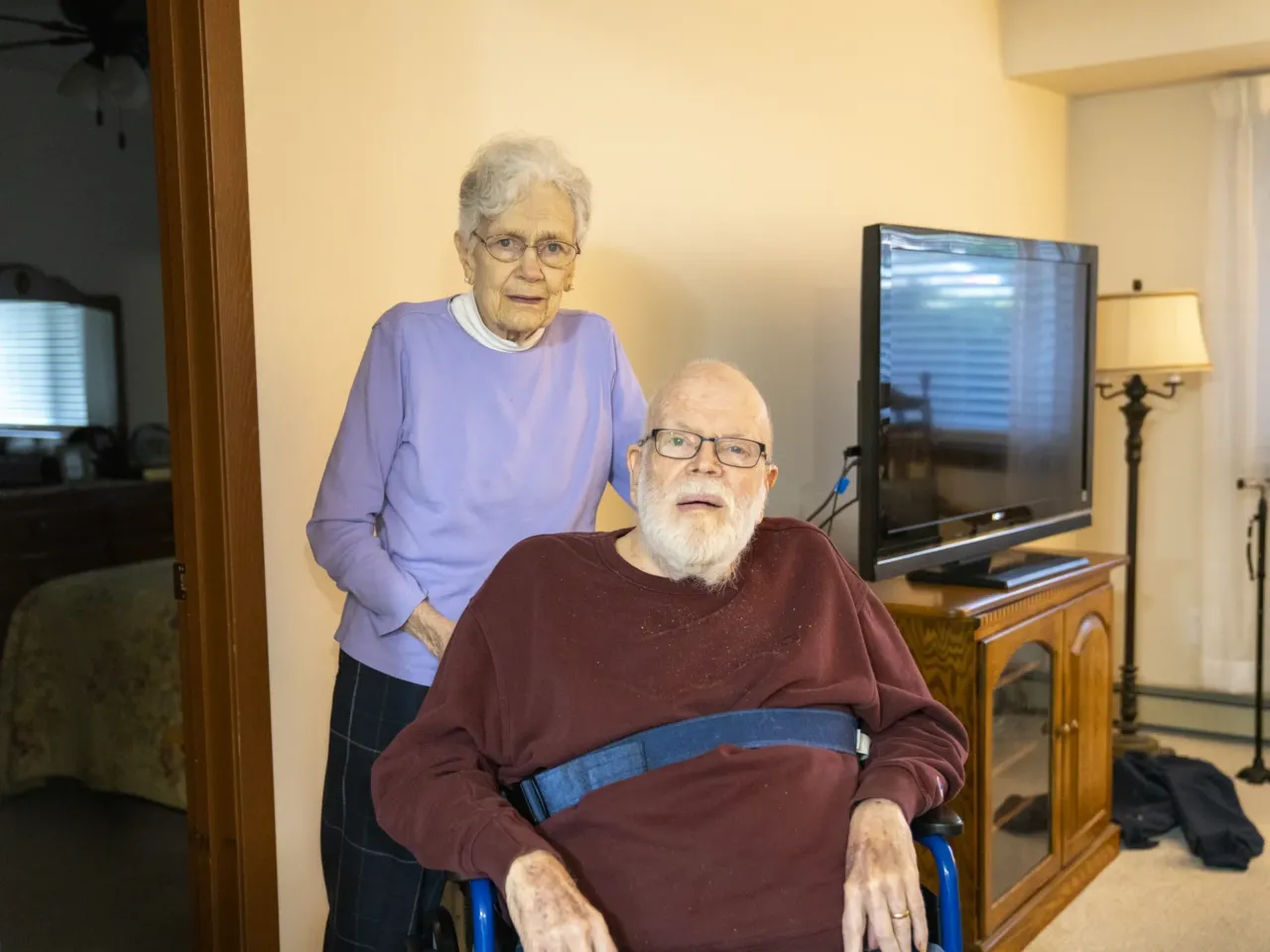
In one of the Ruby Commons apartments, we found Louise Fogelstrom watching Fox News with David, her husband of 63 years. The couple, in their 80s, are not fans of Harris.
“Well, she lies,” Louise Fogelstrom said. “If she came into this house I’d say get your butt out, I don’t wanna see you.”
David Fogelstrom said he is a Trump supporter because they both came from similar industries.
“He was a developer and so forth and I was in the building products industry,” he said. “I think he’s just a regular guy … what you see is what you get.”
Our final interview on this trip was with Josseline Clark, 30, a lifestyle enrichment coordinator at Ruby Commons, who said that her views were her own and she wasn’t speaking on behalf of her employer.
Clark is celebrating a big moment.
“I am very enthusiastic because this year is the year I became an American citizen,” she said.
Her family is from Honduras and she moved to the United States eight years ago.
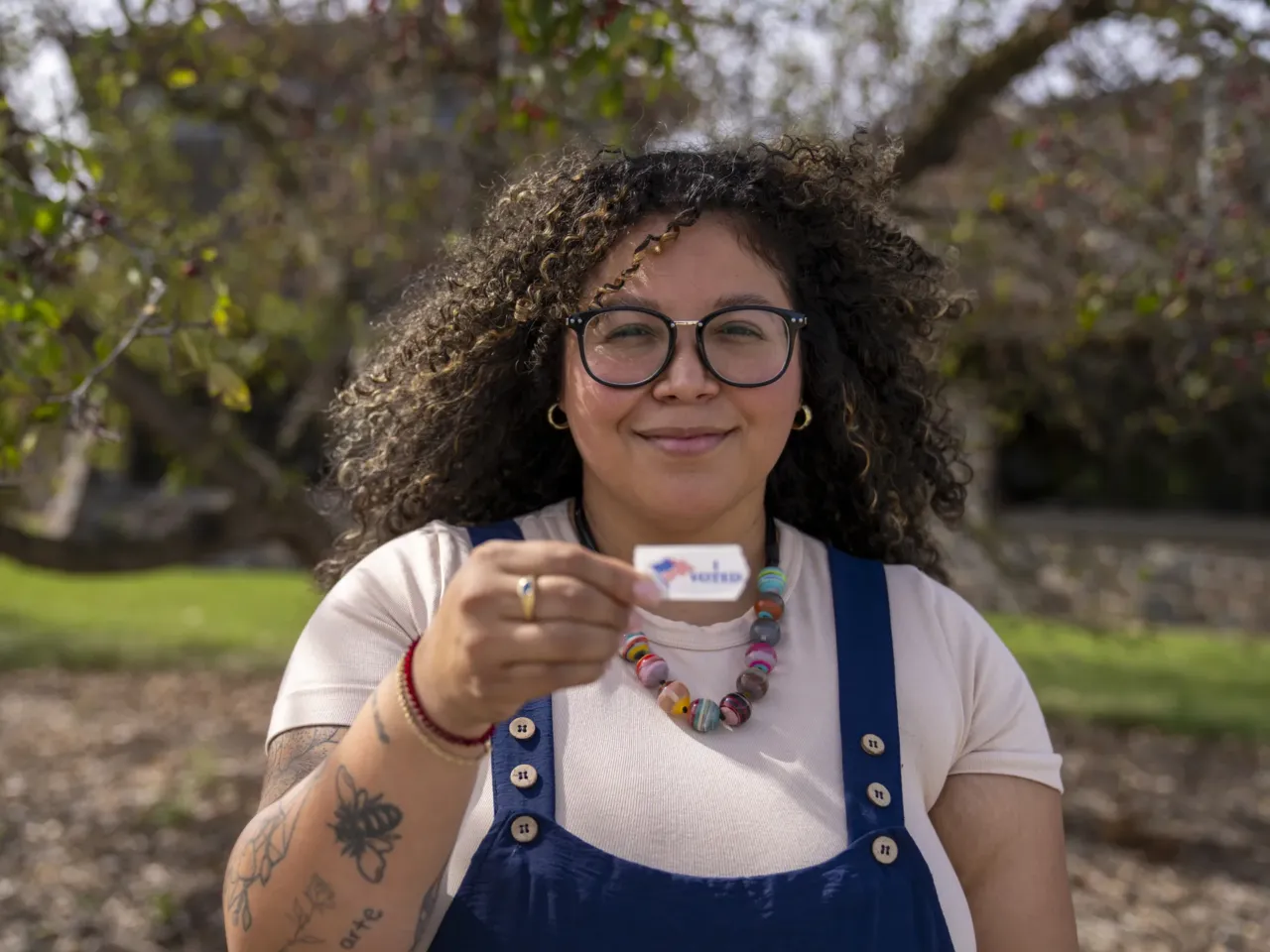
“For me, being able to live in this time where I can vote for the first time and vote for the first female president is super exciting,” she said, adding that her views were her own and she wasn’t speaking on behalf of her employer. “And it just means a lot because there’s a lot of my family that have been here and they have never been able to vote.”
Clark recently voted in her state’s primary. She saved the “I Voted” sticker and placed it in the same box containing her citizenship papers.
“It just felt great,” she said. “Because now you feel like you have a voice and you belong somewhere.”
Ashley Brown and Padma Rama contributed to this report.
Copyright 2024 NPR