
With Republicans taking control of the White House and both chambers of Congress in January, Democrats are undergoing some introspection.
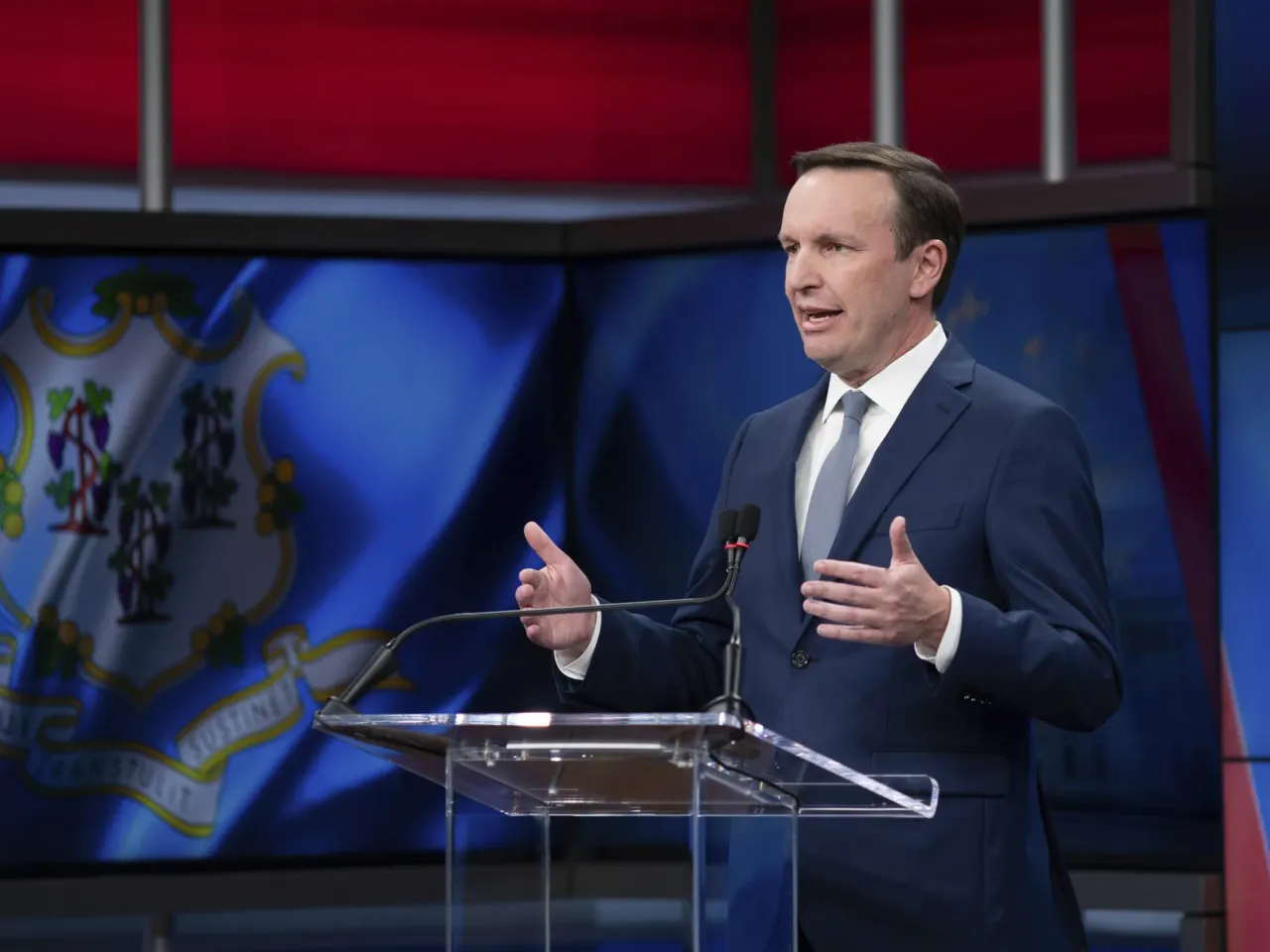
Senator Chris Murphy, D-Conn., says his party misread blue collar voters who chose to support President-elect Donald Trump in particular.
“We claim to be the party that represents working people, poor people,” he told NPR’s Morning Edition. “And yet, as you saw in this election, they are moving to the Republicans in droves. I think that is in part because we aren’t listening to what is really driving people’s emotional center right now.”
He shared his thoughts with NPR’s Steve Inskeep.
This interview has been edited for length and clarity.
Steve Inskeep: What do you think is wrong with your party?
Sen. Chris Murphy: Right now, people are feeling out of control of their lives. In particular, poor people are feeling like they have no agency over their lives. And so, you know, we look at Republicans’ focus on immigration and the border and we say, well, you know, they’re playing to people’s xenophobic, racist instincts. Now, that’s true to an extent, but it’s really about control. President Trump was saying, ‘I’m going to put us back in control of our borders. I am not going to subject you to these extraterritorial forces.’ So I just think we have to do a better job of listening to the folks that we claim to represent.
Inskeep: I think you’re telling me that regardless of what someone’s view of immigration is, it is a real political problem that any political party has to address in a realistic way. Is that it?
Murphy: Yeah, I think during the first four years of Donald Trump, we were a resistance party. And we didn’t actually articulate a view of how we would control the border, how we would speak to a very legitimate issue that people have this question of how you become an American citizen, how you become a member of this multicultural club. I also think that people are in a mood to fight. You know, people know that power has become concentrated in a handful of elites, and they want a real explanation of how that power gets moved to them.
Inskeep: If people are concerned about the concentration of power, why do you think you lost to a billionaire hanging out with the world’s richest man?
Murphy: These people want to blow up the status quo, and everything that Trump does telegraphs that he is willing to defy conventional wisdom. We should be proud of the child tax credit and bulk negotiation of prescription drug prices. But to most people, those are small ball solutions. You know, we scoffed at the fact that Trump was talking about this sort of massive set of tariffs on Chinese goods. It was and is bad policy. It will raise prices for a lot of Americans, but it is a way to fundamentally blow up the global economy.
Inskeep: Is there a case to be made, Senator, that as appealing as it might be, blowing everything up—a revolution, so to speak—is a very risky idea when we do, in fact, live in the richest and most powerful nation in the history of the world, where not only the very wealthy but even the average person is doing way better than most people in the world?
Murphy: Well, that’s true by our traditional measurements of policy success, which is income, employment, and GDP. But if you look at the statistic that matters most—self-reported rates of happiness—we are doing much worse than many other countries with much lower rates of income. And people are much more unhappy today than they were 20 years ago. People are feeling much more isolated, much more devoid of purpose and meaning, and much angrier than they were 20 years ago. And it should be alarming to us that we have structurally low unemployment, GDP growing at a pretty good clip, crime coming down, and people reporting being more unhappy than at any other time in the last 50 years.
Inskeep: Well, you’ll be part of the new Senate led by Republicans. Would you anticipate sometimes voting for Trump’s priorities, given what you’ve said?
Murphy: I think that there is an interesting conversation happening inside the Republican Party that, at times, J.D. Vance was a part of—that does see government playing a bigger role in people’s lives. I actually do support some brand of economic nationalism in which we recapture industries to the United States. Yes, of course, I’m going to be open to efforts to fundamentally reform the American economy. I guess I just worry that it’s all show and that, when Trump governs, he doesn’t actually end up doing anything to rebuild the American middle class or the American industrial base. He ends up just giving a big round of tax breaks to his Mar-a-Lago friends.
Inskeep: We’ve gotten pretty far in this discussion without talking about politically correct speech, wokeism pronouns, trans issues, any number of other social issues, gender issues in society. Do you think that those things were less important than maybe some commentary would suggest?
Murphy: I think there has been a broad intolerance in our party toward people who don’t line up with us on 100% of social and cultural issues and other hot-button topics like climate and guns. My argument to the party is that we should build a bigger tent. I think populist economics should be the tent pole. I think if you want in, you should believe that government should be on a mission to break up corporate power and dramatically raise the average income of working families in this country. But if you don’t agree with us on abortion, or you don’t agree with us on guns, or you don’t agree with us on climate, we still want you in the tent. We want you to be part of that conversation as long as you’re aligned with us on trying to make the economy fair.
I don’t think that’s the message we have sent over the last 10 years. We’ve become very used to having 12 or 13 litmus tests, but I think that’s ultimately a losing gamble for us.
This interview was edited for digital by Majd Al-Waheidi.
Copyright 2025 NPR