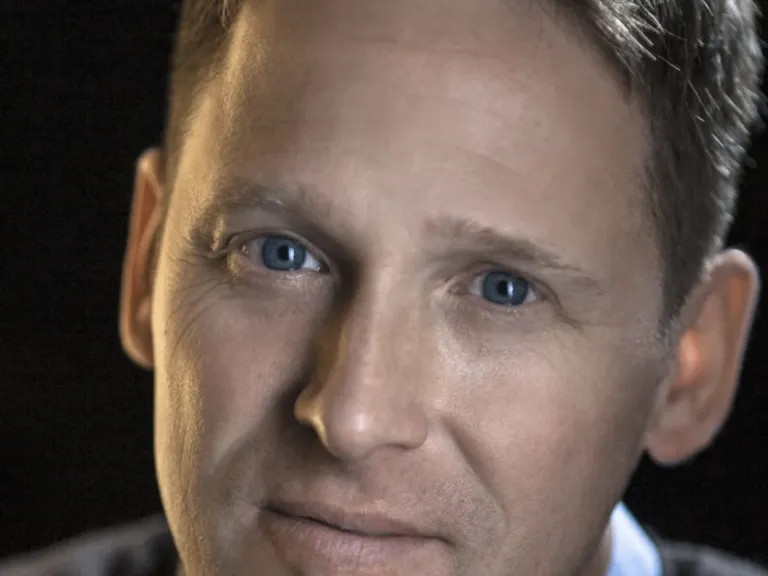
ROB SCHMITZ, HOST:
For many, Thanksgiving is a time for a big meal with loved ones. But family gatherings can also be tough, especially if the conversation turns to subjects where not everyone shares the same set of facts. NPR’s Audrey Nguyen is here with some tips from Life Kit about how to navigate table talk that turns touchy. Hey, Audrey.
AUDREY NGUYEN, BYLINE: Hey, Rob.
SCHMITZ: So, Audrey, I’m sure we can all think of scenarios when we feel like we want to correct something we’re hearing at the table, maybe something we disagree with.
NGUYEN: Yeah – say, your cousin thinks the government is controlling the weather with chemtrails, for example.
SCHMITZ: That’s an interesting example. So in that scenario, I think I would just bite my lip. Or what’s appropriate? Do we engage?
NGUYEN: Well, choosing not to engage is a perfectly valid response. If engaging is going to put you in a situation where you feel uncomfortable or unsafe, opting out is a great choice.
SCHMITZ: OK.
NGUYEN: That can look like just exiting a conversation. You know, say you want to go grab more food or excuse yourself to go use the bathroom. If you want to be more direct, you can just say something like I don’t want to talk about that.
SCHMITZ: (Laughter).
NGUYEN: But, Rob, you really don’t need to engage in the conversation if it feels too personal or existential. But if the thing that stops you in your tracks is a false piece of information, it could be worth engaging in if you’ve got the time and energy. Research shows people trust information more when it comes from sources or cultural contexts they already know.
SCHMITZ: OK. So, Audrey, I’m going to stick with this example that my cousin thinks the government is controlling the weather with chemtrails up in the sky. So if I decide to engage with my cousin on this, where do I start?
NGUYEN: So the experts I spoke to said to set aside the idea of intervention to start. You want to begin from a place of connection, not correction. I talked to Rachel Kuo, the research facilitator of the Asian American Disinformation Table. She recommends taking time to understand why your loved one believes the misleading statement.
RACHEL KUO: So often, people’s memories really shape the ways that they engaged in current ways the political systems and their media environments.
NGUYEN: It’s also good to remember that the goal of your conversation shouldn’t be about changing someone’s core beliefs. Instead, focus more on correcting the specific piece of false information.
SCHMITZ: That makes sense.
NGUYEN: Yeah. An expert I talked to actually avoids using the term misinformation altogether because they found people often had negative reactions to the term.
SCHMITZ: OK, Audrey, so let’s say that you’ve got your cousin’s attention. You’re engaged in a conversation about this example, but maybe you’re using very careful language. Now, how do you take the next step to address what you think is a misleading claim?
NGUYEN: So when you do attempt to correct misleading information, you might think keeping it short and sweet is the move. But actually, you should provide a detailed fact-check.
SCHMITZ: A detailed fact-check. I don’t know if I would do that naturally, but go on, please.
NGUYEN: Here’s Professor Briony Swire-Thompson, director of the Psychology of Misinformation Lab at Northeastern University.
BRIONY SWIRE-THOMPSON: So that’s one of the best methods that we know to correct misinformation, is by not just saying this piece of misinformation is false but providing what we call a factual alternative, so saying what is actually true.
NGUYEN: So providing a factual alternative to this idea that chemtrails are mind-controlling people, you can let your cousin know that chemtrails are actually a misnomer. What they really are, are condensation trails, or contrails, which form when water vapor condenses and freezes around small particles in aircraft exhaust. Some closing tips – if things are getting unproductive or you’re getting stonewalled, it’s all right to take a step back. And as all of the experts I spoke to said don’t expect things to change after one conversation.
SCHMITZ: That is helpful advice from NPR’s Audrey Nguyen. Audrey, thank you.
NGUYEN: Thanks for having me.
SCHMITZ: And for more holiday survival tips, check out NPR’s Life Kit podcast.
(SOUNDBITE OF HANZ’S “PULSE”) Transcript provided by NPR, Copyright NPR.
NPR transcripts are created on a rush deadline by an NPR contractor. This text may not be in its final form and may be updated or revised in the future. Accuracy and availability may vary. The authoritative record of NPR’s programming is the audio record.