Updated February 04, 2025 at 11:47 AM ET
The Republican majority in Congress is largely standing by as President Trump and his allies attempt to expand the power of the presidency. So how should Democrats respond?
The party is grappling with that question now, as Trump and his close adviser Elon Musk enact dramatic changes, and the administration continues to back controversial picks for key cabinet positions.
In the first weeks of his second term, Trump and his acting leadership at the Office of Management and Budget tried to freeze spending that Congress had already appropriated, prompting multiple lawsuits. Musk has also boasted on X – the social media platform he owns – that he has effectively shuttered the U.S. Agency for International Development.
Those are just some of the administration’s recent actions raising questions about the actual scope of presidential authority, as laid out in the Constitution. Trump has maintained that he’s acting in accordance with the law.
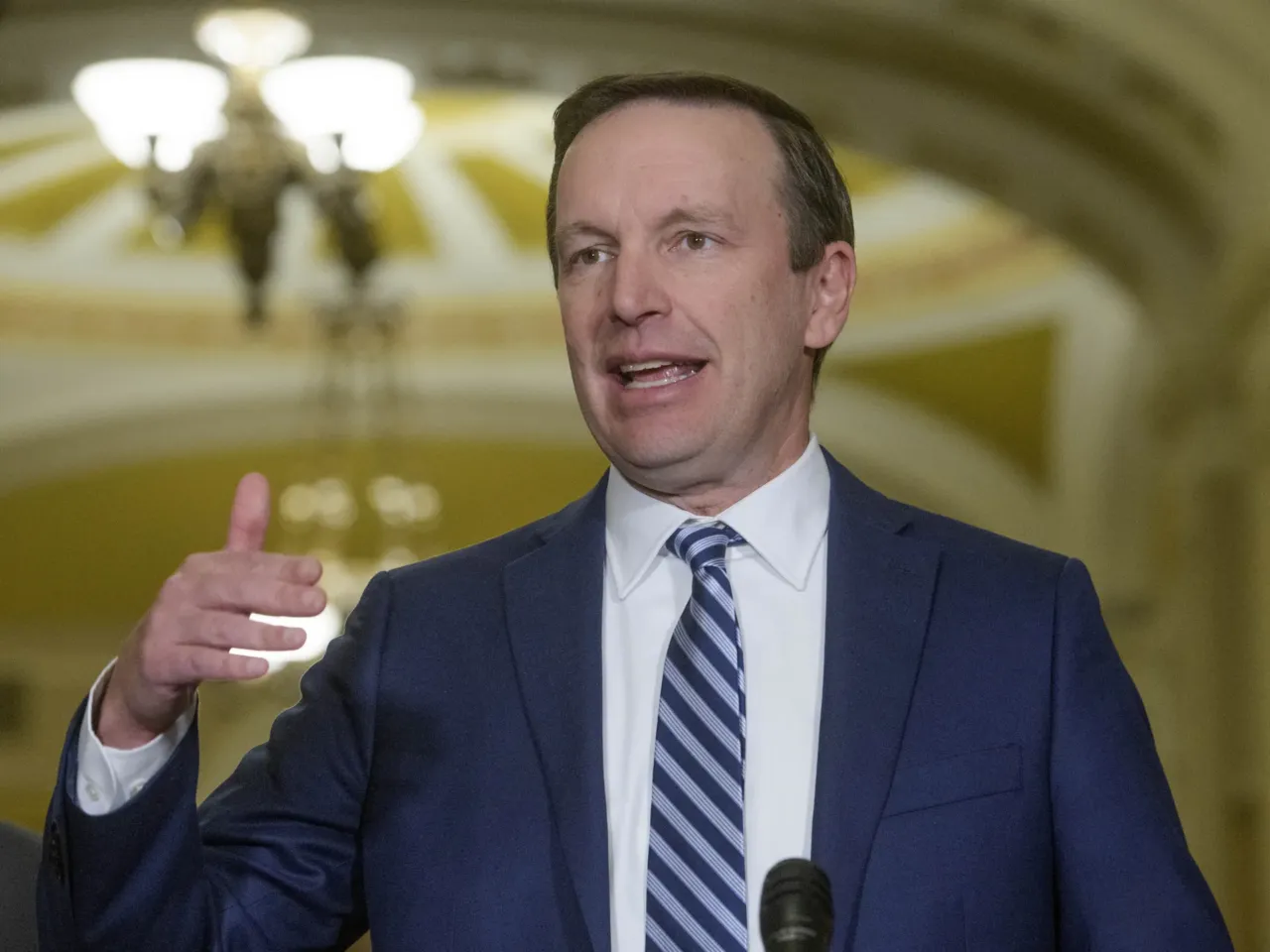
Sen. Chris Murphy, D-Conn., strongly disagrees. He told Morning Edition the president and his allies’ moves represent “illegal seizures of power” that have thrown the U.S. into a “constitutional crisis.” He said he’s unwilling to vote for any Trump nominees and warns that the public may not “rise up” if they see Democrats regularly collaborating with Republicans.
But he says his colleagues across the aisle shouldn’t sit on their hands, either.
“The focus has to be on Republicans right now and why they have been completely and utterly silenced,” Murphy said. “I do not want all of the pressure to be on Democrats to figure this out when Republicans should care just as much about democracy as Democrats do.”
Speaking with NPR’s Michel Martin, Sen. Murphy said the framers of the Constitution designed checks and balances to prevent crises like the one he believes the U.S. is experiencing now.
This interview has been edited for length and clarity.
Michel Martin: So let me go over some of the events of last week. OMB tried to freeze spending that had already been appropriated. The president made moves to close several agencies that were created by Congress. You call it a constitutional crisis. Could you explain in plain language why you say that?
Murphy: The president of the United States does not have the power unilaterally to suspend all federal programs. He certainly does not have the power to suspend those programs and then decide on his own which entities get money and which don’t. President doesn’t have the power to do that because that’s an extraordinary power to be invested in one person. The president could use that power to send money to his friends, to deny money to his enemies, to send money only to Republican states and not to Democratic states. The founders thought that that was a corrupting power that one person should not have.
Second, the president has been in violation of court orders, which is extraordinary. The court has said, you cannot do this. You have to turn that spending back on. He has not done that in particular. He has not done that inside USAID. In fact, the president has gone so far as to essentially shutter the entire agency, laying off 60% of the people in many bureaus, telling employees yesterday that none of them should show up for work. That is unconstitutional.
Martin: Do you think that the president’s real intention is to take this to court because clearly he is going to be challenged in court. Do you think the real goal here is to get this in court, where I think he believes that the courts will be friendly to his view of his authority.
Murphy: It is obviously packed to the Supreme Court with people that are loyal to him, with at least one judge who is deeply corrupt. And he may be making a guess that the court will give him the power to shutter agencies. I don’t think that we should just let the hyperbole sit on the side, because when people hear the president of the United States say that there’s corruption at USAID. When they hear Elon Musk say it’s a criminal enterprise and it goes uncontested by either the media or Democrats, they believe it. I mean, that’s just an outright lie.
So the president and his billionaire advisors are literally making things up out of thin air because they want to seize control of federal government spending so that they can reward their friends and Elon Musk’s friends and punish their enemies so as to suppress political dissent and destroy democracy in this country. That’s why this is a constitutional crisis.
Martin: So then the question becomes, what can the Democrats do about this? There seems to be a disinclination on the part of most Republican senators to oppose the president’s nominees. So what’s the move on the part of the Democrats here?
Murphy: I believe that Democrats should not support a single nominee, that we should not grant expedited process to any nominees until this crisis passes. I worry that the American public is not going to rise up against this seizure of power if they see Democrats collaborating with Republicans on the floor of the Senate on a regular basis to pass legislation or support nominees. That’s the essential thing that has to happen here. The people of this country need to start showing up. And we saw that happening this weekend. I saw town halls for my colleagues packed to the gills. Yesterday, we did a press conference outside of USAID that must have had 500 people at it. But I think you’re going to start to see people drawing a line here that will put pressure on Republicans.
Martin: But that would require the Democrats to draw a line. And are they prepared to do that? When Mitch McConnell was the GOP leader, he said his highest priority was denying Barack Obama a second term. That obviously did not happen. And that’s not an issue here because President Trump is not eligible for a second term. So what is the Democrat’s highest priority when it comes to Donald Trump? Can you articulate that?
Murphy: Right now our highest priority is making sure that democracy survives this assault on the Constitution. I can only speak for myself. I can’t tell you what every single Democrat is willing to do. I’m not going to vote for any more nominees. We are also vigorously pursuing court actions to try to shut down many of these illegal seizures of power. And I do think so far, Republicans have not joined us. But if we are able to muster real public sentiment against these seizures of power, I think that that may be enough to get Republicans to join us and on many of these nominations and pieces of legislation we ultimately don’t need. 20 Republicans remain and just a handful.
Martin: Are the Democrats, in your view, in the Senate, particularly agreed on this strategy of denying future nominees their votes?
Murphy: I can’t speak for every Democrat. I see more Democrats than ever before opposing nominees. But again, the focus has to be on Republicans right now and why they have been completely and utterly silent. I do not want all of the pressure to be on Democrats to figure this out when Republicans should care just as much about democracy as Democrats do.
Obed Manuel contributed.
Copyright 2025 NPR