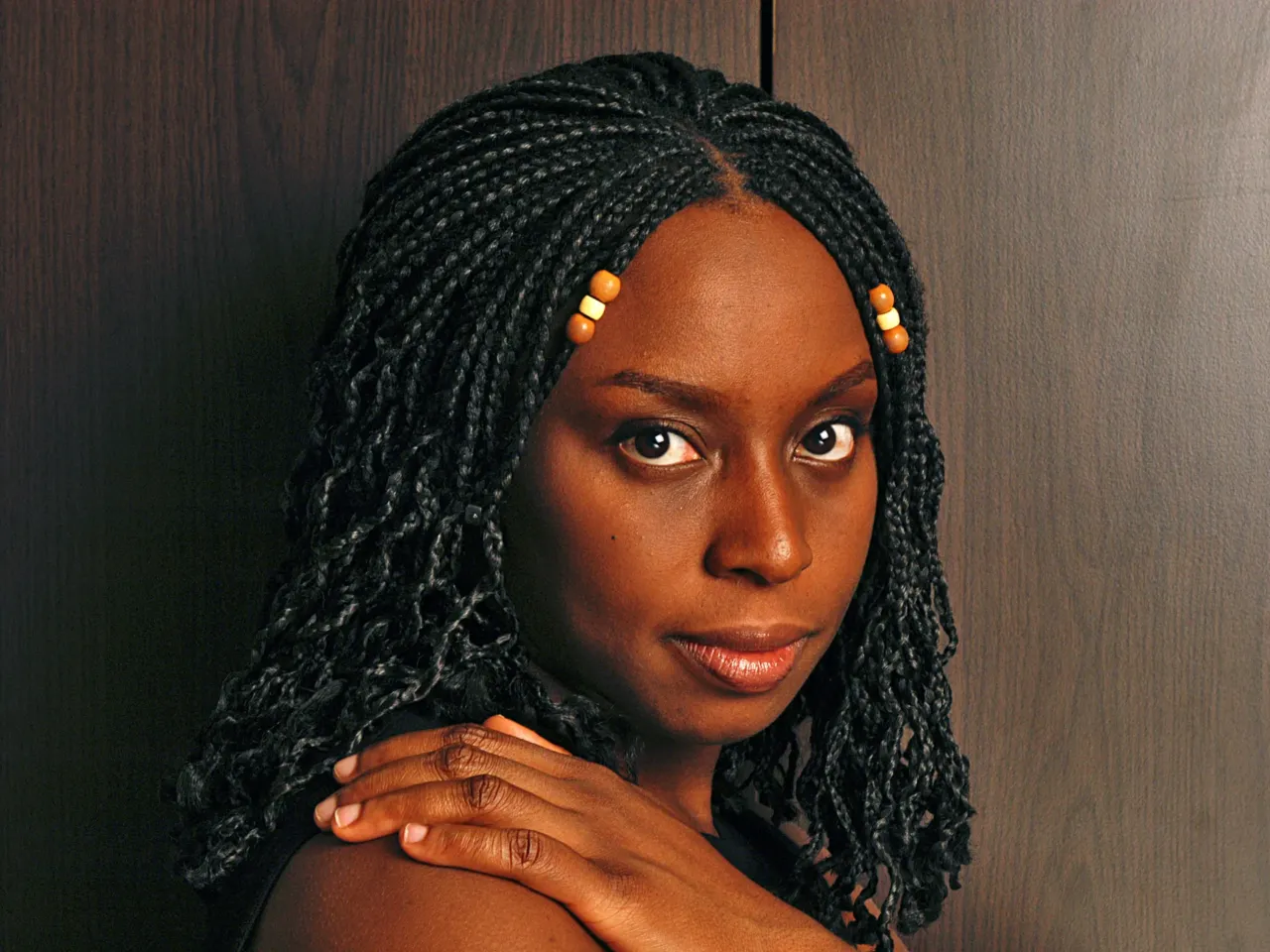
Nigerian writer Chimamanda Ngozi Adichie’s first three novels won prizes and critical acclaim. Two were optioned for movies, and one, Americanah, sold more than a million copies in the U.S. alone. But then, the words stopped.
“I went through what people like to call writer’s block, which is an expression I do not like because I’m very superstitious,” Adichie told Morning Edition host Michel Martin.
Eventually, she wrote speeches and essays on feminism, human rights and grief, even a children’s book. But another novel eluded her until now.
“Writing fiction is the love of my life. It’s the thing that I think gives me meaning. And it’s quite different. I mean, the entire process is very different from writing nonfiction with fiction. It’s magical.”
Her new novel, Dream Count, her first since 2013, tells the interconnected stories of four women: three with ties to Nigeria, the fourth to Guinea. Their names are Chiamaka, Zikora, Omelogor and Kadiatou. But even before the characters came to her, she says, a phrase had lodged in her mind, waiting to be put to use. It became the first sentence of her book.
“I have always longed to be known, truly known by another human being,” Adichie writes, reciting the set of words that had been floating in her head for years. “I knew I would write something with that as kind of the kernel of the story,” she said.
Despite considering herself fortunate to be known by the people in her life, the passing of her father in 2020 made Adichie question how well she truly knew herself and others.
“When I heard the news of my father’s death, I threw myself down on the ground and I was pounding the floor. And I did not realize I was doing this. And afterwards I was shocked by it because I think if you’d asked me how I would react to losing my father, I think I would have said that I would just go numb and completely cold,” Adichie said.
Dream Count, largely set in the Washington D.C., area during the pandemic, explores the desires of its four protagonists — and how they come to understand the other through their experiences with friends, family and lovers.
Adichie explains it’s not so much that women are unknowable: “Women in general are more likely to have richer interior lives and are also socialized to just sort of embrace more complexity emotionally,” she said of her characters. “It may be that if men were raised differently in general, they might also have that kind of rich interiority, but I think women in general have more of it.”
This interview has been lightly edited for length and clarity and includes excerpts from the conversation that did not air in the broadcast.
Michel Martin: We first spoke after Americanah, you’ve been in the public eye for many years now. What’s it like to publish a novel now versus at the beginning of your career?
Chimamanda Ngozi Adichie: Well, I feel older and hopefully wiser. There’s something more intense about it because I haven’t written a novel in so many years. This is my first novel in 11 years… And so having finally finished a novel feels as though I am reunited with myself. Because when I couldn’t write, I felt that I was shut out from myself.
Martin: Tell us about the four women around whom you organized the book.
Adichie: Chiamaka is a Nigerian woman who lives in the U.S. She’s a travel writer who wishes that she were a better writer than she is. And she’s very privileged. She comes from a very wealthy family. Her best friend, Zikora, who lives in Washington, D.C. and is a lawyer, is quite different from her. Omelogor is very practical. She’s Chiamaka’s cousin and lives in Nigeria. She’s a very successful banker. She’s brilliant and also very unconventional. And the fourth character, this is a character that’s most precious to me, is Kadiatou. She’s from Guinea. And she is an immigrant in the U.S.,and she experiences this very painful thing.
Martin: She’s [Kadiatou] based on something that happened with Nafissatou Diallo, a hotel worker who accused the then head of the IMF and also (French) presidential hopeful Dominique Strauss-Kahn or so-called “DSK,” she accused him of sexual assault in 2011. She was a hotel cleaner and she went into his room and said that he assaulted her. He was, in fact, arrested but then the charges were dropped because all these things emerged about how her journey and so forth, at least in the eyes of the prosecution, made her an unreliable witness… But this is before the MeToo movement. Tell us why this was so dear to you.
Adichie: When I first heard the story of this woman who had accused this very powerful man of assault, I followed it very closely. I felt connected to her for obvious reasons. She’s quite different from me. She’s from Guinea; I’m from Nigeria. She’s Muslim; I’m Christian. She’s working class; I’m not. But she felt to me quite familiar and knowable, and I felt protective of her. But it wasn’t until the case was dropped that I just felt something like rage. It became, for me, not just about her. . So this character that I’ve written, I’ve actually really invented the character. The character is not her. I mean, apart from the tiny kernel of the story of the assault.
Martin: Yes, you’re very clear about that.
Adichie: I think for me, that character is not just about Nafissatou Diallo, it’s also about all the women. There are so many women like her across the world who, because they are powerless, are not given a certain kind of human dignity. I really felt enraged by how she was covered in the press, how she was treated, and how she was very easily labeled a liar. And that label then became a kind of encompassing thing as all she was was a liar.
Martin: We’ve had a very serious conversation here, but I do have to say the book is very funny. The men don’t come off particularly well in this book… Some of these men are just trash, I’m sorry.
Adichie: But you know what? I wanted to write about women’s lives. And the reality of it is that for many women, the men in their lives in some ways shape their lives. Generally women are socialized to be the ones who compromise more, who hold back their dreams for people they love, that kind of thing. I’m also often fascinated by women who are in relationships that, looking in from the outside, you can tell is just deeply unhealthy for her. But somehow she finds ways to justify to herself.
Martin: I’m going to ask, are any of these women you?
Adichie: All of them. I mean, Michel, all of them.
Copyright 2025 NPR