Updated March 19, 2025 at 04:00 AM ET
The Trump administration has moved aggressively to cut U.S. foreign aid, canceling 83% of aid contracts on March 10, a decision that has already halted critical health programs in Africa and beyond.
On Feb. 3, President Trump said that USAID was run by ‘radical left lunatics’ and accused the agency of “tremendous fraud,” though he did not provide any details.” Trump also accused the aid agency of stealing “BILLIONS OF DOLLARS” in a post on Truth Social.
Now, the White House is pushing to rescind the $58.4 billion appropriated for the current fiscal year, with many of these cuts being fought in court. A federal judge ruled on March 18 that the administration likely violated the Constitution by effectively shutting down USAID, adding new legal pressure to the issue of foreign aid.
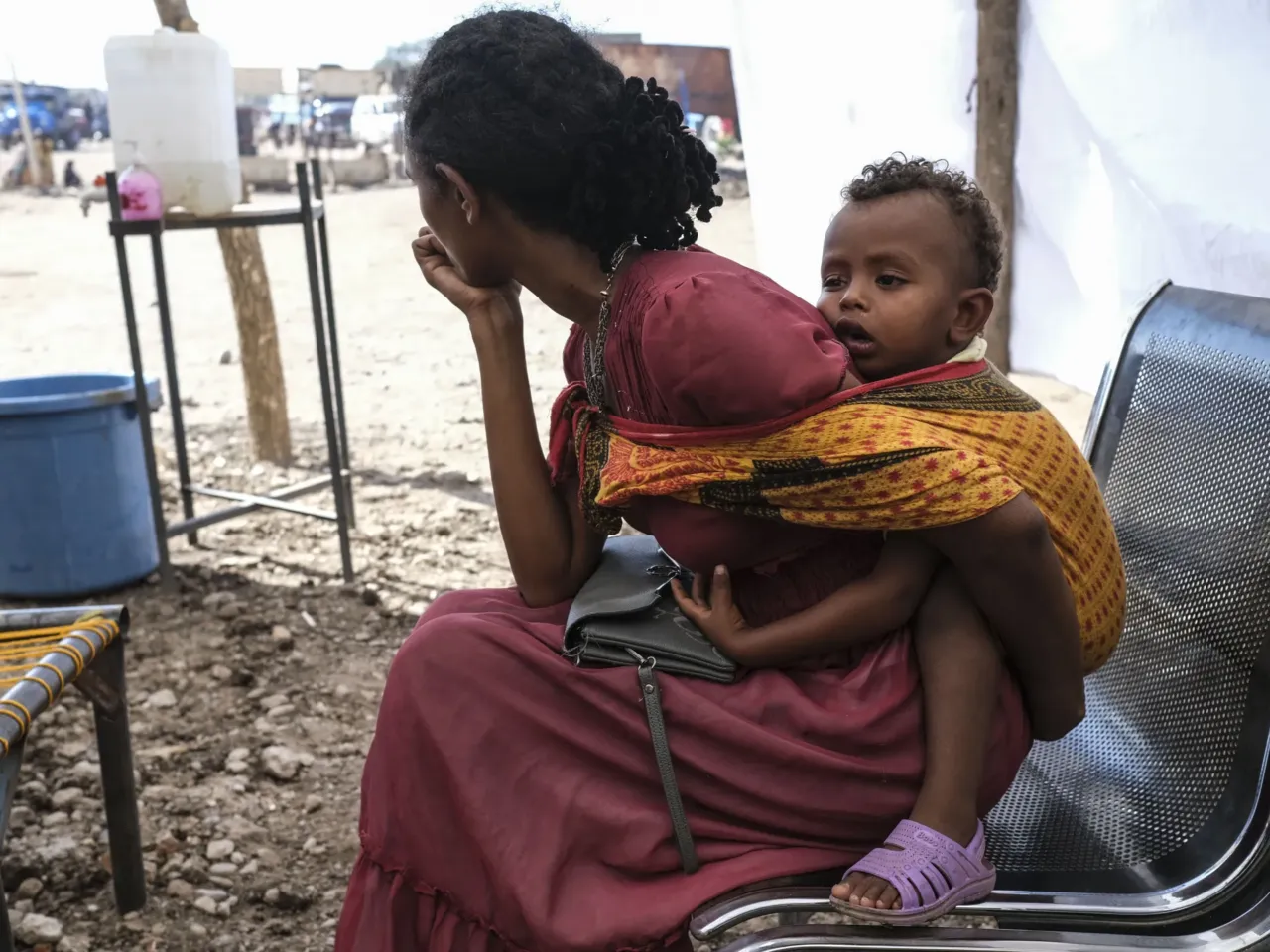
For people and programs on the ground, the funding has already dried up. The impact is particularly stark in Africa, where USAID directed about a quarter of its budget. Morning Edition spoke to three health professionals and aid workers who say the cuts are disrupting HIV, tuberculosis, and maternal health programs, leaving thousands without life-saving care. After the recent war in Tigray, Ethiopia, for example, Maryland-based physician Ayoda Werede who often travels there, said, “there’s been an increase in maternal and neonatal morbidity and mortality rates, especially during the birthing process, especially in remote areas, specifically due to a lack of access to healthcare.”
Zambia: Worries over return of a superbug
Carol Nyirenda, a tuberculosis survivor living with HIV, runs CITAMplus, a community health organization in Zambia.
“I found out my positive status when I was about, I think, 30. I’m 62 now. I’m a grandmother. And this is because of the support that I got from taxpayers’ money from the U.S.,” Nyirenda said. She received free medical treatment under George W. Bush’s PEPFAR.
CITAMplus used U.S. aid to train volunteers who worked in six provinces, encouraging people to seek treatment and adhere to their medications. But last month, Nyirenda’s organization received a termination letter, forcing them to end the outreach undertaken by 500 volunteers.
“My worry is that we might have a superbug, even for HIV. For TB, we might have more of what you call drug-resistant TB, because drug-resistant TB is brought on by not taking your medicine properly.”
Tanzania: “Everybody is in panic”
Dr. Peter Bujari, a public health specialist who runs Health Promotion Tanzania (HDT), also received a letter cutting off funding due to the recent grant cuts.
“USAID plays a significant role in the health sector in Tanzania,” he said. “It does play a significant part in community mobilization, which is important in getting people to go to health services, counseling and testing, supporting the frontline health workers who are meeting patients.”
While some critical-care programs remain, many supporting services have shut down. That includes logistics for transporting TB test samples, security for vaccine storage facilities, and community counseling programs.
“The transmission of TB is going to continue because transmission occurs until one starts treatment,” Bujari said. “If treatment is not started because the diagnosis was not made on time, it means this person continues to spread TB.”
He said the Tanzanian government is trying to fill the gaps, but without NGO support, clinical services are “paralyzed.”
“Everybody is in panic. Everybody’s confused,” he said. “Nobody knows what to do.”
Ethiopia: Efforts stranded and money frozen
As one of the largest beneficiaries of U.S. aid in sub-Saharan Africa, Ethiopia has been hit hard by the freeze. Dr. Ayoda Werede, who co-leads Health Professionals Network for Tigray (HPN4Tigray), recently delivered sonogram machines to Ethiopia’s northernmost region.
“We have the medications,” she said. “But a lot of the other funding that’s needed — like transportation, warehouses, how do you protect these supplies from being stolen or looted — that kind of support is not there anymore.”
HPN4Tigray provides health services, primarily to women, children, and displaced families in Ethiopia and Sudan. Her organization relies primarily on private funding, but many local partners relied on U.S. aid.
While Secretary of State Marco Rubio announced waivers to keep life-saving assistance flowing, organizations there say that it’s been hard to obtain waivers and, even with a waiver, the U.S. government payment system is not functioning. This has halted essential programs, like emergency food aid and treatment for severe malnutrition. UNICEF and the World Food Programme have projected that more than one million children and pregnant women will be denied treatment for acute malnutrition due to the aid freeze.
NPR’s Gabrielle Emanuel reported in February that a program that helped HIV-positive children and adolescents get their medications had their contract terminated. The result was that they had to lay off staff and could no longer support the children. “We don’t even want to open our eyes to see the disaster that’s coming,” Makele Hailu says. He was a program manager at the Organization for Social Services, Health and Development — an Ethiopian nonprofit that used to get 70% of its funding from the U.S.
In addition to the service cuts, the collapse of the payment system has left organizations like HPN4Tigray unable to receive reimbursement from the U.S. government for money that had already been spent before the freeze took effect.
Beyond health
Beyond the risk of disease outbreaks, Bujari noted that the funding cuts have caused widespread economic distress.
“In Africa, particularly, the dependence ratio is something like 80%,” he said, referring to the number of people financially reliant on one income earner.
Staff who lost their jobs can no longer support their families, he said, which means children are dropping out of school and families are losing health insurance.
Bujari had a message for Washington policymakers: “They have done amazing work to approve PEPFAR and USAID funding that has saved millions of lives. In such an abrupt disruption, it is telling those people you can now die.”
Copyright 2025 NPR