
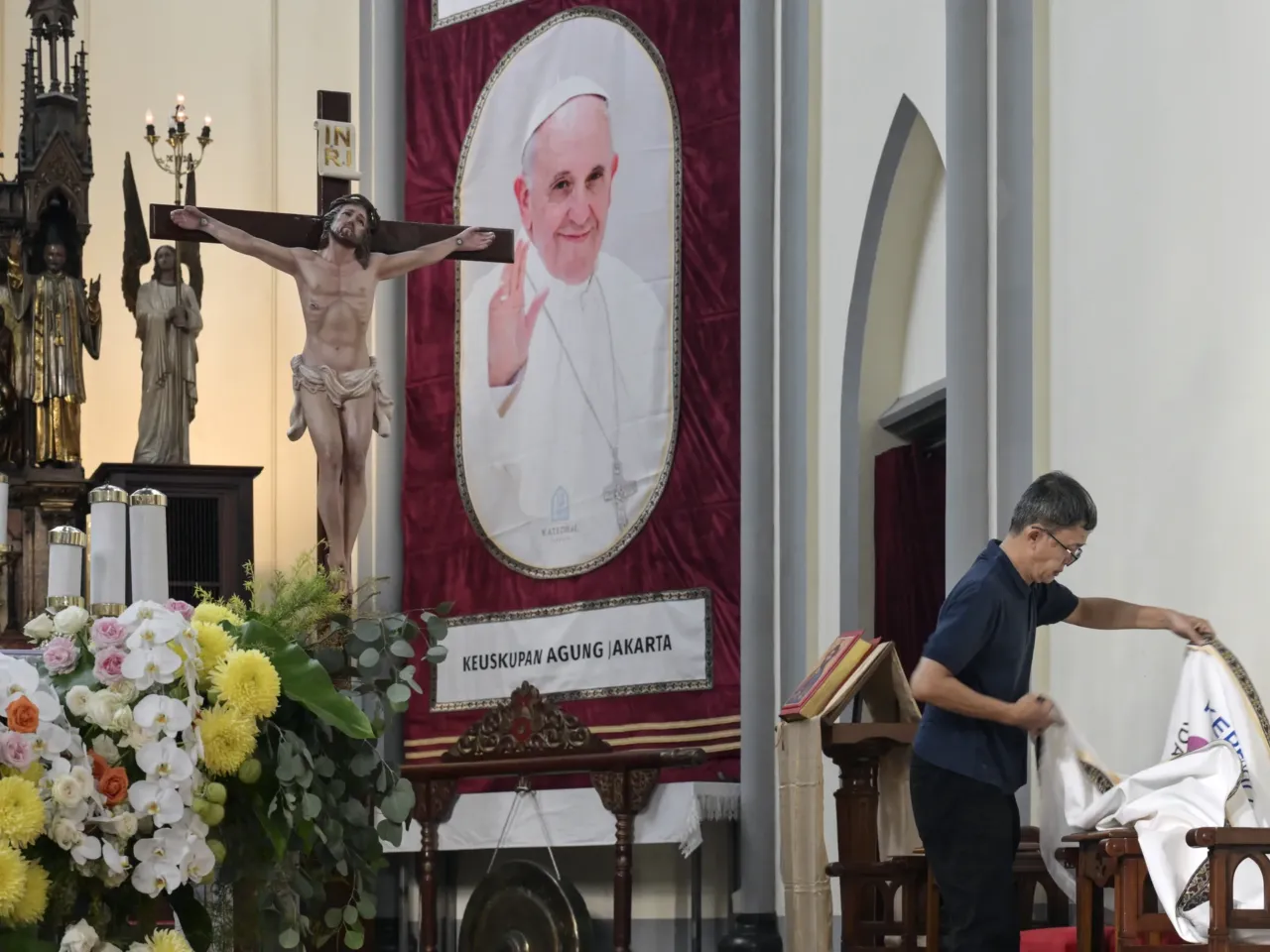
Pope Francis was one of the most popular popes in decades and a towering figure on the world stage, addressing not just Catholics but the men and women of our time.
The outspoken pope lent his voice to almost every modern issue facing the world, often taking the side of the marginalized and vulnerable. He spoke out against commercial exploitation of the environment, rich countries’ unwillingness to accept migrants, the alienation caused by technology and the lucrative sale of weapons of war.
Francis was at times a controversial figure in his own church. Conservative critics charged him with bending church dogma as a concession to modern mores. Progressives, meanwhile, were disappointed that he did not go further to include LGBTQ Catholics and women in church leadership roles.
Same-sex couples
At a news conference weeks into the job, Francis uttered uttered a phrase that would define his papacy: “If someone is gay and he searches for the Lord and has good will, who am I to judge?”
Francis was hailed by LGBTQ rights groups for calling for laws to protect same-sex couples.
Still, the Vatican sent mixed signals during his tenure. In June 2021, it filed a formal diplomatic protest with the Italian government over a draft law that would criminalize violence and hate speech against LGBTQ people and disabled people, as well as misogyny. The Vatican feared the legislation could make the church vulnerable to prosecution for not conducting same-sex marriages, for opposing adoption by same-sex couples and for refusing to teach gender theory in Catholic schools.
And while Francis repeatedly condemned discrimination and violence against gay people, he decried as “ideological colonization” the theory that gender is largely a social construct rather than determined solely by a person’s biological sex.
Progress for women
His election had sparked great hope among Catholic women — lay and nuns — that he would promote a greater role for women in the church. But in the early years of his papacy, Francis made some cringeworthy comments: When he appointed several women to a blue-ribbon theological commission, he called female theologians “strawberries on the cake”; addressing the European Parliament, lamenting Europe’s low birthrate, he compared Europe to a grandmother who is “no longer fertile and vibrant.”
At the same time, Francis promoted the advancement of women in the church far more than his predecessors did — appointing numerous women to high-level posts in Vatican departments — and he called for greater women’s participation in church decision-making.
Francis also created a commission to study the possibility that women could become deacons — meaning they could perform some of the duties of priests. But on the issue of women priests, Francis, like his predecessors, was firmly opposed — a position that infuriated many Catholic women.
Copyright 2025 NPR